Better the Devil You Know: Part Two

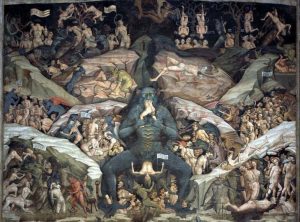
I raised questions about visual images of the devil in my Better the Devil You Know post yesterday, even suggesting that he was once blue and winged rather than red and horned. Following this discussion Daisy alerted me to this wonderful blue devil from Giovanni da Modena. The Inferno, 1410, can be seen in Basilica di San Petronio, Bologna. He is spectacular I have to say and something of a giant. Thank you Daisy I am now convinced that the devil was blue for long periods in history (and your research sounds fabulous).

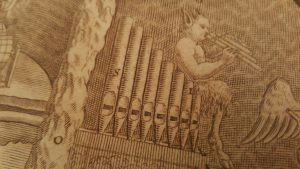
I have also been thinking about how imagery around satyrs and depictions of Pan are crucial to the story. The characteristics of these figures found their way into representations of the devil because the church had demonised them as pagan gods in an attempt to get the masses to follow the one true Christian God. The devil starts to take on some of the characteristics of Pan therefor and see below this sixteenth-century satyr’s cloven hooves and horns. The devil has all the best tunes and he is often depicted as Pan-like playing the pipes!

But when did he turn red?  Part three coming soon!


Posted in Critical thoughts | Tagged , , , | 2 Comments

Better the Devil You Know: Was the Devil Once Blue and an Angel?

I have always wondered how the devil came to be depicted as red with horns and cloven feet and I once heard that one of the first visual images of the devil depicts him as a blue angel. So did he begin his journey in art as blue and with wings not horns? I was first made aware of the diversity and terrible beauty in the many contradictory images of the devil when I reviewed the Magic, Witches and Devils in Early Modern Europe exhibition at the John Rylands Library in Manchester. I encountered blue, white, male and hermaphrodite devils in the images on display. ‘The Devil in Calicut’ in Pierre Boastabu’s Histories (Paris, 1561) is one of the most memorable (and comical). It shows him to be something of an animal hybrid with Eagle’s claws and a cat-like countenance (oh and with a smiling tusk or horn as a phallus). I am resisting endless innuendos re:  feeling ‘horny’ but this might be one way in which we still  associate sex with devilish acts in our language.

Elsewhere this wonderful depiction of the slaying of the white devil from the Shahnama (‘Book of Kings’) (Shiraz, 1542) is equally stunning.

So how did the devil turn red and did this give rise to the image of ‘painting the town red’? If this little history has excited your curiosity then I recommend a night in with your iplayer and Alastair Sooke whose research has focussed on visual images of the devil throughout the ages. You can see him explain with great aplomb ‘How the Devil got his Horns.’ There is lot of footage of him entering remote cathedrals whilst looking for the earliest images of the devil, Lucifer or Satan and yes he finds the contested blue angel that I had heard about!! I loved it. What the devil are you waiting for?  

Another blue and white devil below:

My favourite depiction of Satan will always be the rebel angel in Milton’s Paradise Lost. Milton creates sympathy for the devil and what better example of an oxymoron for my poetry students than his image of ‘darkness visible’. You have got to give the devil his due and Milton’s Satan  made it into my top ten shapeshifters!

Posted in Critical thoughts, Reviews | Tagged , , , | 3 Comments

The Wolf Moon and the Month of Wolves

Tonight is a full moon, and also the wolf moon. January was once referred to as Wulf-monath (wolf month) in Saxon, and it’s full moon takes its name from the possibility that in this bitter month wolves could still be heard howling in the distance.

Sleep well tonight and don’t let the werewolves bite.

Posted in Fun stuff | Tagged , , | 2 Comments

All the Better to See You With: Wolves and US

I found myself in Bolton in the pantomime season en route to Glasgow and was fortunate to stumble across an exhibition on ‘Animals and US’ at Bolton Central Library and Museum.  This ‘family-friendly’ exhibition, purports to show how animals feature in all aspects of our lives, including religion, sport, entertainment and fashion and it is accompanied by a whole programme of events.  However, the first thing I saw when I walked through the door was this: 

I felt very ambivalent about this image. The wolf had evidently been stuffed and housed in a museum for decades and was now made to look ridiculous dressed in human clothes  as the grandmother from Little Red Riding Hood. It had been placed in a glass cage. Was this athropomorphism gone mad or was I missing the point? Our exploitation of, and fear of, the wolf obviously came across, but the fact that this was a real wolf with a true history of persecution made me feel very sad. I’d love to know what you think. Here’s another snap of the exhibition entrance:  

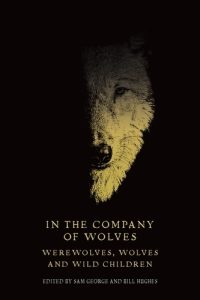
Elsewhere wolves are in the news again and there is an interesting article on Darwin’s Falkland’s Wolf  in The Conversation just now which is well worth a read. This resurgence of interest bodes well for our Company of Wolves publications out later this year. All the better to see you with my dears;-(


Posted in Critical thoughts, exhibitions, OGOM: The Company of Wolves | Tagged , , , | 3 Comments

Shakespeare’s Fey Subplot in YA Gothic

When I was a child in Cumbria it used to be common for people to say you must be a changeling if you had nothing in common with your parents and there were also stories circulating that the gypsies who were passing through the village would steal babies for the fairies taking them from their prams and replacing them with changelings!! Given this rich folklore and fear around changelings from my past I am always surprised now when students  have not heard of them. I wrote about Julia Kagawa’s The Iron King’s intertextual relationship to the changeling subplot in A Midsummer Night’s Dream in Shakespeare, Hobgoblins and the Never Never  and  Generation Dead: YA Gothic Fiction students should rejoice in the new post on the Unchanging Appeal of the Changeling over on Folklore Thursday’s site. Do take a look if you are writing on Julia Kagawa and brush up your Shakespeare. I have this image of Vivien Leigh as Titania, care of the British Library, on my wall so I don’t  need an excuse to post it again here. Magical and one hundred percent fey!!


Posted in Generation Dead: YA Fiction and the Gothic news | Tagged , , , | Leave a comment

Is the End of Time in Sight for Doctor Who?

It has been a while since Doctor Who featured on the site, though I remember posting an All Sorts of Scary (pun intended) story on the  Kandy Man and the unlikely rise of gothic sweets some time ago!! Dr Ivan Phillips, who has been a speaker at all three OGOM conferences and is a contributor to the Open Graves, Open Minds vampire book has just published an article for The Conversation on the current problems facing the Doctor Who franchise this year which is a must for all fans.  Is the End of Time in Sight for Dr Who  is also a fitting preview to Ivan’s forthcoming Doctor Who book (look out for further info on this on the site).  Ivan’s contribution to our  Company of Wolves edited collection is another offshoot or transformation of this project and is entitled ‘I am the Bad Wolf. I create myself’: The metafictional meanings of lycanthropic transformation in Doctor Who’ (inspired).


Posted in OGOM News, Publications | Tagged , | 3 Comments

Preparing for a Viva – Further Thoughts

At the behest of Sam, I have been persuaded to write more about viva “process”. As I said in my previous post, preparing for a viva can be strange. There are many reasons for this: 1) you can’t help thinking you’ve done all the hard work and you should be left alone; 2) very few of us will have done anything like a viva before; and, 3) there seems to be an infinity of questions that could possibly be asked.

So how did I prepare? Well, I think I probably did less than people might imagine. I wasn’t blase by any means but I was focused. I made a clear list of what was important to me. By this point I’d done two other panel discussions: one for my six month progress report and one for my progression. My progression panel has included an external examiner. In both cases I had made myself very nervous and stressed out, and then done well in them. So, first point of focus: don’t freak out. To do this I kept reciting my mum’s advice: “Revision is about opening the brain up to access the information, not cramming it until it shuts down”. Cheers mum!

Sam arranged for us to have a mock viva. Some people don’t agree with mock vivas. I found it very useful as it’s time with someone who knows your work and has done a viva themselves. It also started preparing me for responding orally rather than writing. To prepare for my viva, I read my thesis. And I colour-coded it: red for typos/ minor corrections; blue for points of potential contention and key terms/ ideas I should be clear on; orange for terminology I had invented; and pink for key points.

I was lucky in that my viva happened relatively promptly. I submitted on 30th September and viva-ed on 16th December. I had also met both my examiners before, albeit briefly, and was familiar with their work, especially my external examiner who I had used in my thesis. (This doesn’t make it any less nerve-wracking; I could have entered my viva to find Santa Claus and Edward Cullen behind the desk and I still would have felt nauseous). Thus I could still remember most of my work. After my mock viva I took Sam’s questions home with me to work through. As well as her most pertinent piece of advice: “Stick to your thesis”!

In the weeks that followed I bullet-pointed. A lot. I wrote definitions of theoretical terms and ideas, ie, the sublime, psychoanalysis, postmodernism. I made a key of all the terms I’d created and listed on which pages these were defined. I listed all the pages where my central argument was consolidated and then narrowed that down to a two sentence soundbite. I thought about my original contribution. I clarified my methodology. And at every point I reminded myself:

What were the reasons for my decisions? Why these texts? Why this approach? Why these conclusions? The opening question in a viva is typically something about the process of writing your PhD. Sam had warned me about this so I took some time to remember my PhD journey. I thought about the purpose of this question before I went in. It seemed to me that it was an opportunity to return to the *eureka* moments of my research and reclaim the passion that had fuelled my work. Doing so would immediately make me confident and clarify the importance of my thesis to my examiners.

The other important decision I made was to keep busy. It might look like I did a lot of preparation but in reality I broke it down into short, intense bursts. I didn’t want to exhaust myself mentally. I still went to my friend’s house warming (and read a chapter on the train back). I still went to work. Indeed, some of the best preparation I did was at work (as a tour guide at Shakespeare’s Globe). One of my colleagues was an ecocritic-nerd and he critiqued my methodology for an hour. On the day before my viva, I decided to go in to work because, I reasoned, I’d probably just sit at home panicking. Instead, I wrote a list of my primary texts and made my colleagues listen as I defended my choices. This worked brilliantly. It meant that I was sure that I could clearly and succinctly defend my work. They also complimented me and passed round my thesis which gave me warm fuzzies. I would advise talking about your thesis with everyone who will listen. Defend it. Challenge it. Get used to talking about it. It’s been in your head for so long – let it out.

I also read my thesis again (so twice in total). Only this time I took it on a date. My first reading hadn’t made me like my work. So, I took it for brunch to a really nice place near where I live. The second reading reminded me why I had written on this subject. Never underestimate the impact of space. Treat yourself whilst preparing for your viva. The positive associations will make you feel more confident. After all this, it was just down to the mundane preparations: I checked my route, ensuring I would arrive at university an hour early; I laid out my clothes and packed my bag (including two litres of water); I double-checked the rubric; and, I went to bed early. And I slept. Well, as it happens. Of course I was nervous but I was also prepared to enjoy my viva.

The viva itself went well. I did enjoy it and though there were one or two tricky questions (“What would you do differently” stumped me), I made a few jokes, and got my point of view across. I made notes which will help me should I choose to publish my thesis. When I was told I had passed I just about kept it together – you will not be prepared for the emotional onslaught of your results – and asked for further advice on preparing it as a manuscript. I left not broken but emboldened.

Posted in Critical thoughts | Tagged , , | 1 Comment

2017 – PhD Reflections

As Sam has already blogged (in very flattering terms), I passed my viva on Friday 16th December. (Minor corrections if you were wondering). Following this I have taken two weeks of radio silence to celebrate Christmas, the end of 2016, and to try and get my head around what I’ve achieved over the last few years. I managed to do the first two. The PhD seems a bit like a dream. I know I did it – it’s sitting in front of me and it’s large enough I could bludgeon an intruder with it should I so choose. Whilst many people use the metaphor of pregnancy to discuss doing a PhD, I prefer the idea of running. Earlier this year I did a half marathon and the experience was not dissimilar: there are times when you don’t see how you can finish, let alone start, and it’s a matter of setting yourself a target and then putting one foot (or one word) in front of another until it’s done. Equally, in the moments after you run a long distance, you get a rush of endorphins and then it’s done. Your body holds the aches of exertion – my back is never going to be the same after the PhD – but ultimately the pain is over. And be assured, doing a PhD is incredibly difficult in ways that you won’t realise or expect.

A little over two years ago I wrote a blog full of advice about doing a PhD. During this blog I questioned whether I wouldn’t find my opinions laughable by the end of my studies. Returning to this post, I still agree with it though I might add an addendum or two.

“Passion/ Know thyself”: I stand by this advice. In fact, I think it’s darned good advice for those thinking of doing a PhD. Passion is not just a great episode of Buffy the Vampire Slayer, it’s a major motivator. It was a relief that when I got to the end of this process, I didn’t hate my work. I was proud of it and I’m even looking forward to doing my corrections. And if you don’t know yourself at the beginning of a PhD, you certainly will by the end.

Practical Advice: If I had anything to add to my practical advice it would be to include more holidays. Especially towards submission. Keep a balance of academic and non-academic friends. The academic friends will understand your pain and the non-academic ones will keep you grounded.

Viva: I don’t have extensive advice for the viva partly because so many other people have written on this topic. I found Sophie Coulombeau’s advice particularly useful which you can read here. Much of the advice I read was very contradictory. In the end it all came back to ‘knowing yourself’, which you should do by the end of your PhD. You have to find what works for you. For me, it was the realisation that I wasn’t rehearsing answers, rather I was preparing my thinking process for an oral examination in which I would be disseminating information in a very different way to writing up.

Filing/ Books: You need a filing system and a triple back-up system. Email yourself copies of your work. Date everything. Have files within files. Know where all your notes are. Put more publication information than you think you need. Always work from the same editions of texts where possible.

Cut down on paper waste. I have used four PhD notebooks, two lever arch files of chapter drafts, and, including primary texts, I only bought 15 books in total. I found typing up all my notes very useful as the search option in Word made finding quotations superbly easy.

I guess the only other thing to say at this point is that a great supervisor makes all the difference, and I found that in Sam. Our lunches during the summer before I submitted kept me sane and she dedicated so much time to reassuring me about my ability. We were a formidable PhD team.

Nor would I have been able to submit if it wasn’t for Bill who is a formatting genius. Which, it turns out, I am not. He made my thesis look beautiful and ready to be read.

Oh, and if you are thinking of doing a PhD, get ready to spend more time in your pyjamas, eating food out of tins than you did as an undergrad.


Posted in Critical thoughts | Tagged , , | 2 Comments

Dark Musings From A Discarded Christmas Tree


There is something of an arboreal theme going on on the blog just now following the announcement of the Beasts of the Forest conference. If you are decorating your tree you might like to read Hans Andersen’s unsettling account of a fir tree that feels pain. I was reminded of this story last year when I came across Lars Ostenfeld’s beautifully sad and poignant adaptation of  The Fir Tree (Danish: Grantræet) on the BBC iPlayer. I  do not think you will ever think about your tree in the same way again following these dark musings.

The tale was first published with ‘The Snow Queen’ on 21st December 1844. The story is narrated by the tree itself (which appeals to my botanical sensibilities) and like all of Andersen’s tales there is an emphasis on physical pain and suffering. The tree is vain and so impatient to grow up that it cannot live in the moment because it expects a greater glory. When it is pulled up for a Christmas tree its life is subject to the whim of the humans whose admiration it craves. They profess to love it dressing it with candles before depriving it of light and discarding it on a fire. The tree is sentient and like the tale’s creator is afflicted with a trembling sensitivity and a limitless pining (pun intended). Andersen had written tales with unhappy endings before (The Little Mermaid’ and ‘The Steadfast Tin Soldier’, for example) but a new darker note is struck with ‘The Fir Tree’. It suggests not only the mercilessness of fate but the futility of life itself, only the moment is worth embracing. For the first time in his fairy tales, Andersen expresses an existential doubt that his Christian beliefs cannot allay.

If you like a winter’s tale (and a sad tale is best for winter) you will enjoy the beauty of this. The forest is deeply lush and the Danish speaking tree is extremely uncanny. Thankfully I had already returned my little Christmas tree to the garden when I watched this (as I could see its needles starting to drop). The story does make you question the beauty of something that is dying from the moment it is brought into the house. Andersen’s Nordic sensibilities are very eco gothic here and the tale is wonderfully dark of course. The tree is both tragic and narcissistic. Still time to be unsettled by its arboreal sensitivities.  You can find the story in any complete Andersen collection. and there is an online version here (though I am not sure about this translation). I am lucky to have an M.R. James translation of the tale in an original Faber edition from 1930. I am truly amazed by the meeting of those two minds.

Posted in Critical thoughts | Tagged , , , | Leave a comment

50 Words for Snow

You might have noticed that we have a snow theme on our site just now and it was almost snowing in St Albans on my walk today:

The novelist Marcus Sedgwick is no stranger to OGOM, some of you will have been lucky enough to have caught his wonderful plenary talks at OGOM events. Marcus’s meditation on Snow is currently available in five episodes on Radio 4 where it has been Book of the Week. You can follow the link here and enjoy listening whilst tucked up with your favourite nightcap or a mug of snowman soup (marshmallows in hot chocolate).  

My own snow favourites (apart from Hans Andersen’s Snow Queen and Narnia, where it is always winter and never Christmas) are Jame’s Joyce’s ‘The Dead’ from his short story collection Dubliners:

Snow was general all over Ireland. It was falling softly upon the Bog of Allen and, further westwards, softly falling into the dark mutinous Shannon waves. It was falling too upon every part of the lonely churchyard where Michael Furey lay buried. It lay thickly drifted on the crooked crosses and headstones, on the spears of the little gate, on the barren thorns. His soul swooned slowly as he heard the snow falling faintly through the universe and faintly falling, like the descent of their last end, upon all the living and the dead.

And Kate Bush’s 50 Words for Snow which is a magical and mesmerising incantation inspired by the many, many, words Eskimos have for snow…….so beautiful.

Don’t forget too that you can revisit Bill’s lively and imaginative talk from the Manchester Gothic Festival on snow queens and snowbound landscapes here  


Posted in OGOM News | Tagged , , , | 4 Comments