Werewolves and Wildness: OGOM Publication News

This is the second publication to develop out of our fantastic Company of Wolves conference. There has never been an edition of Gothic Studies on werewolves so this is an absolute first! Thank you to all the contributors for their interesting and inspirational essays. We’ll be in touch!

OGOM Events

OGOM Events

Werewolves and Wildness’,  Gothic Studies,  special issue, ed. by Bill Hughes, Sam George and Kaja Franck

Sam George, Bill Hughes, Kaja Franck, Intro, ‘Wild Things’

Curtis Runstedler, ‘The Benevolent Medieval Werewolf in William of Palerne

Michael Brodski, ‘The Cinematic Representation of the Wild Child: Considering Trouffaut’s L’Enfant Sauvage

Simon  Marsden, ‘“One look and you recognize evil”: Lycan Terrorism, Monstrous Otherness and the Banality of Evil in Benjamin Percy’s Red Moon

Lisa Nevárez, ‘Playgrounds in the Zombie Apocalypse: The Feral Child’

Sue Chaplin, ‘“Daddy, I’m falling for a Monster”: Women, Sex and Sacrifice in Contemporary Paranormal Romance’

Tania Evans, ‘Full Moon Masculinities: The Werewolf in Young Adult Fantasy Fiction’

Sam George, ‘Wolves in the Wolds: The Wyrd Case of ‘Old Stinker’, the Hull Werewolf’

tweet-639468030397939713-2


Posted in Books and Articles, OGOM News, OGOM: The Company of Wolves | Tagged , , , , , | 2 Comments

Saint Death: 2017 The Year of Mexican Gothic

Marcus Sedgwick has been linked to OGOM since its beginnings in 2010. He has appeared at all 3 conferences and has generously offered up essays for both of the OGOM edited collections. His latest essay is intriguingly called ‘Wolves and Lies’ and it will feature in our forthcoming Company of Wolves book   I have fond memories of the session on feral or wolf children at the conference where I was lucky enough to share a slot with Marcus.  October sees the launch of yet another novel from this most gifted of writers and I wanted to post about this ahead of the Generation Dead: YA Fiction and the Gothic module (which runs from next week).

1542

Marcus’s latest novel Saint Death is inspired by the mysterious figure of Santa Muerte (Holy or Saint Death), a ‘folk saint’ of growing popularity in Mexico and parts of the US. Santa Muerte is a (female) skeleton in a shroud, often depicted holding a scythe in one hand and the world in the other. She is something of a cross between the grim reaper and a female saint or holy virgin. Marcus has posted this fascinating video from youtube on his blog as an introduction to the figure:

By coincidence The IGA conference is in Mexico this year and one of the themes is folklore so there has never been a better time to read Saint Death! You can read an extract in The Guardian here and peruse the IGA conference and CFP using the link above.

iga-mexico-2017_wordpress_01

Hasta luego!


Posted in CFP (Conferences), Generation Dead: YA Fiction and the Gothic news, OGOM News, Reviews | Tagged , , , , | 1 Comment

Invisible Library and Visual Librarians

I’ve been meaning to blog for a while about a variant of fantasy and paranormal romance that I’ve noticed many examples of recently. Literature about books themselves are perennially fascinating to avid readers. My detailed review of a few books I’ve read recently in this subsubsubgenre will have to wait, but just as a taster, here’s Genevieve Cogman, author of the brilliant library fantasy series The Invisible Library, in interview.

Then, a little piece on the best librarians in film and TV (Rupert Giles, from Buffy the Vampire Slayer is here, of course).

Posted in Interviews | Tagged , , , , , | Leave a comment

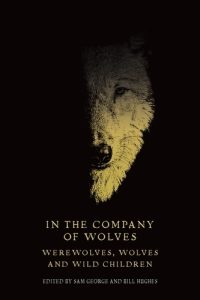
OGOM Company of Wolves: The Book

Woo hoo. We are proud to present the details of the OGOM Company of Wolves book (MUP, 2017). There are 3 publications in total (one book and two special journal issues) and this is the first. More to follow on the other two. We think you’ll agree that it looks very special indeed and it is a fitting legacy re: our fabulous conference. Thank you to everyone who has made submissions to the project. More will be revealed shortly. Wolftastic!!

OGOM Events

The Company of Wolves: Werewolves, Wolves, and Wild Children – Narratives of Sociality and Animality

Brief description of the volume’s scope and content

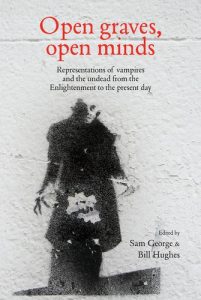
This volume of essays presents further research from the Open Graves, Open Minds Project at the University of Hertfordshire (soon to be an internationally recognised research centre). It follows on from the previous MUP book, Open Graves, Open Minds: Representations of vampires and the Undead from the Enlightenment to the Present Day. The collection connects together innovative research on the cultural significance of wolves, wild children, and werewolves from a variety of perspectives as portrayed in different media and genres ranging through folktales and Gothic literature through sound, fashion, film, and TV, to contemporary poetry and visual art. In the book, eminent scholars and early career researchers cover a range of narratives and discourses: stories of feral children which question the boundaries between animal and human are explored alongside considerations of the cultural significance of the wolf in nature and analyses of the modern werewolf from nineteenth-century Gothic through early cinema to present-day TV and Young Adult fiction.

The book explores crucial questions concerning human social existence and its animal substrate, and the intersection between the human and the wolfishly bestial as expressed in narrative media from a variety of epochs and cultures. It forms a coherent whole; though covering a fascinating diversity of topics, the essays have been selected and guided towards highlighting certain recurring motifs which are drawn together by an erudite introduction.

We begin with the wolf itself as it has been interpreted as a cultural symbol and how it figures in contemporary debates about wilderness and nature. Alongside this, we consider eighteenth-century debates about wild children ­– often thought to have been raised by wolves and other animals – and their role in key questions about the origins of language and society, moving to the fictional representation of such children. The collection continues with a series of essays on werewolves and other shapeshifters as depicted in folk tales, literature, film, and other media, concluding with a section on the transition from animal to human in fashion, art, and poetry.

Wolves have long been the archetypal enemy of human company, preying on the unguarded boundaries of civilisation, threatening the pastoral of ideal sociality and figuring as sexual predators. Yet, in their way, with their complex pack interactions, they have served as a model for society. Lately, this ancient enemy has been rehabilitated and reappraised, and rewilding projects have attempted to admit them more closely into our lives. Our company with wolves has inspired fiction from Ovid, through Perrault and the Grimms’ narrators, to Bram Stoker and Kipling; and, more recently, to Angela Carter, Neil Jordan, Anne Rice, Marcus Sedgwick and Glen Duncan.

Werewolves and shapeshifters have served in narrative fiction to question what humanity is; weres tend to reveal the complex affinities and differences between our existence as linguistic, social subjects and our physiological continuity with other animals. They also draw our attention to questions of hierarchy and sexuality, to the instinctive, and to what extent our conceptions of these are ideological.

Werewolves (along with vampires) have recently become humanised, even romanticised, as identity politics has become mainstream and the Other assimilated. As with the vampire, werewolves invite analyses about otherness, as this collection demonstrates. And just as the vampire figure both conditions the shape of the subgenres it dwells in and draws other genres into its sphere, so fictions about werewolves, wild humans, and human-animal relationships also invoke questions of genre and intertextuality. The essays in the collection address these issues.

Amidst concerns about our relationship with nature, in a culture informed by Romanticism and a post-Enlightenment doubt about the centrality of humanity, contemporary fictions often turn to the animal, and to transitions between animal and human to interrogate what is special about our species. In her werewolf paranormal romance, Shiver, the YA author Maggie Stiefvater quotes Rilke: ‘even the most clever of animals see that we are not surely at home in our interpreted world’. This captures the amphibious nature of being human and raises the kinds of questions that these essays explore and illuminate.

Contents list 

Preface

Sir Christopher Frayling

Introduction

Sam George and Bill Hughes

Cultural images of the wolf, the werewolf and the wolf child

  1. Wolf: A social and cultural creature

Garry Marvin

  1. This is what it sounds like when wolves cry: Storytelling, wolf children, and the state of nature

Sam George

  1. Wolves and lies: A writer’s perspective

Marcus Sedgwick

  1. The sound of the cinematic werewolf

Stacy Abbott

Innocence and Experience: Brute creation, wild beast or child of nature

  1. Wild sanctuary: Running into the forest in Russian fairy tales

Shannon Scott

  1. ‘No more than a brute or a wild beast’: Wagner the Werewolf, Sweeney Todd, and the limits of human responsibility

Joseph Crawford

 The inner beast: Scientific experimentation in George MacDonald’s The History of Photogen and Nycteris

Rebecca Langworthy

  1. Werewolves and white trash: Brutishness, discrimination and the lower-class wolfman from The Wolf Man to True Blood

Victoria Amador

Re-inventing the wolf: Intertextual and metafictional manifestations

  1. The price of flesh is love’: Commodification, corporeality, and paranormal romance in Angela Carter’s The Bloody Chamber.

Bill Hughes

  1. I am the Bad Wolf. I create myself’: The metafictional meanings of lycanthropic transformation in Doctor Who

Ivan Phillips

  1. Growing pains of the teenage werewolf: YA literature and the metaphorical wolf

Kaja Franck

Animal selves: Becoming wolf 

  1. Wearing the wolf: Fur, fashion and species transvestism

Catherine Spooner

  1. A running wolf and other grey animals: The various shapes of Marcus Coates

Sarah Wade

  1. ‘Stinking of me’: Transformations and animal selves in contemporary women’s poetry

Polly Atkin

20150903_102857_resized


Posted in OGOM News, Publications | Tagged , , , , , , , , , , | Leave a comment

Wolves in the Asylum at the Wellcome

20160916_154250_resized (1)

I visited the new exhibition on Bedlam at the Wellcome this week and was thrilled to find the wolf paintings of Freud’s ‘Wolfman’ on display. As we are currently working on the publications from the Company of Wolves conference it seemed particularly serendipitous and compelling. Sergei Pankejeff (1886-1979) was the subject of one of Freud’s most famous case histories. Freud predictably argued that his childhood dream of wolves  represented a ‘primal scene’  of psychosexual development. Freud’s eventual analysis (along with Pankejeff’s input) of the dream was that it was the result of Pankejeff having witnessed his parents having sex a tergo ( ‘from behind’ or ‘doggy style’) — at a very young age. Later in the paper Freud posited the possibility that Pankejeff had instead witnessed copulation between animals, which was displaced to his parents. Pankejeff depicted  the dream that gave him the name ‘Wolfman’ in 1975 when he was nearing the end of his life. It shows five white wolves  in a frozen landscape sitting in a stunted tree.  I was fascinated to see this work for the first time yesterday. Interestingly, Catherine Spooner has written about the significance of white wolves in her essay ‘Wearing the Wolf’ for the OGOM Company of Wolves volume.

wolfpaintingdownload

Amongst the other artists associated with Bedlam and featuring in the exhibition is Richard Dadd (1817-76), a convicted murderer famous for his fairy art. Dadd is mentioned in Joseph Crawford’s essay ‘No more than a brute or a wild beast’: Wagner the Werewolf,  Sweeney Todd and the limits of human responsibility’ in our forthcoming  Company of Wolves collection. He is discussed in relation to reason, insanity and animality. Do go to see this wonderful show if you get the chance (and look out for the publication of OGOM: Company of Wolves next year).

Elsewhere I was intrigued by the Empathy Deck, a new digital commission by artist Erica Scourti.  This has a live Twitter bot that responds to your tweets@empathydeck…genius.

Below ‘All Men Mad: or England A Great Bedlam.  A Poem’ from the exhibition. This was printed on the 14th September in the year 1704 and yet it seems strangely appropriate to our times. What foresight!  I love this!

20160916_161549_resized (1)


Posted in exhibitions, OGOM News, OGOM Research | Tagged , , , , , | Leave a comment

Remus Lupin’s ‘furry little problem’

My blog posts have been very absent recently (in my defence I am in the final stages of preparing to submit my thesis). However, I took the time to read and enjoy this article, ‘Remus Lupin and the stigmatised illness: why lycanthropy is not a good metaphor for HIV/AIDS’, about Remus Lupin and his ‘furry little problem’.

0e0a226ee5e99e4d6706f0df5a66c47fThe idea of using lycanthropy as a metaphor for disability, and the problems that this incurs, is discussed by Kimberley McMahon-Coleman and Roslyn Weaver in Werewolves and Other Shapeshifters in Popular Culture (2012). One of the particular difficulties which they identify is that the werewolf is understood a priori as a monster. Thus, anything that is identified with werewolfism, such as reading lycanthropy as a metaphor for HIV/AIDS, appears to be always, already monstrous in itself. If Lupin is read as someone living with HIV/AIDS, he starts in a position of monstrosity from which he must redeem himself. As the article suggests, given that Lupin is the exception to the rule of lycanthropy – the ‘good’ werewolf, the novels are in danger of suggesting that it is the victim of societal stigma who must strive to make themselves ‘non-monstrous’. This puts the onus of the individual rather than society and strays into the realm of victim-blaming. Clearly, it should be human society that moves away from the tendency to stigmatise difference.

I would suggest that in order to prevent the problematic elements of reading lycanthropy as HIV/AIDS, and perhaps lending this metaphor further weight, the werewolf should have been redeemed – by this I mean changing the definition of the werewolf. The description of the werewolf in Fantastic Beasts & Where to Find Them (2001) states that ‘at the full moon, the otherwise sane and normal wizard or Muggle afflicted transforms into a murderous beast’ (p. 42). This stereotype of the werewolf as losing all sense of self when transformed has become part of popular culture since the twentieth century, particularly in horror films. According to this description, the werewolf IS dangerous, despite the sympathetic presentation of Lupin. Even allowing for the Wolfsbane potion, which itself only a recent addition to Harry Potter werewolf lore, having a werewolf living in close quarters with humans would seem unwise.

Instead, I think that presenting the werewolf as less dangerous would have enabled a more powerful exploration of the effects of societal stigma. The monstrous werewolf of popular culture could be presented as a misconception, which had come about because of the terrifying nature of transforming from one state to another, rather than the inherent danger of the transformed human. The perception of the werewolf as evil could then be deconstructed showing that the werewolf, whether transformed or not, is not dangerous. In this way, being a werewolf would then no longer be monstrous. The texts could suggest that the werewolf has been appropriated as a monster, in order to make a statement about the role of the ‘other’ within society. A character such as Fenrir Greyback, the most extreme presentation of lycanthropy within in the Harry Potter novels, would then be the product of stigmatisation. He takes on the role of the stereotypical werewolf because that is the role that is forced on him by society. In this way the danger of misinformation that has surrounded HIV/AIDS and the risk it poses could be more effectively framed. (I admit even these changes wouldn’t render it a perfect metaphor).

Considering the issue of Remus Lupin and lycanthropy, it is with a heaviness of heart that I state that, though I love the Harry Potter novels and they are a constant companion, Rowling’s writing sometimes falls down on close inspection. The use of lycanthropy as a metaphor for HIV/AIDS appears to be well-intended but is, ultimately, problematic. (In the same way, the lack of democracy in the Ministry of Magic always concerns me). Thus, as the above image shows, Rowling use of names, and research into historical magic, is thrilling and delightful. But the interpretation of the character of Lupin is, perhaps, done more effectively my the readers themselves. Unfortunately Pottermore, whilst a powerful tool for the fandom, has the tendency to curtail the subtle and thoughtful world-building done by the fans of the series. The navigation of the rights of the author and the reader to the text is exemplified in the Harry Potter series. The fandom, often in the form of fanfiction, has constructed powerful narratives regarding the world of Harry Potter, including back stories for many lesser characters, and alternative timelines. These often allow the voices of minority groups to be heard against the predominantly normative space that the novels create. Each clarification by Rowling minimises these voices and denies the role of reader in constructing and re-constructing the textual world. Instead, she offers the definitive reading of characters and situations without acknowledging that the best literature has a multiplicity of interpretations.

(NB: On a personal, and rather light-weight note, the other reason I put in the above image is because my partner’s surname is Howells. As I come to the end of dedicated three years of my life to werewolves, it seems apt that I should stumble across this image).

References:

Rowling, J. K., Fantastic Beasts & Where to Find Them (London: Bloomsbury Publishing, 2001)

Posted in Critical thoughts | Tagged , , | 3 Comments

I Know What You Did Last Summer: Welsh Bigfoot to rival Old Stinker the Hull Werewolf

images (8)

Sasquatch, a Yeti or Bigfoot like creature has been spotted in Welsh woodland according to British newspapers. He is now set to rival Old Stinker the Hull Werewolf in the history of British monsters, having been supposedly captured on film. Bigfoot is the name given to a mythological simian, ape, or hominid-like creature that is said to inhabit forests, mainly in the Pacific Northwest of America. Bigfoot, described as a large, hairy, bipedal humanoid, is a very American myth,  but now he has entered Welsh folklore, alongside the Ddraig Dragon! There is of course the Bwbachod, the Welsh equivalent of the Brownie, which is found in Sikes, British Goblins and Briggs’s Dictionary of Fairies. The Bwca (pronouned booka) is connected to the Brownie, and is a small hairy fellow up to three feet tall.  So maybe this creature is more Boggart than Bigfoot!

The Weirdest Welsh Mythical creatures can be found over on the spooky isles pages and the poet Gillian Clarke has listed her top ten Welsh myths you are likely to find in a children’s book in The Guardian. Mark my words the Welsh Yeti will be next!

The stories so far:

http://www.dailymail.co.uk/news/article-3783369/Is-Bigfoot-Man-claims-experienced-close-encounter-elusive-Yeti-Welsh-woodland.html

http://www.mirror.co.uk/news/weird-news/shock-over-first-uk-bigfoot-8806509

http://www.dailystar.co.uk/news/latest-news/543595/bigfoot-britain-first-uk-footage

http://www.express.co.uk/news/uk/709409/Bigfoot-caught-on-camera-Yeti-creature-Welsh-mountain

https://www.thesun.co.uk/news/1760666/chilling-footage-appears-to-show-giant-bigfoot-wandering-through-british-woodland-for-the-first-time/

images (9)

Posted in Fun stuff, Resources | Tagged , , , , | 3 Comments

Hull Werewolf Old Stinker Inspires Research Paper

I am beyond excited to report that The Hull Werewolf ‘Old Stinker’ has surfaced again in the last few days, terrorising women with his human face and very, very, bad breath (hence his name). The two most recent sightings have been reported on in the Hull Daily Mail  ‘Women Says She Ran from Hull Werewolf Old Stinker’ and in The Metro ‘Woman Met Eight foot Werewolf Old Stinker With Human Face and Extremely Bad Breath’ (no prizes for those headlines).  The hairy beast has even caught the attention of dark rocker Alice Cooper who posted about him on his Facebook page and asked for further information. Look no further Alice I am about to make known my wolfish research!!

werewolf-picture

Old Stinker, or the Beast of Barmston Drain, is  part of my recent research (and a favourite of OGOM). I first wrote about him back in May in Ancient Werewolf Known as Old Stinker Sparks Folk Panic in the UK and followed this up with a more meditative piece on the significance of the werewolf’s relationship to the flesh and blood wolf in ‘Why I Believe in the Story of Old Stinker the Hull Werewolf’. I’ve been documenting his progress with interest following our Company of Wolves event and could not resist the opportunity to speak about him at the aptly titled Gothic North Symposium which is part of the Manchester Gothic Festival in October.  The full programme and tickets can be found here . My paper is listed as:

‘Wolves in the Wolds: The Wyrd Case of ‘Old Stinker’ the Hull Werewolf’  

Some say Old Stinker was first reported on in the eighteenth century and is not a recent phenomenon, but his reappearance could not be more serendipitous or timely, given our work this very week on the book from our Company of Wolves festival. How very, very, exciting…don’t leave home without your Wolf bane!!

20150904_120746


Posted in OGOM Research, OGOM: The Company of Wolves | Tagged , , , | Leave a comment

‘The Gothic North’ Symposium, Manchester Metropolitan University, 22 October 2016

Sam and I are both delighted to be presenting papers at this fabulous ‘Gothic North’ symposium at MMU’s Centre for Gothic Studies in October; the schedule is now up here. There is a wide range of papers on all conceivable aspects of ‘Northern Gothic’; Sam will be talking on ‘Wolves in the Wolds: The Wyrd Case of ‘Old Stinker’ the Hull Werewolf’, and my paper is ‘Boreal Magic: Snow Queens, Frozen Landscapes and Restoring Equilibrium in Paranormal Romance’.

This is part of their exciting Gothic Manchester Festival, which has some great events, including films, pub quizzes, Gothic walking tours, and the inaugural lecture by Professor Dale Townshend.

Posted in Conferences | Tagged , , , , , , , , , | 1 Comment

Shapeshifters, female geeks, and exotic mathematics

A good article on ‘The Latest in Science Fiction and Fantasy‘ by N.K. Jesmin, reviewing some exciting new fantasy/SF novels and a collection of essays on geek feminism.

Posted in Books and Articles | Tagged , , | Leave a comment