Witches Night Brew for Walpurgisnacht

For Walpurgisnacht, or witches night, a witches rout or selection of dark posts from the archive…..do not leave home without your broomstick!

How did I choose me my witchcraft kin?

Witches, Gothic Novels and Cosmic Horror

 I Saw Three Witches

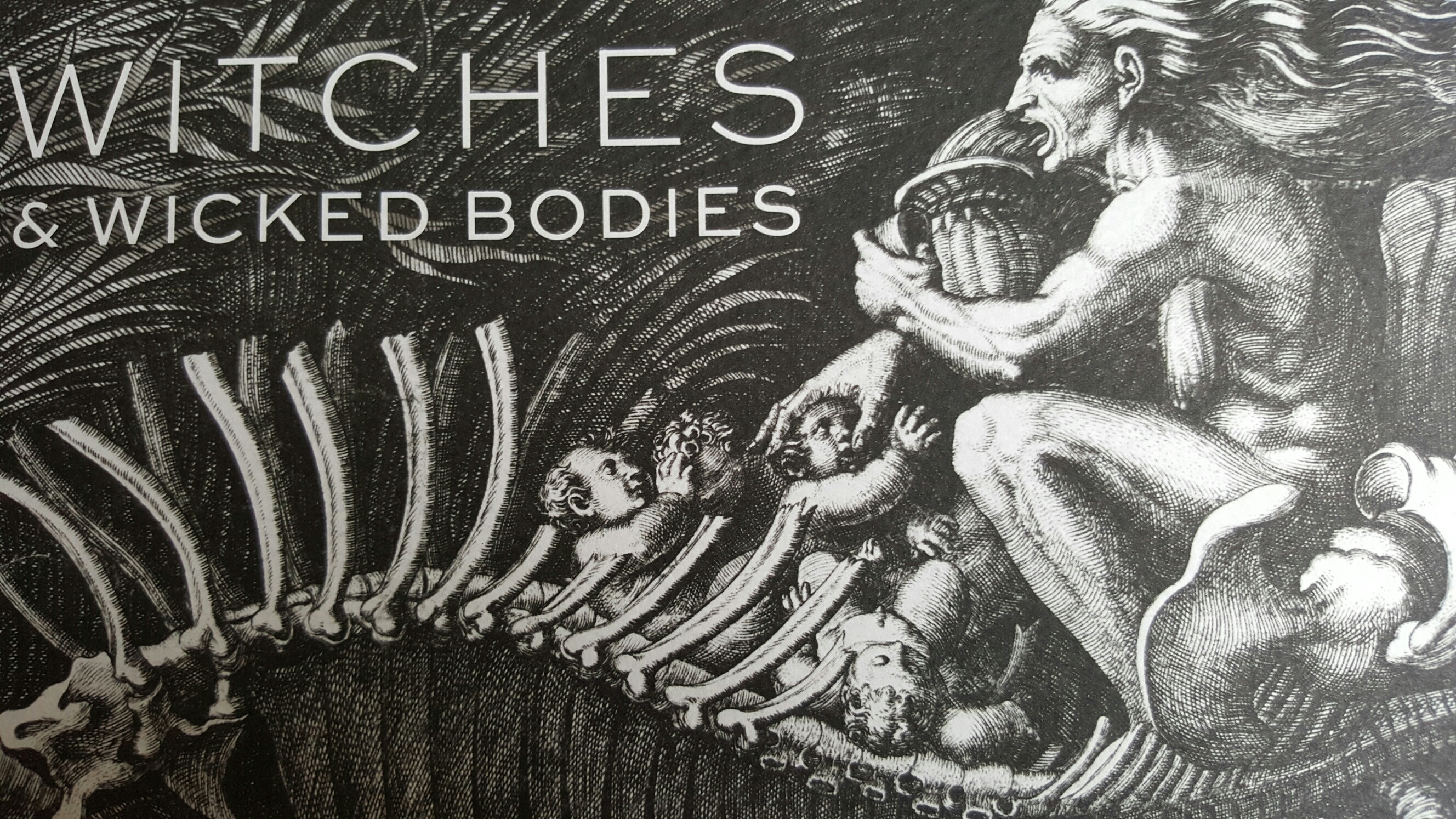
Review of Witches and Wicked Bodies

Witches from Fiction Witches from History

Witches Brew

Emergence of the Sympathetic Witch

Sexualising the Witch

Fire Burn and Cauldron Bubble

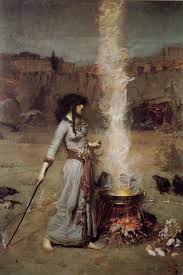
waterhouse images


Posted in Resources | Leave a comment

It’s Walpurgisnacht – get your broomstick ready!

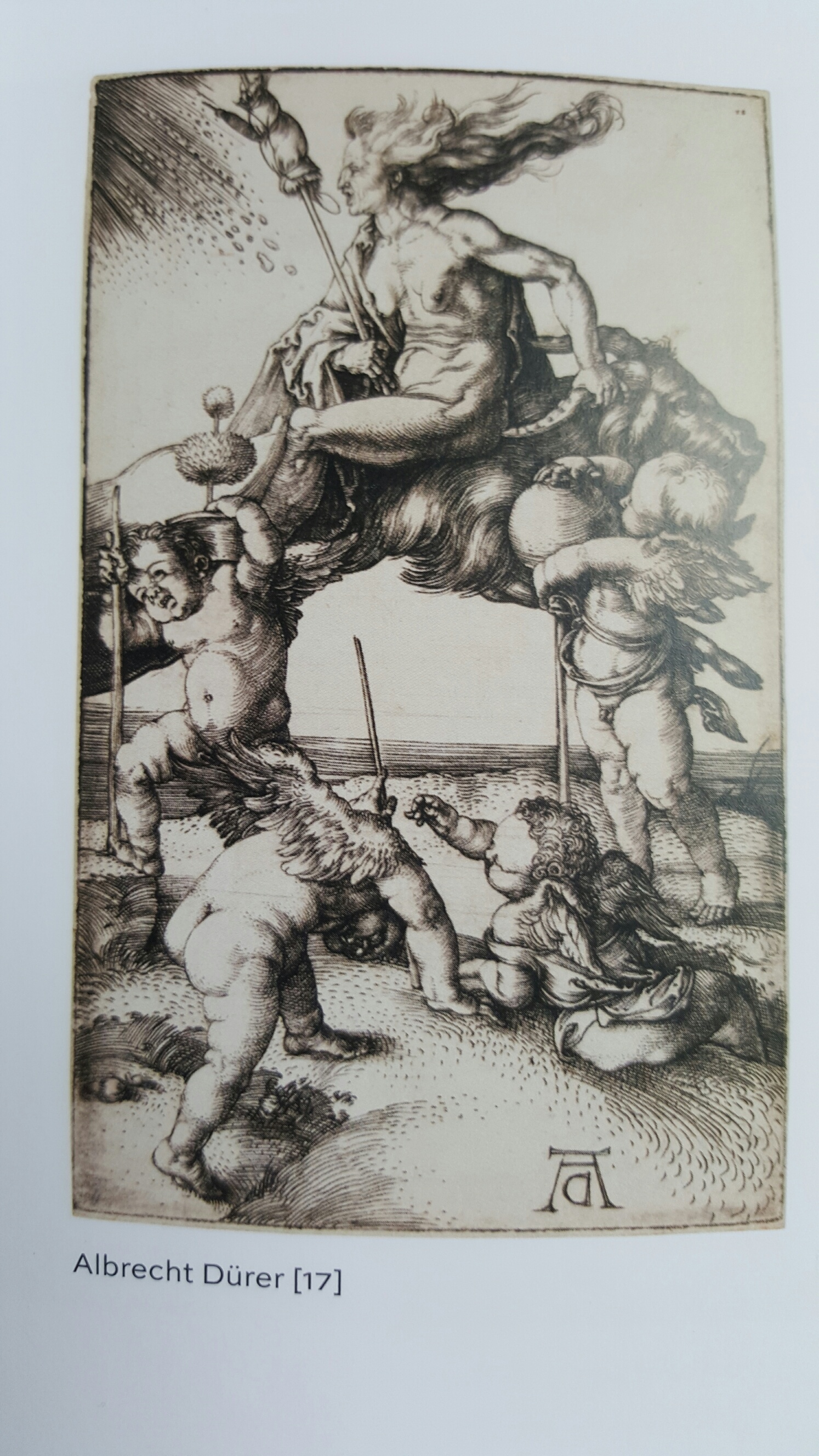
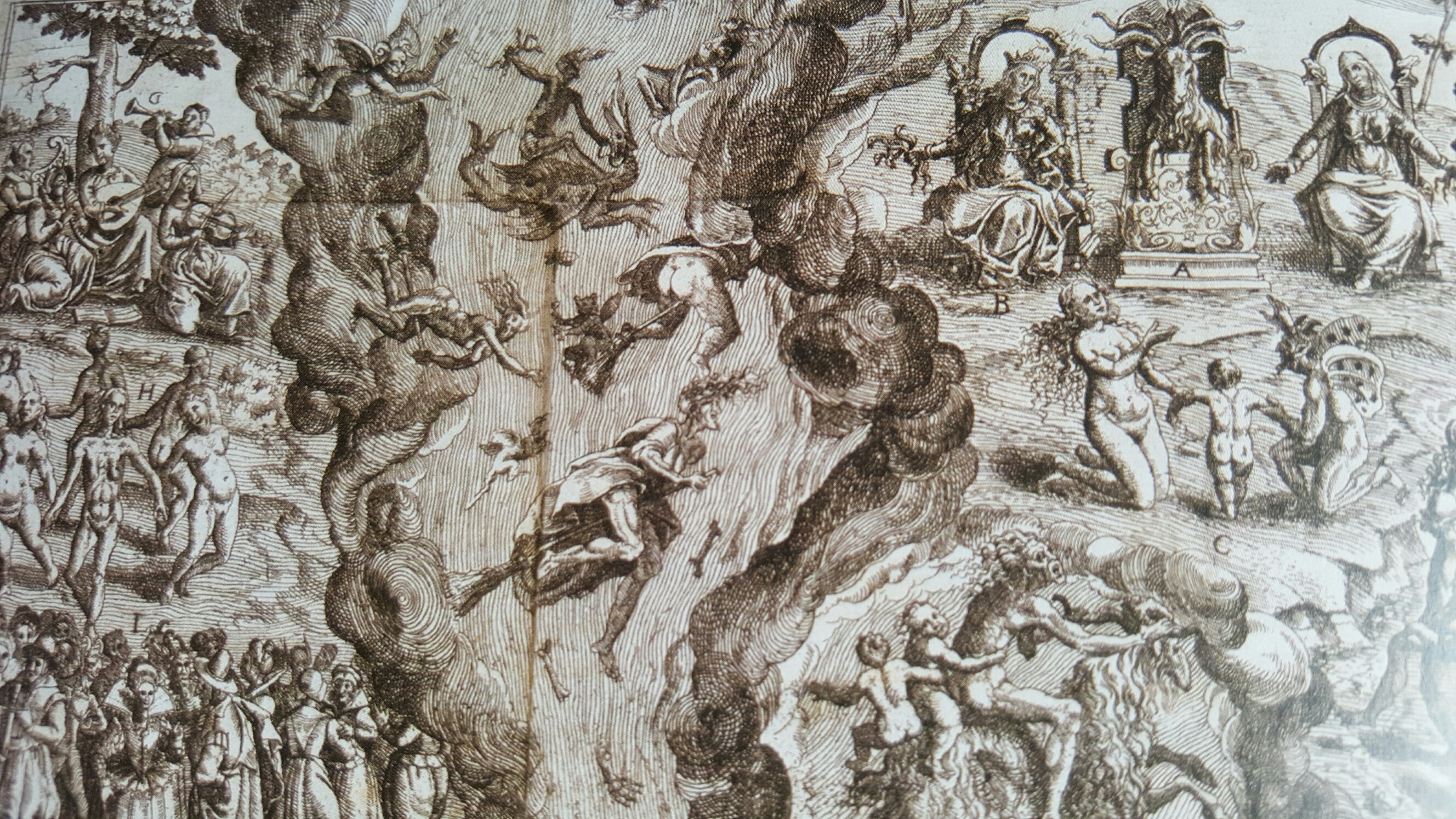
Today is Wapurgisnacht, a night of dark celebrations, also known as Hexennacht or witches night!! I am going to retweet some of our witchy posts from the blog but here are some pictures of the dark sabbath from the archive to get you in the mood. If you are going out tonight don’t forget your broomstick!!

20160430_161343_resized

Agostino Veneziano, ‘The Witches Rout'(c.1520) above

Albrecht Durer, ‘Witch Riding Backwards on a Goat’ (c.1500) below

20160430_161042_resized

Pierre de Lancre (1553-1651), detail from the witches sabbath, ‘The Inconstancy of Witches’ below

20160430_161631_resized


Posted in Fun stuff, OGOM News | Tagged | Leave a comment

Shakespeare, Hobgoblins and the Never Never

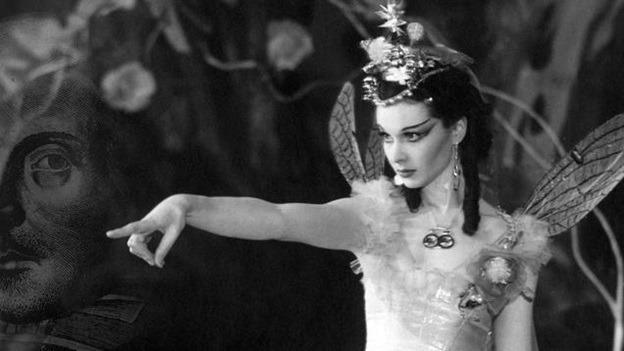
Following my post on Gothic Shakespeare I wanted to mention the British Library’s mesmerizing show Shakespeare in Ten Acts  There are over 200 rare and unique items on display including the only surviving play-script in Shakespeare’s handwriting. Visitors are encouraged to imagine how audiences reacted to ground-breaking moments, such as the first performance in a Shakespeare play by a female actor in 1660. Some surprisingly eccentric pieces of Shakespearean history are also on display for the first time and I delighted in the circus prop from Peter Brook’s radical 1970s A Midsummer Night’s Dream. I fell in love with the image of Vivien Leigh as Titania in the 1937 production at the Old Vic too.  Leigh was once described as ‘an exquisite piece of porcelain forever teetering on the edge of a shelf’ and she was born to play this part – one hundred per cent fey!

vivien_leigh_shakespeare

A Midsummer Night’s Dream is something of a theme for me just now. I have always been intrigued by the figure of Puck in folklore and more recently I have been doing some intertextual readings of Julia Kagawa’s The Iron King with my Generation Dead: YA and the Gothic students. In the novel the teenage protagonist Meghan is unaware that she is Oberon’s daughter and that her best friend Robbie is actually Robin Goodfellow or Puck, a very old faery, who has ballads, poems and stories written about him. In fact Puck, is a half domestic fairy of the hobgoblin type, the best known of all hobgoblins. Mentions of him in Elizabethan literature are common (hence Shakespeare uses him as a character in A Midsummer Night’s Dream). Interestingly, Kagawa’s Puck is something of a shapeshifter and Pooka, the Irish Puck, often takes animal form, especially that of a horse. According to sources in the Norton Shakespeare Puck inherited his tricksy nature from the fairies but had to be given fairy powers by his superhuman father (see Robin Goodfellow: his mad pranks and merry jests, 1628). Shakespeare’s Puck is mischievous and meddling he takes delight in the discord he has helped to sow among the mortal couples but he is not the originator of the discord, in fact he is the indispensable agent for setting things right. In this role he is both the mischief maker and match maker (Norton Shakespeare, p. 808). Hence he is the perfect vehicle for keeping Meghan away from Queen Mab’s son Ash, the Prince of the Winter Court, and causing havoc with the would-be lovers in the Never Never world of Julia Kagawa’s paranormal romance.

The Iron King draws on A Midsummer Night’s Dream in other ways too. Shakespeare’s play includes a subplot about a little changeling boy who is the subject of a quarrel between Oberon and Titania. This draws on the belief that fairies covet and steal human children. Some say golden haired beautiful children are thought to be desired by fairies to improve their stock! Sometimes humans are taken as servants or slaves (and midwives). In these stories the human child is substituted for a fairy changeling (unbeknownst to the parents). The changeling is knowing, strange and precocious, it does not behave like a child (See ‘Changelings’ in Katherine Briggs, The Fairies in Tradition and Literature, pp. 136-145).  In The Iron King, Meghan’s little brother Ethan is taken by fairies and a changeling is left in his place. If you read the novel alongside Shakespeare you will see that this story in the play is narrated by Puck:

PUCK  The King doth keep his revels here tonight.

Take heed the Queen come not within his sight,

For Oberon is passing fell and wroth

Because that she, as her attendant, hath

A lovely boy, stolen from an Indian King.

She never had so sweet a changeling;

And jealous Oberon would have the child

Knight of his train, to trace the forests wild.

But she perforce, withholds the loved boy,

Crowns him with flowers and makes him all her joy.

And now they never meet in grove or green,

By fountain clear, or spangled starlight sheen,

But they do square, that their elves for fear

Creep into acorn cups, and hide them there.

(A Midsummmer Nights Dream 2.1.18-31)

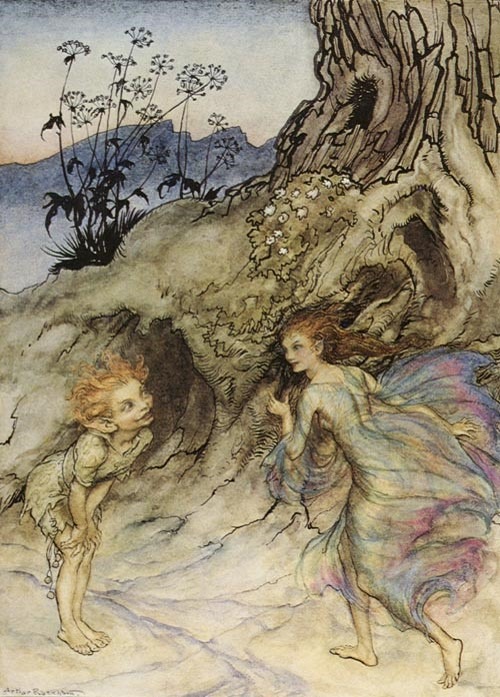
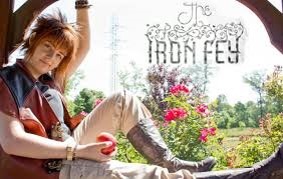
Seeing Vivien Leigh as Titania and reading these passages from Shakespeare makes me more alive to the sources of British folklore. British artists too excel in depicting the world of the fey and Arthur Rackham’s visualisation of Puck below looks to have had a strong influence on how film makers imagined Robbie in the trailer of The Iron King. Sadly, this project was never funded but maybe if Tinkerbelle waves her little wand and we all say we believe in hobgoblins it might actually be revived. Here’s hoping!

Picture1

robibePicture2

Posted in Critical thoughts, exhibitions, Generation Dead: YA Fiction and the Gothic news | Tagged , , , , | 3 Comments

OGOM website changes

I’ve made some changes–I hope for the better–to the OGOM website. I’m working towards a redesign that will make the site more attractive, more informative and interactively communal, and easier to use.

There is now a sitemap (with a link, just under the search box on the right sidebar) which display the structure of the site and all the pages that are available.

I’ve also added a Facebook feed, displaying the latest posts on our OGOM Facebook, in addition to the Twitter feed and below it on the right-hand side. We’re hoping this will draw the two overlapping sets of OGOM participants more closely together, attracting Facebook followers to the blog, where they can join in by commenting on blog entries and enjoy the more permanent resources that the website offers. In turn, from the blog you can follow the more ephemeral posts on Facebook and join in the more spontaneous discussions there.

The calendar–which highlights past posts and allows you to access them by date–has been moved to the foot of the page next to the word cloud.

More changes to come! Please do comment and make suggestions.

Posted in OGOM News | Tagged , , , | Leave a comment

Changes to Twitter – @OGOMProject

If you’re following either Sam, Kaja, or myself via our Twitter accounts, I’ve now set up a special OGOM one — @OGOMProject. Any future blog posts will send a Tweet via this account as well as our original ones.

To follow the OGOM Project Tweets, there is a new link for you to click on in the right-hand sidebar,

The idea is that there will be one Twitter handle specifically for OGOM updates whereas my own account (@BillBloodyHughe) might be full of things about eighteenth-century dialogues, cats, and what I’ve had to drink.

I want to arrange it so that OGOM Tweets will also be retweeted on our own accounts so that they’ll appear as usual. Just testing at the moment; there should be no reason for any of our Twitter followers to do anything, but you might want to follow @OGOMProject.

If this isn’t very clear (and I apologise) or if you have any suggestions, do please get in touch!

Posted in OGOM News | Tagged , , | Leave a comment

Free Course: Hans Christian Andersen’s Fairy Tales

I came across this free on-line course on Hans Christian Andersen’s Fairy Tales, presented by The Hans Christian Andersen Centre at the University of Southern Denmark in Odense, Denmark, via Future Learn (with whom I’m also doing a fascinating course on Reading in the Digital Age).

I’m enjoying it very much; I plan to report on it in a bit more detail for the blog but I thought I’d post something now so that anyone who is interested can get involved. The introductory week has finished (it’s a six-week course), but there’s still time to get involved (I cought up just today, in fact). The next few weeks promise detailed close readings of Anderesen’s tales and his dual strategy of writing for the childlike mind while appealing to adult readers and suggesting adult themes.

And I’ve already bumped into the OGOM Company of Wolves contributor, Charmaine Tanti! So come and join us; the online course is quite a fascinating communal experience, and new to me.

Posted in Courses | Tagged , , | Leave a comment

Gothic Shakespeare: Enter the Gothspeare!!

3f2622f9ddffaf917de90c8d36fd0317

The nation is celebrating Shakespeare this weekend and it is time to enter the gothspeare and rediscover some of our blog entries on gothic Shakespeare see for example:

Supernatural Shakespeares

Shakespeare’s Vampires

Shakespeare’s Irish Werewolves

Buffyology Lessons in the Academy: Buffy V Shakespeare

Shakespearean YA

Black and Deep Desires: Was the Dark Lady of Shakespeare’s Sonnets a Vampire?

OGOM’s very own Kaja Franck doubles as a guide at The Globe Theatre (I have heard she is excellent too) and it seems a good time to mention a book that is able to make connections between readings of Shakespeare and the rise of the Gothic. It is a little gem of a publication entitled Gothic Shakespeares edited by John Drakakis and Dale Townsend.  It is not a new book but one I find myself returning to again and again. Shakespeare is of course full of ghosts, witches (even wolves/werewolves) together with fear-inducing moments and cultural anxieties which many writers in the Gothic mode have since emulated, adapted and appropriated. My favourite essay is “As one dead’: Romeo and Juliet in the Twilight Zone’ by Glennis Byron which sets the scene perfectly for intertextual readings of paranormal romance. Shakespeare’s teenage lovers are referenced in many YA gothics such as Marion’s Warm Bodies where zombie R even re-enacts the balcony scene with his living girlfriend Julie. Other stand out essays in this volume include Dale Townsend on Hamlet’s ghost, Angela Wright on Radcliffe and Shakespeare, Sue Chaplin on Shakespeare and Walpole’s gothic, Peter Hutching on ‘Theatres of Blood’ Shakespeare and the horror film and Fred Botting and Scott Wilson on the ‘gothspeare’. This little book offers a provocative account of Gothic reformulations of Shakespeare, and Shakespeare’s significance to the Gothic. Once you are awakened to the gothspeare you will never ever think of the bard in the same way again!!


Posted in Critical thoughts, Publications, Reviews | Tagged , | Leave a comment

Review of ‘Reflected Shadows: Folklore and the Gothic’, 15th-17th April 2016

On 15th-17th April, I attended ‘Reflected Shadows: Folklore and the Gothic’ at Kingston University. This conference, dedicated as the name suggests to folklore and the Gothic, was jointly organised by The Folklore Society and Kingston University. The conference opened with The Folklore Society Presidential Address by James H. Grayson. The topic of this keynote was Korean folklore and the manner in which it had been preserved. I know little about this area but the ideas that came from this plenary reverberated through the conference more widely. Specifically the notions of why we return to folklore and its relationship to cultures perceived to be under threat reappeared throughout the other papers. I was particularly taken with how contemporary cultures adapt or appropriate folklore in order to create cultural narratives.

After tea, coffee and sugary snacks (academia continues to eschew dietary fads), I attended the ‘Folk Narrative and the Gothic’ panel. This was opened by Ruth Heholt whose paper considered the work of Catherine Crowe and her place within parapsychology and the collection of ghost stories. Though wary of some of Crowe’s methods and tendency to universalise the supernatural, Heholt’s argument placed Crowe as one of the earliest proponents for formal investigation of the supernatural. Moreover, Crowe was shown to be critical of the claims of objectivity made by science and consciously aware of the gendering of scientific studies versus oral traditions. Heholt reclaimed Crowe’s vision of folklore as the voice of the underprivileged.

Nadia Van der Westhuizen’s paper was on doppelgangers, mirrors and Tanith Lee’s White as Snow (2000). I have only read one of Lee’s novels which I thoroughly enjoyed so I entirely agree with Van der Westhuizen’s comment that she has been woefully ignored by the academy. The paper was an excellent exploration of the mirror trope in Lee’s novel and caught the deeply uncanny quality of the doppelganger. The next paper in this panel was on the subject of the sin eater. This figure, a person who is paid to eat the sins of a dead person by consuming food whilst sat next to the corpse, has been associated with Welsh folklore but there is limited evidence for its existence. Instead, it appears to have been read onto Welsh cultural practices and is an example of how folklore can be created through the misappropriation of ‘other’ cultures. Given by Juliette Wood, this paper encapsulated some of the recurring themes throughout the conference.

The next day started with a panel on ‘Vampires, Mirrors and The Witch of Prague’ which featured Martina Bartlett on the subject of Polidori’s The Vampyre (1819), Tina Rath on theatrical adaptations of Polidori’s vampiric novella and John Callow talking about Francis Marion Crawford’s The Witch of Prague (1885). What was noticeable in these panels was how the speakers sought to reclaim authors who have not become part of canon. As with many Gothic writers, they had been ignored for more ‘respectable’ writers. This is certainly something that I have found difficult to defend as someone who studies werewolves – especially werewolves in contemporary Gothic/ horror texts. Therefore I was pleased to note that Rath commented that ever since Lord Ruthven entered the theatre, he had been happily ‘sparkling’ in the moonlight. Fey vampires are not simply to be denigrated.

The third session that I attended was dedicated to Folk Horror and folklore. Unfortunately I have not seen, or read, a great deal of Folk Horror but this panel certainly whet my appetite. Gunnella Thorgeirsdottir spoke about the Icelandic tradition of the Yule Lads and their representation in recent horror films. The Yule Lads are traditionally the children of trolls and throughout time they have moved from malign and threatening figures to becoming tricksters. The next paper was dedicated to Hammer’s use of Folk Horror in The Witches (1966). Paul Cowdell explained how Folk Horror requires a sense of place and the action unfolds in a fully realised space, once which is often influenced by real-life historical occurrences. Folk Horror narratives are often based on the belief put forward notably by James Frazer in The Golden Bough (1890) that the primitive has survived in the modern world. Whilst the universalisation of folklore has been critiqued, it has influenced the modern religions of Wicca and Paganism which pertain to keeping alive ancient traditions. Cowdell showed how The Witches critiques and subverts this idea whilst apparently conforming to this model of Folk Horror.

I found this idea particularly interesting as it shows the overlap between schools of thought in literary studies (which I am most familiar with) and narratives themselves. One of my contentions in my thesis has been that the universalisation of the werewolf as an ancient figure that appears in every culture has often mistaken fictional narrative with historical fact. Whilst Victorian werewolves may appear to be based on folklore, it is important to ascertain what the sources of this folklore are. Often they are misreading of cultural practices or simply come from unreliable sources. Whilst Gothic writers may strive to create authenticity within their texts it is important not to mistake this for real-world verisimilitude. Mikel Koven’s paper expanding this idea further as he was speaking about the role of the antiquarian in Folk Horror. The antiquarian acts as an authority figure within Folk Horror narratives in order to authenticate the subject matter. Perhaps more confusingly as Folk Horror is so directly tied to history and geography, it can be hard to distinguish between fact and fiction. Indeed one of the aims of Folk Horror, and often Gothic texts, is to convince the reader that what is happening in the narrative is fact.

The idea of the origins of folklore, the Gothic and monsters was taken up again in the plenary session by Professor Fred Botting. His lecture was on the history of zombies and folklore. At the opening he acknowledged that he had wanted to distance himself on ‘discovering’ the origins of the zombie. In part this was due to the assumptions that are made both about folklore and the Gothic. Folklore is considered to be an oral tradition that predates the Enlightenment whereas the Gothic is based around the ‘authentic’ written text and is negatively associated with the Enlightenment. Botting’s paper very subtly attempted to critique the unquestioning assumption that zombies are creatures of real Haitian folklore. He drew attention to the fact that the history of the zombie is itself a narrative. As a narrative it can be used to authenticate zombies but it also potentially appropriates and misinterprets non-Western beliefs in the same way as the film White Zombies (1932) bastardised the notion of voodoo. To read the zombie only as a metaphor for slavery in Western texts can diminish the horror of slavery itself and glosses over the subtleties of Haitian folklore in speaking back and revolting against the oppressive regime.

I was speaking after lunch on the subject of werewolves, folklore and pulp fiction. On my panel I was joined by Catherine Pugh who spoke on the subject of black dogs. I was particularly enamoured by her talk because, being a fellow yellow-belly, she mentioned the preponderance of black dogs in Lincolnshire. She entwined themes of mental illness, folklore and human/animal relationships to give a multifocal view of the black dog. The final panel of the day was on the Devil and the Gothic. The first paper given by Diana Coles considered representations of the Devil in folk tales especially in the Middle Ages. The figure of the Devil is entwined with folk representations which have filled out the sparse comments about this entity in the Bible. What became clear is that the Devil always has hooves and is fond of entrapping people by appearing as a beautiful young man. Women are apparently more successful at outwitting the Devil. The next paper by Deidre Nuttall considered Devil Lore in the Republic of Ireland. She looked at stories about the appearance of the Devil and how these have been associated with Protestants as well as the effects that this has had into the twentieth century.

The final day started with a panel that was designed for me: ‘Teen Gothic Literature and Film’. This panel featured Carys Crossen talking about the importance of place and folklore in Alan Garner’s novels (which I have not read but have just ordered into my local library); Auba Llompart Pons on Chris Riddell’s Goth Girl series; and Kristine Moruzi and Michelle Smith talking about vampires and witches in teen school fiction. All three papers were excellent and led to very interesting discussions about how we define a text as Gothic (and not just containing Gothic furnishings), the importance of parody in Gothic literature, and the heteronormative quality of YA Gothic. This was certainly the panel were I felt as though I had interesting ideas to add to the discussion. (And it’s given me plenty to discuss with Sam in regards to her Generation Dead module).

The conference was rounded up with a final panel on the European Gothic. Opening the panel was Jen Baker talking about the representation of dead children in Victorian literature in comparison to their folkloric counterparts. I had previously discussed the importance or lack thereof of finding origin stories for monsters and it was clear that Baker had been very precise in her connection between the Gothic and folklore – only using that which was most pertinent or could be clearly linked to the literary incarnations of dead children. Following Baker’s paper there were two slightly frustrating talks: frustrating because they were talking about very interesting texts that had not been translated into English yet. Firstly Camilla Schroeder talked about the use of E.T.A Hoffman’s The Sandman (1816) in a contemporary German novel, Die Geisterseher (1995) by Kai Meyer. This particular example of Meyer’s work features the Sandman and the Brothers Grimm and has not been translated. Rosie Taylor’s paper was on Scandinavian Gothic and in particular Sweden’s first work of vampire fiction, Victor Rydberg’s Vampyren (1848). Rydberg’s novel is an adaptation of Polidori’s The Vampyre which reflects Swedish fears about Scandinavian national identity. Again, this novel has not been translated. I left this panel a little frustrated but also considering taking my research post-PhD in the direction of Scandinavian Gothic.

After lunch and the closing remarks, a group of us made our way to Strawberry Hill, the home and Gothic confection of Horace Walpole, author of The Castle of Otranto (1764) and progenitor of the Gothic in English literature. It seemed fitting that we should make use of the proximity of the house at this conference. I have visited before but it is worth at least two visits. Indeed, since I last saw the house, a great deal more work had been done. The highlight was discovering a rail of costumes which, excited academics that we were, we immediately donned and began posturing. (There are photos – though hopefully they won’t see the light of day). I returned home exhausted but inspired having thoroughly enjoyed myself. The other delegates were gracious towards those who were not experts in folklore (I look to myself for this) and very engaging and encouraging. What was particularly noticeable at this conference was how quickly the questions became discussions, and very fruitful discussions indeed. There were no awkward silences and those questioning the panellists were polite and constructive. Moreover, the comments about historicising folklore and questioning its validity reverberated with my own ideas about faux-folklore in werewolf texts.  I look forward to the next conference organised by The Folklore Society and hope to find a reason why I can attend.
Posted in Reviews | Tagged , , , | 1 Comment

Supernatural Shakespeare

Shakespeare’s 400th Deathday* is fast approaching and there are plenty of activities taking place to commemorate this. One article which has caught my eye is called ‘”Supp’d full with horrors”: 400 years of Shakespeare’s supernaturalism’. It’s an excellent overview of the impact that Shakespeare has had on the Gothic and horror in general and brings together both parts of my professional life as tour guide at Shakespeare’s Globe and Gothicist.

*Term stolen from Harry Potter

Posted in Fun stuff, Resources | Tagged , , , , | Leave a comment

OGOM developments April 2016

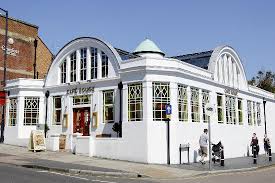
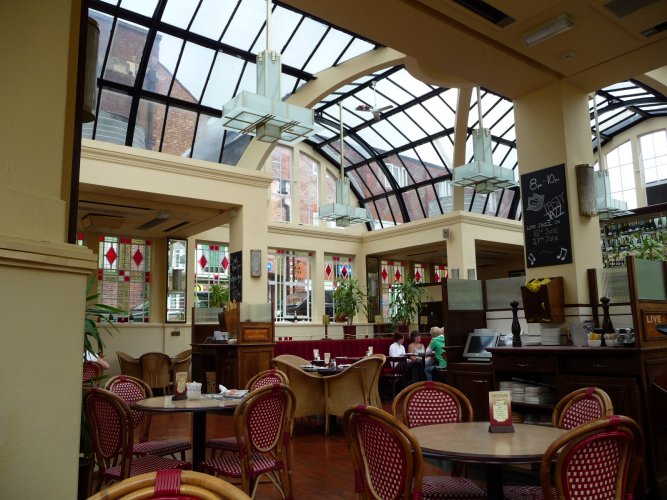
Sam and I met up with Kaja yesterday in Café Rouge, St Albans to plan various developments for the OGOM Project. There was much enthusiasm and some exciting ideas will be coming to fruition over the next few months.

First of all, we discussed changes to the OGOM website; we’re hoping to revamp (I know, I’ve used that before) the appearance and add a portal-style front page and possibly a discussion board.

We then discussed the book and journal from the Company of Wolves conference; there are no definite dates yet, but we’ve made some decisions on how the publicatiions will be themed and have worked on the book proposal for Manchester University Press. If you have submitted one of the many excellent articles, we’ll be in touch soon.

Next on the agenda was the terrific-looking Books of Blood event–an extravaganza of visual art, video, performance art, poetry, and related events, which will tour as an exhibition.

Finally, we came up with some brilliant ideas for OGOM IV–the next conference, which will take place in 2017 and has some magical, enchanting themes involving the Dark Arts, witches, and Faery. It’s still a bit of a secret at the moment–keep your eyes open for future posts!

I forgot to take any photos, which is a shame as they would have conveyed our enthusiasm; I have a picture of the very beautiful buiding, however.

CafeRougecaferouge1

Posted in OGOM News, OGOM: The Company of Wolves | Tagged , , | Leave a comment