Events and CFPs: Vampires, pedagogy, Candyman, folk horror, Gothic adaptation, Gothic women

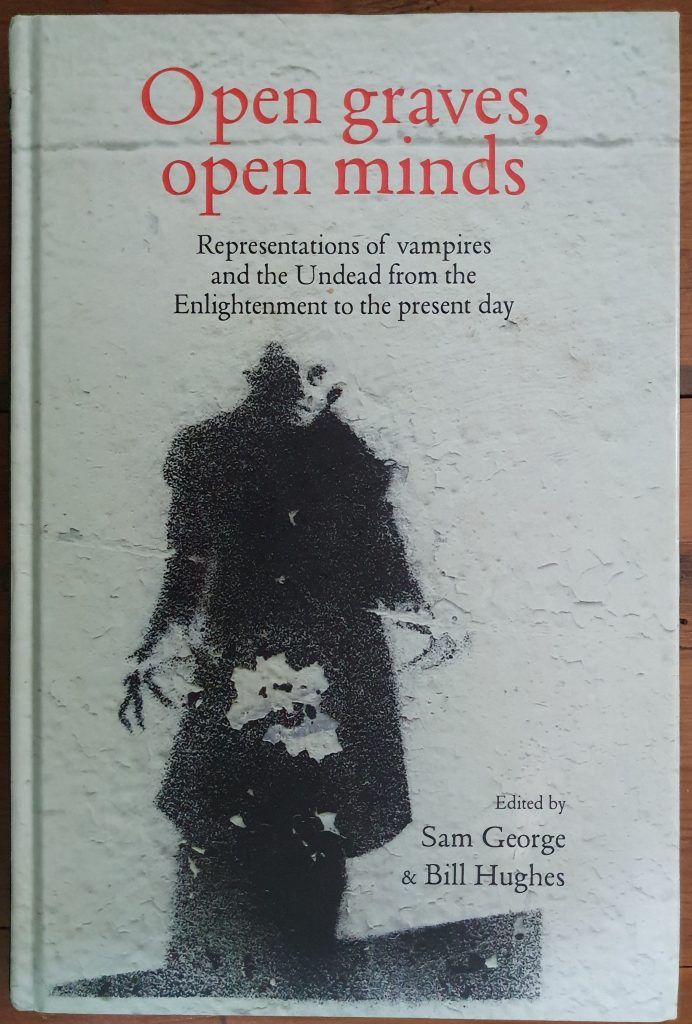
Quite a diverse selection here of CFPs, forthcoming events, and resources; OGOM’s Dr Sam George and Dr Bill Hughes discussing vampiric matters among them!

1. Polidor’s The Vampyre, In Our Time, Radio 4, 9.00/21.30, 7 April 2022

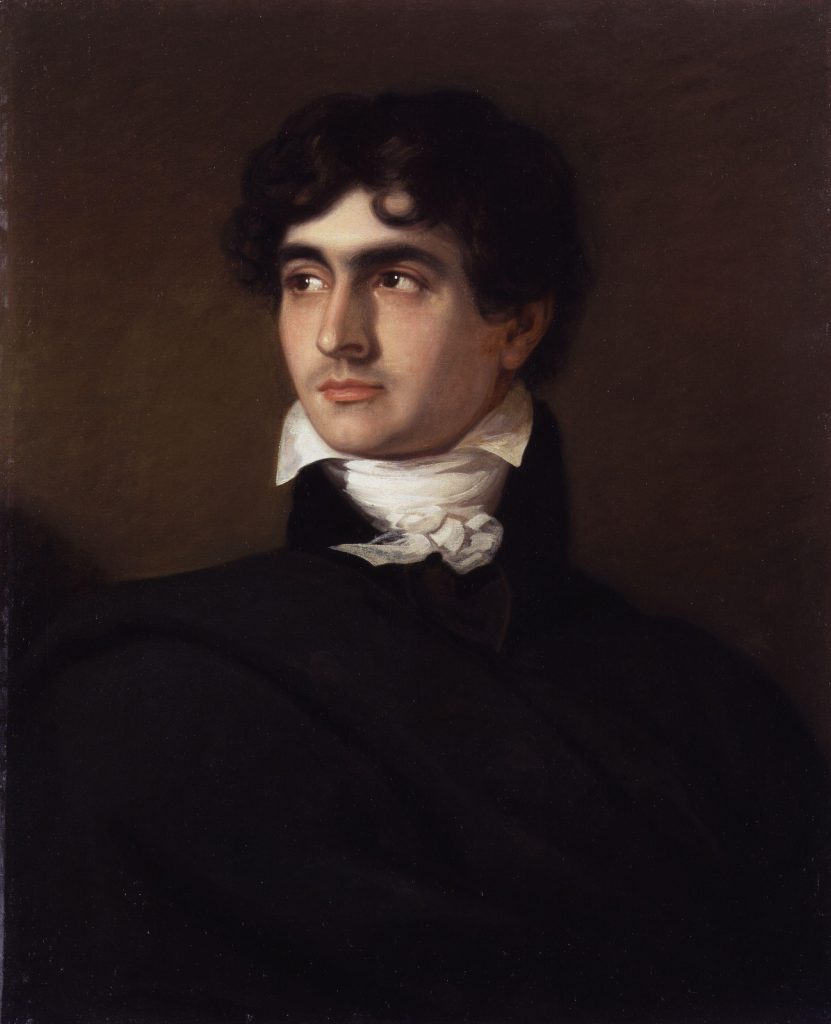
Melvyn Bragg and guests [OGOM’s Dr Sam George, Prof. Nick Groom, Prof. Martyn Rady] discuss the influential novella of John Polidori (1795-1821) published in 1819 and attributed first to Lord Byron (1788-1824) who had started a version of it in 1816 at the Villa Diodati in the Year Without A Summer.

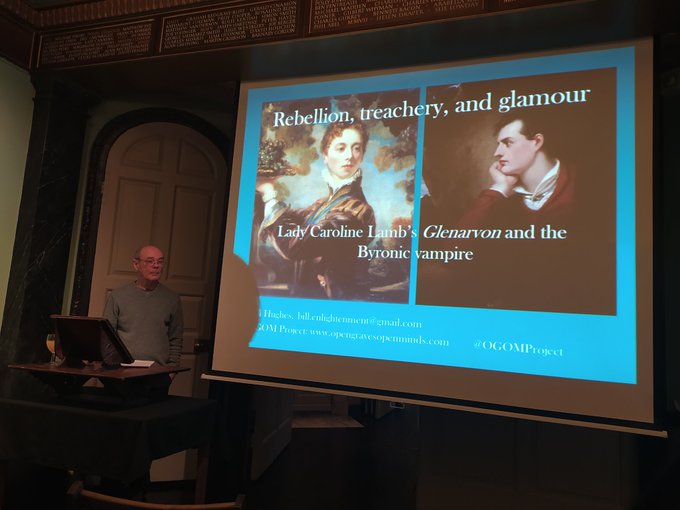
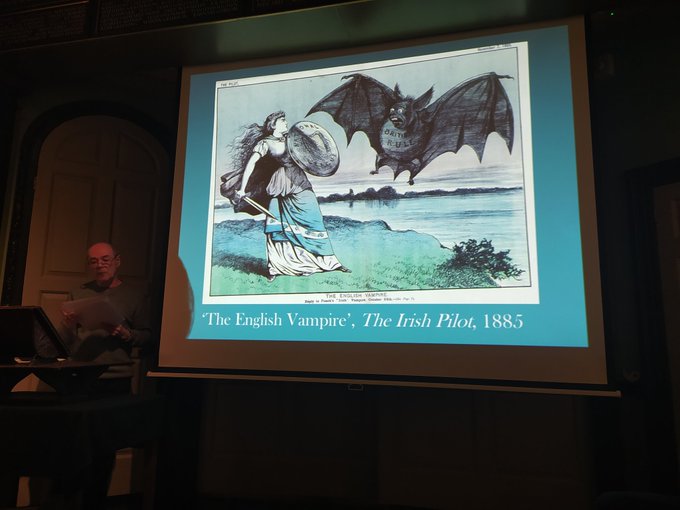
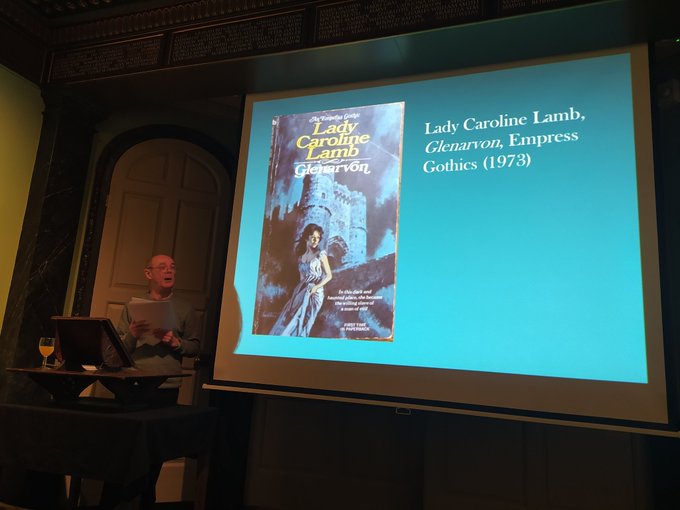
2. Rebellion, treachery, and glamour: Lady Caroline Lamb’s Glenarvon and the Byronic vampire, talk, 6.30-8.00 pm, 20 April 2022, Art Workers Guild, London

Dr Bill Hughes is at The Byron Society to give a talk that develops the ideas he first presented at OGOM’s 2019 symposium, ‘Some curious disquiet’: Polidori, the Byronic vampire, and its progeny (this will also be expanded upon in our forthcoming book The Legacy of John Polidori: The Romantic Vampyre and its Progeny (2022)). He will be tracing the progress of the Romantic vampire as political rebel through Lady Caroline Lamb’s Gothic novel Glenarvon, John Polidori’s The Vampyre, and their descendants in Gothic Romance and contemporary paranormal romance.

3. CFP: Recovering the Vampire: Degeneration to Regeneration, conference, 4-5 November 2022, Edge Hill University. Deadline: 17 June 2022

How can vampires help us heal? In the 125th anniversary year of Bram Stoker’s Dracula, this interdisciplinary project examines the continuing history of the vampire from the 19th century to the present, exploring how the vampire can function as a cultural figure of recovery, community, and regeneration.

4. CFP: Gothic Pedagogies: teaching, learning, and the literatures of terror, conference, 14 July 2022, University of Birmingham. Deadline: 30th April 2022

It has been a decade and a half since the last period of sustained work exploring the ways in which gothic literature is, and might be, taught in the classroom. This symposium seeks to renew this important critical discussion. It invites contributions that explore the richness, value, and complexities of pedagogy that situates the careful scrutiny of gothic literature at its heart.

5. CFP: Candyman and the Whole Damn Swarm, hybrid conference, 7-9 October 2022, University of Sheffield/ Sheffield Hallam University. Deadline: 8 July 2022

Candyman and the Whole Damn Swarm is a hybrid conference celebrating the thirtieth anniversary of Candyman (1992). The conference – a collaboration between the Centre for the History of the Gothic at the University of Sheffield, Fear 2000 at Sheffield Hallam University, and the University of California, Riverside – will take place on  Friday 7 – Sunday 9 October 2022.

6. CFP: Folk Horror: Special Issue of Horror Studies, articles. Deadline: 3 October 2022

This special issue attempts to systematize and formalize the study of folk horror, a subgenre whose meteoric rise (or return?) to popularity in the past ten years or so raises critical questions relating to rurality, “traditional” cultures, nationalism, and place, among others. 

7. CFP: Special Issue of Literature: ‘Recycling the Gothic: Adaptations in the Romantic-Era Marketplace’, articles. Deadline: 5 august 2022

This Special Issue seeks to examine adaptations of the Gothic in all forms, from the novel to the short story, chapbooks and serialized publications. It will explore the recycling of  essential elements of the Gothic as a sign of activity and innovation rather than monotony and stagnation. The recycling of the Gothic, whether specific motifs and characterizations or stories themselves, reveals continual interest and engagement between the author and the reader. This distinction is important not only because it allows recycling to be seen as crucial to the growth and sustainability of the Gothic, but also because it allows the Gothic tradition to continue to be viewed in the larger context of evolving discourses.

8. Event: Gothic Women Today: A Public Humanities Panel for Early Career Researchers, 17:00BST / 9:00PST, 14 April 2022

Do you want to share your knowledge of Gothic women writers with the world? Do you analyze the latest Gothic films according to 18C genre conventions? Do you want to meet like-minded fans and scholars of women’s writing beyond your university? Then join our discussion of how we can engage with the field of Public Humanities in this panel for early career (and beyond!) researchers. Hear Dr. Kim Simpson (Chawton House), Dr. Corin Throsby (Cambridge), Dr. Courtney Floyd and Dr. Eleanor Dumbill (Victorian Scribblers), and Dr. Sarah Faulkner (U of Washington) speak about their work bringing Gothic women writers alive and to the people.

Posted in Call for Articles, CFP (Conferences), Events | Tagged , , , , , , , , , , , , , , | Leave a comment

Goblin mode: the trend’s mythical origins, and why we should all go ‘vampire mode’ instead

Goblin mode

Arthur Rackham’s illustration of the Victorian poem Goblin Market. British Library

Sam George, University of Hertfordshire

“Goblin mode” is taking the current pandemic-ridden world by storm. This state of being is defined by behaviours that feel reminiscent of deep lockdown days – never getting out of bed, never changing into real clothes, grazing from tins or packets instead of cooking, binge watching television and doom-scrolling.

Goblin mode appears to be a reaction to the early pandemic emphasis on home and personal improvement – a “devil may care” attitude in the face of hyper-curated social media content. But this behaviour does not quite align with the goblins of folklore, who take a more playful and mischievous approach to life.

British writer and folklorist Katharine Briggs’s Dictionary of Fairies informs us that goblin is a “general name for evil and malicious spirits, usually small and grotesque in appearance”. Interestingly, the word goblin evolved to refer to a subterranean species – not far off from those who languish indoors during lockdown. But that’s where the similarities end.

Goblins, Brian Froud

There are many variants of goblin, with different characteristics, from the Highland fuath to the English goblin and the French gobelin. Today, the term goblin encompasses any fairy with an injurious intent, such as Knockers, Phookas, Spriggans, Trolls or Trows.

Goblin behaviour can range from mild pranks to acts of outright terror. A goblin is seldom welcomed, even by its own kind. Goblins are certainly a menace in the home. According to mythology expert Theresa Bane, “a house goblin, will work against the family living there, making their life more difficult by banging on pots and pans, knocking on doors and walls and rearranging items in the house”.

In British and German lore, they can shapeshift, and will typically take the form of whatever animal best reflects their beastlike nature. This aspect of goblin lore is represented in Christina Rossetti’s 1862 poem Goblin Market:

One had a cat’s face, one whisked a tail, one tramped at a rat’s pace, one crawled like a snail. One like a wombat prowled obtuse and furry, one like a ratel tumbled hurry skurry.

Goblin Market, Arthur Rackham

This Victorian poem is an early example of goblins behaving badly. They stand in for predatory corrupting males, using forbidden faerie fruits to lure female victims to their doom. Most goblins depicted in literature and folklore are active, playing pranks and generally causing trouble for the humans around them. They do not sit passively at home, surrounded by creature comforts, lazing the day away.

The “goblin mode” trend might even be seen to malign certain goblins. Hobgoblins, for example, are helpful and well-disposed towards humankind, if sometimes mischievous and tricksy. Puck in Shakespeare’s A Midsummer Night’s Dream is one such character. Like all hobgoblins, he’s a shapeshifter, and also performs labours for humans, much like the brownie, a house spirit known for its helpfulness.

Puck, Arthur Rackham

Vampire mode

A closer look at the goblins of folklore tells us that goblin mode might be somewhat of a misnomer. There is, however, another mythical creature whose characteristics are more fitting for this time period – the vampire.

Vampires have long been associated with disease and contagion. This characterisation draws in part from Dracula, but it also feeds on wider fears and collective obsessions around networks of contagion and contamination.

The 1922 film Nosferatu came out shortly after the Spanish influenza pandemic of 1918-19, which killed more people worldwide than the first world war. The word Nosferatu is similar to the Greek word nosforos, meaning “plague bearer”. He even looks like a plague rat, with fangs set at the front of his mouth like the vermin he brings in his wake.

But over the last 200 years, Vampires in popular culture have evolved from plague-ridden creatures like Nosferatu to sparkling, aspirational sex symbols. Instead of holing up and resigning to a fate forever in goblin mode, we should follow the example set by vampires and aim to emerge from the pandemic as better versions of ourselves.

The Cullen family from the book and movie franchise Twilight is the best representation of this dramatic shift. They are attractive, cool, youthful and partake in normal human social behaviour like going to school and dating – a far cry from plague-bearing, sickly Nosferatu. Repulsion cedes to attraction as horror gives way to romance. Goblins by comparison, are unlikely romantic leads, they’re not sexy – or aspirational.

Modern vampires also have an association with youthful culture that could be refreshing after two years of pandemic-induced hibernation. The film Lost Boys, in which Kiefer Sutherland’s undead crew inhabits a fashionably grungy underground domain, was released with the strapline “Sleep all day. Party all night. Never grow old. Never die”. This would be an appropriate post-lockdown motto. It’s time we stopped languishing like goblins and started flourishing as newly born vampires.

Sam George, Associate Professor of Research, University of Hertfordshire

This article is republished from The Conversation under a Creative Commons license. Read the original article.

Posted in Critical thoughts | Tagged , , , , , , , | Leave a comment

New links and CFP: Anne Rice, African myth, fantasy journal, Daphne Du Maurier

We’ve added some new links to the OGOM website, expanding its potential as a research tool for students, early career researchers, and established scholars.

1. Sam George on Anne Rice

OGOM’s Dr Sam George gave a talk recently on BBC Radio 4’s Last Word, following the sad death of Anne Rice, author of Interview With the Vampire and the subsequent Vampire Chronicles novels. There is now a link to that talk from our Resources page for Online talks and interviews.

2. Mythological Africans

Those of you who follow Helen Nde’s brilliant @MythicAfricans posts on Twitter will be pleased to know she has set up the Mythological Africans website as an excellent resource for the many divers mythological and folkloric traditions in Africa. We’ve set up a Related Link to this on the right-hand column of our Blog and Resources pages so that you can conveniently access it among the other useful links we have there

3. Mapping the Impossible: Journal of Fantasy Research

A new online journal has just emerged: Mapping the Impossible: Journal of Fantasy Research, affiliated to the University of Glasgow’s Centre for Fantasy and the Fantastic. It is an open-access student journal publishing peer-reviewed research into fantasy and the fantastic. We’ve added a link to our list of relevant journals (again, on the right-hand column of the Blog and Resources pages) and we wish them best of luck in this new venture.

4. CFP: Reimagining Rebecca: a symposium on du Maurier’s novel & its legacy. University of Sussex, 27 May 2022. Deadline: 7 March 2022

“I am glad it cannot happen twice, the fever of first love,” writes Daphne du Maurier in her 1938 domestic Gothic novel Rebecca. But to look at Rebecca’s legacy is to see the fever of love for the story itself happen over and over again. Its influences on the 20th century domestic gothic and 21st century domestic noir literary genres have been well documented [. . .] This symposium will be held on Friday 27th May at Sussex University, aiming to explore these questions and beyond through examinations of du Maurier’s novel and its legacy: its feverish first love, its second wives, and its haunting, ghostly imprint on popular culture.

Posted in CFP (Conferences), Resources | Tagged , , , , , , | Leave a comment

Nosferatu at 100: The Vampire as Contagion and Monstrous Outsider

Online Event: Saturday, 12 March 2022, 10.00 – 14.35 GMT

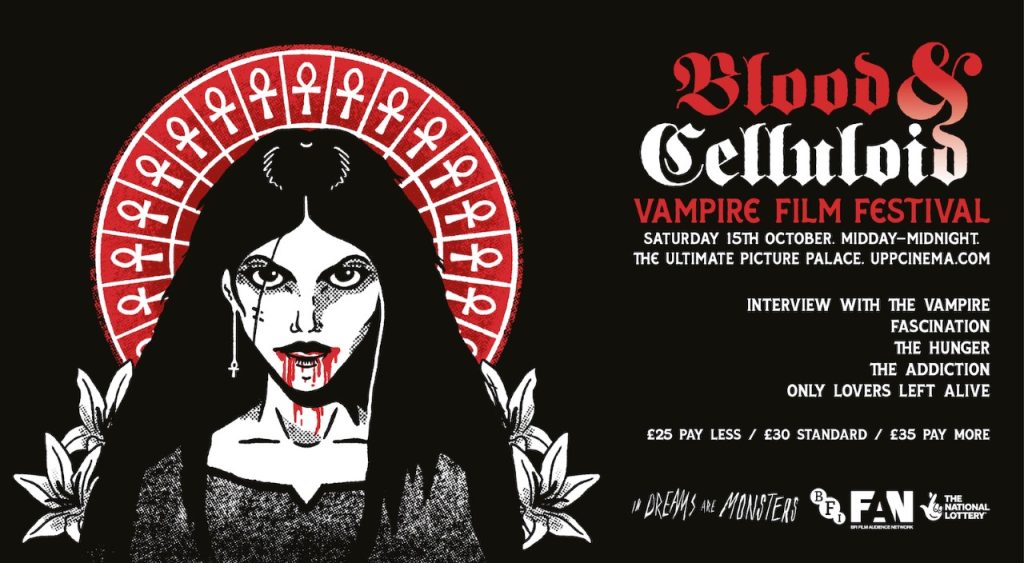
2022 marks the 100th anniversary of the release of F. W. Murnau’s classic vampire film, NosferatuA Symphony of Horror. The Open Graves, Open Minds Project are hosting an online event to celebrate the 100th anniversary of this film, which premiered in March 1922. We will have talks by the leading scholars of vampire and Gothic film, Prof. Stacey Abbott, Dr Xavier Aldana Reyes, Dr Sam George, and the novelist Marcus Sedgwick, with concluding addresses by Prof. Ken Gelder and Dr Bill Hughes. There will be opportunities for all attendees to ask questions of the panel and join in discussion. There will also be a vampiric flash fiction writing competition for those who are feeling creative.

Full details and Schedule here.

Delegates will receive a Centenary Souvenir PDF Progamme and Poster designed specially for the event a few days prior to the 12th March!!!

Fees:

£8.00 Full rate

£5.00 Concessionary (for students and unwaged)

Posted in Events | Tagged , , , , , , | 2 Comments

CFP and Events: Lady Caroline Lamb, Byron, and rebellion

A few related items here, centering on Byron and rebellion and including the Byronic vampire.

Lady Caroline Lamb as page boy by Thomas Phillips

1. Rebellion, treachery, and glamour: Lady Caroline Lamb’s Glenarvon and the Byronic vampire, The Byron Society, Art Workers Guild, London, 20 April 2022, 6.30-8.00 pm

I have generously been invited by The Byron Society to give a talk that develops the ideas I first presented at OGOM’s 2019 symposium, ‘Some curious disquiet’: Polidori, the Byronic vampire, and its progeny (this will also be expanded upon in our forthcoming book The Legacy of John Polidori: The Romantic Vampyre and its Progeny (2022)). I’ll be tracing the progress of the Romantic vampire as political rebel through Lady Caroline Lamb’s Gothic novel Glenarvon, John Polidori’s The Vampyre, and their descendants in Gothic Romance and contemporary paranormal romance.

2. CFP: Byronic Modes of Rebellion

Continuing the theme of Byronic rebellion, ‘The Byron Society is pleased to announce that it is sponsoring a panel at the 2022 BARS/NASSR annual conference on the theme Byronic Modes of Rebellion, and providing bursaries of £250.00 each for three speakers.’

3. Byron Society events

Click on the above for a range of other exciting events related to Byron.

Posted in CFP (Conferences), Events | Tagged , , , , , , , , , | Leave a comment

Merry Christmas 2021

Merry Christmas and Happy Holidays to you all!

We live in Gothic times but the principle of hope will emerge from the darkness.

The Addams Family Christmas
Posted in Fun stuff | Tagged , , , , | Leave a comment

RIP Anne Rice (1941–2021)

I’ve left this a bit late, I know, but I want to express our mourning over Anne Rice, who died 11 December 2021. Rice’s novel Interview with the Vampire (1976) is, as I’m sure you’ll know, a pivotal moment in vampire fiction. Along with Neil Jordan’s 1994 adaptation of the novel into film, Interview is one of the key texts in the establishment of the humanised vampire and, notably, the vampire as lover paving the way for the genre of paranormal romance that we at OGOM have paid special attention to since the beginning of the Project. That encounter between the modes of horror and romance is central to our revisionist approach to Gothic studies. Rice’s vampires are not only lovers but polymorphously perversely so, challenging social constraints and emancipating the realm of diversity from its relegation to Otherness.

More vampire novels followed, beginning with The Vampire Lestat (1985) and eventually forming the Vampire Chronicles series. She also radically reformed other conventional monsters, such as witches (Lives of the Mayfair Witches series), mummies (Ramses the Damned series), and werewolves (in the Wolf Gift Chronicles). She also wrote erotic novels, in particular reworking the ‘Sleeping Beauty’ tale into the Sleeping Beauty Quartet under the penname of A. N. Roquelaure (the transformation of fairy tale is another area of research that OGOM are involved in).

Interview with the Vampire (1994) Directed by Neil Jordan Shown: Kirsten Dunst, Brad Pitt, Tom Cruise

The humanised vampirism that Rice helped inaugurate is a central theme of Dr Sam George’s pioneering MA module, Reading the Vampire; she has taught Interview with the Vampire on that course for over ten years. You can hear Sam celebrating the life and work of Anne Rice on BBC Radio 4’s Last Word here.

Posted in OGOM Research | Tagged , , , | Leave a comment

CFPs and Events: Crones, vampires, Alice, Blake, Shelley, Burns Night

An assortment of conference CFPs and calls for articles, plus online events.

1. CFP: Crones, Crime, and the Gothic, In-person Conference, Falmouth University UK, 10-11 June 2022. Deadline: 1 April 2022.

Older women have traditionally been portrayed negatively in folklore, fairy tales, literature and film, for example. Images of witches, evil stepmothers, shrivelled, bitter ‘spinsters’, and vindictive, bullying women abusing positions of power are rife in Western culture. Yet, perhaps things are changing. A new emphasis on the need to discuss and understand the menopause seems to be at the heart of this. This conference examines historical representations of the ‘crone’ in relation to crime and Gothic narratives. But it also looks ahead and globally to examine other types of discourses and representations. Bringing older women to the fore of the discussion, this conference aims to go global and really shake up the way that the ‘crone’ is thought about and symbolized.

2. CFP: ‘Vampires Through the Ages’, The 6th Vampire Academic Conference, The International Vampire Film and Arts Festival and University of South Wales, Insole Court Mansion, Cardiff, Wales, 15-17 June 2022. Deadline: 28 February 2022.

This major interdisciplinary international conference aims to examine and expand debates around vampires in all their many aspects. We therefore invite researchers from a range of academic backgrounds to re/consider vampires as a phenomenon that reaches across multiple sites of production and consumption, from literature and film to theatre and games to music and fashion and beyond. What accounts for this Gothic character’s undying popular appeal, even in today’s postmodern, digital, commercialized world?  How does vampirism circulate within and comment upon mass culture?  

3. Call for Abstracts: Through the Looking-Glass: A Companion. Deadline for Abstracts: 15 January 2022.

Following the Through the Looking Glass Sesquicentenary Conference, we invite submissions for a Companion to Through the Looking-Glass of short pieces (4000 words), centring around Lewis Carroll’s Through the Looking-Glass, its cultural and adaptation history, and its ongoing relevance until today.

4. Global Blake: An International Online Conference, University of Lincoln & Bishop Grosseteste University, on line, 11-13 January 2022.

Today, Blake’s global presence cannot be underestimated. The aim of this project is to showcase the wide variety of global ‘Blakes’ (after Morris Eaves’s “On Blakes We Want and Blakes We Don’t”, 1995, and Mike Goode’s “Blakespotting”, 2006) and to provide an overview of the appropriations and rewritings as well as examples, that fall into three categories: art, literature and music. It will examine how Blake’s global audiences have responded to his poetry and art as well as explore what these specific, non-British responses and cultural and social legacies can bring to the study of Blake. 

5. 2022 Shelley Conference online events

As we approach the 2022 Shelley Conference, we invite Shelley scholars, students, and admirers from around the world to take part in #Shelley200. Join us for a series of free online events celebrating Percy Bysshe Shelley’s life, works, and legacy. Book tickets for live events, and view the recordings of past events.

6. BARS Digital Events: Digital Burns Night II, 27 January 2022, 17:00 – 18:30 GMT

After the success of the first Digital Burns Night Supper, this event is returning in 2022. Our virtual Burns Night will follow the order of toasts and entertainments at a traditional Burns Supper to structure an academic event celebrating Burns, Scotland, and Romanticism. We invite the audience to come prepared with examples of poetry to read aloud or perform.

Our participants include Andrew McInnes (Edge Hill University), Jennifer Orr (Newcastle University), Gerard McKeever (University of Stirling), Rita Dashwood (Edge Hill University), Zayneb Allak (Edge Hill University), Ainsley McIntosh (Independent scholar), and Angela Wright (University of Sheffield).

Posted in Call for Articles, CFP (Conferences), Events | Tagged , , , , , , , , , , , | Leave a comment

Call for articles: Murder she wrote, Supernatural Cities, 1980s horror

Some calls for articles in journals and edited collections. Be warned that the deadline for the Murder, She Wrote collection is very soon–15 December 2021!

1. Call for chapters: Edited collection – ‘Something very sinister is going on here’: The cultural value and afterlife of Murder, She Wrote. Deadline: 15 December 2021

Call for critical essays to be included in a collection on Murder, She Wrote, which we are proposing for inclusion in Routledge’s Advances in Popular Culture series.

This edited collection will offer a critical overview of the series and its cultural impact, including perspectives on paratextual elements which have grown around the TV show, including board games, video games, podcasts, fan conventions, collectible figures, and a series of ghostwritten novels ‘authored’ by fictional series star Jessica Fletcher. The collection will also explore the series’ position within the crime genre, particularly as it relates to and engages with earlier iterations of the ‘lady detective’.

2. Call for articles: Revenant Special Issue: ‘Supernatural Cities’. Deadline: 14 January 2022

In this issue, we are interested in documenting how the supernatural shapes various global cities and the cultural practices that inform how urban places are represented, identified, and transformed into spaces of supernatural engagement.
In addition to a general call for creative pieces on the urban supernatural we invite audio and written submissions of supernatural folktales from cities across the globe. These submissions will form a written and audio catalogue of supernatural stories informing an exploration of the connections and diversity of stories in international urban environments.
We also invite reviews of books, films, games, and art related to supernatural cities. Given the special issues focus, reviews of supernatural tourism activities and events from around the world are most welcome.

3. Call for articles: Horror Studies – Special issue on 1980s Horror Film Culture. Deadline: 17 January 2022

This special issue will re-evaluate the horror genre in the 1980s and the legacy of this decade in contemporary horror studies. While many disparage the decade as a period of soulless commercialism, avid consumerism and the decade that fashion forgot, the 1980s introduced new modes of communication, new commercial appreciation for horror texts, and is now, in contemporary times, suffused with a sense of nostalgia. The seeds of discontent in our contentious and fractured present were sown in the 1980s, making it an important if divisive decade.
This special issue is open to submissions on any geographical region or emphasis which evaluates or (re)considers the impact of horror in the 1980s.

Posted in Call for Articles | Tagged , , , , , , , , , , , , | Leave a comment

Events and CFP: Radcliffe, mermaids, Byron, Gothic Excursions, Haiti and Vodou

Some interesting online events coming up along with some prerecorded ones, plus another Byron CFP. Be warned: the first two events are very soon–Monday and Tuesday!

1. Radcliffe Beyond Udolpho, The Gothic Women Project, 29 November 2021.

For the November Gothic Women seminar, we will be looking into Radcliffe’s identity as an author beyond just The Mysteries of Udolpho and exploring her legacy in the Gothic at large.

Elizabeth Bobbitt, Ann Radcliffe: Looking Beyond the 1790s to Radcliffe’s Later Works

Deborah Russell, The Politics of Place in The Castles of Athlin and Dunbayne

Angela Wright, The Afterlives of The Mysteries of Udolpho

2. Mermaids: Fish, Flesh or Fowl?, The Folklore Society, 30 November 2021.

What is a mermaid? Nothing so simple as a woman with a fish’s tail. Mythology, symbolism, literature, art, folktale and ballad have all influenced her development, and male attitudes to women are key to both her vulnerability and her power. A talk by Sophia Kingshill.

3. CFP: Byron and Loss, Byron Society Annual Conference, Newstead Abbey, 23-24 April 2022. Deadline: 1 February 2022.

Postponed since 2020, this conference aptly marks the bicentenary of a troubling year plagued by loss. George III had lost his life and, many would argue, George IV lost what little shreds remained of his dignity, pursuing his errant wife with hypocritical vengeance during the so-called Queen Caroline Affair. The monarchy and government had lost the trust of the people, and many of them would have lost their lives had the Cato Street Conspiracy succeeded. Meanwhile Byron, now in the fourth year of his self-imposed exile, was rapidly losing his hair, teeth, famous good looks, and – some might argue – his dignity. It is against this backdrop that he became interested in Italian politics, or rather the loss of political authority and national autonomy. To mark the year of 1820, and in recognition of the troubling experiences of the past two years, we welcome papers considering the theme of Byron and loss. 

4. Gothic Excursions, Disrupted Histories; Montreal Monstrum Society, Fall 2021

Online lectures:

Ken Russell’s Gothic: Tone, Mode and the Limits of Art-Horror
Joan Hawkins
Virgins and Vampires: Jean Rollin’s Female Transgressors and Gothic Subversion
Virginie Selavy
Race and the Gothic Past in Jewell Gomez’s The Gilda Stories
and Tananarive Due’s My Soul to Keep
Dara Downey
Painting with Light in Kathryn Bigelow’s Near Dark: Vampires, Chiaroscuro, and a New Type of Gothic
Stacey Abbott

5. The Character Assassination of Haiti, Co-sponsored by Haitian Studies Association and In Cultured Company

This event took place on 1 November 2021 but is available on line.

Join us on Monday, November 1, at 8:00 pm EST, in celebration of Fèt Gede (Haitian Day of the Dead), Dr. Samuel Cruz and Nyya Flores Toussaint ’19 will host a discussion about how Haiti’s social, political, and spiritual context is wrongly contextualized as being a result of the 1791 Vodou ceremony at Bwa Kayiman that marked the beginning of the Slave Rebellion and Haitian Revolution.
Since Haiti’s successful establishment of the second nation-state in the Americas, Bwa Kayiman has been falsely claimed as Haiti making a pact with the devil in order to be emancipated and independent. This conversation will critically analyze the role imperialism, Christianity, and anti-Blackness have had on Haiti’s current politics, history, and spirituality.

Posted in CFP (Conferences), Events | Tagged , , , , , , , , , , | Leave a comment