Fairy Doors and the Fey at Easter

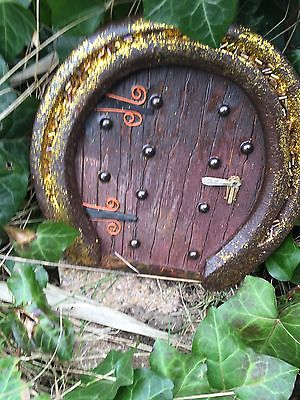
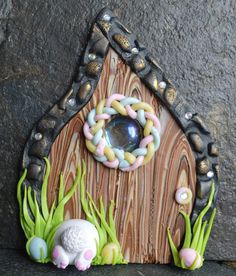
March 20th marked the equinox this year. There is a special calendar to mark these. Apparently an equinox occurs twice a year in spring and autumn when the Sun crosses the plane of the Earth’s equator.  Derived from a Latin term meaning “equal night”, an equinox happens when the centre of the Sun is observed directly above a certain location on the Earth’s equator.  But in folklore equinoxes are mystical moments when  magical power touches the Earth. Hope you enjoy this magical phase therefore. If you are feeling creative you can make a fairy door to encourage the Easter fairy to visit. I am going to do this in my garden!

b17741f0355a26160771e3f164ced242

Easter-Fairy-Doors-Horseshoe

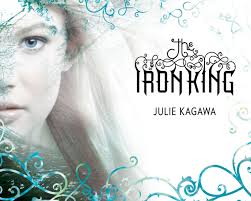
If you are one of the non believers (shame on you) I recommend a reading of Julia Kagawa’s The Iron King  reviewed here to introduce you to the modern fey and the contemporary never never and you will never never look back! Have a magical spring OGOMERS beware of white rabbits with pocket watches…

iron kingeindex


Posted in Fun stuff | Tagged , , , | 3 Comments

A Dark Reading List for Your Inner Teen Goth

Exactly what it sounds like; a diverse and intriguing list of recommendations by Alison Nastasi, including Anne Rice, Edward Gorey, Neil Gaiman, and Sade.

Posted in Books and Articles, Reading Lists | Tagged , , , , , | 2 Comments

Holly Black interview

Holly Black, for me, is one of the very best writers of YA paranormal romance. She is the author of the powerful vampire dystopia novel The Coldest Girl in Coldtown (which is on the Generation Dead module), of the Curse Workers Trilogy, the Modern Faerie series, and others. Here she is being interviewed at the International Conference of the Fantastic in Arts. I’ve just started her new dark faerie paranormal romance, The Darkest Part of the Forest, which expertly and thrillingly weaves in many folkloric motifs–and I’m loving it!

Posted in Generation Dead: YA Fiction and the Gothic news, Interviews | Tagged , , | 1 Comment

Re-imagining Fairy Tales

A favourite OGOM topic (well, for me anyway!) is the transformation of classic fairy tales into (mostly YA) paranormal romances and allied genres. Here, the bare motifs of the fairy tale are invigorated by giving novelistic flesh to the characters and, in a similar use of realist conventions, placing them in a contemporary milieu. To the encounter of the genres of Gothic and romantic fiction is added a third generic modulation–that of the fairy tale.

There are some interesting recommendations of this genre here, with reworkings of Grimms’ tales, Peter Pan, The Wizard of Oz, and The Thousand and One Nights. Some of these I know (Robin McKinley’s Beauty has featured on Sam’s Generation Dead course); some have been mentioned here before; some like very tempting indeed. The commentary is a little lightweight (fairy tales don’t really have happy endings in general), but resources like this, aimed at a YA readership after all, are very helpful.

Posted in Books and Articles, Critical thoughts, Generation Dead: YA Fiction and the Gothic news, Reading Lists | Tagged , , , , , | Leave a comment

The Witch and Fast Anchor Film Festival 2017

An opportunity for up-and-coming film makers to submit entries to this festival and perhaps win an award.

This site also features a review by Charlotte Haley of Robert Eggars’s current film The Witch: A New England Folk-Tale; Charlotte draws briefly on the categories of ‘horror’ and ‘terror’ that Ann Radcliffe delineated in the early days of the Gothic novel.  From this and other accounts, the film seems to be a Gothic and folkloric work of great merit: Conrad Runstedler (who gave a fine paper at the OGOM Company of Wolves conference) praises it in a detailed review here which does encourage me to see it.

Posted in Awards, Events | Tagged , , , , , | 2 Comments

CFP: Representations of Romantic Relationships and the Romance Genre in Contemporary Women’s Writing, Saturday 11th June 2016, Sheffield Hallam University

For any postgraduates interested in the hybrid genre that is Paranormal Romance, this symposium by the Postgraduate Contemporary Women’s Writing Network looks an excellent opportunity to enter the much-contested debate about the Romance element. I’ve mentioned briefly before here how questions of aesthetic value surround evaluations of Paranormal Romance; gender, class, and sexuality issues may well block the appreciation of these texts. Alternatively, that may be a fashionable relativism which is over concerned with content at the expense of form or addresses the subjectivity of myriad identities rather than radical and universal aesthetic judgements. But the Frankfurt School philosopher Theodor Adorno warns us not to succumb to Either/Or thinking; the more fruitful response is to explore the dialectic between these oppositions through dialogue and critical thought. This symposium on contemporary romance fiction promises such a space for dialogue to address these themes and others.

Posted in CFP (Conferences) | Tagged , , , | Leave a comment

Generation Dead: The Shiver Workshop

This post is a little late (mainly due to the distractions of moving house and trying to teach myself basic plumbing skills alongside managing a PhD and moonlighting as a tour guide at Shakespeare’s Globe theatre) so apologies for my silence of late. However, last Monday I was lucky enough to be able to lead the two Generation Dead workshops. As regular readers will be aware the Generation Dead module has been convened by Sam for third year undergraduate students at the University of Hertfordshire. One of the set texts is Maggie Stifevater’s Shiver (2009) which is the text I am analysing in my thesis. With this in mind, Sam suggested that I take the workshop as a way of getting teaching experience (although without any of the pesky marking!).

I was incredibly enthused by the idea of getting to workshop the novel with her group. Due to my aforementioned guiding job, I am relatively happy to talk with groups of young people and present my ideas to them. Moreover I was excited to get some feedback about my teaching abilities and also my arguments regarding the text. One of my greatest difficulties when writing my thesis has been to use the correct tone: one which is academic but also understandable. Partially this is because I tend to jump ahead with my arguments without breaking them down. In order to impart my ideas effectively in the workshop I would have to break my ideas down into manageable chunks. The workshops are two hours long and so I decided that the best model, following Sam’s lead, would be to prepare three 20 minute mini-lectures. For the rest of the time I would split the students into groups so they could discuss and feedback on what I had mentioned during my pieces. For each discussion section, I prepared two questions that would lead the groups’ discussions.

The secondary readings for the werewolf week were: ‘Folklore Relating to Werewolves’ and ‘Natural Causes of Lycanthropy’ from Sabine Baring-Gould’s The Book of Werewolves (1865); ‘Women who Run With Wolves’ from Chantal Bourgault du Coudray’s The Curse of the Werewolf (2006); ‘The Wolves of Mercy Falls Trilogy’ from Joni Richards Bodart’s They Suck, They Bite, They Eat, They Kill (2011); and, ‘The True Self, Animal or Human’ from Kimberly McMahon-Coleman and Roslyn Weaver’s Werewolves and Other Shapeshifters in Popular Culture (2012). I also suggested that the students read Helene Figari and Ketil Skogan’s ‘Social Representations of the Wolf’ in Acta Sociologica 54.4 (2011), pp. 1-16. Though this essay does not relate to the werewolf, or indeed any, literature per se, it is a very useful essay for contextualising how Western societies have constructed a symbolic version of the wolf.

Because I am cruel, I opened the workshop by asking the students to give me a sentence or two about what they thought of the novel and how it related to other texts that they had read on the course. (I also insisted that none of the students sit at the back of the lecture hall because at this point, if you are studying literature at university level, you should have come to terms with the fact that you are a nerd and therefore you do not need to hang out on the back rows in order to maintain a semblance of “cool”). The power going to my head aside, there was a sensible reason for asking the students to give me feedback about the text. Firstly, I think that the further that you go with literary studies the more difficult it becomes to differentiate between your own ideas and those that you have read in secondary criticism. By considering your immediate reaction to the text it is easier to maintain a foundation of your own ideas. I suggested to the students that the first thing they should do with the text is note the things they like and dislike. This can help to navigate the secondary reading by suggesting what will be useful to their argument. In preparation for the workshop I created a handout with the suggested bibliography. Though it was three pages long, I pointed out that sometimes it is better to read fewer supporting texts in order to ensure that the depth, as opposed to the breadth, of their arguments and research was clear.

Secondly, by comparing the text to others on the course, this was an opportunity for them to start considering the idea of genre and the how texts could be linked under the title ‘YA Gothic’ or ‘YA paranormal romance’. Both Sam and Bill have blogged about the complications of genre in regards to these terms and the OGOM project more widely. (And you can read their ideas, here, here and here). Encouraging students to make links between the texts supports the framework of their studies and helps them navigate this new field. Indeed one of the most difficult things about preparing the workshop, and with my thesis in general, has been the lack of foundations or limitations for theoretical approaches. There is no area of werewolf studies that is overburdened with essays and books and so finding my own approach has proved challenging. For the students I used my first two mini-lectures to deal with the basics: “What is a werewolf?” and Shiver and the Gothic. By posing the question “What is a werewolf?”, my aim was to highlight the variety of forms that werewolves could take. I used the Baring-Gould reading to show how the werewolf has deviated from folklore representations and how modern texts have simulated folklore in order to create a veneer of authenticity for their own incarnations. I compared Jeffrey Andrew Weinstock’s entry on werewolves in The Ashgate Encyclopedia of Literary and Cinematic Monsters (2014) with J.K. Rowling’s description of werewolves in Fantastic Beasts and Where to Find Them (2001). Rowling has clear rules that define her lycanthropes (as befits the genre of her text) whereas Weinstock acknowledges the wide variety of presentation of werewolves. This begs the question, why does an author choose to present their werewolf (or other monster) in a certain way? Stiefvater’s werewolves change with the seasons and not the full moon. The students picked up on this and, amongst other ideas, suggested it might be a way of making her werewolves more gender neutral by rejecting the monthly cycle. The Du Coudray reading was particular pertinent here in showing how the werewolf has been read as a gendered monster. The students also put forward the idea that the use of the seasons, combined with the less monstrous presentation of Stiefvater’s werewolves, suggests that they are more natural than supernatural.

My next section on Shiver and the Gothic was a way of rehearsing key ideas from Gothic studies (obscurity, the sublime, romance, the past) and applying them to the text. Drawing on the Rochards Bodart and McMahon-Coleman/Weaver readings, I pulled out some quotations from the novels in order to show elements of the Gothic were clearly presented within these novels. Of particular interest to me was considering the role of romance in early Gothic texts (or first-wave Gothic, if you will) and the resurgence of Gothic, especially the romance, in YA novels. As has been acknowledged, particularly in regards to the Twilight series, the romance elements have often been used as a means of denigrating these texts. I then asked the groups to apply one of the following ideas to the novel: the Uncanny, monstrosity, the Abject, transgression, or the Other. (This led to me announcing: “If it’s leaking or oozing then it’s probably the Abject”). One of the particularly interesting ideas that emerged in regards to the Other was the often conservative quality of YA Gothic. By allowing the supernatural creature to stand in for a panoply of otherness, albeit in a more sympathetic light, this can mean that the storylines feature predominantly white, straight, cis-gendered, able-bodied protagonists. This leads the reader to have to decide how successful the text has been in representing a more engaged and thoughtful presentation of the Other.

My final section was looking at the presentation of the animal Other in the novel. Using ecoGothic and the Figari and Skogen essay, I put forward the idea that the animal Other is side-lined despite these werewolves being presented in a naturalistic manner. I deconstructed the character of Sam and his engagement with human language as the means of subjectivity. By reading alongside the importance of smell and the characters of Isobel and Shelby, it is possible to show the complexity of the novel in both celebrating the human subject but allowing the wolf to exist within the text. These ideas will form the basis of my fourth chapter so it was wonderful to get some feedback from the group. Hopefully it has also been useful in their reading of Marcus Sedgwick’s The Dark Horse (2003) this week. Overall, I found the whole experience of preparing and giving the workshops invaluable. The students were lively and engaged and a credit to the module as a whole.
Posted in Critical thoughts, Generation Dead: YA Fiction and the Gothic news | Tagged , , , , , , , , , , , , , , , , , , | 3 Comments

My kind of fairies!

I love these down-to-earth urban fairies!

Posted in Fun stuff | Tagged , | Leave a comment

‘Fire Burn and Cauldron Bubble’: Witches, Magic and Demons @TheJohnRylands

hagbroom20160304_161111_001_resized_1

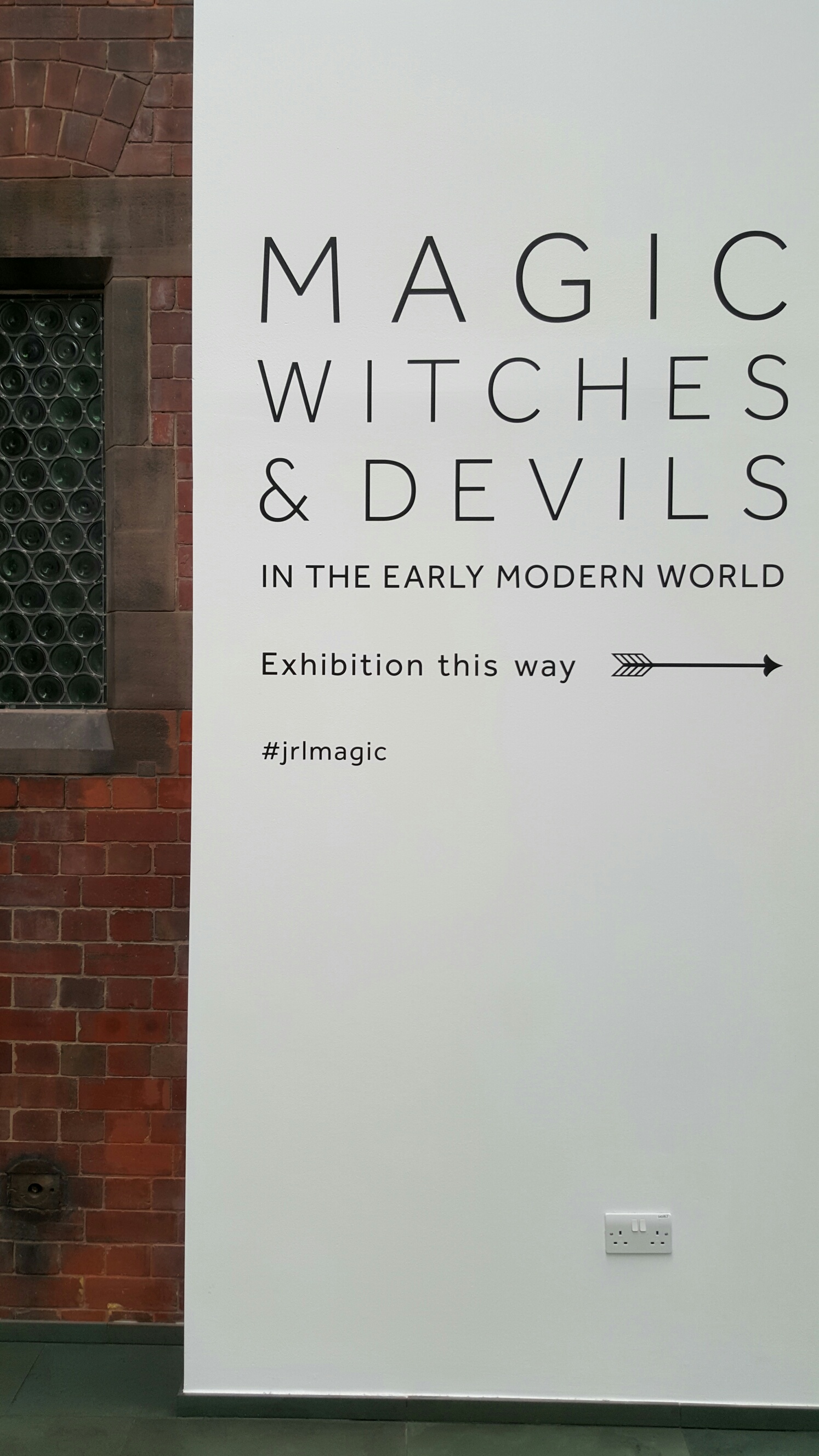
I have been blogging quite a lot lately about witches and magic books. I wrote on the Renaissance magician John Dee in ‘It’s a kind of Magic’ and offered some critical thoughts on ‘Sexualising the Witch’ in response to recent scholarship. Prior to this I wrote a number of confessional posts about my formative reading involving witch poetry and spell books (inspired by an anthology of witches that I was given age 12). You can read about these in ‘How Did I Choose Me My Witch Craft Kin’ and ‘I Saw Three Witches.’ I also started to map the rise of the sympathetic witch in the twentieth century as a possible research strand. When I found myself in the north on a fleeting visit therefore it was imperative that I visited  the exhibition ‘Magic, Witches and Devils in the Early Modern Period’, curated by Jennifer Spinks and Sasha Handley.  

20160304_154233_002_resized (1)

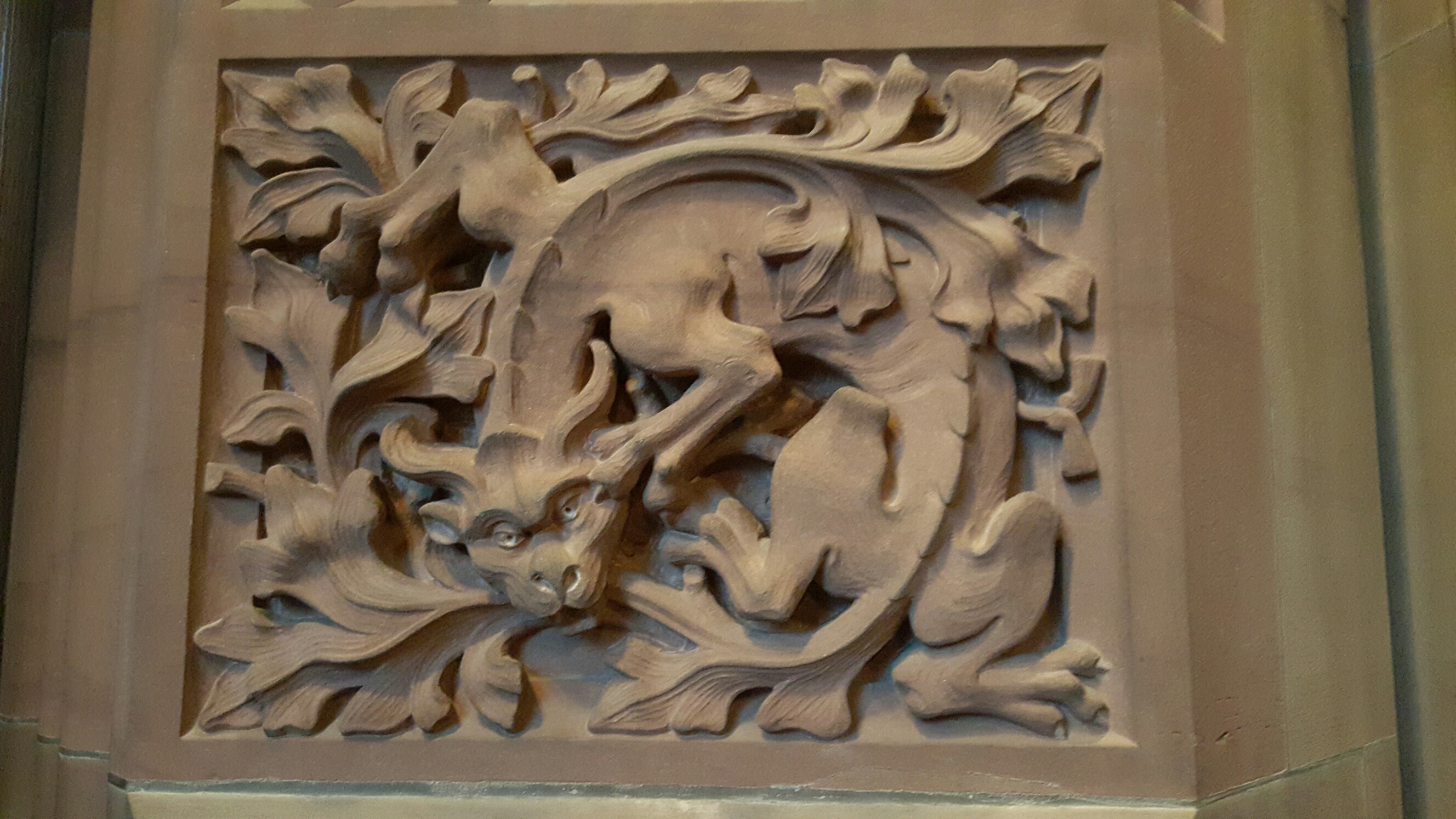
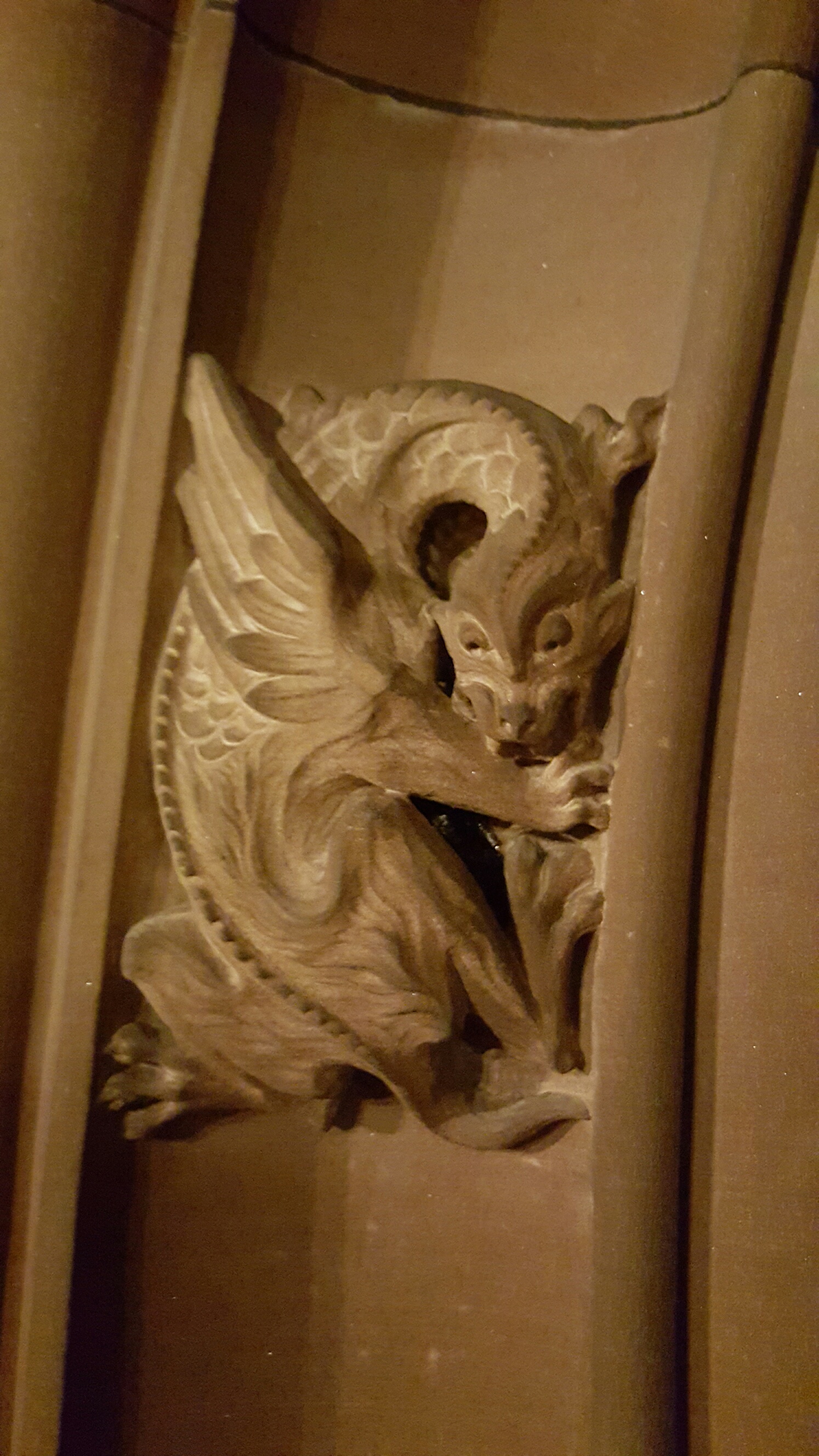
The John Ryland’s Library is a place of terror and wonder where knowledge and imagination correspond. It is also a little like Hogwarts (in fact it is probably the most splendid gothic building I have ever visited), the perfect home for magic.  I made sure I had a good look at the gargoyles and mythical creatures hidden in the gothic passageways before going in to the look at the exhibition show cases.

20160304_163139_001_resized_1

20160304_163417_resized_1

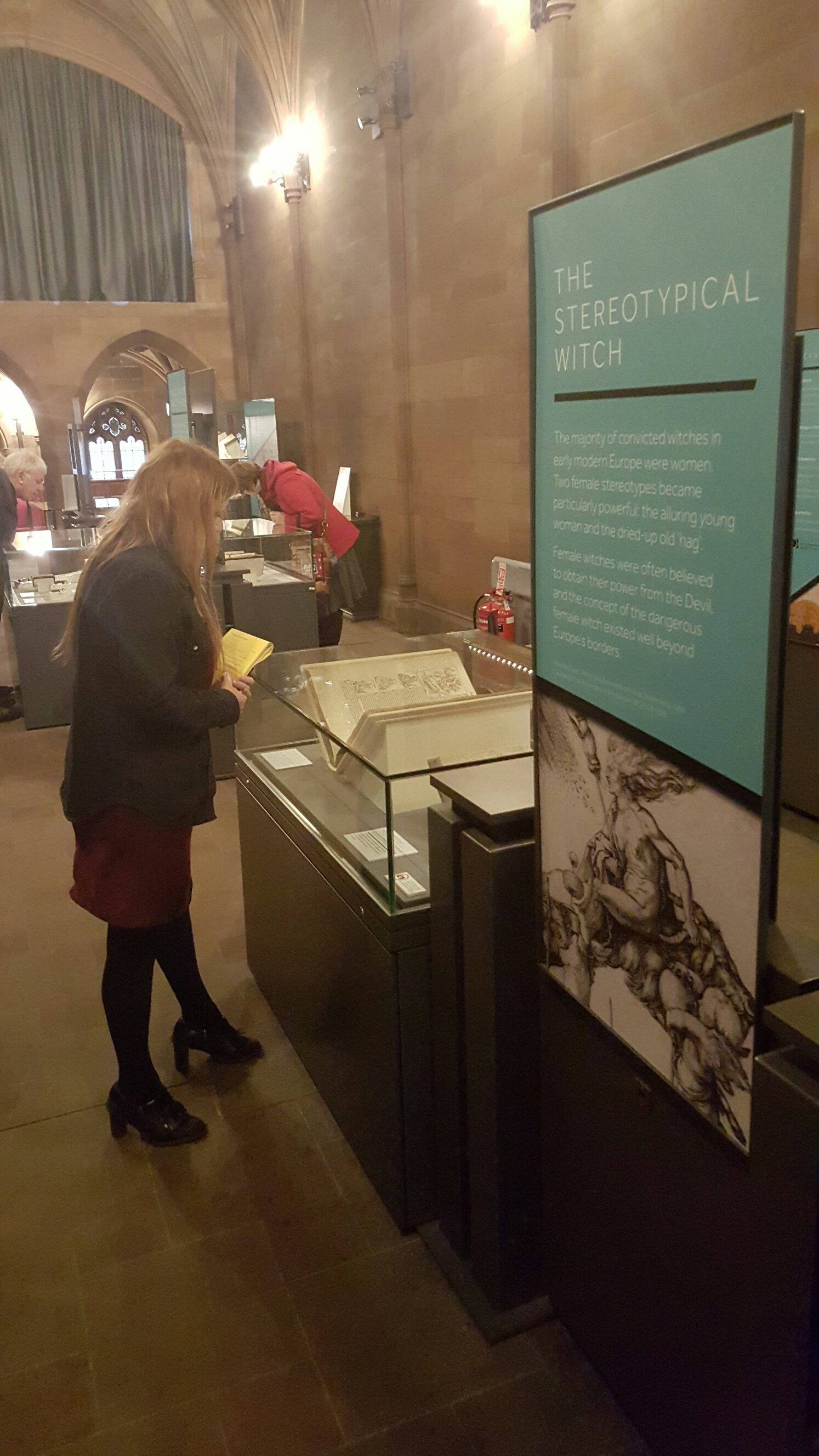
I have become increasingly interested in visual images of the witch and despite prominent and influential figures such as John Dee the stereotypical witch is of course female. The exhibition catalogue tells us that:

The majority of convicted witches in early modern Europe were women, and two female stereotypes became particularly powerful: the alluring young woman, and the dried-up old ‘hag’. Regardless of age, female witches were believed to be in sexual thrall to the Devil, who was the source of their power. Yet this power came at a price and revealed the Devil’s deceptiveness: witches were given gold that turned to dung, or seduced by handsome men who later revealed their true, diabolical form.

Visual images are important in establishing these stereotypes  and I learned that:

The story of the witch of Berkeley was illustrated for the first time in the 1493 Nuremberg Chronicle, told as part of a historical narrative in a Christian framework. The half-naked witch, wrapped in her shroud, is shown claimed by the Devil after her death as payment for the magical powers given to her in life.

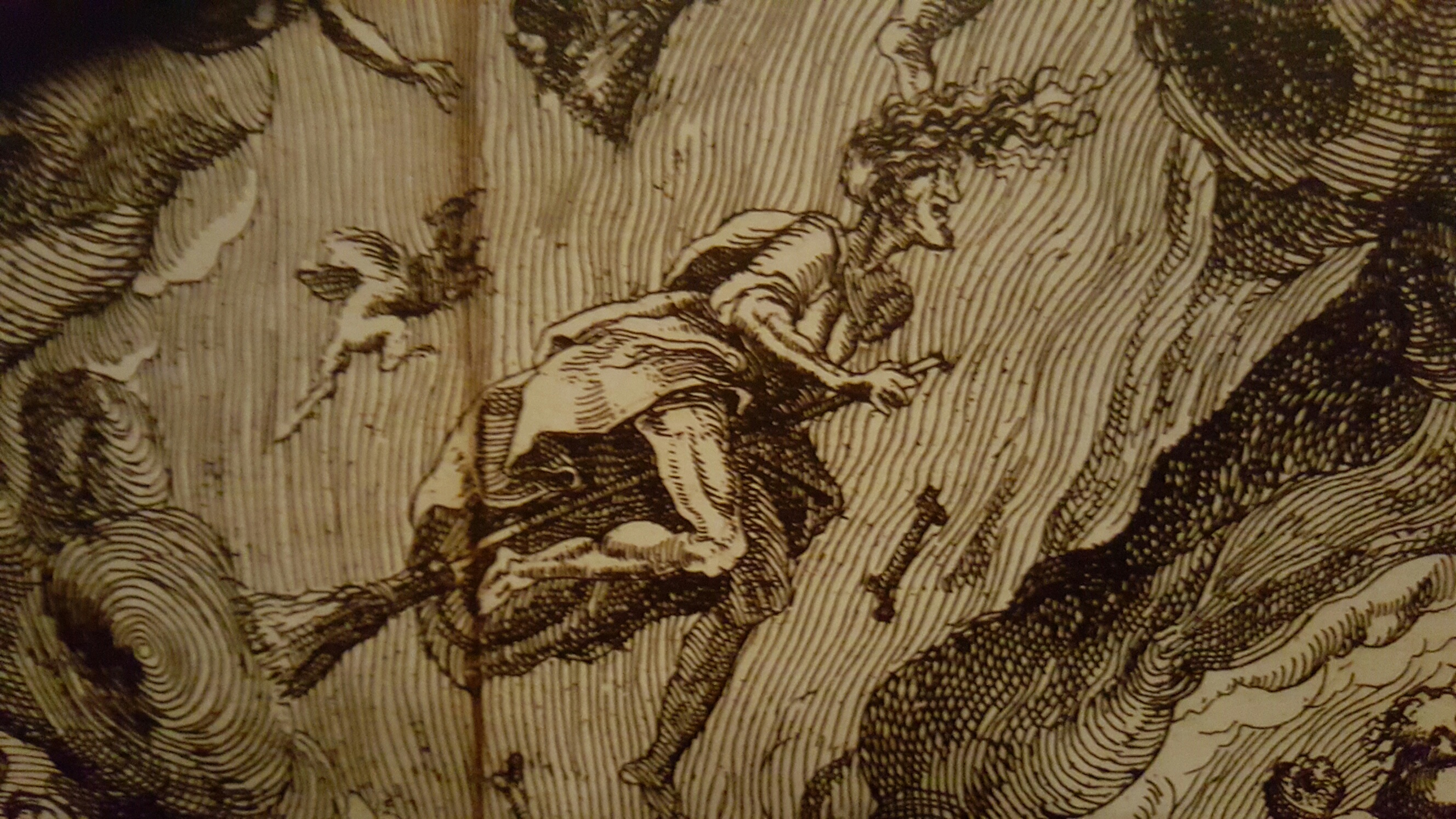
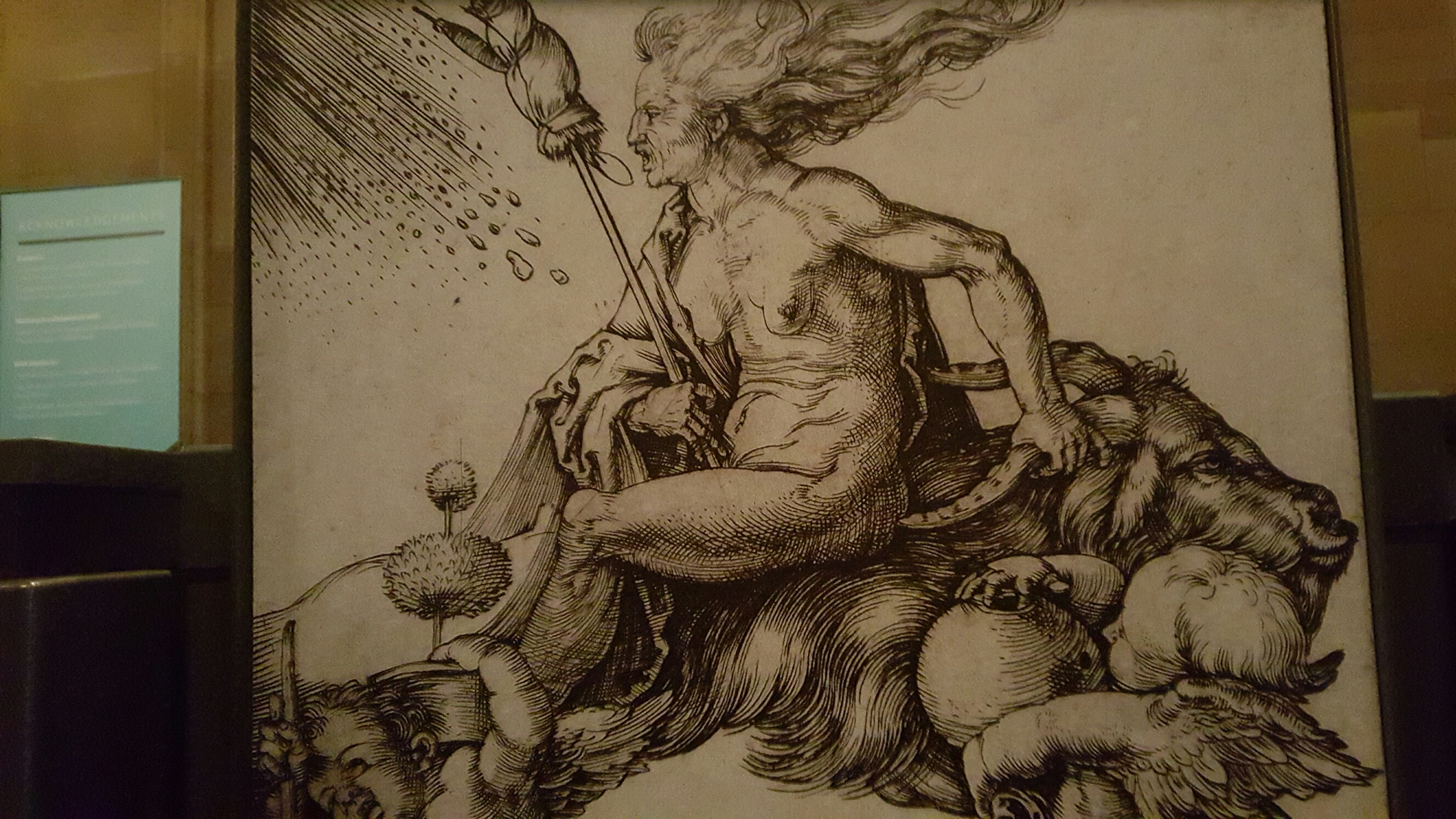
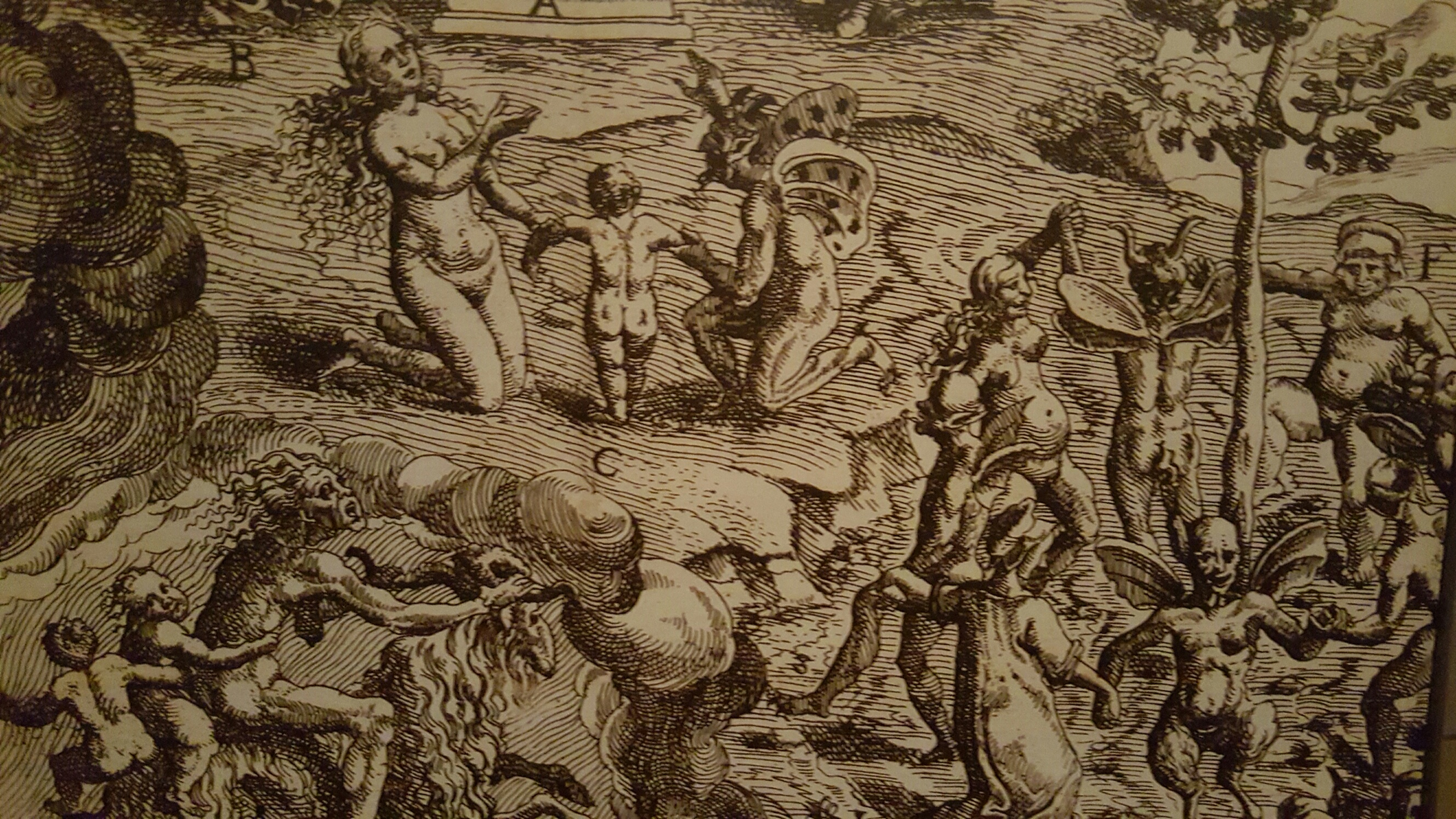
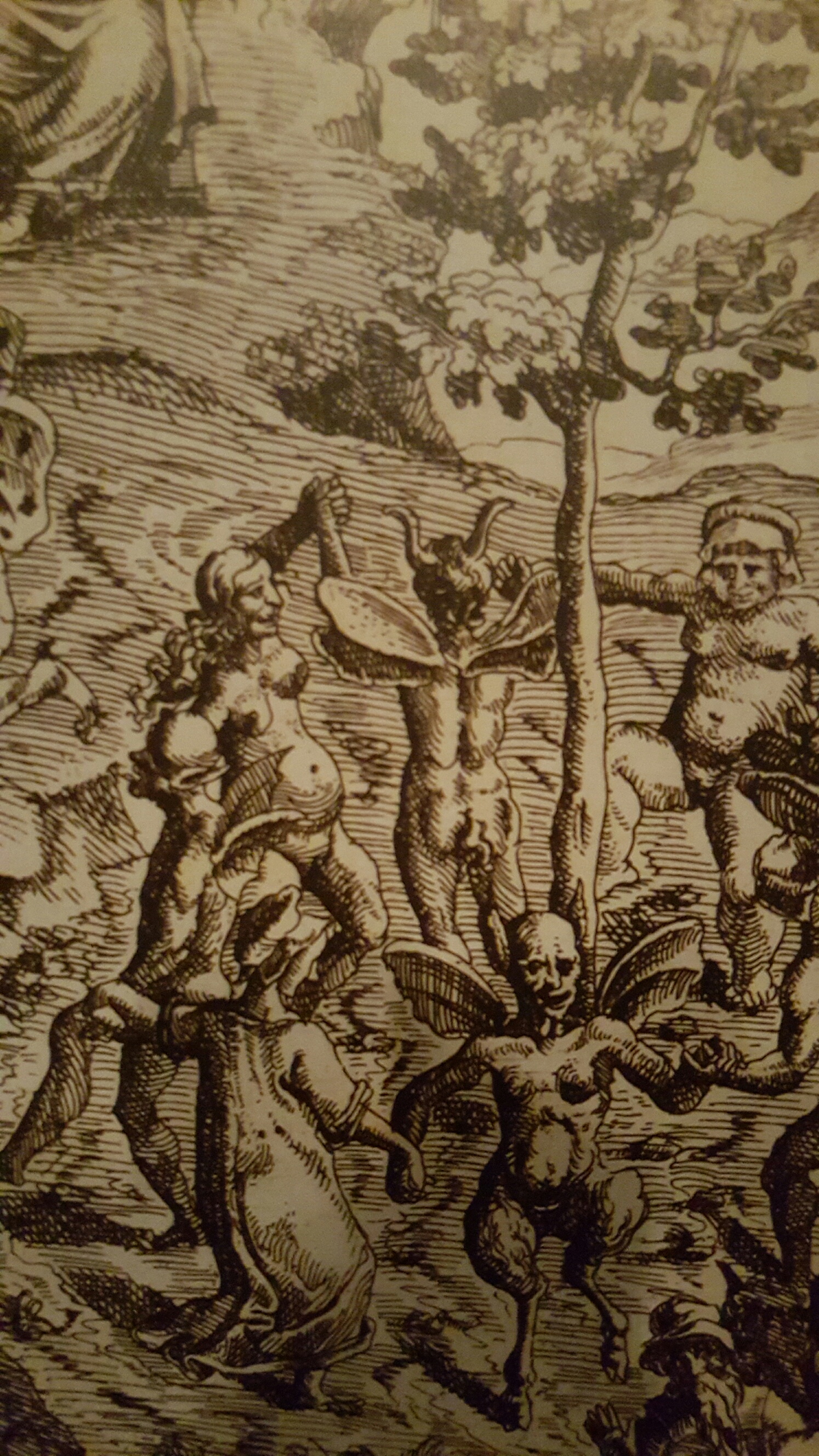
This certainly whetted my appetite and one of my favourite images (and titles) was Albrecht Durer ‘Witch Flying Backwards on a Goat’ (Nuremberg, 1500) pictured below. I also enjoyed gazing at Jan Ziamko’s ‘A Witches Sabbath’ (which appeared in a text in Paris in 1613) and images of witches and devils carrying off human children, which were very evocative of anxieties around demons and demonic women.

goat20160304_160430_resized_1

demons20160304_160542_resized_1

demonstwo20160304_160556_resized

My favourite exhibit however was a book by the herbalist and botanist Conrad Gesner, De Remedis Sectretis (France, 1555), with handwritten annotations by no other than John Dee (yes, really). This combined my research on OGOM and botany to mesmerising effect. The page was open on a remedy for eternal youth, consisting of herbs, donkey’s milk, cinnamon and eggs with a delightful drawing of the ‘cinnamon girl’ by Dee. I felt very privileged to have seen this and it is one of the many wonders you will encounter during the exhibition.

metwo20160304_160301_001_resized

I left with some wonderful source material and a copy of the Penguin book of Witches to read on the journey home.  If you have not caught this show you have until 21st August 2016. I would have liked the exhibition to break out of the Early Modern Period and perhaps gesture towards more sympathetic portraits of witches in the twentieth century but the fact that it didn’t do this leaves lots of space for my own research.  I will post something on this shortly and write on some further images of European witchcraft that I want to share.  If you are travelling northwards to Manchester in the near future do take a detour to the John Rylands Library and  don’t leave home without your broomstick!

Posted in Critical thoughts, Events, exhibitions | Tagged , , | 9 Comments

Intertextuality and YA Fairytale Adaptations

As you probably know, I am fascinated by intertextuality and the transformation of genres, particularly the way that recent YA fiction has taken classic narratives and reimagined them as contemporary paranormal romance or other YA genres. The chart here is an inspiring achievement (though it needs to be viewed on a large screen); the visual representation of 162 YA adaptations of myth, fairy tales, and other narratives, showing the intertextual pathways between works and genres.

The web page also has some chatty, but quite useful, information about the adaptation of classic tales, with lists of YA novels for each source narrative. And, unusually, the comments are worth reading; they provide genuine debate and some suggested additions to the list. It’s not confined to fairy tale: there are retellings of Shakespeare, Peter Pan, the Alice stories, Jane Austen, the Brontes, and world mythology. It’s an extensive list that inspires my curiosity and uncontrollably acquisitive bibliophilia.

My friend Sarah Bartlett and I initiated our own research into graphical representations of intertextuality, employing the new technology of Linked Data and using Jane Eyre as an example of what could be done. You can read about it here; it’s not overly technical and is just an introductory exploration of the possibilities.

Posted in Books and Articles, Generation Dead: YA Fiction and the Gothic news, Resources | Tagged , , , , , , , , | 7 Comments