At the behest of Sam, I have been persuaded to write more about viva “process”. As I said in my previous post, preparing for a viva can be strange. There are many reasons for this: 1) you can’t help thinking you’ve done all the hard work and you should be left alone; 2) very few of us will have done anything like a viva before; and, 3) there seems to be an infinity of questions that could possibly be asked.
So how did I prepare? Well, I think I probably did less than people might imagine. I wasn’t blase by any means but I was focused. I made a clear list of what was important to me. By this point I’d done two other panel discussions: one for my six month progress report and one for my progression. My progression panel has included an external examiner. In both cases I had made myself very nervous and stressed out, and then done well in them. So, first point of focus: don’t freak out. To do this I kept reciting my mum’s advice: “Revision is about opening the brain up to access the information, not cramming it until it shuts down”. Cheers mum!
Sam arranged for us to have a mock viva. Some people don’t agree with mock vivas. I found it very useful as it’s time with someone who knows your work and has done a viva themselves. It also started preparing me for responding orally rather than writing. To prepare for my viva, I read my thesis. And I colour-coded it: red for typos/ minor corrections; blue for points of potential contention and key terms/ ideas I should be clear on; orange for terminology I had invented; and pink for key points.
I was lucky in that my viva happened relatively promptly. I submitted on 30th September and viva-ed on 16th December. I had also met both my examiners before, albeit briefly, and was familiar with their work, especially my external examiner who I had used in my thesis. (This doesn’t make it any less nerve-wracking; I could have entered my viva to find Santa Claus and Edward Cullen behind the desk and I still would have felt nauseous). Thus I could still remember most of my work. After my mock viva I took Sam’s questions home with me to work through. As well as her most pertinent piece of advice: “Stick to your thesis”!
In the weeks that followed I bullet-pointed. A lot. I wrote definitions of theoretical terms and ideas, ie, the sublime, psychoanalysis, postmodernism. I made a key of all the terms I’d created and listed on which pages these were defined. I listed all the pages where my central argument was consolidated and then narrowed that down to a two sentence soundbite. I thought about my original contribution. I clarified my methodology. And at every point I reminded myself:

What were the reasons for my decisions? Why these texts? Why this approach? Why these conclusions? The opening question in a viva is typically something about the process of writing your PhD. Sam had warned me about this so I took some time to remember my PhD journey. I thought about the purpose of this question before I went in. It seemed to me that it was an opportunity to return to the *eureka* moments of my research and reclaim the passion that had fuelled my work. Doing so would immediately make me confident and clarify the importance of my thesis to my examiners.
The other important decision I made was to keep busy. It might look like I did a lot of preparation but in reality I broke it down into short, intense bursts. I didn’t want to exhaust myself mentally. I still went to my friend’s house warming (and read a chapter on the train back). I still went to work. Indeed, some of the best preparation I did was at work (as a tour guide at Shakespeare’s Globe). One of my colleagues was an ecocritic-nerd and he critiqued my methodology for an hour. On the day before my viva, I decided to go in to work because, I reasoned, I’d probably just sit at home panicking. Instead, I wrote a list of my primary texts and made my colleagues listen as I defended my choices. This worked brilliantly. It meant that I was sure that I could clearly and succinctly defend my work. They also complimented me and passed round my thesis which gave me warm fuzzies. I would advise talking about your thesis with everyone who will listen. Defend it. Challenge it. Get used to talking about it. It’s been in your head for so long – let it out.
I also read my thesis again (so twice in total). Only this time I took it on a date. My first reading hadn’t made me like my work. So, I took it for brunch to a really nice place near where I live. The second reading reminded me why I had written on this subject. Never underestimate the impact of space. Treat yourself whilst preparing for your viva. The positive associations will make you feel more confident. After all this, it was just down to the mundane preparations: I checked my route, ensuring I would arrive at university an hour early; I laid out my clothes and packed my bag (including two litres of water); I double-checked the rubric; and, I went to bed early. And I slept. Well, as it happens. Of course I was nervous but I was also prepared to enjoy my viva.
The viva itself went well. I did enjoy it and though there were one or two tricky questions (“What would you do differently” stumped me), I made a few jokes, and got my point of view across. I made notes which will help me should I choose to publish my thesis. When I was told I had passed I just about kept it together – you will not be prepared for the emotional onslaught of your results – and asked for further advice on preparing it as a manuscript. I left not broken but emboldened.
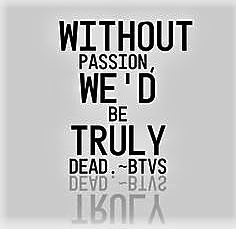 “Passion/ Know thyself”: I stand by this advice. In fact, I think it’s darned good advice for those thinking of doing a PhD. Passion is not just a great episode of Buffy the Vampire Slayer, it’s a major motivator. It was a relief that when I got to the end of this process, I didn’t hate my work. I was proud of it and I’m even looking forward to doing my corrections. And if you don’t know yourself at the beginning of a PhD, you certainly will by the end.