Beauty and the Beast: more thoughts

Further to Sam’s post below, I’m writing a paper on YA adaptations of ‘Beauty and the Beast’ for the Damsels in Redress: Women in Contemporary Fairy-Tale Reimaginings at Queen’s University, Belfast (7-8 April), so the tale is very much on my mind. I’m looking at Robin McKinley’s version, Beauty (1978) that Sam mentions, plus her later reworking of it as Rose Daughter (1997). I’m also looking at Rosamund Hodge’s Cruel Beauty (2015), and, briefly, Donna Jo Napoli, Beast (2004); Alex Flinn, Beastly (2007); Sarah J. Maas, A Court of Thorns and Roses (2015); perhaps others (there are so many!). And Angela Carter’s powerful revisions in The Bloody Chamber, ‘The Courtship of Mr Lyon’ and ‘The Tiger’s Bride’ will be reference points.

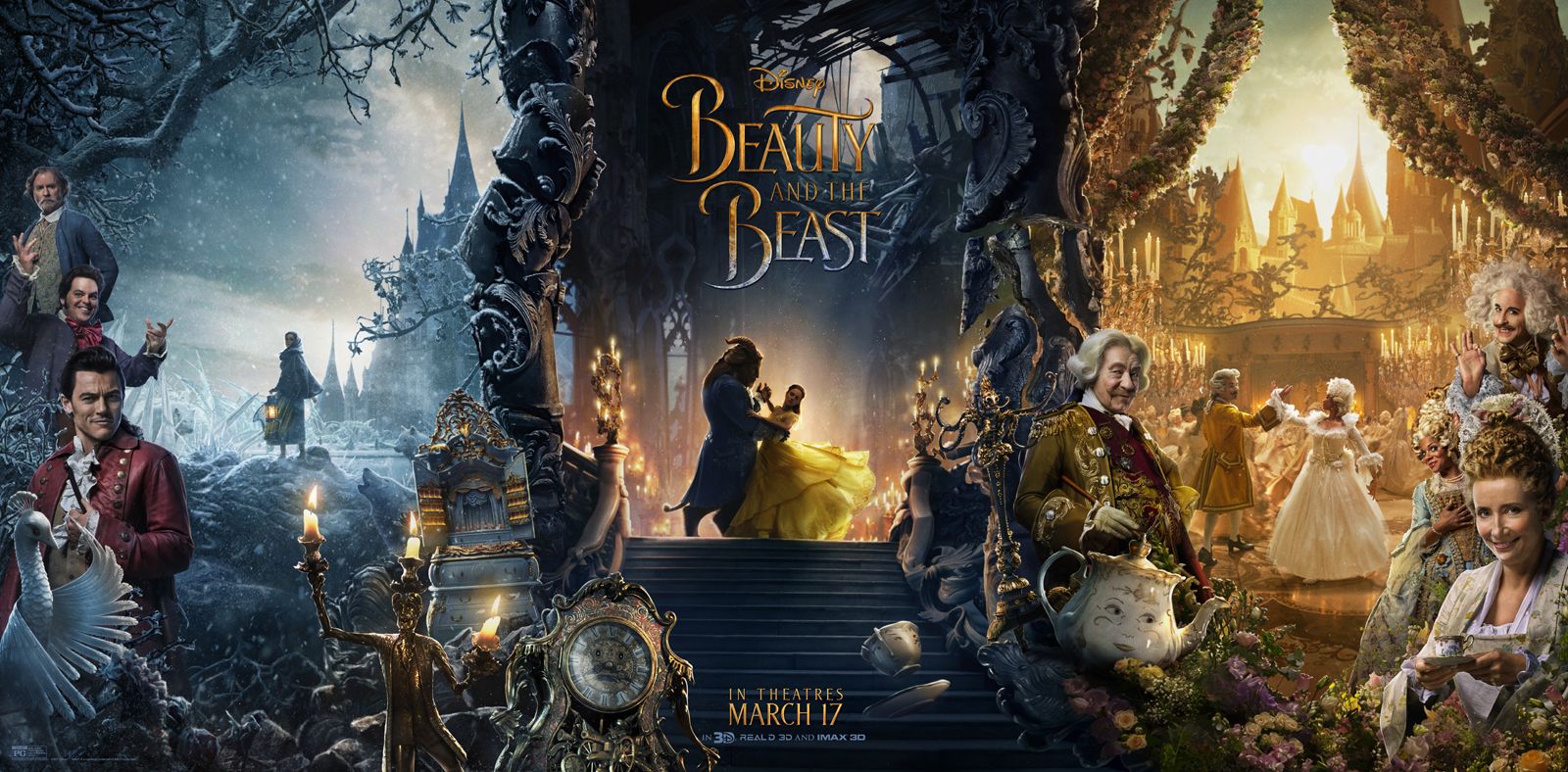
I was hoping to see the new Disney version tonight, but it’s booked up; I’ll review it here when I see it. I watched the old Disney version and will be rewatching Cocteau’s La belle et le bête and the 1952 animated film by Lev Atamatov of the Russian version of the tale, ‘The Scarlet Flower’.

Some of the many varieties of animal that make up the Beast-man that Sam talks of can be seen in the illustrations to Betsy Hearne’s excellent book Beauty and the Beast: Visions and Revisions of an Old Tale (Chicago: University of Chicago Press, 1991). I’m also looking forward to the folklorist Maria Tatar’s new book on the subject when it comes out this month.

And Sam mentions the library in McKinley’s version. This motif of Beauty’s love of books seems to stay in place through practically all of the incarnations, from Madame de Villeneuve’s 1740 original onwards, including the Disney version (where she is a bookworm and her doltish suitor Gaston a philistine), and the significance of women’s reading in different contexts is crucial to the way the tale has been reshaped.

There are some more links here to recent articles:

An interview by Kevin Fallon with Dan Stevens (who plays the Beast) on the gender politics of the new film: Dan Stevens: ‘”Beauty and the Beast’s” Woke, Feminist Beast’

A fascinating article on human-animal couplings in folktales worldwide and what they signify, quoting Maria Tatar: Jane Henderson, ‘Fairy tales love animal-human couplings — but why?’

An article by Valerie Derbyshire on the history behind Madame de Beaumont’s version and its feminist content: ‘Beauty and the Beast was originally a feminist fable disguised as marriage guidance’

Illustrations of classic fairy tales in the New York Public Library, compared with their Disney versions: Lauren Weiss, ‘Disney Classics in the Digital Collections’

Posted in Critical thoughts, Generation Dead: YA Fiction and the Gothic news, Resources | Tagged , , , , , , , , | 2 Comments

Fairy Tale Hybridity: What Kind of Animal is Beast in ‘Beauty and the Beast’?

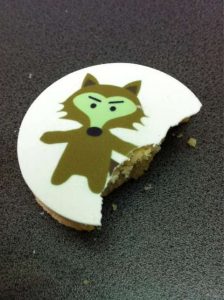
‘Beauty and the Beast’ belongs to the Animal Groom cycle of fairy tales alongside ‘The Frog King’ and ‘Cupid and Psyche’.  I have always been intrigued by what kind of animal Beast is in this tale.  In his twenty first-century manifestation he has ram’s horns, a lion’s mane and a wolfish/bearish face:

I am reliably informed that the 1991 Disney animation figures Beast as a buffalo in a reference to Native American culture and the fact there is an animal bridegroom folktale called ‘The Piqued Buffalo Wife’ from that part of the world.

I have often seen him pictured as a human lion (see below)

and @BillBloodyHughe reminded me that in the French 1740 original by Madame de Villeneuve, the Beast has scales and an elephant’s trunk:

A 1765 version of this tale represents the beast as slightly more demonic looking resembling a black ram:

In fact he has an uncanny resemblance to Black Phillip from Robert Egger’s The Witch (2015)! He is more elegant and a warthog in many of the illustrations of the tale however, such as the one below:

In Andrew Lang’s retelling of La Belle et la Bête par Madame de Villeneuve. Beast is shown with human hands and an elephant’s trunk objecting to the merchant’s stealing of a rose from his garden (1889).

Then there is the bear/tiger/lion of Cocteau’s memorable film version of 1945 La belle et la bête

There are now versions which retell the tale from Beast’s point of view (Donna Jo Napoli, Beast (2004); Alex Flinn, Beastly (2007)). Robin McKinley’s Beauty (1978) is studied on OGOM’s Generation Dead: YA Fiction and the Gothic module which I developed and here Beast is wonderfully hybrid. He has a ‘heavy brown mane that falls to his shoulders’ (145) and is more civilised than savage, shown in his liking for fine food and wine (though he cannot wield a knife and fork because of his paws/claws!). He also has an extensive library full of books which haven’t been written yet (lovely trope) though he has trouble turning the pages (those paws again).

Beauty adds further mystery to the appearance of the Beast when she remarks on his human eyes and the fact that he is not ‘bearish’ at all. In fact she compares him to Yggdrasil, an immense mythical tree that connects the nine worlds in Norse cosmology. This is a good reason  to read Neil Gaiman’s Norse Mythology (which I know Kaja has been enjoying but I have not got round to reading it yet alas).

“I realised that what made his gaze so awful was that his eyes were human. We looked at each other a moment. Not bearish at all, I decided. Not like anything else I could put a name to either. If Yggdrasil had been given an animal’s shape, it might have looked like the beast” (Robin McKinley’s Beauty, p. 131)

So the Beast is compared to an animal/human tree in McKinley. Hybridity is debated widely in the vegetable world too. Taxonomy has been something that has always been a part of my research because of my botanical interests. Hybrid blooms known as ‘exotics’ (such as parrot tulips or double hyacinths) tend to be considered ‘monstrous’ because they do not produce good seed, are not pure stock, and because ‘nature’ can no longer be found among them. Animal hybrids such as the mule are also thought to be debased and are infertile. Beast is one of only a few positive images of hybridity in the popular imagination, though of course the tale is ambiguous and he has to become fully human for the union to be legalised in marriage. I posted on hybridity and the Wellcome Institute’s Making Nature Exhibition recently. This is a very intelligent exploration of taxonomy including faux classification and animal/human hybrids such as Beast so do try to catch the show.

The furore surrounding the new Disney version seems to be focussed on Belle or Beauty rather than Beast,  perhaps due to the celebrity nature of its star Emma Watson, whereas the Disney animation previously gave us a Beast-centred narrative, devoted almost exclusively to the development or regeneration of the unregenerate male figure. Further discussions of the Disney version can be found in Jack Zipes ‘Breaking the Disney Spell’ in Tatar ed. The Classic Fairy Tales (New York: W.W. Norton, 1999), pp. 332-352.

If you have seen Beauty and the Beast you might be interested in the following articles from The Guardian ‘Beauty and the Beast: Dark History of a Literary Fairy Tale’ and ‘The Beauty and the Beast in La La Land’ on the various musical versions. It will be hard for any adaptation to out do Cocteau’s for me. It was the first to fully bring out the unsettling Gothic elements in the tale. I’d like to see a version where the animal and human are reversed with a wolf as Beauty and a human Beast. Of course in Carter’s version, ‘The Tiger’s Bride’, which is the most subversive, instead of Beast becoming human, Beauty herself transforms and becomes furred …absolute genius!

Posted in Critical thoughts, Generation Dead: YA Fiction and the Gothic news, Reviews | Tagged , , , , , , , , | 7 Comments

The Eyes of My Mother

Kate Timperley has asked me to pass this news on about an intriguing Gothic film soon to be released:

I am really happy to let you guys know of a really interesting Gothic horror film that I’ve been working on over the last couple of months that comes to cinemas next Friday 24 March that I thought would really be of interest to some of you guys.

It’s called The Eyes of My Mother, by first-time Director Nick Pesce. Fusing classic horror ingredients with gothic black-and-white imagery, it’s received excellent reviews from many quarters, including 5* from Time Out – it’s a real treat for horror fans.

You can catch in several great cinemas across the UK from next Friday 24 March (check where here http://www.parkcircus.com/films/27463-the-eyes-of-my-mother)

https://www.timeout.com/us/film/the-eyes-of-my-mother-2016

Really hope you guys might be able to make it and can’t wait to know what you think!


Posted in Events | Tagged , , | Leave a comment

Buffy: 20 years on

Some more interesting pieces on how important Buffy the Vampire Slayer is, twenty years after it was first shown.

Lauren O’Callaghan’s article ‘20 years of the Slayer: How Buffy defined a generation of TV and movies‘ explores the series’ originality and influence with the help of the renowned Whedon scholars Rhonda Wilcox and Stacey Abbott (who has worked closely with OGOM since our first conference).

David Sims, in ‘How Buffy the Vampire Slayer Redefined TV Storytelling‘ discusses the innovative ways in which Buffy explored long narrative arcs and other inventive storytelling techniques that played a significant part in the rise of TV’s ‘Golden Age’.

C. Molly Smith interviews David Boreanaz (who played ‘the vampire with a soul’, Angel) in ‘David Boreanaz reflects on Buffy: “I was in the right spot at the right time”‘.

And Milly Williamson, the scholar of Buffy fandom, suggests in ‘Buffy the Vampire Slayer would have had her work cut out in 2017‘ how the ethics of collectivity in Buffy are relevant to a period where the naked will-to-power and the demonisation of the Other seem to be on the rise 

Posted in Critical thoughts | Tagged , , , , , , | Leave a comment

Rimsky-Korsakov, The Snow Queen (Opera North)

I’ve just seen Opera North’s production at The Lowry, Salford of Rimsky-Korsakov’s opera The Snow Maiden, part of a trio of fairy-tale operas that the company are touring with—you can still catch them if you’re quick. There’s a trailer here.

I’m fascinated by the ways that fairy tales can be reworked and remediated in all sorts of forms. Rimsky-Korsakov’s work is based on a play by Ostrovsky that takes Russian fairy tales of a snow maiden, Snegurochka as its raw material. The opera (and, I think, the play) adds a mythic, ritualistic dimension to the folkloric tales and suggests an allegory of physical desire that is entwined with the cycle of the seasons.

The music is beautiful and colourfully orchestrated, full of Romantic lyricism and folkloric dance elements. The production design was fabulous, with efflorescences of ice crystals, foliage, and flowers being projected onto the set. And the programme includes illuminating essays by Marina Frolova-Walker (on the music and its background), Sophie Schuenemann (on the folkloric tradition and its vicissitudes through Stalin and since), Susan Godsil (on psychoanalysis and folktales), and George Hall on editions of Ostrovsky’s play and performances of the opera. And here’s some extracts and audience reactions.

Posted in Reviews | Tagged , , , | Leave a comment

Buffy – My Childhood Companion

Happy Buffyversary! Bill has already blogged links to some wonderful articles about BtVS and below are a few more that may be of interest:

The Guardian, ‘Buffy the Vampire Slayer was a feminist parable for everyone – including me’, Anthony Head

Vice, ‘”Buffy the Vampire Slayer” Actors and Experts On Their Favourite Buffy Episode’, Various

The Guardian, ‘Buffy the Vampire Slayer at 20: the thrilling, brilliant birth of TV as art’, Lucy Mangan

and just for funsies: Buzzfeed, ’16 Things about “Buffy” That Make No Sense Now That I’m An Adult’, Hilary Mitchell.

Buffy had been written about by far greater academics than myself, so, for this blog, I am removing my academic-hat and writing this piece from a personal point of view. Where Proust had madeleines, I have Buffy the Vampire Slayer and I think I got the better deal.

Though we are celebrating Buffy‘s 20th anniversary, the show didn’t air on BBC 2 until 1998. It was the winter term so I would have been twelve years old. My parents had banned the television when I started secondary school – my parents were, and remain, lentil-eating, Guardian-reading lefties. I loved vampires, books and introduced myself to my future best friend by saying, “My name’s Kaja Antonia Franck and art is my forte”. I was a swot. My dad stuck a poster on our kitchen cupboards that proclaimed: ‘Stop Now Before It’s Too Late, Books Can Kill” because of my tendency to walk through my town, nose in book, dodging lampposts and the elderly. My mother was an ardent feminist. When I told her about Buffy, she checked that it passed the *Strong, Female Character* test and the television was duly dusted off and plugged in again.

That term, and the one after, I was rehearsing my role of Sir Andrew Aguecheek in Twelfth Night. Rehearsals were on Wednesday nights and finished just in time for me to get back for Buffy. I can still remember the giddy excitement I felt before the first episode. Pre-Twilight, YA Gothic wasn’t readily available and, as a fledgling Gothic enthusiast, I survived on a diet of Shakespears Sister, evil Disney Queens, and staying up late to catch horror films. The publication of Harry Potter helped to quench my thirst for hidden supernatural worlds, existing in the corner of my eye, barely glimpsed. But Buffy was different, Buffy was cool and sexy and had hot guys and even hotter library action. With the call of “Buffy Time”, my sister and I would scamper upstairs to the attic. The television was lodged on a tall cupboard under the eaves and we’d lie on cushions looking up at the tiny screen as it flickered from black and white to colour.

I’m not sure if I recognised that Buffy was groundbreaking, that she was a feminist icon, that this series would lead to a lifelong love-affair with teen vampires. But I did know that I wanted to be Buffy. (And then I wanted to be Willow, and maybe a little Faith – there was a BtVS leading lady for any shade of puberty). She was honest and complicated. Her fashion was on point. I’ve still got my “Buffy coat” – an homage to the two-tone turquoise jacket she wore in ‘Becoming, Part 1’ (S2:E21). Sure, she wasn’t the most popular girl in school but she was liked and respected. The show never got bogged down in cliques and bitchiness like other American series. Instead, it remained vibrant. Bitching was replaced with effervescent verbiage. The language was as spry as the leading lady.

As I got older and started going out, my friends and I would discuss our attack moves should any guy jump out of the darkness – 80% of them consisted of going ‘Buffy on his ass’. And the boys! The boys! I remember reliving ‘Angel’ (S1:E7) with my mum as she ironed in the kitchen. I was broken by his revelation, shocked by the emotional betrayal; I’d never been so invested in a fictional world. (The Red Wedding still doesn’t compare). I remember watching Drusilla pouring holy water on a bare-chested, leather-trousered Angel who was handcuffed to her four-poster. I may not have known exactly what was going on when she called him a “Bad Daddy”, but I knew I liked it. Buffy taught me that fantasy meant escape. It gave voice to my isolation, my fear that there was something bigger going on out there from which I was exempt. It spoke to my desire that I could be part of something bigger and bolder and braver. Buffy’s difficulties balancing full time slayage with homework were my frustrations at dealing with the pressures of school when I was feeling more intensely alive than every before but weighed down with expectations and pin-balling emotions. Buffy was fierce and loyal and she had the best of best friends.

Friendship and Buffy are entwined in my memories. Buffy aired in the UK at the same time as I entered Year Eight. It was the year I sat next to Ellie, my future maid of (dis)honour, whose 31st birthday I will be celebrating this weekend. Our friendship was cemented by Buffy. After each episode we’d spend hours on the phone. My parents would bring me cups of tea whilst I lay on the hall floor watching the shadows cast by the lampshades and disappearing further into Buffyverse. By Year Nine I had a poster of Spike above my bed and one Saturday, Ellie and I spent the whole day lying in bed, fuelled by tea, discussing in what order we’d have sex with Angel, Spike and Oz. Buffy showed people losing their virginity without judgement. It opened a space for us to talk about what we thought sex would be like, what we wanted it to be like. We labelled guys at our local town hall disco on how much they looked like the leading men. With the release of the box sets, we’d spend weekends gorging ourselves on Buffy, watching for 24 hours, dissecting every nuance. (Perhaps laying the foundations for my future studies). For one of my birthdays, Ellie bought me the extended editions of ‘Becoming, Part One and Two’. It’s only looking back that I can see the power of those episodes. They meant that we were more than our relationships with boys, that stripped of everything we were still strong in our own right.

The final episode aired whilst I was on my year abroad. I was 18 and all the way in the US of A. My mum, dad and little sister watched it together without me. Afterwards they sent me an emailed review. I didn’t keep up with the final seasons. Pre-Netflix, watching a show weekly took some dedication. But perhaps these later episodes didn’t speak to me in the same way. Buffy’s university experience was not one I recognised and her decision to stay in Sunnydale didn’t reflect my desire to get as far away from my school life as possible. She dropped out, I found my place. (My sister and dad made me a Mr Pointy to take with me). Buffy and I drifted apart.

It was only when the series went up on Netflix that I made it my mission to sit back down and watch all the episodes again from start to the very end. It was like coming home; Buffy always has the door open for you to return. I watch Buffy and I’m 12, 13, 14, 15, 16, all the versions of me until now. But more than this, Buffy grows along side you. The episodes that annoyed me, I understand now. I no longer hate Riley. (In fact I’ve got a bit of a soft spot for him). Buffy’s job at ‘DoubleMeat’ reminds me of the waitress job I had whilst I was doing my MA. Dawn is my little sister. The Scooby Gang makes mistakes, lose their way but find their way back. The meandering story lines reflect the experience of transitioning into adulthood. The final episode made me cry – a poignant and fitting ending. Afterall, if Buffy taught me anything, it was that we all have the ability to be the Chosen One.

Posted in Critical thoughts | Tagged , , | 1 Comment

Buffy: ‘academia’s most-studied pop cultural artifact’

Buffy the Vampire Slayer was first shown twenty years ago this week. Its multi-layered cleverness, its wit and wordplay, the depth of its characterisation and its subtle feminism, have not faded. Its influence on TV has been huge and it has become, with some justification, ‘academia’s most-studied pop cultural artifact’. It’s the show that awakened my love of vampire narratives and hence play an important role in the origins of the OGOM Project itself. Here are links to three interesting articles on the show:

Jennifer Keishin Armstrong, ‘We should thank Buffy for today’s “Golden Age” of television

Neil Genzlinger, ‘A Buffy Family Tree: “Bones” and Demons and Rabid Fans

Alyssa Rosenberg, ‘”Buffy the Vampire Slayer” proved you could save the world and still hit the mall


Posted in Critical thoughts, Resources | Tagged , , | Leave a comment

Folklore and Fiction: Hybrid Creatures from the Owl Man to the Demon Dog

I am always pleased to find references to English folklore so I just wanted to make mention of this lively and accessible article by Nic Rigby from the BBC site. Serpents, Owl Men and Demon Dogs discusses the way British writers have drawn on stories of mythical and fantastical creatures from the Lambton Worm to the Essex Serpent and the Cornish Owl-man. Other wonders of British folklore Spring Heeled-Jack and Black Shuck or the demon dog have been mentioned on the blog previously and continue to be of interest to OGOM. No mention of Old Stinker, the Hull werewolf here, and I am saving the myth of the Cumberland Cockatrice (dragon’s body and tail with a cock’s head) that informed my childhood for another post!  It is interesting how many of these English myths are about hybrid creatures and I am currently reading The Impossible Zoo: An Encyclopedia of Fabulous Beasts and Mythical Monsters by Leo Ruickbier which is wonderful to dip into and browse and I just had to buy a copy from the shop at the Wellcome Collection. They currently have  a Making Nature: How We See Animals exhibition which includes faux taxonomy and crazy taxidermy. I tweeted some images from this and  found it  very pertinent indeed (I will add a post on it soon).  The theme of hybridity will be further explored in a performance called Sheep Pig Goat on 14th March. Still time to grab some tickets!


Posted in Critical thoughts, exhibitions, Publications | Tagged , , , , | Leave a comment

CFP Postgraduate Medical Humanities Conference

CFP University of Exeter (29th – 30th June 2017)

Keynote Speakers
Victoria Bates (Bristol)
Ina Linge (Cambridge)
Hannah Morgan (Lancaster)

The by now well established University of Exeter Postgraduate Medical Humanities Conference is returning in 2017 for the fourth consecutive year to showcase the diversity of contemporary medical humanities research. Our conference this year will provide a platform for an international community of postgraduate researchers to share insights and network with academics working within and across disciplinary boundaries.

While we encourage innovative submissions that relate to any aspect of medical humanities, the following subject areas are of particular interest: 

  • History of medicine
  • Disability studies
  • Gender and sexuality
  • Transformations of the body
  • History and philosophy of science
  • Occupational health and industrial psychology
  • Trauma studies
  • Affect studies
  • Medicine and the law
  • Medicine and the body in popular culture
  • Literature and medicine
  • Medical practise and issues of intersectionality
  • Globalization and biomedical practice

Although all proposals must address the conference’s central theme, we welcome scholarly submissions from those operating outside of traditional humanities research settings, such as medical students and community activists.

Applicants are invited to submit abstracts of up to 300 words (for 20-minute previously unpublished papers) to pgmedhums@exeter.ac.uk by Friday 3rd March 2017 with “PGMH 2017 Conference Abstract” written in the subject line of the email. We are also keen to receive panel and workshop proposals. These should include 300-word abstracts for up to four speakers, along with a 500-word overview that explains the aims and rationale of the session.

There will be the offer of a small number of travel bursaries for this event, the details of which will be announced in due course.

Posted in CFP (Conferences) | Tagged , , , | Leave a comment

Wolves of Finland

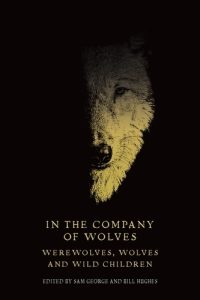
An interesting article here by Patrick Barkham on the conflicting attitudes to wolves in Finland. Some of the issues raised in OGOM’s Company of Wolves conference (and featuring in our forthcoming book) on our relationship to nature and the image of the wolf as predatory enemy of civilisation or symbol of a lost wilderness appear here. 

Posted in Critical thoughts, OGOM: The Company of Wolves | Tagged , , , , , , | Leave a comment