Angela Carter Interview with Marie Mulvey-Roberts

Here’s an account of a fascinating radio interview on Angela Carter with Dr Marie Mulvey-Roberts, Associate Professor of English literature at UWE, with a link to the interview.

Posted in Interviews | Tagged , | Leave a comment

Wolfwalkers

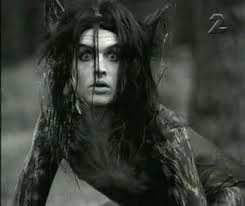
A preview by Amy Cranswick of what looks like a wonderful animated film of motifs that prompted OGOM’s Company of Wolves conference–wild children, wolves, and werewolves–‘First look at Tomm Moore’s next animated feature Wolfwalkers‘. Moore is the creator of The Secret of Kells and the selkie film Song of the Sea.

Posted in Film Clips, OGOM: The Company of Wolves, Reviews | Tagged , , , , , , | Leave a comment

May Day for Goth Girls

I’m posting this wonderful image for all the goth girls, to celebrate May Day, and because it is half way to Hallowe’en!! Also because I was named after Sam played by Elizabeth Montgomery in Bewitched (my sisters also have witchy names – Rowena and Demelza) and I like to think I looked a little like this gothicky witch in my earlier days!! I can also imagine Kaja rocking up to her wedding wearing something a lot like this and reaching for her copy of Harry Potter! 

This is in fact just a quick morning doodle from the gifted hand of Chris Riddell, political cartoonist on The Observer and author of the brilliant Goth Girl (daughter of Lord Goth). It’s my new screen saver replacing Vivien Leigh as Titania. Hope you like it too!

Posted in Fun stuff | Tagged , , , , | 6 Comments

Witches and Walpurgis Night

Happy Walpurgisnacht!

Here’s an excellent article by Prof. Owen Davies of the University of Hertfordshire, ‘Witches and Walpurgis Night‘. He traces the folkloric origins of the supposed sabbat of witches through Goethe and Bram Stoker to contemporary popular culture.

Posted in Critical thoughts | Tagged , , , , , , | Leave a comment

Ring-a-ring-a Widdershins: It’s Walpurgis Night and Halfway to Hallowe’en!


It’s Walpurgis Night  (Walpurgisnacht or Valborgsmässoafton),  the night that marks the transition from winter to spring, falling on the eve of the first of May. It’s also halfway to Halloween!! Kaja will like that!  In folk tradition, witches and devils would gather on the Brocken, the highest of the Harz Mountains, to perform rituals and indulge in revelry for one night. The festivities are based on ancient folklore and witches are believed to fly on their brooms to the Brocken mountain on the eve of May Day. It is called Walpurgis Night because it is the eve of the feast day of Saint Walpurga, an eighth-century abbess in Germany.

Here’s something to get you reeling. It’s a song that the North Berwick witches sang as they danced. A ‘cummer’ is an olde Scottish dialect word for woman/witch. ‘widdershins’ means to go anti-clockwise contrary to the course of nature. Legend holds that demons always approached the devil widdershins. Not surprisingly, such a path was considered evil.

‘The Witches Reel’

Ring- a- ring- a widdershins
Linkin’ lithely widdershins
Cummer carlin crone and queen
Roun’ go we!

Ring- a- ring- a widdershins
Loupin’ lightly widdershins
Kilted coats and fleeing hair
Three times three.

Ring- a- ring- a widdershins
Whirlin’ skirlin widdershins
And deil take the hindermost
Who’er she be!

(from Book of Witches, ed. Jacynth Hope Simpson, 1966).  


Posted in Fun stuff, OGOM News | Tagged , , , | 3 Comments

Gothicise and Supernatural Cities

I’m setting up a permanent link (in the Related Links column on the right) from the site to the art collaborative Gothicise,  which was launched in 2010. Gothicise create site-specific performances that interrogate the relationship between site and narrative including the 2015 Death Café Limerick. The collaborative is the brain child of Dr Tracy Fahey. I am currently collaborating with Tracy on the Books of Blood project . Tracy, Head of Fine Art at Limerick School of Art and Design (LSAD), also established the research centre ACADEMY. Tracy has published on medical Gothic, domestic Gothic, folk Gothic, memory studies, contemporary art, design and pedagogy.  She is currently working on a monograph on Irish Folk Gothic for University of Wales Press to be published in 2018. She is also a writer of gothic fiction. Her collection The Unheimlich Manoeuvre  was published in 2016 and her novel The Girl In The Fort is due out this year. I’ll be seeing Tracy at the IGA Conference in Mexico where we are collaborating on a folklore panel together with Dr Karl Bell of Spring-Heeled Jack and Supernatural Cities fame  Supernatural Cities was hosted in Limerick this year. You can view the programme here.  OGOM hope to announce further collaborations with this compelling research project in 2018!

Posted in Critical thoughts, Events, OGOM News, OGOM Research | Tagged , , , , , | Leave a comment

Beauty and Beastliness: Intertextuality, genre mutation, and utopian possibilities in paranormal romance

We now have a repository where we hope to make talks and other research outputs available.

I’ve uploaded my talk, ‘Beauty and Beastliness: Intertextuality, genre mutation, and utopian possibilities in paranormal romance‘, which I gave recently at the excellent ‘Damsels in Redress: Women in Contemporary Fairy-Tale Reimaginings’ conference, at Queen’s University Belfast, 7-8 April 2017.

You can also read my review of the conference which I posted yesterday.

Posted in Critical thoughts, Resources | Tagged , , , , , , | Leave a comment

The Works of H. G. Wells

This is an excellent blog devoted to reading through the work of H. G. Wells, with critical summaries of each text. I have added a permanent link in the Related Links section on the right-hand side of the Blog and Resources pages.

Posted in Critical thoughts, Resources | Tagged , , , , | Leave a comment

Fairy Tale Films and Gothic Forests at the Barbican, 3-25 May 2017

A season of films on fairy tale and Gothic forests, Into the Woods at the Barbican (including Neil Jordan’s adaptation of Angela Carter’s tales, The Company of Wolves, which inspired OGOM’s 2015 conference).

Join us as we venture in to the darkness of the forest and mingle with the folk, daemons and monsters who inhabit these haunted landscapes.

Posted in Events | Tagged , , , , , , , , | Leave a comment

Conference review: Damsels in Redress: Women in Contemporary Fairy-Tale Reimaginings, Queen’s University Belfast, 7-8 April 2017

At last I’ve managed to review the ‘Damsels in Redress: Women in Contemporary Fairy-Tale Reimaginings’ conference at Queen’s University Belfast which I attended recently. My thanks to the organisers, Lisa Kennedy, Amy Finlay, and Christina Collins for such an inspiring event. Papers from the conference are going to be posted to Academia.edu, so I will link from here when they’re uploaded.

The first keynote address by Professor Diane Purkiss, ‘Winter Roses: Fairy Tales, Snow, Ice, North’, was a fascinating and broad survey of landscapes of faery dominated by winter. Topics ranged through Snow Queens of myth and folklore; the Italian Buffona; the pairing of the Spring Boy and Winter Goddesses such as the Scottish Bera (who appears in Melissa Marr’s Wicked Lovely series, which I discuss in my own account of winter landscapes, ‘Boreal Magic’ here); reworkings such as A. S. Byatt, Emma Donaghue, and Helen Oyeyemi; and the Snow Queens of Anderson, C. S. Lewis, and Mrs Coulter in Philip Pullman, to avatars in anime.

Katherine Whitehurst talked on women, ageing, and the postfeminist idealisation of youth in the film Snow White and the Huntsman.

Miriam Walsh showed how the film Maleficent allows previously marginalised figures to speak, giving agency to the evil character through depicting their history and motivations.

Brian McManus talked about the transformation of the Irish Banshee figure from its traditional role through Hermione Templeton Kavanagh’s originally feminist short stories of Darby O’Gill, co-opted in the Disney film for patriarchal motives.

Elizabeth Byrne looked at Esme Weatherwax and other witches in Terry Pratchett’s Discworld series as an understanding of how stories are shaped by and shape culture.

Then, my own talk on variations on the ‘Beauty and the Beast tale’ was well-received; I was treated nicely and asked interesting questions (my talk is available here).

On the same panel, Donna Mitchell looked at the doll-like qualities of Claudia in Anne Rice’s Interview With the Vampire (and Neil Jordan’s film), making sound use of Simone de Beauvoir and highlighting the Gothic threat of the doll’s gaze.

Erica Gillingham explored Malinda Lo’s Ash lesbian retelling of Cinderella—an absorbing YA fantasy romance, where the love object the Huntress is not a replacement for the Prince but creates new possibilities.

More dolls in Sally King’s fascinating discussion of the shifts in the depiction of Cinderella’s footwear from pattens in Basile, through Perrault’s pun on vair and verre (from fur to glass) and its characterisation of fragile sexuality, to the silver or golden slippers in Grimm and Disney films and finally the plastic shoes of Disney dolls.

Robyn Muir looked at the Disney princess of live-action remakes of animated fairy tales through a first wave of conventionally feminine roles through gradually increasing emancipation to Belle of Beauty and the Beast, who is a more empowered and adventurous figure.

Jo Ormond talked about Mattel’s Ever After High series of novellas, with its associated website and collection of dolls and how much they fulfil Mattel’s claim of encouraging girls to create their own destiny.

Amy Davis, of the University of Hull, then gave the second keynote on the fairy tale elements in the TV series Outlander and the foregrounding of female sexuality and agency therein.

Rebecca McEwen addressed two postmodern reworkings of fairy tale in Jeanette Winterson’s Sexing the Cherry and Emma Donoghue’s Kissing the Witch and how they resist the traditional patriarchal tendencies of fairy tales.

Dearbhla McGrath presented on the Researchers in Schools project (a very worthwhile project that addresses pupils with high ability who don’t get to top universities), where she has been encouraging secondary school students to challenge gender stereotypes through old and new versions of fairy tales, from Perrault and Beaumont to Angela Carter and Emma Donaghue.

Sarah Armstrong talked about eugenics, narcissism, and the fairy tale elements of motherhood (such as the changeling motif) in the TV SF series about clones, Orphan Black.

Daisy Butcher, of the University of Hertfordshire (OGOM’s host), discussed the archetype of the Monstrous Mother and the vagina dentata in Neil Gaiman’s Coraline through a Jungian perspective.

I had to leave to catch a plane, so unfortunately I missed Laura Becherer, on female liberation in Eowyn Ivey’s The Snow Child, Rebecca Hurst, on domesticity and wilderness in Soviet fairy tales (which I particularly wanted to see), and Emeline Morin, on the aesthetics of the female body in Matteo Garrone’s fim, The Tale of Tales.


Posted in Conferences, Reviews | Tagged , , , , | Leave a comment