The Northern YA Literary Festival: Holly Black, Samantha Shannon, Alwyn Hamilton

The Northern YA Literary Festival is hosted by the University of Central Lancashire at Preston, 24 March 2018. This looks a great event: the wonderful Holly Black (probably my favourite author in YA paranormal romance) being interviewed by Samantha Shannon (whose novels of an alternative London with a magical underworld, complete with convincing criminal argot, are brilliant). There’s also a talk by Alwyn Hamilton, whose Rebel of the Sands trilogy is an exciting meld of Western and The Thousand One Nights, and a paranormal romance that takes on radical political uprising as its theme. There are also talks on Getting into Publishing (with authors Teri Terry, Danny Weston, and Anna Day) and Feminism in YA (with Katherine Webber, Annabel Pitcher, Lauren James, and Matt Killeen).

Posted in Events | Tagged , , , , , , , | Leave a comment

There Must Be An Angel #FebruaryAngels

A special announcement – in February OGOM will team up with the ever innovative, entertaining and educational FolkLore Film Festival on Twitter for a month of Angel-inspired fun, heavenly connections and celestial interventions. Join us on Twitter @OGOMProject @FolkloreFilmFes using the hashtag #FebruaryAngels. It’s  going to be divine!! Discover more about OGOM and angels here

Posted in Events, Fun stuff, News | Tagged , , , , | Leave a comment

Big Bad Humans and Benevolent Wolves

Followers of OGOM will know that we have been at the forefront of debates around the cultural representation of the wolf since the Company of Wolves Conference in 2015. We went on to collaborate more fully with the UK Wolf  Conservation Trust and stage our Being Human event ‘Redeeming the Wolf‘ in 2017.

If we needed more evidence that wolves still need to redeemed here it is: Harmless or Vicious Hunter: the Uneasy Return of Europe’s Wolves. Marcus Sedgwick, friend of OGOM, and writer of many fine books which represent wolves and wolf children, has alerted me to the above article which appeared today in The Guardian.  It appears to be influenced by the work we have done in the media forging a relationship between the big bad wolf of fairy tale and the wolf’s troubled return (‘Little Red Riding Hood Hampers Wolf Debate Says Academic’).

I despair at the fatuous and androcentric way humans continue to control the planet and its inhabitants, signing the death warrant of thousands of animals and their young because they have an irrational fear of them, or because they might ocasionally pose a threat to livestock preserved for humans only to kill and devour. Wolves continue to be slaughtered and persecuted all over Europe whilst they struggle to return. Such wolves are only doing what wolves do, but murdering humans are far from being redeemed. I am continuing to research and popularise benevolent representations of the wolf in the hope that we can create a new narrative for the twenty-first century.


Posted in Critical thoughts, OGOM: The Company of Wolves | Tagged , , , , | Leave a comment

Exploring Gothic Romance

As part of my research into the formal qualities of Paranormal Romance, and how different genres encounter each other to generate this new kind of novel, I’m immersing myself into one of its forbears. Gothic Romance (sometimes known as fantasy romance or romantic suspense) has affinities with Jane Eyre (1847) and Wuthering Heights (1847) and is perhaps epitomised by Daphne du Maurier’s Rebecca (1938). Subsequent writers such as Mary Stewart, Victoria Holt, Barbara Michaels, and Madeleine Brent proliferated from the 1950s to the 1970s.

These novels rarely embrace the supernatural; it may be suggested but it is usually resolved in the manner of Ann Radcliffe’s novels. But key motifs of moonlight, darkness, and shadows; subterranean passages and caverns abound. The protagonists are endangered, vulnerable (though often plucky) young women—orphans, governesses, or companions. The hero will be brooding and have dark secrets. There may be indecision by the heroine in her choice of love object between two men, one who seems more benign than the other (but appearances are often deceptive). Often an antiquated family home is central; abbeys or castles may appear. The covers of these novels are highly atmospheric and portray those Gothic themes; likewise, the gloriously kitschy illustrations in the Reader’s Digest anthology I found, A Gothic Treasure Trove (2001).

This collection is laden with paratextual markings of the Gothic, from the cover (above) and the illustrations below to the blurb on the back of the dust jacket, which characterises the anthologised works as ‘A Gothic novel which fulfils the old traditions of brooding atmosphere, suspense and romance’, ‘remains taut as it moves from castle to cave to scaffold and from disaster to deception’, and ‘suspenseful and bewitching’.

Incarceration is a common theme in the original Gothic; Madeleine Brent’s heroine Lucy meets her lover while both are imprisoned in the exciting adventure of Moonraker’s Bride (1973). Lucy is particularly unconventional, resourceful, and courageous (which may not be surprising to those who know the Modesty Blaise spy stories by Peter O’Donnell, who also wrote as ‘Madeleine Brent’).

Lucy has an explosive first kiss at a fireworks party:

Any Gothic heroine worth her salt must encounter a creepy monk at some point in her career; Catherine, in Victoria Holt’s Kirkland Revels (1962), is nearly sent to the madhouse because of this one:

And men must fight to protect their womenfolk, as in Barbara Michaels’s Wings of the Falcon (1977):

Mary Stewart, in Thunder on the Right (1957), deliberately invokes Ann Radcliffe, acknowledging her Gothic origins. Here, the heroine visits a convent in France in quest of her vanished friend: and encounters a young door-keeper:

But her eyes, still staring as if fascinated, held in them some uneasiness that Jennifer by no means liked. Under that childish china-blue brightness it was as if dismay lurked—yes, and some obscure horror. Something, at any rate, that was not just mere shyness and fear of strangers; something that was beginning to communicate itself to Jennifer in the faintest premonitory prickling of the spine. Something, Jennifer told herself sharply, that was being dragged up out of the depths of the subconscious, where half a hundred romantic tales had contributed to feed the secular mind with a superstitious fear of the enclosing convent walls. This, she added with some asperity, as she stepped past the staring orphan into a tiny courtyard, was not a story in the Radcliffe vein, where monastic cells and midnight terrors followed one another as the night the day, this was not a Transylvanian gorge in the dead hour of darkness. It was a small and peaceful institution, run on medieval lines perhaps, but nevertheless basking in the warm sunshine of a civilized afternoon. (26)

Yet this deflation of Radcliffe is a narrative ploy, of course, as the discerning reader will know, and ironises the heroine’s innocence of what will follow. And note Stewart’s Radcliffean use of Continental Europe as otherness, including a Catholicism that is in opposition to Enlightened progress, is still potent.

I must admit I’m enjoying these novels enormously. They’re well-crafted, with gripping plots and often engaging characters. Among other things, they capture well the intensity of first love and the utopianism of mutuality between the sexes that is found in YA paranormal romance. They are not as ideologically regressive as one might expect. Stewart’s novels in particular explore ideas of masculinity and heroism, and have a distinctly feminist strand of female autonomy together with a critique of masculinist values. I’ll be presenting some of this research at the forthcoming IGA Conference.

Posted in OGOM Research | Tagged , , , , | 2 Comments

Ursula Le Guin: Tributes and Analysis

Some more valuable links to material on the wonderful Ursula K. Le Guin who, sadly, died on Monday (22 January 2017).

Tributes from her fellow writers in SF and fantasy: ‘The Science Fiction and Fantasy Community Remembers Ursula K. Le Guin‘.

John Freeman commemorates her in ‘My Last Conversation with Ursula K. Le Guin‘.

Gabrielle Bellot writes about the fluidity of genre and the ethical questioning of Le Guin’s work in ‘The Amorphous Fictional Spaces of Ursula K. Le Guin‘.

The political radicalism of Le Guin’s writing is well known; the following pieces of analysis highlight this:

Verso Books have posted Le Guin’s essay in their edition of Thomas More’s Utopia, ‘A War Without End‘.

Nicole M. Aschoff writes in the Jacobin magazine about Le Guin’s critical utopianism: ‘Ursula K. Le Guin, 1929–2018‘.

Finally, the great Marxist critic Fredric Jameson analyses Le Guin’s technique and use of genre as a process of ‘of radical abstraction and simplification’ in his essay ‘World Reduction in Le Guin‘.


Posted in Critical thoughts, Resources | Tagged , , , , , , , , | Leave a comment

RIP Ursula K. Le Guin

Ursula Le GuinPhoto by Marian Wood Kolisch/University of Oregon

It’s very sad to hear of the death of Ursula K. Le Guin, aged 88. For me, no other writer of SF or fantasy reaches the heights that she did. She was a writer of great intelligence, and an intelligence that was subtle, probing, and open-ended. Her characters have a depth unusual for those genres. Her fertile imagination was rooted in a deep awareness of the boundless variety of human culture (possibly acquired in part from her father, the anthropologist Alfred Louis Kroeber). Allied to this is the absence in her work of that positivism and determinism that almost always dominates the genre of science fiction: she was a humanist to the core. She was, of course, also a political radical—ardently feminist and inspired by a visionary strand of anarchism. And her powerful narratives are composed in an elegant, often lyrical style that is, once more, rarely found in SF or fantasy.

I would single out The Left Hand of Darkness (1969)—a tremendously moving account of cultural and sexual difference, an adventure story and a love story interspersed with invented myths.

I’m torn between that and The Dispossessed (1974); this is a utopian fiction unlike any other that I know of. Its uniqueness lies in the way that it is dynamic; rather than trying to represent the perfected society, it depicts an anarchist utopia in the process of formation, encountering obstacles and taking wrong turns. This is a dialectical exploration, where the anarchist society emerges out of and is pitted against a world much like ours at the time of its writing, divided between advanced capitalism, authoritarian socialism, and an exploited Third World. One brilliant touch is the way that these political conflicts are reflected in the scientific theories about the nature of time that are argued about in the novel and that (like the societies) await their synthesis and transcendence.

Then, there is Le Guin’s famous Earthsea series (originally a trilogy) for young adults. This illustrates vividly her sense of the variety of human culture, with its tales of wizards and dragons traversing the diverse islands of the vast archipelago that is Earthsea. There is a profound concern with the relationship of language to reality, explored through the apparatus of casting spells. Again, the depth of her characters and the attention she pays to their development is to be celebrated.

Archipelago map by Le Guin, redrawn and recolored by Liam Davis

The obituaries and repostings of articles for her have been pouring out. Below are a few links to some interesting pieces (which might serve as a permanent resource of critical thoughts for researchers on Le Guin). There are other posts on Le Guin on our blog, so please search if you’re interested.

The Guardian‘s obituary: ‘Ursula K Le Guin, sci-fi and fantasy author, dies aged 88‘.

A personal tribute from the fantasy writer Jo Walton: ‘Bright the Hawk’s Flight on the Empty Sky: Ursula K. Le Guin‘.

Dimitri Fimi has a thoughtful piece in The ConversationUrsula K Le Guin’s strong female voice challenged the norms of a male-dominated genre: ”.

Julie Phillips in the New Yorker has an excellent overview of Le Guin: ‘The Fantastic Ursual K. Le Guin‘.

The novelist David Mitchell praises the Earthsea books: ‘David Mitchell on Earthsea – a rival to Tolkien and George RR Martin‘.

Margaret Atwood talks about Le Guin’s work in this review essay for the New York Review of Books: ‘The Queen of Quinkdom‘.

A brief interview with Le Guin: ‘Four Questions for…Ursula K. Le Guin‘.

Le Guin herself speaking against the commodification of literature: ‘Ursula K Le Guin’s speech at National Book Awards: ‘Books aren’t just commodities’‘.

Le Guin is interviewed here by Naomi Alderman for BBC Radio 4: ‘Ursula Le Guin at 65‘.

And, at JSTOR, the special issue of Science Fiction Studies, 2.3, The Science Fiction of Ursula K. Le Guin (November 1975), 208-210, which can be read free on line.

Posted in Critical thoughts | Tagged , , , | Leave a comment

Literature for the Living Impaired: Teaching Zombie YA Fiction

Histories of zombies tend to focus on their reanimation in film and understandably privilege the birth of the Romero zombie. The ‘living impaired’ in literature are often overlooked in these accounts, together with their relationship to folklore, so I appreciate this short slide show on Zombies in Literature which links to zombie myths from around the world (e. g. Nachzehrer (German); Vetela (Hindu); Zombi (Haitian); Wendigo (Native American); Gashadokuro (Japanese).

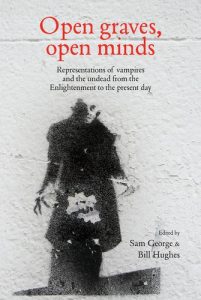
Roger Luckhurst’s Zombie’s: A Cultural History (2015) is seminal of course, but it does overlook the humanised or sympathetic zombie of young adult fiction, which is exactly my kind of zombie (at least the one I will be discussing in my Generation Dead: YA Fiction and the Gothic workshops over the next few weeks). In previous years I have relied on Fred Botting’s ‘Love Your Zombie: Horror, Ethics, Excess’(The Gothic in Contemporary Literature and Popular Culture, pp. 19-37) for a critical take on zom rom com and Bill Hughes’s, insightful ‘‘Legally Recognised Undead’: Essence, Difference, Assimilation in Daniel Waters’s Generation Dead’ (Open Graves, Open Minds, pp. 245-264). This year I am blessed to have Stacey Abbotts Undead Apocalypse: Vampires and Zombies in the Twenty-First Century (2016). Stacey’s ‘Be-Me: I-Vampire/ I-Zombie’ (pp.142-177), fills the gap left by Luckhurst’s book and allows the sympathetic or reluctant zombie to find a voice, a pulse, a heart. This ‘differently biotic’ twenty-first-century zombie ‘walks among us’, shuffling in the footsteps of its charismatic undead cousin, the vampire. It is more likely to cite Lennon’s ‘Imagine’ and re-enact Romeo and Juliet than trigger an apocalypse!

‘You’re bleeding!’

As she says this I begin to notice things. Sharp points of pain all over my body. I hurt. I pat myself down, and find my clothes sticky with blood. Not the dead black oil that once clogged my veins. Bright, vivid, living-red blood. Julie presses her hand into my chest […] against the pressure of her palm I feel it. A movement deep inside me, a pulse

‘R! Julie shrieks. ‘I think…you’re alive!’ (Warm Bodies, p. 228). 

Posted in Generation Dead: YA Fiction and the Gothic news | Tagged , , , , , | Leave a comment

Folk Horror Returns Ahead of The Urban Weird in April

Folk Horror has officially returned!! This could not be more serendipitous given that in three months time the OGOM project will collaborate with Supernatural Cities to present The Urban Weird (6th, 7th April) with more than a slight nod to folk horror!

From Britannia to the Wicker Man: The Welcome Return of Folk Horror   makes reference to the ‘submerged histories’ which give play to the imagination and rise up to frame spacial narratives and this is precisely the theme for our Spectral St Albans tour. St Albans is built on the remains of the ancient Roman city of Verulamium, razed to the ground by Boudicca.

You can join us for a stunning tour of the buried city walls  on the 7th April and engage with the magical and supernatural history of Hertfordshire’s finest spectral city (home to tortured martyrs, ghostly medieval monks, pagan Gods, grotesque carvings, winged skulls, Wiccan communities, folklore rituals and more). Look out for news of how to join us coming shortly!


Posted in Conferences, OGOM: The Urban Weird | Tagged , , | Leave a comment

Merpeople and Monstrous Lovers

Image result for mermaid paintingI’ve not seen Guillermo del Toro’s film The Shape of Water yet, but it appears to be an intriguing take on the ‘Beauty and the Beast’ archetype that lies behind the genre of Paranormal Romance. With its love affair between human woman and fabulous aquatic being it also, of course, resonates with the myths and legends of mermaids, mermen, and selkies that we have explored previously, here and elsewhere.

Carli Velocci, in ‘Why We’re So Obsessed with Sexy Monsters‘, reviews the film and explores the appeal of the monstrous lover. Emily Temple, in her appealingly-titled ‘Hot Sex with Sea Monsters: A Comparative Study‘, also reviews the film, comparing it to Rachel Ingalls’s novel Mrs Caliban (which depicts another love affair with an aquatic monster).

On the female side, mermaids have always held an erotic charge, but their glamour is frequently dangerous. Brenda S G Walter’s article, ‘Dark Mermaids Take Everything Men Fear and Use It Against Them‘, shows how some recent mermaid films, such as The Lure (2015), She Creature (2001), and Mamula (2014), emphasise this destructive aspect through the horror genre and in a contemporary feminist context.

There is some very well researched background on merpeople on this post at The Thinker’s Garden about The Mermaid Isles Project. The Mermaid Isles Project itself

seeks to fish out these scaly creatures and, figuratively, trigger their resurgence in the British Isles. Put more precisely, its chief researcher Professor Sarah Peverley seeks to chart and illustrate the unique role that mermaids have played in Britain’s iconographic and literary history from the Middle Ages to the sixteenth century.

The Thinker’s Garden is a fascinating site in its own right; its curators say:

We are friends of the Rational, and yet we readily indulge in the raptures of the imaginative spirit. Naturally, our inspiration for the Garden’s temenos of friendship comes from Epicurus, but we also love Plotinus and the Renaissance Platonists, as well as the Transcendentalists and Romantics. We are also drawn to the peculiarities of the Theosophists and hermeticists of the nineteenth century.

I’ve added links to both The Mermaid Isles Project and The Thinker’s Garden to the Related Links on our Blog and Resources pages.

Posted in Critical thoughts, Resources | Tagged , , , , , , , | 4 Comments

Direwolves: Dogs in Wolves’ Clothing in Game of Thrones

OGOM’s ‘Redeeming the Wolf’ event explored how literature, folklore, fairytale, and film have shaped our perceptions of the wolf and could be impeding its return. Odin and Thor (above) are two ‘wolf dogs’ from Northern Ireland who play ‘direwolves’ in the HBO series Game of Thrones.  The dogs have their own Facebook, Twitter and Instagram accounts and are insured for one million each. They  played ‘direwolf’ pups Summer and Grey Wind in season 1. Much of the show is filmed on location in Northern Ireland and the dogs are Northern Innuits. The significance of the ‘direwolves’ has been the subject of much speculation in newspapers such as the Huffington Post which suggests that The Direwolves are More Important Than You Think (ooh – the reasons why are rather elusive, however, as shown in the extract below):

The introduction to the near-mythical direwolves was more than just Martin’s/HBO’s way of pleasing the puppy-lovers in the audience. In actuality, the direwolves have very important roles to play on “Game of Thrones.” Interestingly enough, it appears the direwolves were some of the first “characters” Martin considered for his series. As the author told Mashable in 2014, he always had a fascination with the werewolf legends as a kid and simply picked the wolf as the House Stark sigil from a gut feeling. But, of course, the direwolves do serve a bigger purpose than just being a throwback to his childhood.

The owner of the direwolf acting dogs, Mr Mulhall, was quoted in the press as saying ‘Odin and Thor […] are a wolf look a like breed, the closest dog breeders can get to a wolf without a licence’. Celebrities have apparently tried to buy these dogs for huge amounts and there are a growing number of enquiries from people wanting similar wolf dog pups. Here are Odin and Thor’s Game of Throne cameos:

There is no doubt that the ‘direwolves’ are spectacular but the story of humankind’s relationship to these animals (dogs in wolves’ clothing) is perverse. It seems we admire these dogs because they look like untamed wolves, whilst simultaneously desiring to make them yield to us. Do we invite wildness in only to contain it? They represent the complex nature of hybridity – celebrated as pets for their ‘inbetweeness’ but made to appear  fully wolf for the delight of the viewers!

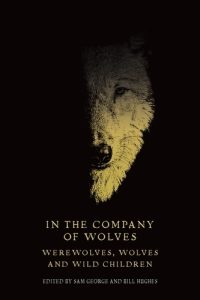
Look out for OGOM’s next publication: In the Company of Wolves: Werewolves, Wolves, and Wild Children – Narratives of Sociality and Animality, ed. by Sam George and Bill Hughes (Manchester University Press, 2018)

Posted in OGOM: The Company of Wolves | Tagged , , , , | 2 Comments