Frankenstein: essays and 1910 film

Image result for frankenstein frontispiece

A bit behind with blogging, so quite a few Frankenstein items have accumulated (it being, as I’m sure you’ll know, the 200th anniversary of the novel’s publication).

First, a brief discussion, with some very useful links, of the claim by Brian Aldiss, reiterated recently by William Gibson, that Frankenstein was the first science fiction novel. This is contentious: some put forward Margaret Cavendish’s The Blazing World (1666) as the first of the genre (I disagree). But read the article here:
Mary Shelley’s Handwritten Manuscript of Frankenstein: This Is “Ground Zero of Science Fiction,” Says William Gibson‘.

More on Mary Shelley’s novel, particularly on its relation to the visual arts, in Jonathan Jones, ‘Frankenstein and the gory gang: how the novel blazed a trail for high art horrors‘.

Helena Nicholson, in ‘The modern Prometheus: the relevance of Frankenstein 200 years on‘, assesses the contemporary relevance of the novel, calling up the familiar debate on how much the novel is a critique of science–a debate which is often too simplistic.

Claire Connolly writes on the Irish dimension of the novel in ‘Frankenstein’s Ireland: A “wretched” place with “traces of civilisation”’.

There’s an article on the moral questions raised by the novel by Raymond Boisvert : ‘Mary Shelley, Frankenstein & Moral Philosophy‘.

Finally, an article by Kelly Faircloth on the restored 1910 film of Frankenstein, with a link to the film.


Posted in Critical thoughts | Tagged , , , , , , , , | Leave a comment

CFPs: Buffy and the Bible, myth and fandom, fantasy blogs, Tropical Gothic

Some exciting calls for papers and articles:

1. Buffy and the Bible conference, University of Sheffield, 4-5 July 2019, deadline 18 March 2019

SIIBS and Sheffield Gothic are delighted to announce a two day interdisciplinary conference: ‘Buffy and the Bible’ which will take place at the University of Sheffield on 4-5th July 2019. Part of the Gothic Bible Project, and following our inaugural Gothic Bible conference in 2017 (which you can read all about here) ‘Buffy and the Bible’ will take the hit show Buffy the Vampire Slayer (1997-2003) as a case study to interrogate the relationship between religion and popular culture, and we welcome papers and posters that explore this theme in any aspect of the Buffyverse (see the Call For Papers below for more details).

2. Articles sought for Monumenta Mythica: A Journal of Modern Myths, Legends, & Folklore, deadline 15 January 2019

The myths, legends, and folklore of the world are both timeless and timely, giving context to the courses of nations and meaning to personal moments. They are reenacted in formal tableaux and reified in cosplay. They inform our religions and our television. They are us.

Monumenta Mythica, a new, online, peer-reviewed, open access journal from the Fandom and Neomedia Studies (FANS) Association, is pleased to publish this Call for Papers (see below for German and Spanish). We also accept reviews of works relevant to the fields of Monumenta Mythica as well as short documentary films. The field is broadly construed and may include, but is not limited to:

3. Bloggers on fantasy sought for the Tor.com website:

Writers wanted! The Tor.com blog is looking for fantasy experts to contribute in-depth essays, commentary, and analysis of your favorite books, authors, and series.

4. CFP: Tropical Gothic special issue of eTropic: Electronic Journal of Studies in the Tropics, deadline 30 December 2018


Posted in Call for Articles, CFP (Conferences) | Tagged , , , , , , , , | Leave a comment

Slaying Vampires: Romantic Origins, Theatrical Afterlives

but those mine enemies, which would not that I should reign over them, bring hither and slay them before me’ Luke 19.27

Vampire slaying kits, in my opinion, date back to around the time of British vampirologist Montague Summers (1880-1948) and have been in circulation since the 1920s.  It is my belief that such kits are tied to a form of entertainment in the theatre but the contents point to darker, more unsettling undead issues. The boxes generally contain a crucifix, Bible, holy water, wooden stakes and a mallet together with the book of common prayer (1851 edition). Inside many there is an unnerving handwritten passage from Luke 19.27 which reads: ‘but those mine enemies, […] I should reign over them, bring hither and slay them before me’.

Over 100 kits are known to exist, and many of them are antique in appearance. I have heard that there are nineteenth century examples (I mention this in the video, but I fear they are put together from antique parts at a much later point in history). It is sometimes stated that vampire kits in general, are late Victorian novelties, sold to tourists in eastern Europe in the wake of the publication of Dracula in 1897. However, there are some ‘Professor Blomberg’ kits in circulation and these are very recent creations, c.1970s. Though constructed from antique boxes and contents, they are most likely produced in the era of Hammer Horror.

We have 2 kits at OGOM and they look surprisingly similar, rather plain and naïve looking (very unlike the more ornate ones that include antique pistols). The first was donated by an antiquarian bookseller in Oxford and the story is that it was left there by a travelling theatre company in the 1930s and the second, which has pliers for defanging the vampire, is a contemporary kit that was made as recently as 2011 from parts.  I often get asked whether the kits are genuine. This is a very complex question to answer. Vampire kits are not fakes or reproductions, because there may be no evidence of an original. They are I think invented artefacts, akin to magic sets, but also art objects, that offer themselves up for display and become the preserve of galleries, archives or museums of curiosity.

As curios, they transcend questions of authenticity. They are part of the material culture of the gothic in which our shared anxieties are made manifest.  They are also extremely theatrical. It is worth noting that on 18th May 1897 the first and only performance of Stoker’s play Dracula, or The Undead was performed at the Lyceum Theatre (the novel was published on 26th May). The book thus began its life as a theatrical performance. These kits were sold to capitalise on the popularity of vampire theatricals. Surprisingly, Vampires appeared on stage from the 1820s onwards due to the vogue for reading and creating phantasmagoria and Polidori’s Vampire archetype enjoyed an extensive afterlife in the theatre.

The vampire kit’s connection to the taste for Phantasmagoria links them to Diodati and the story writing competition of 1816 involving Mary Shelley, Percy Bysshe Shelley, Lord Byron and William John, Polidori. Mary recalls that the party read and discussed a volume translated from the German by a Frenchman entitled Fantasmagoriana, or the history of spectres, revenants and phantoms which had been published in 1812. Amongst its varied material is the story of a sinner who is doomed to return as a vampire to suck the blood of his descendants.


Posted in Critical thoughts, MA Reading the Vampire module news, OGOM Research | Tagged , , , , | 2 Comments

Hallowe’en Greetings From OGOM

Hello OGOMERS,

Wishing you a spooktacular Hallowe’en evening!!!

We are just back from our Supernatural St Albans Halloween Tour which went down a real treat. Around 40 people engaged in our wonderfully weird history of witches, tortured martyrs, vampire graves, dragons, succubi and more. We are going to be running similar events regularly and making it a feature of what we do on the project so if you missed this one there will still be more opportunities to experience it and meet us in person in future:-)

You may have encountered some spirits but don’t forget that Hallowe’en is also a time to find (or test) true love. Why not try putting a black cat in a pumpkin shell and carrying a white owl on your shoulder to make sure true love endures…

Or put some spiders in your tea cup

If you still have not found true love send a lock of hair sailing into the air on a breeze. The place where the hair lands is where your true love is lying!

If you have already found true love but fear that your lover’s heart may grow cold you can do the following test to ensure your lover stays true….

Finally, make sure you invite some lucky black cats to share the evening with you…if they can sing or conduct a choir of Jack ‘O’ Lanterns all the better!

Posted in Fun stuff, News | Tagged , , , , | 1 Comment

Older than Dracula: in search of the English vampire

Older than Dracula: in search of the English vampire

File 20181025 71032 1t7uont.jpg?ixlib=rb 1.1
The Premature Burial.
Antoine Wiertz (1854)

Sam George, University of Hertfordshire

The story of Count Dracula as many of us know it was created by Bram Stoker, an Irishman, in 1897. But most of the action takes place in England, from the moment the Transylvanian vampire arrives on a shipwrecked vessel in Whitby, North Yorkshire, with plans to make his lair in the spookily named Carfax estate, west of the river in London.

But Dracula wasn’t the first vampire in English literature, let alone the first to stalk England. The vampire first made its way into English literature in John Polidori’s 1819 short story “The Vampyre”. Polidori’s vampire, Lord Ruthven, is inspired by a thinly disguised portrait of the predatory English poet, Lord Byron, in Lady Caroline Lamb’s novel Glenarvon (1816). So the first fictional vampire was actually a satanic English Lord.

It is nearly 200 years since this Romantic/Byronic archetype for a vampire emerged – but what do we know about English belief in vampires outside of fiction? New research at the University of Hertfordshire has uncovered and reappraised a number of vampire myths – and they are not all confined to the realms of fiction.

The Croglin Vampire reputedly first appeared in Cumberland to a Miss Fisher in the 1750s. Its story is retold by Dr Augustus Hare, a clergyman, in his Memorials of a Quiet Life in 1871. According to this legend, the vampire scratches at the window before disappearing into an ancient vault. The vault is later discovered to be full of coffins that have been broken open and their contents, horribly mangled and distorted, are scattered over the floor. One coffin only remains intact, but the lid has been loosened. There, shrivelled and mummified – but quite intact – lies the Croglin Vampire.

Elsewhere in Cumbria, the natives of Renwick, were once known as “bats” due to the monstrous creature that is said to have flown out of the foundations of a rebuilt church there in 1733. The existence of vampire bats, which sucked blood wouldn’t be confirmed until 1832, when Charles Darwin sketched one feeding off a horse on his voyage to South America in The Beagle. The creature in Renwick has been referred to as a “cockatrice” – a mythical creature with a serpent’s head and tail and the feet and wings of a cockerel – by Cumbrian County History. But it’s the myth of the vampire bat that has prevailed in the surrounding villages and is recorded in conversations in local archives and journals

What picture emerges then in this history of the English vampire? The Croglin Vampire has never been verified – but it has an afterlife in the 20th century, appearing as The British Vampire in 1977 in an anthology of horror by Daniel Farson, who turns out to be Stoker’s great-grandnephew.

The Nightmare.
John Henry Fuseli (1781)

Nightmare in Buckinghamshire

But there is one case that has no connection to fiction, the little-known Buckinghamshire Vampire, recorded by William of Newburgh in the 12th century. Historical records show that St Hugh, the Bishop of Lincoln, was called upon to deal with the terrifying revenant and learned to his astonishment, after contacting other theologians, that similar attacks had happened elsewhere in England.

St Hugh was told that no peace would be had until the corpse was dug up and burned, but it was decided that an absolution – a declaration of forgiveness, by the church, absolving one from sin – would be a more seemly way to disable the vampire. When the tomb was opened the body was found to have not decomposed. The absolution was laid inside on the corpse’s chest by the Archdeacon and the vampire was never again seen wandering from his grave.

The Buckinghamshire revenant did not have a “vampire” burial – but such practices are evidence of a longstanding belief in vampires in Britain. Astonishingly, the medieval remains of the what are thought to be the first English vampires have been found in the Yorkshire village of Wharram Percy. The bones of over 100 “vampire” corpses have now been uncovered buried deep in village pits. The bones were excavated more than half a century ago and date back to before the 14th century. They were at first thought to be the result of cannibalism during a famine or a massacre in the village but on further inspection in 2017 the burned and broken skeletons were linked instead to deliberate mutilations perpetrated to prevent the dead returning to harm the living – beliefs common in folklore at the time.

‘Vampire graves’ have been found at the abandoned village of Wharram Percy in Yorkshire.
Paul Allison via Alchemipedia, CC BY

Vile bodies

The inhabitants of Wharram Percy showed widespread belief in the undead returning as revenants or reanimated corpses and so fought back against the risk of vampire attacks by deliberately mutilating their own dead, burning bones and dismembering corpses, including those of women, children and teenagers, in an attempt to stave off what they believed could be a plague of vampires. This once flourishing village was completely deserted in the aftermath.

Just recently at an ancient Roman site in Italy the severed skull of a ten-year-old child was discovered with a large rock inserted in the mouth to prevent biting and bloodsucking. Then skull belongs to a suspected 15th-century revenant which they are calling locally the “Vampire of Lugano”.

There has been a wealth of other stories from the UK and other parts of Western Europe – but, despite this, thanks to the Dracula legend, most people still assume such practises and beliefs belong to remote parts of Eastern Europe. But our research is continuing to examine “vampire burials” in the UK and is making connections to local myths and their legacy in English literature, many years before the Byronic fiend Count Dracula arrived in Yorkshire carrying his own supply of Transylvanian soil.The Conversation

Sam George, Senior Lecturer in Literature, University of Hertfordshire

This article is republished from The Conversation under a Creative Commons license. Read the original article.

Posted in Critical thoughts | Tagged , , , | 1 Comment

Something to Howl About: OGOM Gothic Studies Special Issue, ‘Werewolves and Wildness’

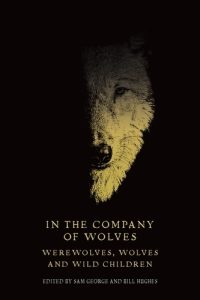
We’re excited to announce that we have submitted our special issue of Gothic Studies on ‘Werewolves, Wild Children and Wilderness to Edinburgh University Press for publication in May, 2019.  This is the first of two publications that have developed from our now legendary Company of Wolves conference and programme of events.  You can see the line up of this special issue, including the abstracts below. Big thanks to our wonderful contributors…..woo hoo… definitely something to howl about!!

Gothic Studies: Werewolves, Wild children and Wilderness

Sam George and Bill Hughes,  Intro: ‘Werewolves and Wildness’.

Sue Chaplin, ‘‘Daddy, I’m falling for a Monster’: Women, Sex and Sacrifice in Contemporary Paranormal Romances Featuring Vampires and Werewolves’ 

Abstract. This article examines a key trope within much contemporary paranormal romance: the absence, or ineffectiveness, of the father. The first part of the essay develops an analysis of this aspect of the genre (in the Twilight Saga especially) through the work of René Girard, Luce Irigaray and Juliet MacCannell. Of particular importance here is the extent to which Twilight and similar narratives stage female self-sacrifice as a pre-condition for the redemption of the hero and the restoration of patriarchal bonds initially compromised by some crisis in the effective functioning of paternal authority. The second section extends this analysis to consider ways in which paranormal romances featuring werewolves and vampires shift away from this conservative and reductivist romance paradigm so as to affirm and contest heteronormative, paternalistic models of masculinity and sexual desire.

Tania Evans, ‘Full Moon Masculinities: Werewolves, Emotional Repression and Violence in Young Adult Fiction’

Abstract. Gothic monsters have recently experienced a period of focused scholarly analysis, although few studies have engaged with the werewolf in terms of its overt alignment with masculinity. Yet the werewolves of young adult fantasy fiction both support and subvert dominant masculine discourses through their complex negotiation with emotional repression and violence. These performative masculine practices are the focus of this article, which analyses how hegemonic masculine ideals are reinforced or rejected in a corpus of young adult fantasy texts, including Cassandra Clare’s young adult series The Mortal Instruments (2007-2014) and Stephenie Meyer’s Twilight Saga (2005-2010). Both texts feature masculine characters whose lycanthropic experiences implicitly comment upon gender norms, which may shape young adult audiences’ understanding of their own and others’ gender identities.

Simon  Marsden, ‘One look and you recognize evil’: Lycan Terrorism, Monstrous Otherness and the Banality of Evil in Benjamin Percy’s Red Moon’

 Abstract. Benjamin Percy’s novel Red Moon (2013) navigates the problem of the ‘monster’ in the context of post-9/11 representations of Islamist terrorism. Structured around a series of terrorist atrocities carried out by lycan extremists, Percy’s novel employs the werewolf as a figure of monstrous otherness in order to deconstruct the very processes of othering by which the monster is produced culturally and politically. Focusing on the distorted ethical justifications of the terrorists and on the roles of political opportunism and media manipulation in shaping US responses, the narrative allows both lycan terrorists and their political antagonists to emerge as more clown than monster. This article draws upon Hannah Arendt’s account of the banality of evil, and its development by more recent privation theorists, to situate Red Moon within contemporary popular and theoretical discourses of evil and to read the novel as an interrogation of the processes by which our modern political ‘monsters’ are created.

Curtis Runstedler, ‘The Benevolent Medieval Werewolf in William of Palerne’

 Abstract. This article argues that the werewolf of the medieval romance displays behaviour comparable with modern studies of the wolf. In the dualistic medieval world of nature versus society, however, this seems inconsistent. How does the medieval werewolf exhibit realistic traits of the wolf? I examine the realistic lupine qualities of the werewolf Alphouns in the Middle English poem William of Palerne to justify my argument. Citing examples from his actions in the wilderness, I argue that Alphouns’s lupine behaviour is comparable to traits such as cognitive mind-mapping and surrogate parental roles, which are found in contemporary studies of wolves in the wild. Recognising the ecology of the (were)wolf of the medieval romance helps us to understand better the werewolf’s role as metaphor and its relationship to humans and society.

Sam George, ‘Wolves in the Wolds: Late Capitalism, the English Eerie, and the Weird Case of ‘Old Stinker’ the Hull Werewolf’

Abstract. British folklore reveals a history of werewolf sightings in places where there were once wolves. This article draws on theories of the weird and the eerie and on the turbulence of England in the era of late capitalism in its analysis of the representation of werewolves in contemporary urban myths. Werewolves are deliberately excluded from Mark Fisher’s notion of the ‘weird’, because they behave in a manner that is entirely expected of them. I contradict this by interrogating the werewolf as spectre wolf, bringing it within the realms of the weird. In examining the Hull Werewolf, I put forward the suggestion that he represents not only our belief in him as a wolf phantom, but our collective guilt at the extinction of an entire indigenous species of wolf. Viewed in this way, he can reawaken the memory of what humans did to wolves, and redeem the Big Bad Wolf of our childhood nightmares

Lisa Nevárez, ‘Playgrounds in the Zombie Apocalypse: The Feral Child’

Abstract. In the episode `The Grove’ (4.14) from AMC’s The Walking Dead, Lizzie and Mika Samuels, sisters and two of the child survivors of the zombie apocalypse, brutally meet their ends. Lizzie, no longer able to distinguish between life and death, kills Mika, and Carol in turn shoots Lizzie, claiming that Lizzie ‘can’t be around people’. These characters call into question the dividing line – if one remains, as established society crumbles – between human and animal, feral and civilised. The texts analysed in this article, AMC’s The Walking Dead and Max Brooks’s novel World War Z, include themes of re-socialising children and forming communities, or packs, in which the children can perhaps become rehabilitated into productive contributors. Viewing children in this light summons up viewer and reader responses to ‘horror’ that are more in keeping with reactions to real-life cases of abused and neglected ‘feral’ children than with the ‘horror’ produced by a zombie-themed text.

Michael Brodski, ‘The Cinematic Representation of the Wild Child: Considering Trouffaut’s L’enfant sauvage (1970)’

Abstract. This article, in examining François Truffaut’s L’enfant sauvage (1970), will consider the feral child Victor (Jean-Pierre Cargol) with regard to the film’s cinematic portrayal as typifying the cultural construction of a child. Following James R. Kincaid, the figure of the child can be seen as a ‘hollow category’, seemingly featureless in its alleged innocence. As a result, it functions as an adult ‘repository of cultural needs or fears’. For this reason, the child, and especially the feral child, can serve as a projection screen for a variety of different and even opposed questions and symbolic constructions. The film effects this subliminally through the portrayal of Victor. This is mainly achieved by constantly shifting between a Romantic discourse of the noble savage and child of nature and the Lockean empiricist view, with the infant’s mind as a tabula rasa condition and the doctor’s, Jean Itard (played by Truffaut himself), consequent need to educate Victor.


Posted in OGOM: The Company of Wolves, Publications | Tagged , , , , | Leave a comment

Deviant Burial of ‘Vampire’ Child in C15th Italy

I am mapping ‘deviant’ burials for a piece I am writing on Wharram Percy, the medieval English village that mutilated its own dead, including many women and children. Whatever these people believed eventually took hold completely and led to them deserting the village. It is a famous case within archaeology but I will be bringing it within the realms of literature and supernatural beliefs regarding vampires and revenants in my new research article. An earlier short piece, How Long have We Believed in Vampires? was written last year, and again I draw connections between deviant burials, the folklore of the undead, and its legacy in literature.

Yesterday, I was made aware of a new article in Science Daily which reports on a similar ‘deviant’ burial, this time involving a ten year old child, a suspected revenant  in fifteenth-century Italy. The severed skull has a large rock inserted in the mouth to prevent biting and the child’s corpse from returning, thus spreading the plague which may have killed her:  Vampire Burial Reveals Efforts to Prevent Child’s Return from the Grave 

What is most striking about this for me is that despite Wharram Percy and the Southwell Vampire, a skeleton found with metal spikes through its shoulders, heart and ankles, dating from 550-700AD and buried in the ancient minster town of Southwell, Nottinghamshire, most still believe these practises only took place in Eastern Europe, in Slavic regions. This new discovery takes us outside of that realm and on to Italy, paving the way for my forthcoming article on the English Vampire and deviant burials a little closer to home in Yorkshire in the UK.


Posted in Critical thoughts, MA Reading the Vampire module news, OGOM Research | Tagged , , , , | Leave a comment

OGOM: Spectral St Albans Hallowe’en Tour – booking now

OGOM is proud to announce a special Supernatural St Albans Hallowe’en Tour. We will be exploring the magical and spectral history of Hertfordshire’s finest gothic city. The event is informed by the research we carried out for our ‘Urban Weird‘ project in collaboration with Supernatural Cities.   We have explored the weird and the eerie, and those uncanny or submerged histories that give play to the imagination and rise up to frame spacial narratives.

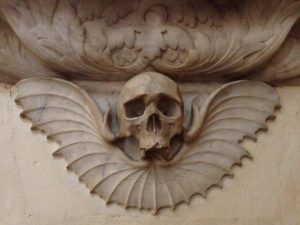
St Albans is home to tortured martyrs, ghostly monks, pagan Gods, grotesque carvings, an ancient dragon or wyrm’s lair, succubi, winged skulls, witches, Wicca communities, folklore rituals and more. Join us on 31st October. Your tour guides are OGOM’s very own Dr Sam George and Dr Kaja Franck. Meet at the Clock Tower, St Albans, 4.00. The tour lasts 90 minutes with optional drinks to follow at the most haunted Inn. Price 8.00.

To book please email: K.A.Franck@gmail.com

Posted in Events, Gothic Hertfordshire, OGOM News, OGOM Research | Tagged , , , , , , | 2 Comments

CFP: Reading Group on Animals and Mythical Creatures

The Myth Reading Group at the University of Essex Centre for Myth Studies have announced a CFP on Animals and Mythical Creatures for the Autumn Term 2018. They invite proposals from anyone who is interested in any aspect of mythological animals and creatures and addresses the theme from a mythological perspective across cultures, periods, and media. Please contact them with suggestions for works or topics to read and discuss. They are also accepting proposals for video conferencing (by Skype) for those who cannot travel to Colchester.

The Myth Reading Group meets on alternate Wednesdays in term time, between 5.00 and 6.30 p.m. (North Teaching Centre: Room NTC.2.05) at the University of Essex Colchester Campus. The sessions include a short presentation of up to 30 minutes, followed by discussion or a reading session. The first session will take place on 17 October. Email: mythic@essex.ac.uk

ca. 1602 — The Maiden and the Unicorn by Domenichino — Image by © Alinari Archives/CORBIS

Posted in CFP (Conferences), Events | Tagged , , , | Leave a comment

Vampire Myths and Vampire Lore

Posted in MA Reading the Vampire module news, OGOM Research | Tagged , , , , , | Leave a comment