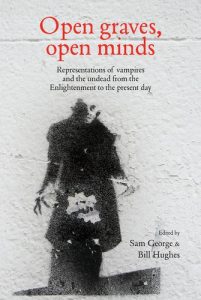
The Open Graves, Open Minds Project began by unearthing depictions of the vampire and the undead in literature, art, and other media, then embraced werewolves (and representations of wolves and wild children), fairies, and other supernatural beings and their worlds. The Project extends to all narratives of the fantastic, the folkloric, and the magical, emphasising that sense of Gothic as enchantment rather than simply horror. Through this, OGOM is articulating an ethical Gothic, cultivating moral agency and creating empathy for the marginalised, monstrous or othered, including the disenchanted natural world.
As you may know from previous posts, I have been tracing the genetic mutations from which the genre of paranormal romance arose by looking at an earlier manifestation, Gothic romance (or romantic suspense). This genre flourished from about the 1940s to the 1980s and has as its architexts the Brontës’ Jane Eyre (1847) and Wuthering Heights (1847) and, nearer in time Daphne du Maurier’s Rebecca (1938).
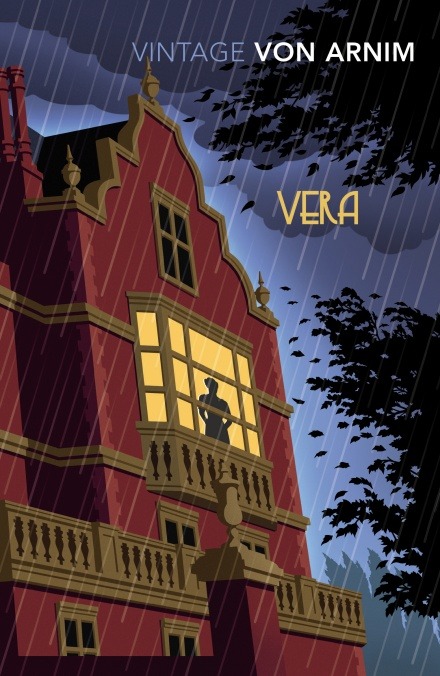
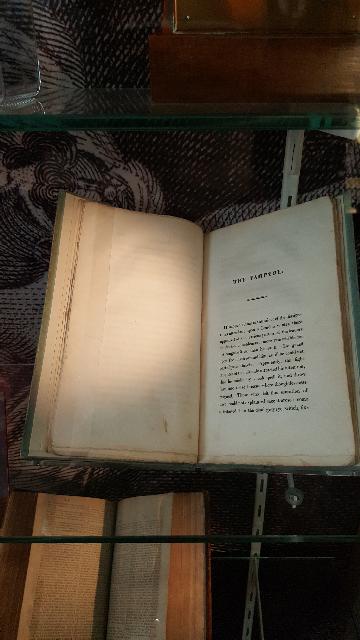
This line of research led me to Elizabeth von Arnim’s Vera (1921) which has been claimed as an important influence on du Maurier’s classic romance of a young and vulnerable woman who loves and marries a man whose life is haunted (figuratively) by the powerful presence of his dead first wife, Rebecca.
Vera is a darkly comic transformation of the Gothic romance paradigm. In novels of that genre (and in paranormal romance too), the plot moves towards an overcoming of the otherness of the demonic lover with a promise of mutuality, often involving the redemption or reformation of the man. (This sometimes involves a very dubious sexual politics where, as in Victoria Holt’s aptly named The Demon Lover (1982), the ‘hero’ has abducted and raped the heroine but is transformed by her love.)
In von Arnim’s novel, Lucy Entwhistle, a young woman whose father has just died, is comforted by an older and very self-assured man who is himself bereaved: his wife, Vera has, it is rumoured, committed suicide. The man, Everard Wemmys, courts her and soon marries her. He is genuinely demonic – bullying, rigidly puritanical, monstrously selfish. His dominance (fearful but exciting in Gothic romance) is viciously oppressive, stifling any possibility of mutuality (his conversational style with others reveals this; his silencing of Lucy herself; even the obsessive locking away of the books in the library he doesn’t read). Lucy seems to have had a vaguely academic or bohemian life when her father was alive and his friends visited and is used to free and lively dialogue, but now she is cut off from social life with an egotistically monologic husband. And his monstrosity is singularly without glamour.
The gothicised romance plot typically shows the reformation of the rake (after Samuel Richardson’s Pamela (1740)) or taming of the monster, culminating in marriage. Vera arrives at marriage very quickly and Wemmys’s petty cruelties begin even on their honeymoon (though the reader becomes aware of his despotism even earlier). Von Arnim strips away romantic illusion or utopian possibilities, depicting the horrific afterlife of courtship in a brutally constricting marriage. It is significant that Emily Brontë’s Wuthering Heights is referred to in the novel. This is a key intertext in Gothic and paranormal romance and is a similarly uncomfortable depiction of the interaction of love and violence. (Arnim’s friend John Middleton Murray likened the book to Wuthering Heights as written by Jane Austen, which captures its caustic wit.) The novel lays bare the allure of Gothic/paranormal romance. It is horribly, excruciatingly funny.
Conference report by Daisy Butcher, PhD candidate, University of Hertfordshire
On Friday the 28th of June I attended the Queer Fears Symposium run by my wonderful secondary PhD supervisor Dr Darren Elliott-Smith at the Odyssey Cinema in St Albans. The day consisted of academic papers on the topic of Queerness in Horror film and TV and also a film screening of Nightmare on Elm Street 2:Freddy’s Revenge in the evening. This article is a short review of the symposium’s presentations and the event as a whole.
The first panel, entitled ‘In and Out of the Closet’, included the University of Hertfordshire academics Chris Lloyd, Tim Stafford, and Ben Wheeler. The panel discussed American Horror Story, The Chilling Adventures of Sabrina,and The Lost Boys,which were favourites of mine as both a fan and researcher. Points of particular interest for myself included Chris Lloyd’s analysis across the seasons of American Horror Story, Tim Stafford’s argument surrounding the queerness of the Spellman family structure, and Ben Wheeler highlighting the inherent homoeroticism of The Lost Boys.
The second panel, on Queer Performative Horror, featured Valeria Lindvall, who explored the web series Dragula; Daniel Shepherd, who delivered his paper on the appropriation of the Babadook as a Queer icon; and Lexi Turner analysing Queer dance in the films Suspiria and Climax. Although I had not actually seen these films and webseries, the presentations were very engaging and effective in emphasising the unique queer elements.
After this panel we were treated to lunch. The catering at this conference was of excellent quality with plenty of vegetarian options for myself. We also had a pint-sized Freddie Kreuger serving us biscuits throughout the day, which was a fun touch!
The first afternoon panel was on ‘Consuming Queerness and other Gross Tales . . .’, where Robyn Ollett and Eddie Falvey both examined Julia Ducournau’s 2016 film RAW which explores university hazing culture and cannibalism. Robyn Ollett explored themes such as the self-destructive body horror of the film while Eddie Falvey opted for more of a survey approach to the female body in horror film, comparing Ducournau’s film to Teeth, which shows a vagina dentate body as a site of resistance, as well as Thanatomorphose and Contracted, which seemed more regressive in their representation of the female body as diseased after sex/rape. Lastly, the University of Hertfordshire academic Laura Mee rounded off the panel by discussing the films of Lucky McKee, which feature monstrous female forms such as hybridised bug-women who devour their mean landladies.
The final panel of the conference, entitled ‘Frightfully Problematic Queerness’, featured Sam Tabet and the University of Hertfordshire PhD candidate Siobhan O’Reilly. Unfortunately, Christopher Clark was unable to make it but on a positive note it meant we had more time for questions and discussion at the end of both papers. Siobhan O’Reilly’s paper was extremely enlightening on the reality of transphobia in horror film history. In fact, she had completed a comprehensive list of films which feature trans characters negatively, often as the killer of the stories. One film in particular that she used as a case study was Sleepaway Camp, where the film’s final twist is the revelation that Angela was in fact the murderer. Siobhan O’Reilly showed a clip of the final scenes which highlighted how the characters seem more shocked by her having a penis than the fact she is a serial killer. Sam Tabet analysed the more recent film What Keeps you Alive from 2018, which featured a lesbian couple where one of them was a psychotic killer. Sam went into detail about the film’s conception, as the director originally had the idea for a heterosexual couple and then opted to swap out the murderous husband for a lesbian wife instead. She highlighted the problematic nature of the film and its reinforcement of the link between lesbian desire and violence.
To end the symposium, Dr Darren Elliott-Smith delivered the keynote on the gay zombie: ‘”Unbury Your Gays”: Queer Zombies, Mental Illness and Assimilation Anxieties in Contemporary Film and TV’. In his presentation, he looked into contemporary zombie film and TV shows such as In the Flesh and Otto.
The attention to detail at the conference was first class, as the post-keynote wine reception and refreshments included rainbow drops served by Freddie and a magnificent rainbow cake with rainbow napkins. Moreover, the Odyssey as a venue was fantastic as all film clips and presentations took place on their professional cinema screen. Not to mention that the staff were very helpful and enthusiastic, even going as far as to put up themed horror film posters around the venue and hiding Freddie Kreuger gloves on their current film posters such as Spiderman: Far from Home and Rocketman. I did not attend the film screening in the evening but overall this one-day symposium was one of the best academic events I have ever attended. While Queer Theory had not been my specific research approach, it was a very thought-provoking conference and it was inspiring to see how academics approached Queerness as a topic more broadly than I first anticipated. The commitment and passion behind it was obvious as Dr Darren Elliott-Smith did a wonderful job in organising the event. It was certainly a worthy send-off and legacy for him to leave the University of Hertfordshire with as he moves on to pastures new at the University of Stirling. I would like to wish him the best of luck and am grateful to him for remaining my secondary PhD supervisor and staying attached to my project.
Daisy Butcher is a Gothic and horror PhD student at the University of Hertfordshire attached to the Open Graves Open Minds project. Her thesis focuses on the monstrous feminine, psychoanalysis, and body horror from the nineteenth-century Gothic short story to modern film and TV reincarnations. Her PhD project particularly analyses the female vampire, mummy, and the killer-plant monster. She is currently editing a publication with the British Library, Evil Roots: Killer Tales of the Botanical Gothic, which will be released in Autumn 2019.
1. Myth and Art Revisited conference, National and Kapodistrian University of Athens, Greece, 18-19 December 2019. Deadline: 31 July 2019.
This international two-day conference hosted by the Department of English Language and Literature, National and Kapodistrian University of Athens, seeks to explore from a comparativist and interdisciplinary perspective the relationship between classical myth and art as a “revisiting,” or rereading, by other means, of the mythical narratives provided to us by traditional scholarship from a later framework.
The aim of this special issue of Gothic Studies (23/3, to be published Nov 2021) is to bring together research that does not simply consider Gothic short fiction and its artistic and cultural brethren as incidental, but integral to the design and effect and/or cultural significance of the piece because the short form in the Gothic tradition has, as yet, received little in the way of sustained scholarly attention. Form and structure, publication histories, and multi-media adaptation, in various guises, will comprise a key focus of the issue.
Supernatural Studies is a peer-reviewed journal that promotes rigorous yet accessible scholarship in the growing field of representations of the supernatural, the speculative, the uncanny, and the weird. The breadth of “the supernatural” as a category creates the potential for interplay among otherwise disparate individual studies that will ideally produce not only new work but also increased dialogue and new directions of scholarly inquiry. To that end, the editorial board welcomes submissions employing any theoretical perspective or methodological approach and engaging with any period and representations including but not limited to those in literature, film, television, video games, and other cultural texts and artifacts.
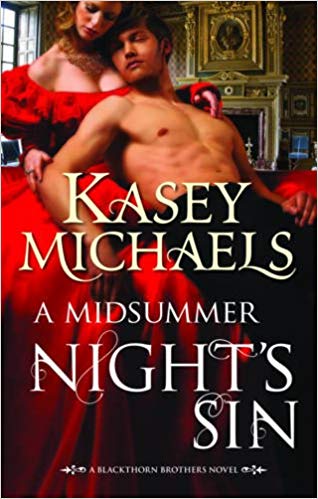
Next year will be the tenth anniversary of the OGOM Project. Sam and I are working on something very special and magical for our celebrations and 2020 conference. All will be revealed soon but some of our background research involved watching Max Reinhardt’s 1935 film production of A Midsummer Night’s Dream. It’s a remarkably good film, though some performances may be a little weak. But it’s visually superb and evokes a truly other world of slightly Gothic Faery through light and shade and effects that still seem spectacular.
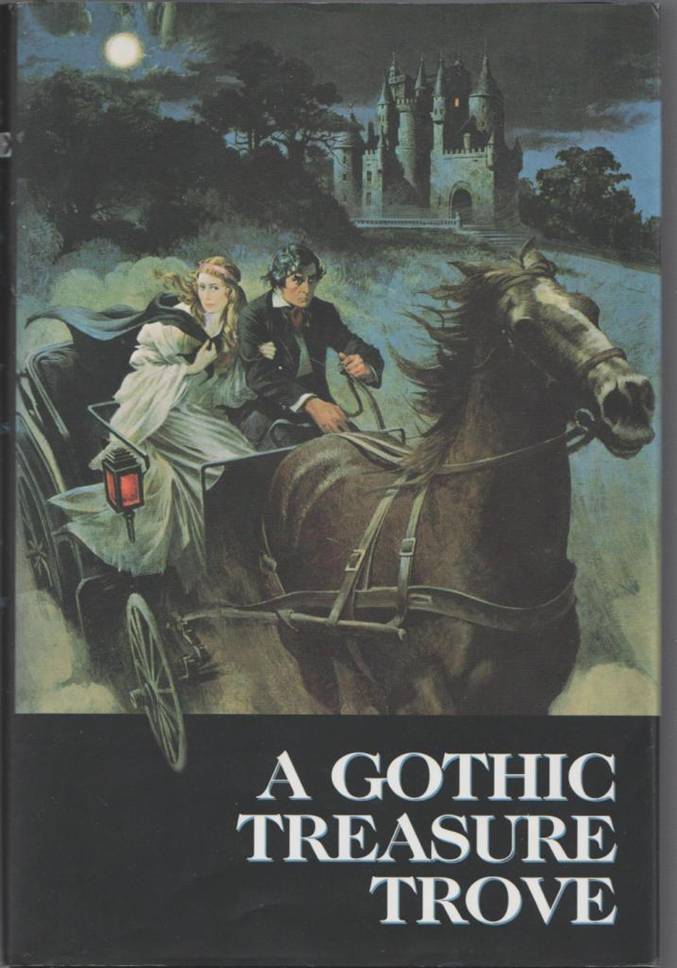
Serendipitously, the next day I found this steamy Regency bodice ripper (featuring Robin ‘Puck’ Goodfellow Blackthorn and an abduction from a masked ball) in a charity shop:
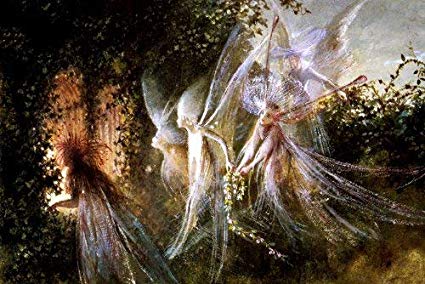
A related theme can be found in Sam’s Twitter Moment, where she has been researching the interrelationship of fairies and the Gothic in Victorian painting and literature: Victorian Fairies and the Gothic.
John Fitzgerald, Fairies Looking Through a Gothic Arch (1864)
In the opening decades of the twenty-first century, with Trump in the White House and Brexit on the horizon, Angela Carter’s famous assertion of 1974 that ‘we live in Gothic times’ has never been more apt. This year’s Gothic Manchester Festival Symposium picks up on these concerns, inviting twenty-minute papers on the theme of ‘Gothic Times’ that are accessible to a non-specialist audience. These may focus on any aspect of Gothic culture – literature, film, television, music, graphic novels, games, Goth subcultures, etc.
Gothic Nature is a new interdisciplinary and peer-reviewed academic journal seeking to explore the latest evolutions of thought in the areas of ecohorror and the ecoGothic. It welcomes articles, reviews, interviews, and original creative pieces from researchers and artists interrogating the darker sides of our relationship to the nonhuman.
Since its inception, Gothic has had a complex and fascinating relation to the real. Its origins in the mid and late-eighteenth century are imbued with the socio-cultural emergence of modernity, yet the Gothic Romances of this period, such as Horace Walpole’s The Castle of Otranto and those of Ann Radcliffe, playfully offset any historical veracity through fakery, phantasy and terror. The genre’s resurgence as a mode in the nineteenth century, and as an ever-increasingly plastic substance or style in the twentieth and twenty-first, has resulted in an explosion of Gothic literature and media. From its narratives and counter-narratives of property ownership, Empire, Queerness, technology, and life itself, Gothic has produced a multitude of metafictional realities –political and ontological.
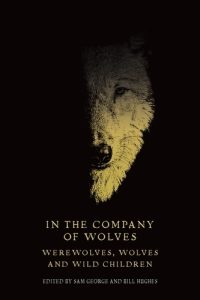
Woo hoo we’re excited to announce that OGOM’s Dr Sam George and Dr Bill Hughes have edited the first ever issue of Gothic Studies on werewolves and it is out now from Edinburgh University Press: ‘Werewolves and Wildness’ 21.1 (May 2019) If you are a member of the IGA, you should be able to access this online. We hope you enjoy it. We would like to thank all our wonderful contributors. The contents are as follows:
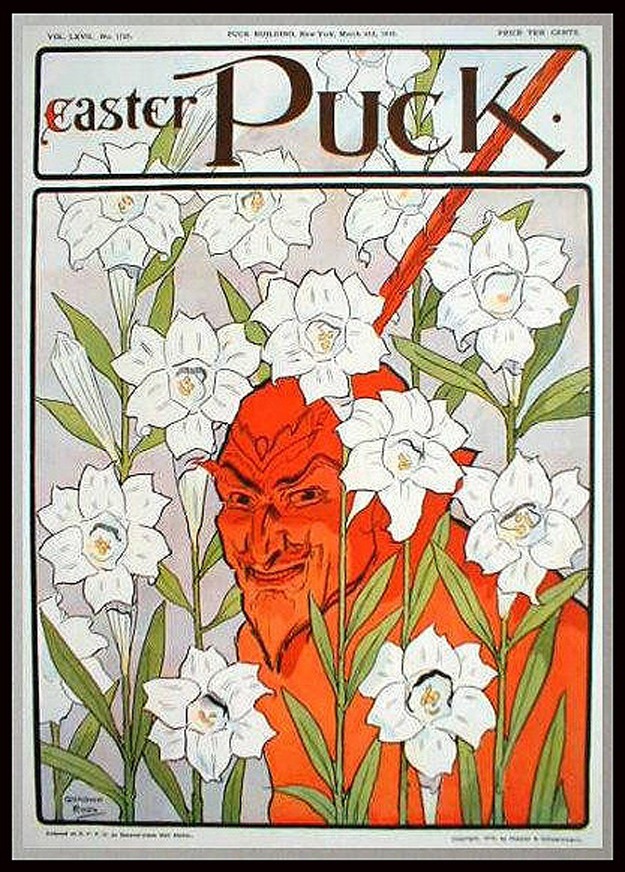
Happy holidays to all from OGOM. Here’s a cover from a turn-of the-19th-century satirical magazine Puck announcing a very mischievous Easter:
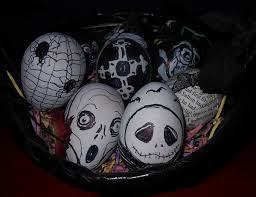
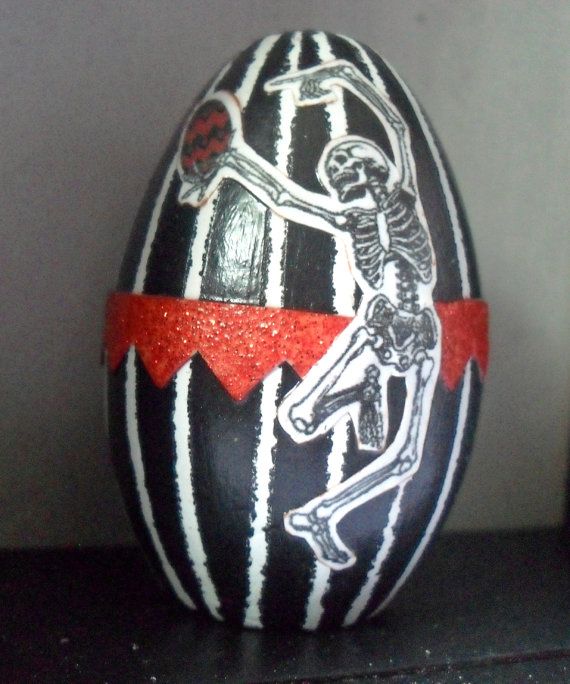
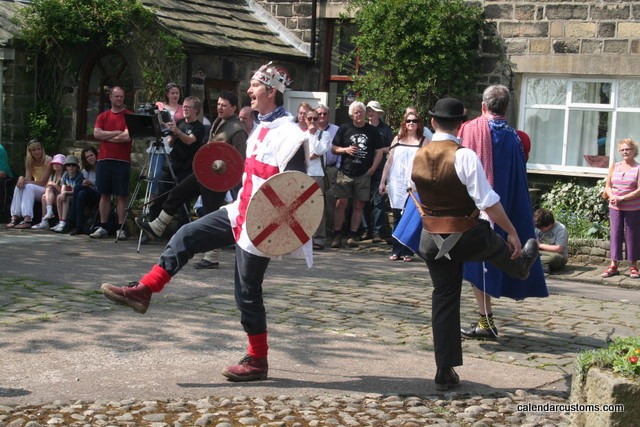
However you are spending the bank holiday, I hope you catch some mummers or pace egg plays as they are always a delight. We have already had reports from Todmorden and St Albans. You can read about the play’s themes and significance in our earlier post here.
If you are short of ideas for pace eggs, we do have some that would appeal to gothic sensibilities….wow just wow!!
Mummer or Pace egg Plays are often performed today in areas such as St Albans, Todmorden & Hebden Bridge. They have a hero-combat theme. St George fights and conquers all manner of enemies (The dragon, The Turk etc.). The other major motif is death and resurrection so those killed are ‘cured’ and will live to fight another day. These plays are secular, so the resurrection here often involves a magic cordial, but they do share the Christian theme of renewal and rebirth at Easter.
Todmorden in West Yorkshire is launching it’s Centre for Folklore, Myth and Magic on Easter Saturday so do go along and find out more. You can pop into some of those wonderful bookshops such as Lyalls (Rochdale Rd, Todmorden OL14 5AA) and Border Bookshop (61a Halifax Rd, Todmorden OL14 5BB) that we have been hearing so much about too; peopled by interesting OGOM inspired staff :-).
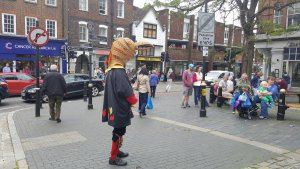
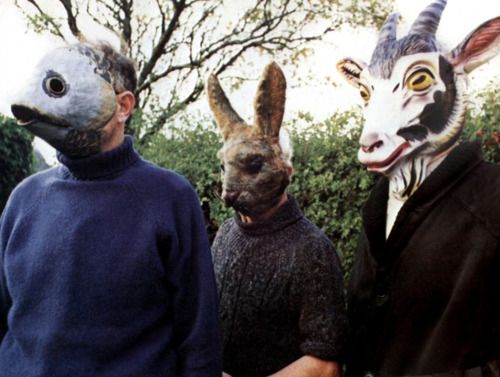
Here in St Albans we have our own mummer’s group The St Alban’s Mummers. Animal mummers are popular:
Animal heads have existed since medieval times, the nobility staged elaborate mummings at court involving swan heads, peacocks & dragons. Similar heads can still be found in St Albans in C21st (above) and are strangely unsettling to see.
A more sinister version of mummers emerged in folk horror’s The Wicker Man (1973). A film which draws heavily on the sources in J.G. Frazer’s The Golden Bough (1890).
Mikel Koven has written a provocative account of folklore in the film in relation to Frazer who coincidentally features heavily in my forthcoming book on the shadow and my essay on folkloric shadowless demons in the special edition of Gothic Studies on Folklore (next but one issue).
Folklore and Folk Horror are really thriving in Gothic Studies just now and the University of Hertfordshire have just launched their MA in Folklore Studies, the first of its kind in the UK. Applications are open!
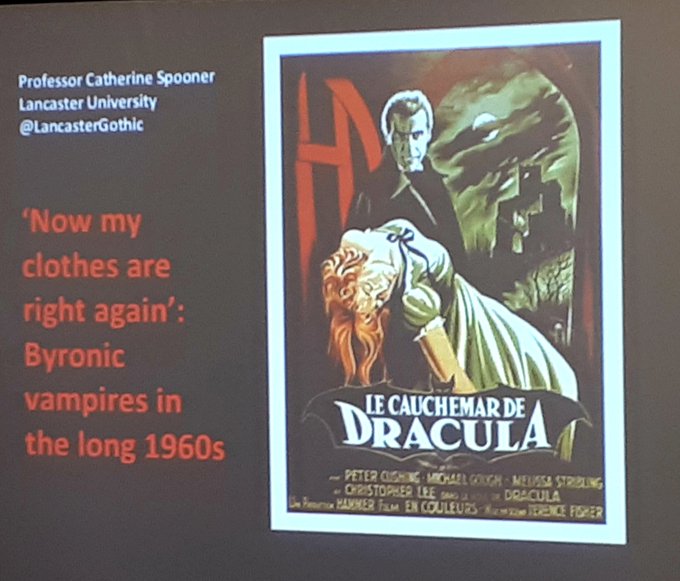
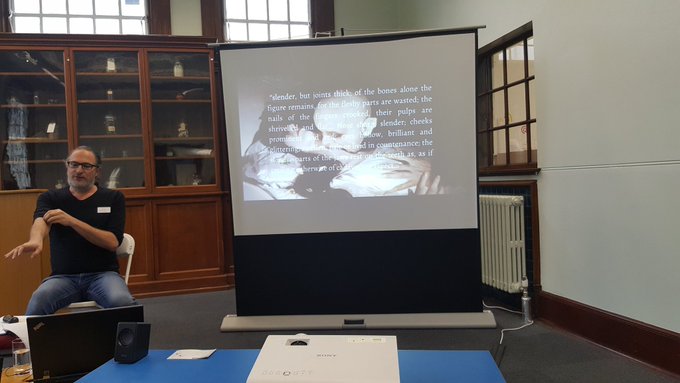
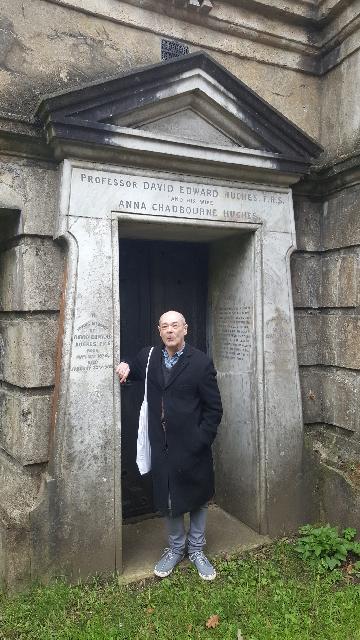
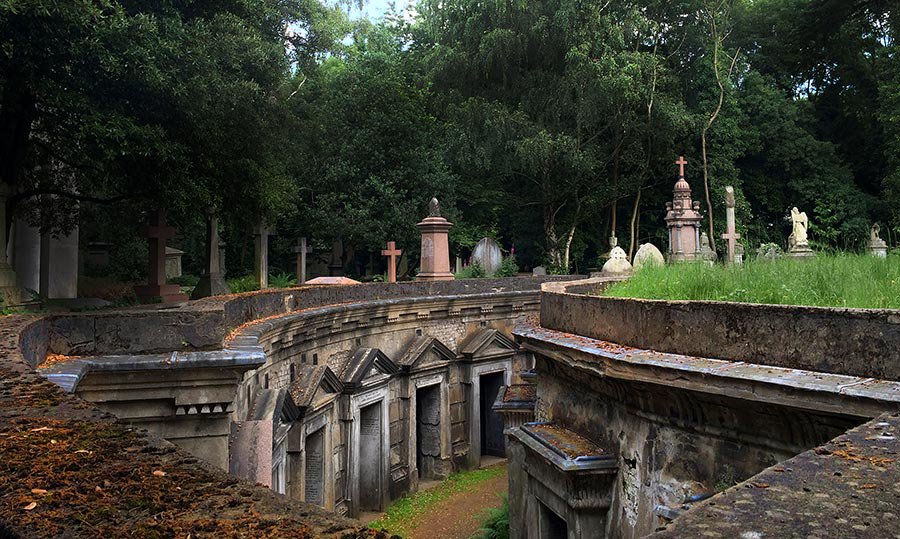
OGOM’s recent symposium, ‘Some curious disquiet’: Polidori, the Byronic vampire, and its progeny‘
was a huge success and we’d like to thank again everyone who made it
possible, form the brilliant speakers to the very supportive visitors
and the staff at Keats House, the guides at Highgate Cemetery; and the
University of Hertfordshire, the IGA, and BARS, who gave generous support.
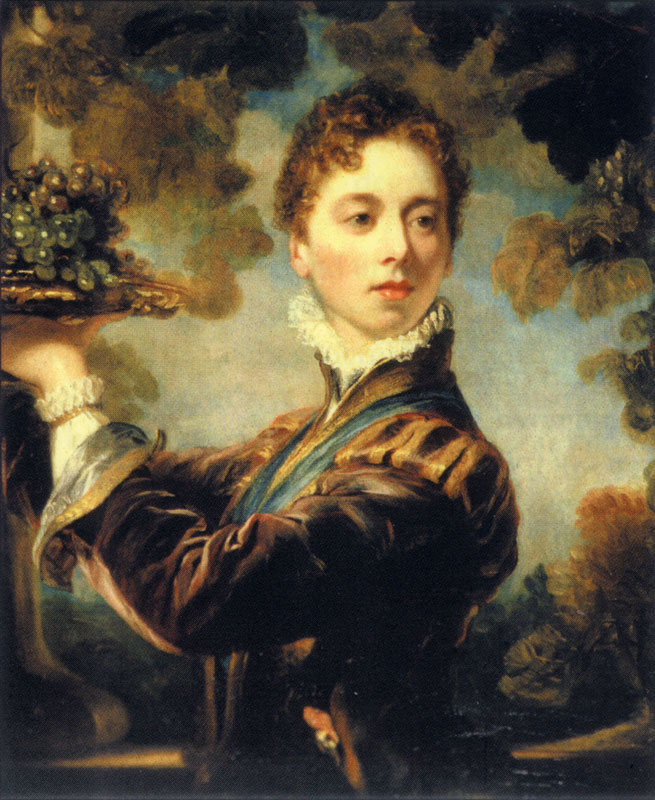
Lady Carolie Lamb dressed as a pageboy, by Sir Thomas Lawrence
This website is, among other things, a resource through which OGOM research can be disseminated. So, for those who are interested, I have made available my paper from the symposium ‘Rebellion, treachery, and glamour: Lady Caroline Lamb’s Glenarvon and the progress of the Byronic vampire’ on the Repository page here. This talk covered the interconnections between Glenarvon, John Polidori’s The Vampyre, and today’s vampire lovers.
I’ve also made available my paper from the fabulous IGA 2018 conference at MMU, “Two kinds of romance”: generic hybridity and mongrel monsters from Gothic novel to Paranormal Romance’. MA students at Bath Spa University, where I was kindly invited to talk recently by my doppelgänger Prof. William Hughes, may be interested too–it’s substantially the same talk. In this I discuss the shifts in genre from the Radcliffean Gothic novel to contemporary paranormal romance by way of the Gothic Romance of the 1950s-70s.
Marina Warner
Marina Warner is a writer of fiction, criticism and history; her works include novels and short stories as well as studies of art, myths, symbols and fairytales.
Centre for Myth Studies, University of Essex
The Centre It promotes the study of myth, from ancient to modern, and raises awareness of the importance of myth within the contemporary world.
Mythopoeic Society
The Mythopoeic Society is a non-profit organization devoted to the study of mythopoeic literature, particularly the works of members of the informal Oxford literary circle known as the “Inklings.”
Sheffield Gothic
Sheffield Gothic is a collective group of Postgraduate Students in the School of English at The University of Sheffield with a shared interest in all things Gothic.
American Gothic Studies
American Gothic Studies is the official journal of the Society for the Study of the American Gothic (SSAG), which promotes and advances the study of the American Gothic
Echinox Journal
Caietele Echinox is a biannual academic journal in world and comparative literature, dedicated to the study of the social, historical, cultural, religious, literary and arts imaginaries
Folklore
Journal of The Folklore Society. A fully peer-reviewed international journal of folklore and folkloristics, in printed and digital format
Gothic Nature
Gothic Nature: New Directions in Ecohorror and the Ecogothic
Gothic Studies
The official journal of the International Gothic Association considers the field of Gothic studies from the eighteenth century to the present day.
International Journal of Young Adult Literature
an academic peer-reviewed journal dedicated to publishing original and serious scholarship on young adult literature from all parts of the world.
Irish Journal of Gothic and Horror Studies
The Irish Journal of Gothic and Horror Studies (ISSN 2009-0374) is a peer-reviewed, interdisciplinary, electronic publication dedicated to the study of Gothic and horror literature, film, new media and television.
Journal of Popular Romance Studies
The Journal of Popular Romance Studies is a double-blind peer reviewed interdisciplinary journal exploring popular romance fiction and the logics, institutions, and social practices of romantic love in global popular culture.
Journal of the Fantastic in the Arts
An interdisciplinary journal devoted to the study of the fantastic in Literature, Art, Drama, Film, and Popular Media
Monsters and the Monstrous
Monsters and the Monstrous is a biannual peer reviewed global journal that serves to explore the broad concept of “The Monster” and “The Monstrous” from a multifaceted inter-disciplinary perspective.
Studies in the Fantastic
Studies in the Fantastic is a journal devoted to the Speculative, Fantastic, and Weird in literature and other arts
Supernatural Studies
Supernatural Studies is a peer-reviewed journal that promotes rigorous yet accessible scholarship in the growing field of representations of the supernatural, the speculative, the uncanny, and the weird.
The Lion and the Unicorn
The Lion and the Unicorn, an international theme- and genre-centered journal, is committed to a serious, ongoing discussion of literature for children.
Victorian Popular Fictions Journal
Victorian Popular Fictions is the journal of the Victorian Popular Fiction Association. The VPFA is a forum for the dissemination and discussion of new research into nineteenth- and early-twentieth-century popular narrativeo
Related Links
Aarne-Thompson-Uther Index
The Aarne-Thompson-Uther Index is a classification numeric system created to group similar folktales from different cultures
ACADEmy
LSAD centre for research into Art, Curatorial Studies, Applied Design and Art and Design Education
African Religions
With the Yoruba Religion Reader and similar resources
Angela Carter Society
Promoting the study and appreciation of the life and work of Angela Carter
Art Passions
Art Passions: Fairy Tales are the Myths We Live By
Asian Gothic
Asian Gothic appears as an attempt to make sense of the vast and diverse body of Asian literature, film, television, games, comics and other forms of cultural production by reading these texts from a Gothic perspective
British Association for Romantic Studies (BARS)
The UK’s leading national organisation for promoting the study of Romanticism and the history and culture of the period from which it emerged.
British Association for Victorian Studies (BAVS)
The British Association for Victorian Studies (BAVS) is a multidisciplinary organisation dedicated to the advancement and dissemination of knowledge about the Victorian period.
Byron Society
The Byron Society celebrates the life and works of Lord George Gordon Byron (1788-1824), a poet, traveller and revolutionary
Cambridge Research Network for Fairy-Tale Studies
The Cambridge Research Network for Fairy-Tale Studies is an open space at the University of Cambridge aimed at connecting researchers with an interest in fairy tales across different disciplines and scholarly perspectives.
Carterhaugh School
We give lectures and teach courses on fairy tales, folklore, witches, writing, and more. Basically, your ultimate fantasy college courses
Centre for Myth Studies, University of Essex
The Centre It promotes the study of myth, from ancient to modern, and raises awareness of the importance of myth within the contemporary world.
Deborah Hyde
Deborah Hyde wants to know why people believe in weird stuff. She attributes her fascination with the supernatural to having spent her childhood with mad aunties. She approaches the subject using the perspectives of psychology and history.
Fairyist: The Fairy Investigation Society
A website that will gather together sources, links, bibliographical references and discussions on fairies and related supernatural creatures
Folklore Society
The Folklore Society (FLS) is a learned society, based in London, devoted to the study of all aspects of folklore and tradition, including: ballads, folktales, fairy tales, myths, legends, traditional song and dance, folk plays, games, seasonal events, ca
Ghoul Guides
Home to the Ghoul Guides – a digital multimedia project devoted to exploring, understanding, and enjoying the wonders and weirdness of the Gothic
Gothic Feminism
Gothic Feminism is a research project based at the University of Kent which seeks to re-engage with theories of the Gothic and reflect specifically upon the depiction of the Gothic heroine in film
Gothic Herts Reading Group
This site is our one-stop platform for discussing our latest Gothic texts, from journal articles and press pieces, to full length books both old and new
Gothic Women Project
2023: The Year of Gothic Women. An interdisciplinary project devoted to spotlighting undervalued and understudied women writers
Haunted Shores
Haunted Shores Research Network, dedicated to investigating coasts and littoral space in Gothic, horror, and fantastic multimedia
Hellebore magazine
HELLEBORE is a UK-based small press devoted to British folk horror and the occult. Maria J. Pérez Cuervo publishes the magazine twice a year, on Beltane and Samhain
MEARCSTAPA
monsters: the experimental association for the research of cryptozoology through scholarly theory and practical application
Mermaids of the British Isles
a history of mermaids in the arts and cultural imagination of our early islands, which will map the place of these beguiling, and often deadly, figures in the national maritime imaginary, and explore our ancestors’ persistent reimagining of the mermaid
Open Folklore
Open Folklore is devoted to increasing the number of useful resources, published and unpublished, available in open access form for folklore studies and the communities with which folklorists partner
PCA Vampire Studies
A site dedicated to the Vampire Studies Area of the Pop Culture Association
Pook Press
Publisher of Vintage Illustrated Fairy Tales, Folk Tales and Children’s Classics
Romance Scholarship DB
This Romance Scholarship Database is therefore intended as a tool to assist popular romance scholars in their research into modern popular romance novels
RomanceWiki
A wiki resource for romance fiction authors, texts, and publishers
Science Fiction and Fantasy Research Database
The Science Fiction and Fantasy Research Database is a freely available online resource designed to help students and researchers locate secondary sources for the study of the science fiction and fantasy and associated genres.
Sophie Lancaster Foundation
The charity, known as The Sophie Lancaster Foundation, will focus on creating respect for and understanding of subcultures in our communities.
Supernatural Cities
Supernatural Cities is an interdisciplinary network of humanities and social science scholars of urban environments and the supernatural.
Supernatural Studies Association
The Supernatural Studies Association is an organization dedicated to the academic study of representations of the supernatural, the speculative, the uncanny, and the weird across periods and disciplines.
The Association for the Study of Buffy+
The mission of the Association is to promote the scholarship of Buffy+ Studies, focusing on inclusivity, intersectionality, and excellence. We define Buffy+ Studies as the scholarly exploration of Buffy the Vampire Slayer and its related texts.
The Society for the Study of the American Gothic (SSAG)
The Society for the Study of the American Gothic (SSAG) was established in 2023 to promote and advance the study of the American Gothic through research, teaching, and publication
The Thinker's Garden
we also love Plotinus and the Renaissance Platonists, as well as the Transcendentalists and Romantics. We are also drawn to the peculiarities of the Theosophists and hermeticists of the nineteenth century
Vamped
Vamped is a general interest non-fiction vampire site. We publish interviews, investigations, lists, opinions, reviews and articles on various topics.
Vampire Studies Association
TThe Vampire Studies Association (VSA) was founded by Anthony Hogg . . .“to establish vampire studies as a multidisciplinary field by promoting, disseminating and publishing contributions to vampire scholarship
Victorian Popular Fiction Association
The Association is committed to the revival of interest in understudied popular writers, literary genres and other cultural forms.
Wells at the World's End
I am reading through the complete works of H G Wells, in chronological order. This blog is for my jottings, as I go along.
YA Literature, Media, and Culture
YALMC is a resource for those of us researching, writing, writing about, interested in Young Adult Literature, Media, and Culture.
YA Studies Association (YASA)
The YA Studies Association (YASA) is an international organisation existing to increase the knowledge of, and research on, YA literature, media, and related fields