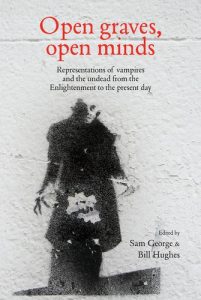
The Open Graves, Open Minds Project began by unearthing depictions of the vampire and the undead in literature, art, and other media, then embraced werewolves (and representations of wolves and wild children), fairies, and other supernatural beings and their worlds. The Project extends to all narratives of the fantastic, the folkloric, and the magical, emphasising that sense of Gothic as enchantment rather than simply horror. Through this, OGOM is articulating an ethical Gothic, cultivating moral agency and creating empathy for the marginalised, monstrous or othered, including the disenchanted natural world.
Churchill War Rooms, Clive Steps, King Charles Street, London, SW1A 2AQ 21 September 2019
Keynote Speakers: Richard Jones, Professor Michael Smith, and Professor Richard Toye, University of Exeter.
The year 2019 marks the anniversary of the first draft of Churchill’s essay, Are We Alone in Space? (1939), which was closely preceded by Orson Welles’s broadcast of The War of the Worlds. ‘I read everything you write,’ Churchill told Wells with whom he shared a passion for science fiction, scientific discovery and a concern over the impact of technological advances on warfare and the future of mankind. This conference is set against a backdrop of ever-changing London, the city with which Wells and Churchill are closely linked, a place of visions, nightmares and dreams.
The 1960’s and 70s folk horror canon brought the ‘Unholy Trinity’ of Witchfinder General (1968), TheBloodon Satan’s Claw (1971), and The Wicker Man (1973), establishing a platform for rural horror and isolated cults. There is a current folk horror revival, with films such as Kill List (2011), A Field inEngland (2013), The Witch (2015), and Midsommar (2019) heading the film and media popularity. But what does this mean? What cultural, political and social reflections are part of the folk horror renaissance? This conference aims to represent folk horror in today’s film and media, to delve into theories and critical thoughts on the genre.
The Chichester Centre for Fairy Tale, Fantasy and Speculative Fiction seeks articles, book reviews and creative writing relating to literary and historical approaches to folklore, fairy tales, fantasy, Gothic, magic realism, science fiction and speculative fiction for a special issue of Gramarye, its peer-reviewed journal published by the University of Chichester, celebrating the life of its founder Prof. Bill Gray (1952-2019). We are particularly interested in articles on fairy tales, fantasy literature and the work of C.S. Lewis, Robert Louis Stevenson, Philip Pullman, J.R.R. Tolkien, George MacDonald and ETA Hoffman.
We invite proposals for papers of 20 minutes as well as proposals for exhibiting practice based work exploring ‘enchanted environments’. For papers, please send abstracts of no more than 300 words; for practice based work, please send a brief outline detailing the work you’d like to exhibit.
In 2019, extinction is no longer the province of dinosaurs, the Dodo, or species far away in space and time. As Greta Thunberg argued in her Davos speech earlier this year, and as the ongoing socio-political efforts of the Extinction Rebellion suggest, extinction of the human (as well as the non-human) is an immediate concern and a very possible outcome of the climate crisis, unless significant action is taken by all. With this in mind, the ‘Extinctions and Rebellions’ symposium will think about the varied cultural discourses of extinction, past and present. It will not only be a platform to discuss current environmental and ecological concerns of the Anthropocene in the cultural imagination, but it also offers a space to think about how previous literary and scientific forms have imagined extinction as a process or finality, and how these conversations speak to and could offer a means to think about our current climate crisis. Moreover, we will explore ‘extinction’ and ‘rebellion’ as they pertain to questions of literary form and scientific theory and practice. This one-day event will allow postgraduates, early-career researchers, and academics to think about how the sciences and humanities can work together, inform, and facilitate the “clear language” needed to rebel against human and non-human extinction.
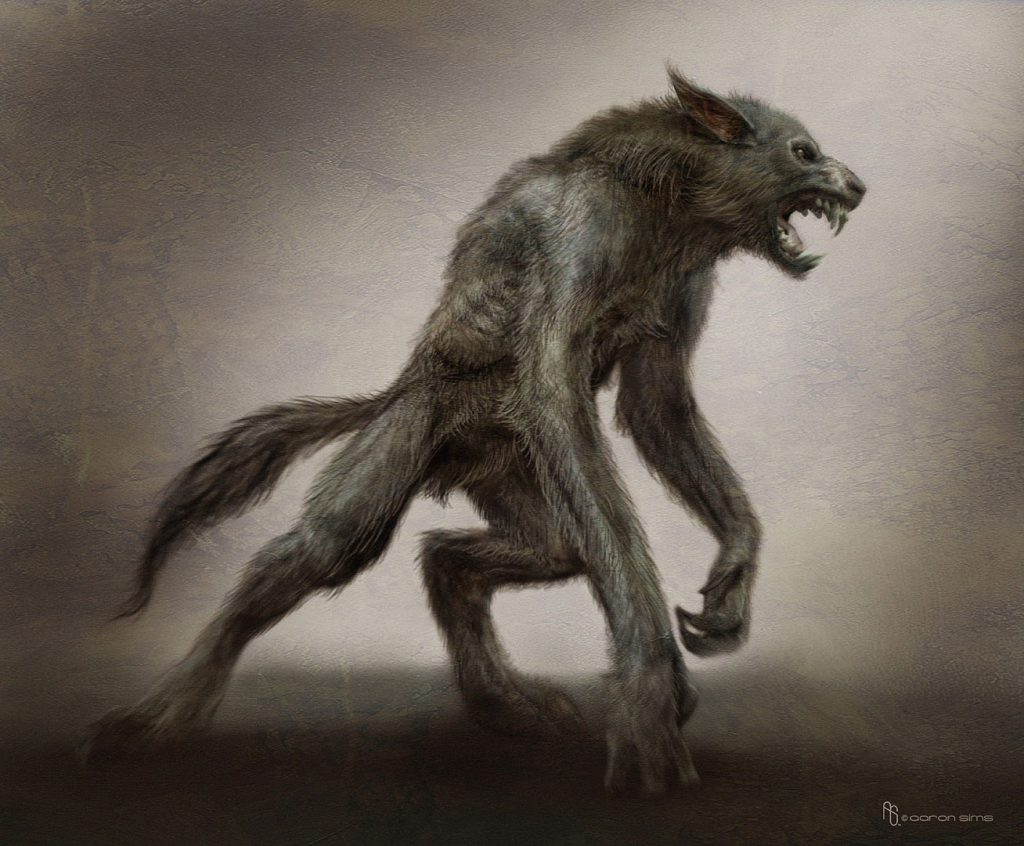
The condition of shapeshifting into a wolf in the full moon is, of course, known as lycanthropy. September brings us the full moon closest to the Autumn equinox. The Harvest Moon will appear bigger and brighter tonight and will inspire increased activity from werewolves. According to some folklore, they will be compelled to leave their hunting grounds in the woods and make their way to open fields where they will prowl about howling at the moon. Farmers were traditionally at danger of being attacked by werewolves as they worked the fields late into the evening by the light of the harvest moon. Tonight, werewolves will more frequently be found crossing roads and gardens to make their way to these open fields. It might be that there is not increased aggression, as there is with the October Blood Moon coming soon, but there will be increased activity!!
If you spot one, be advised they can run to 66 miles per hour, and stay away from open fields or areas with large power cables – some say werewolves are drawn to electrical radiation!!
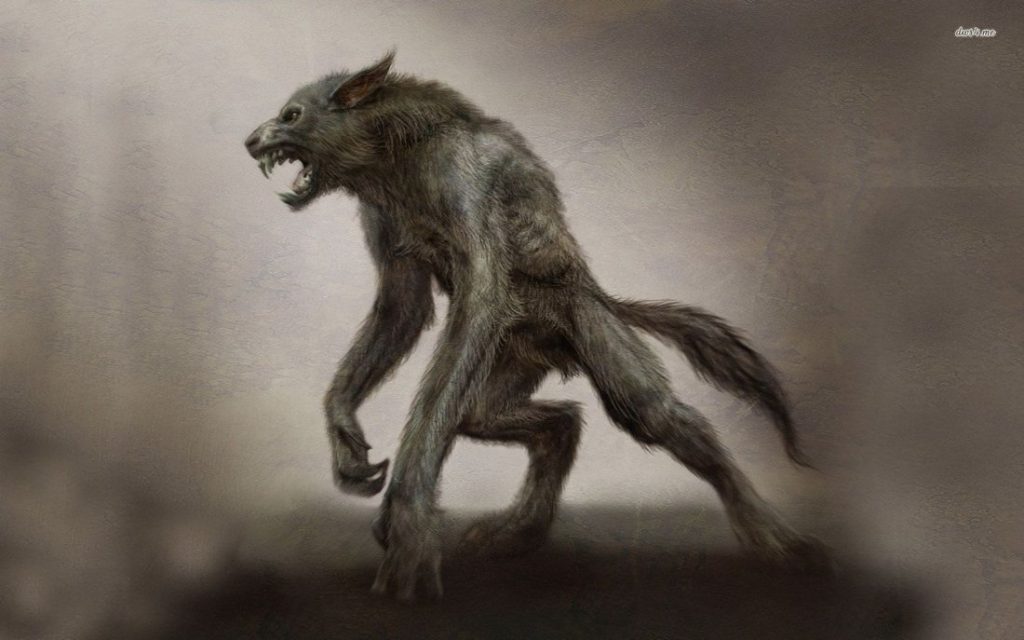
Werewolves are frequently sighted in places in the UK where there were once wolves, the Yorkshire wolds for example. These are werewolf hot spots. Many people believe that there are no British werewolves, but this is not true. There are a number of intriguing werewolf myths in the UK. The Dogdyke Werewolf in Lincolnshire is one example, and Old Stinker, the Hull Werewolf. He’s a nine-foot werewolf who stands upright and has a very human face. He frequents the ill-smelling Barmston Drain area of Hull, supposedly the site of murders and suicides. He has very, very bad breath, possibly the result of eating corpses – hence his name! You can read my essay on Old Stinker and the English Eerie in the OGOM special issue of Gothic Studies on Werewolves and Wildness. You can find out all about the issue here
The myth of the Werewolf of Dogdyke in Lincolnshire was first recorded in 1926 when one Christopher Marlowe, who lived in nearby Langrick Fen, supposedly found a skeleton of a half-wolf half-man creature buried in the peat. He took the corpse back to his house and was later awoken by the head of a large wolf looking at him through the window. This creature is very shadowy, appearing also in wolf form. It is worth noting too that the Hebrides, the Vale of Doones in Exmoor, and Merionethshire in Wales have similar earlier records of eerie werewolf hauntings, thought to be the earth-born spirits of werewolves recorded by Elliott O’Donnell in 1912.
These werewolf hauntings fit well with the theory I developed around the werewolf as spectre wolf. In Why We Should Welcome the Return of Old Stinker, the English Werewolf, I give my reasons as to why this dark, gothicised creature has replaced the extinct flesh and blood animal in the popular imagination in Britain.
If you are in a werewolf hotspot in the UK tonight for the Harvest Moon, you might want to stay indoors!!
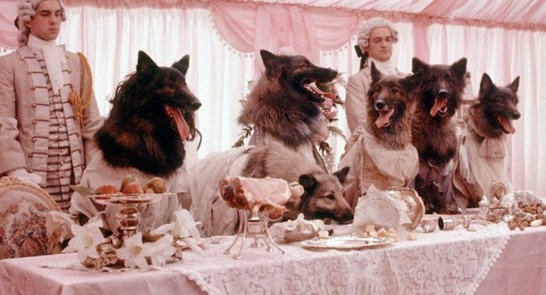
Wedding scene from the Neil Jordan film The Company of Wolves
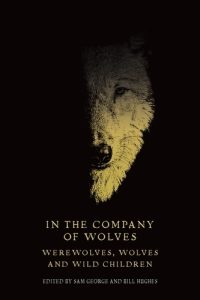
We’re very excited to have received the proofs for our forthcoming collection of essays, In the Company of Wolves: Werewolves, Wolves, and Wild Children – it looks fabulous! This book is published by Manchester University Press and will appear in February 2020. We’d like to thank all our wonderful contributors and MUP for making this possible.
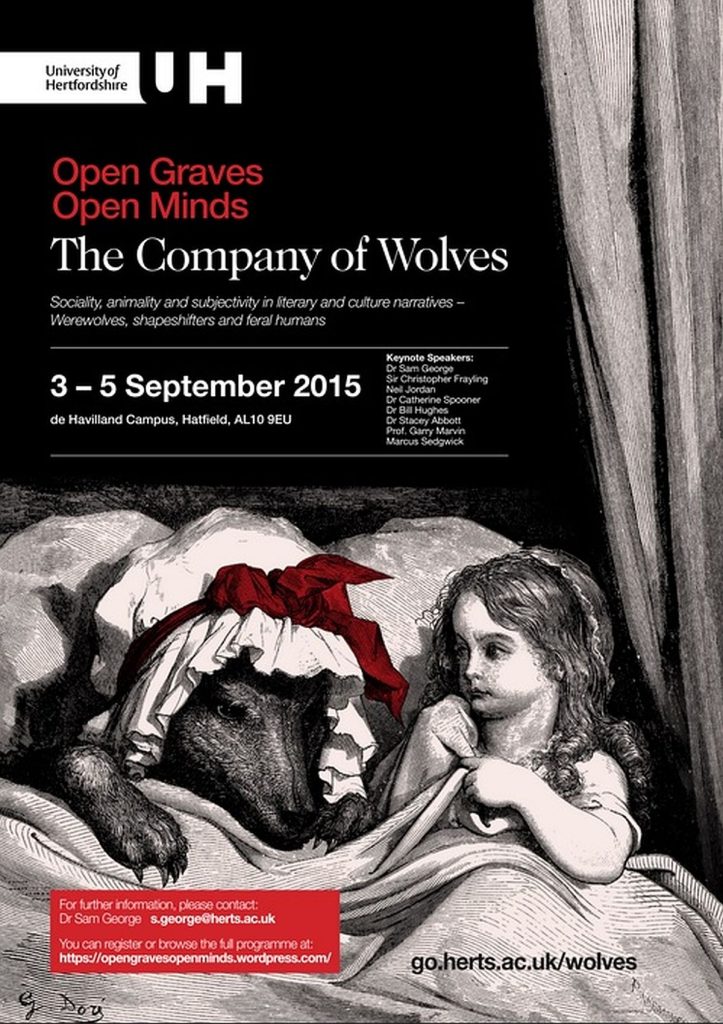
The book emerged out of our very successful 2015 conference, ‘The Company of Wolves’: Sociality, Animality, and Subjectivity in Literary and Cultural Narratives—Werewolves, Shapeshifters, and Feral Humans. There are more details of the book here. We hope to have a launch party, perhaps as riotous as the one in the picture, together with a film screening, so keep following us for further news.
The book contents are:
List
of figures
Notes on the
contributors
Preface – Sam George
Acknowledgments
Introduction: from
preternatural pastoral to paranormal romance – Sam
George and Bill Hughes
Part 1: Cultural images of the
wolf, the werewolf and the wolf child
1. Wolves and lies: a writer’s perspective – Marcus
Sedgwick
2. ‘Man
is a wolf to man’: wolf behaviour becoming wolfish nature – Garry Marvin
3. When wolves cry: wolf-children,
storytelling, and the state of nature – Sam George
4. ‘Children of the Night, what music they make’: the
sound of the cinematic werewolf – Stacey Abbott
Part 2: Innocence and experience: brute creation, wild beast or child of nature
5. Wild sanctuary: running into the forest in
Russian fairy tales – Shannon Scott
6. ‘No more than a brute or a wild
beast’: Wagner the Werewolf, Sweeney Todd, and the limits of human
responsibility – Joseph Crawford
7. The
inner beast: scientific experimentation in George MacDonald’s The History of Photogen and Nycteris – Rebecca
Langworthy
8. Werewolves and white trash: brutishness,
discrimination and the lower-class wolfman from The Wolf Man to True
Blood – Victoria Amador
Part 3: Re-inventing the wolf: intertextual
and metafictional manifestations
9. ‘The price of flesh is love’: commodification,
corporeality, and paranormal romance in Angela Carter’s beast tales – Bill
Hughes
10. Growing pains of the teenage
werewolf: YA literature and the metaphorical wolf –Kaja Franck
11. ‘I am the Bad Wolf. I create myself’: the metafictional
meanings of lycanthropic transformation in Doctor Who – Ivan Phillips
Part 4: Animal selves: becoming wolf
12. A running wolf and other grey animals: the
various shapes of Marcus Coates –Sarah Wade
13. ‘Stinking of me’: transformations
and animal selves in contemporary women’s poetry – Polly Atkin
14. Wearing the wolf: fur, fashion and species
transvestism – Catherine Spooner
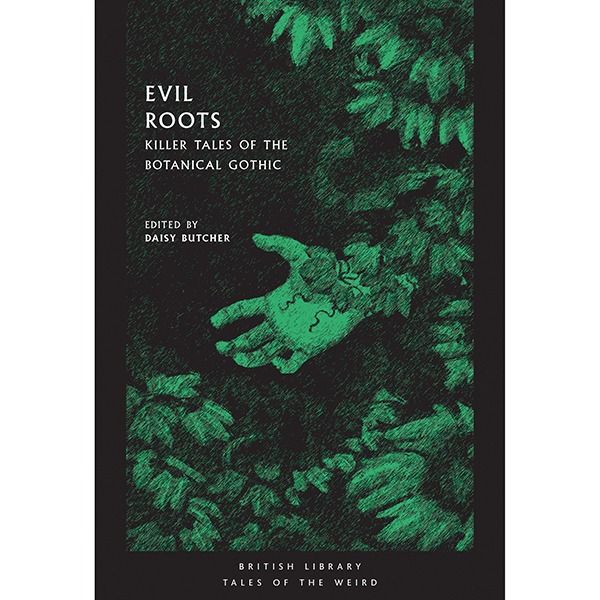
Daisy Butcher, ed., Evil Roots: Killer Tales of the Botanical Gothic
If you’ve been enjoying the @OGOMProject #BotanicalGothic theme on Twitter, come along and celebrate the release of my book Evil Roots: Killer Tales of the Botanical Gothic with myself at the Odyssey Cinema. (For the Twitter Moments on #BotanicalGothic, click here and here.)
The book features fourteen killer plant stories, ranging
from Nathaniel Hawthorne’s ‘Rappucini’s Daughter’ (1844) to Emma Vane’s ‘The
Moaning Lily’ (1935). One of the main challenges in putting together this
collection was choosing texts which were not too repetitious or similar to each
other. I am very pleased with the collection of stories, which range from
anthropomorphic plant women, one killer fungus, a plant murder mystery, and a
vampiric lily.
I won the book contract with the British Library as part of
their ‘Tales of the Weird Series’ while sourcing and analysing texts for my thesis
during the second year of my PhD. The series features well-known Gothic and
horror academics (and friends of OGOM) such as Xavier Aldana Reyes and Andrew
Smith.
Drafting up the book proposal and selecting the short
stories proved to be an exciting new challenge for me and also enabled me to
learn some key skills as a researcher, enriching my PhD project.
The book can be found at many online and high street retailers and independent booksellers, and, of course, the British Library itself. Fans of weird, Gothic, and horror tales are invited to attend the film screening and book launch event, which will be held at the Odyssey Cinema in St Albans, Hertfordshire on 7 September 2019 at 7 pm.
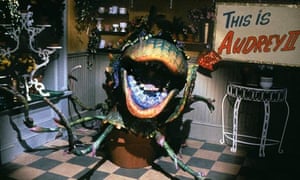
The Little Shop of Horrors
For the event, there will be a screening of the 1980s cult classic film Little Shop of Horrors, followed by a talk by Daisy about the book and the Botanical Gothic genre as a whole from Darwin to Stranger Things. There will also be a stand with copies of the book available for purchase on the night. Tickets can be bought by following this link.
Fellow Gothicists can also look out for the book at the upcoming Gothic Nature II conference, held at the University of Roehampton in London on the 14 September 2019, where the British Library will have a stall and I will be presenting a paper.
Daisy Butcher is a doctoral student at the University of Hertfordshire, attached to the Open Graves Open Minds project. Last year, she reached out to the British Library on whether they would be interested in a book on Gothic killer plant short stories and gained a book deal with them. She was able to source texts through her work for her PhD thesis which includes a chapter on Man-Eating plant tales. This article is a brief summary of the book and Daisy’s journey getting it to print and also to promote her upcoming book launch event at the Odyssey cinema at her hometown of St Albans.
In the opening decades of the twenty-first century, with Trump in the White House and Brexit on the horizon, Angela Carter’s famous assertion of 1974 that ‘we live in Gothic times’ has never been more apt. But from the eighteenth century onwards, the Gothic mode has routinely placed the present moment under scrutiny, exploring the terrors of the age whilst calling into question the comforting fantasies upon which the established order rests. In this, the Gothic text might be seen to offer a culturally and politically engaged exploration of the historic period in which each text was produced, interrogating the contemporary present even as it calls into question standard historical narratives about the past.
Date: Saturday 26
October 2019
Location: Business
School, Manchester Metropolitan University
Tickets: £10 –
Released soon!
Organised by Dr Linnie Blake
This event is part of the 7th annual Gothic Manchester Festival which is themed on ‘Gothic Time and organised by the Manchester Centre for Gothic Studies at Manchester Metropolitan University.
OGOM will have a strong presence at this year’s festival and we hope to see you there. Here are our contributions:
Daisy Butcher: Mummy Dearest: Nineteenth-Century Women Writers and
the Mummy
In this paper, I aim to interrogate the pioneering short stories by female authors who gave us the mummy curse tale as a politically charged symbol of resistance against patriarchal imperialism and posited the unwrapped mummy as a metaphorical rape victim. I will argue that the origins of the mummy curse tale date back to Frankenstein which was an inspiration to Jane C. Loudon. She created a time-travelling sci-fi saga in ‘The Mummy’, paving the way for short stories from Louisa May Alcott, Jane G. Austin, and Charlotte Bryston Taylor. Shelley’s novel refers to Frankenstein’s monster as a mummy (in Chapters 5) and my aim is to celebrate Mary Shelley’s legacy, while also giving critical attention to female writers and their underrepresented texts. I aim to be the first researcher to explore the link between Frankenstein and the female authored mummy curse tale in depth.
Bill Hughes: When did Gothic times begin? Vampiric memory and
modernity in Holly Black’s The Coldest
Girl in Coldtown
Angela Carter famously announced that we are living in Gothic
times. This seems paradoxical: at least since the inception of the Gothic
novel, ‘Gothic’ has signified a barbaric past in contrast to modernity. The
onset of modernity itself is slippery; in one sense its birth lies around the
eighteenth century but it may be aligned also with the modernism that emerged
between the fin de siècle and the First World War.
Almost as famously, Nina Auerbach said, ‘Each age embraces the
vampires it needs’. Holly Black’s The
Coldest Girl in Coldtown exemplifies this as a vampire paranormal romance
set in a neoliberal dystopia where commodification dominates and surveillance
abounds. Vampires had revolted against an older, secretive feudal order and now
openly market their glamour through Reality TV. Significantly, this revolt,
depicted in flashback, took place in the Vienna of 1916, where the ideas of
Freud circulated and also where neoliberal theory was born. This paper will
examine the paradoxes of Gothic modernity in Black’s novel.
Sam George: Fairies, Fallen Angels and Spirits of the Dead:
Edwardians Living in Gothic Times
In the present, we believe fairies have nothing of the dead reawakened within them; they are often viewed as a consolation for modernity, or the loss of wild environments, but this has not always been the case. Fascinated by ghosts, vampires, angels, etc., Victorians did not see fairies as differing from spirits of the dead. In 1887, Lady Wilde gave voice to the Irish belief that fairies are the fallen angels, cast out of heaven. Elsewhere, Evans-Wentz (1911) popularised the idea of piskies as the souls of the dead. In an age of widespread religious doubt, thought turned to the persistence of the dead and to occult methods of communicating with them, and, rather than dispelling fairies, death and loss in WWI reawakened a belief in airy spirits.
It was in this climate that the Cottingley fairy photographs emerged in 1917. Sir Arthur Conan Doyle’s defence of them in The Coming of the Fairies (1922) was influenced by Theosophic views of fairies as evidence of a shadowy spirit world. Believing in fairies and spirit photography, and surrounded by memories of the dead in the aftermath of WWI, Edwardians like Doyle really were living in Gothic times.
The co-chairs of the PCA/ACA Vampire Studies area are soliciting papers, presentations, panels and roundtable discussions which cover any aspect of the Vampire for the Annual National Popular Culture Association Conference to be held in Philadelphia, PA from April 15-18, 2020. This year’s central theme is the legacy of Bram Stoker’s Dracula.
Abstracts are sought for a collection of philosophical essays related to the Philip Pullman trilogy and soon-to-be HBO series His Dark Materials (The Golden Compass/Northern Lights, The Subtle Knife, and The Amber Spyglass). This volume will be published by Open Court Publishing (the publisher of The Simpsons and Philosophy, The Matrix and Philosophy, Dexter and Philosophy, The Walking Dead and Philosophy, The Handmaid’s Tale and Philosophy, Boardwalk Empire and Philosophy, and The Princess Bride and Philosophy, etc.) as part of their successful Popular Culture and Philosophy series.
3. CFP: ICFA 41, Climate Change and the Anthropocene, 41st International Conference for the Fantastic in the Arts (ICFA), Orlando, Florida, 18-22 March 2020. Deadline: 31 October 2019.
Amitov Ghosh suggests in The Great Derangement (2017) that among the difficulties of confronting climate change is the fact that it is “unthinkable” via the conventions of realist fiction. Taking our cue from Ursula K. Le Guin’s phrase “realists of a larger reality” in her acceptance speech for the Medal for Distinguished Contributions to American Letters, ICFA 41 will explore the power of fantastic genres to make climate change and other crises of the Anthropocene visible and intelligible. How have fantastic genres helped us represent and respond to this reality? How might these genres offer us new ways for thinking about humanity, our planet, and the complex entanglements between them? How might we reimagine ourselves and the future in the face of climate change? We welcome papers, creative works, and panel discussions addressing these and related questions across any genre, every language, and across all media of the fantastic.
How and why do contemporary horror films depict families as sites and sources of horror? We are especially interested in discussions of inheritance, possession, trauma, and/or gatherings of families as a community or in a place for ritual-like practices.
Written as a collaboration between Terry Pratchett and Neil Gaiman, Good Omens (1990) had an active and long-term fanbase before the debut of the Amazon Prime miniseries. Its adaptation, brought to fruition by Gaiman as a promise to Pratchett before Pratchett’s 2015 death, however, has not only brought new fans into the fold, but increased the visibility of the original text.
This collection seeks to examine the book and the series, separately and together, in the numerous contexts in which both exist (text, television, fandom, etc.) The collection is under contract with McFarland & Company. The collection will be peer-reviewed.
For its 13th annual edition, Cine Excess focuses on independent visions of excess and the contribution of independent filmmakers working outside of the mainstream to an understanding of cinema, culture and identities. These range from classic cult auteurs, such as Ed Wood, to contemporary movie makers who retain a fiercely unorthodox world-view whilst moving from the margins to the mainstream (such as Kathryn Bigelow). Cine Excess Xlll further considers how indie directors negotiate and respond to their own cinema cultures and wider global trends, including those iconic British filmmakers who bring elements of subversion to national cinema traditions, such as guest of honour, Norman J. Warren. With the emergence of the women in horror filmmaker movement (as embodied by guests of honour, the Soska Sisters), a particular focus is the work of female and minority directors operating in the independent sphere. We are also interested in cult creators that explore bizarre characterisation and unorthodox approaches to narrative, or adopt extreme aesthetics associated with the post-9/11 milieu. Further topics might examine gender- and genre-crossing, settings/landscapes of excess, and obscene images of nationhood, as well as how contemporary issues, such as those pertaining to mental health, are framed through cinemas of transgression. Proposals are now invited for papers that assess the importance of independent visions of excess within these differing contexts.
The aim of this special issue of Gothic Studies(23/3, to be published Nov 2021) is to bring together research that does not simply consider Gothic short fiction and its artistic and cultural brethren as incidental, but integral to the design and effect and/or cultural significance of the piece because the short form in the Gothic tradition has, as yet, received little in the way of sustained scholarly attention. Form and structure, publication histories, and multi-media adaptation, in various guises, will comprise a key focus of the issue.
3. Call for articles: Revenant: Critical and Creative Studies of the Supernatural Special Issue: Performing Fairy. Deadline: 31 October 2019
Revenant: Critical and Creative Studies of the Supernatural (www.revenantjournal.com) is now accepting abstracts for critical articles, creative writing pieces, and book, film, music, or event reviews for a themed issue on ‘Performing Fairy’, examining contemporary and historical intersections of phenomenological fairy practice. [. . .]
Contributing to this discussion, we invite abstracts for work that examine the role of fairy and its evolution as a cultural marker and interrogator of societal issues across film, TV, literature, video games, art, music or public performance.
1. First, a conference CFP: Utopia & Dystopia: Conference on the Fantastic in Media Entertainment, University of Southern Denmark, 28-29 May 2020. Deadline: 10 December 2019.
This conference invites new research in the fantastic. Why is the fantastic more popular than ever? What theories – or bundle of theories – capture the specific nature of the fantastic? What purposes do fantastic genres serve in terms of evolution, adaptation, sensory pleasures, and cognitive as well as social uses? How do we create fantastic stories across media platforms and in different aesthetic forms? How is worldbuilding used to create transmedia stories of the fantastic? How do new technologies and media aesthetics affect the fantastic in terms of production, distribution, and fan uses?
Intended for publication with Lexington Books, Gothic Mash-Ups will theorize and trace the way that producers of gothic fiction – from the 18th century to today – appropriate, combine, and reimagine elements from earlier texts and genres. Particularly welcome are essays about individual texts (or groups of texts) that bring together characters and storylines from two or more prior gothic narratives or cross gothic storylines with other kinds of stories. From Walpole’s early generic hodgepodge and Universal Pictures’ monster film crossovers to such contemporary “Frankenfictions” (De Bruin-Molé) as The League of Extraordinary Gentlemen and Penny Dreadful, this collection will examine the fundamental hybridity of the gothic as a genre.
This collection addresses horror films’ treatment of loss, specifically grief and how grief shapes, magnifies, and escalates the horrific. Selected films should be from the last twenty years. This contemporary approach will lend the collection a sense of urgency. Moreover, in addition to conventional horror films, we highly support explorations of less frequently examined films that contain a high degree of complexity in content and aesthetics. A24 films are the perfect example of this. Additionally, examinations of genre-defying films such as Yorgos Lanthimos’ The Killing of a Sacred Deer and David Lowery’s A Ghost Story are especially encouraged.
This collection’s goal is to devote critical attention to an understudied avenue of popular culture: Sci-Fi/SyFy Channel’s original films. Since 2002, Sci-Fi/SyFy Channel’s production company, Sci-Fi Pictures, has created over 200 original films, spawning such franchises as the Sharknado and Lavalantua series alongside cult/fan favorites like Ghost Shark, Ice Spiders, and Mongolian Death Worm. Sharknado’s release in 2013 saw unprecedented popularity for one of SyFy’s creature feature films, correlating to a meteoric rise in popularity of not just the recently-minted Sharknado franchise, but SyFy’s feature films as a whole.
Revenant: Critical and Creative Studies of the Supernatural (www.revenantjournal.com) is now accepting abstracts for critical articles, creative writing pieces, and book, film, music, or event reviews for a themed issue on ‘Performing Fairy’, examining contemporary and historical intersections of phenomenological fairy practice.
Contributing to this discussion, we invite abstracts for work that examine the role of fairy and its evolution as a cultural marker and interrogator of societal issues across film, TV, literature, video games, art, music or public performance.
The first issue of Gothic Studies published by EUP is also the first ever issue devoted to werewolves. In the twenty-first century, the era of late capitalism, new werewolf myths have emerged from our cultural memory around humans and wolves. Gothic texts deal with a variety of themes just as pertinent to contemporary culture as they were to the eighteenth and nineteenth centuries, when Gothic novels first achieved popularity. The werewolf is easily situated within themes of monstrosity, liminality and the divided self, showing it to be a decidedly Gothic creature.
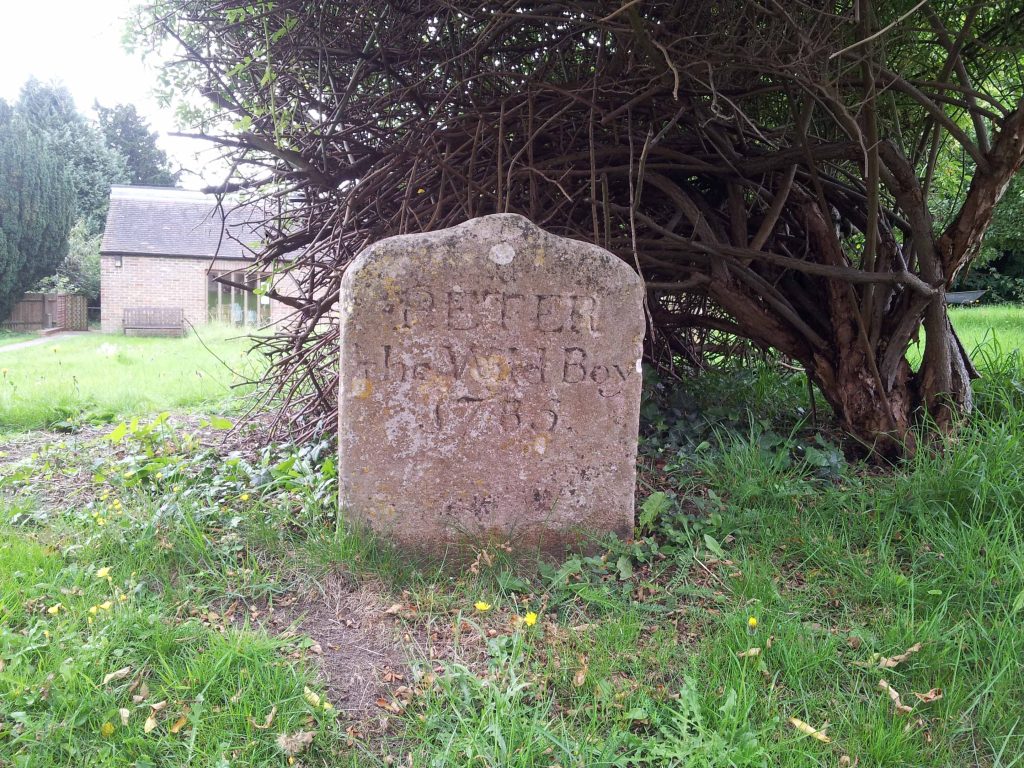
During the conference, we visited the UK Wolf Conservation Trust sanctuary in Reading and observed the wolves and made a pilgrimage to the eighteenth-century grave of Peter the Wild Boy (thought to have been raised by wolves or bears) at St Mary’s Church, Northchurch in Hertfordshire.
The grave of Peter the Wild Boy
The conference and its outputs embraced not only the werewolf but the actual wolf, with all its ambiguous characteristics of pack sociality and alleged savagery, and also narratives of wild children (who are often claimed to have been raised by wolves and thus partake of the same liminal quality as the werewolf, hovering between humanity and animality, society and nature). The conference inspired much debate about the place of the werewolf within academia and received many accolades and acknowledgements for providing a first for the UK academy.
Gothic studies can be accused (with some validity) to have become too all-encompassing; we should therefore justify our venturing into narratives of the wild child alongside the werewolf in a journal devoted to the Gothic. There is the close relationship between the werewolf and feral children; the suggested animality they share was explored at the conference. In addition, narratives of the wild child do often evoke horror as though they too are monsters (as both Nevárez and Brodski show in their articles). There is the intertextuality between the narratives of wolves, werewolves, and wild children. And many of the most significant original narratives of wild children, closely bound up with speculations on the origins of language and society, stem from the eighteenth century, when Gothic itself as a genre was born; wildness and the boundaries of language are truly Gothic themes.
One of the ways Gothic as a genre has mutated in recent years has been through its encounter with romantic fiction to create a new form, paranormal romance, which features the sympathetic monster – vampires, notably, but also subsequently other creatures, including werewolves. The twenty-first-century werewolf is thus more humanised, and this assimilation of otherness, correlated with shifts in social attitudes towards minority groups, colours contemporary werewolf narratives. This includes post-9/11 attitudes to terrorism, as examined by Marsden in his article. Alongside this has been a certain feminisation of the werewolf, with women in urban fantasy and paranormal romance often appearing as the werewolf protagonists. Alongside this, werewolf fictions may explore masculinity, as Chaplin and Evans show in their articles. The particular essence of the werewolf as animality irrupting into humanity makes them especially suited to explore concerns about nature and wildness, aligning them with the recent development of eco-Gothic as a distinct perspective within Gothic studies; Runstedler and George explore this perspective. Our contributors each respond to these new emphases on wildness and the werewolf in various and thought-provoking ways. Thus, as this new werewolf scholarship will show, to cite Kathryn Hughes, ‘in our dog-eat-dog world, it’s time for werewolves’.
Sam George is Senior Lecturer in Literature at the University of Hertfordshire, UK and the Convenor of the Open Graves, Open Minds project. Her interviews have appeared in newspapers from the Guardian to the Independent and the Wall Street Journal. Her research straddles the boundaries between the life sciences, animal studies and the gothic.
Sam George
Bill Hughes is co-organiser of the Open Graves, Open Minds: Project at the University of Hertfordshire. Bill researches contemporary paranormal romance. Elsewhere his research and publications explore the interrelation of the dialogue genre and English novels of the long eighteenth century. Bill also researches contemporary paranormal romance.
Marina Warner
Marina Warner is a writer of fiction, criticism and history; her works include novels and short stories as well as studies of art, myths, symbols and fairytales.
Centre for Myth Studies, University of Essex
The Centre It promotes the study of myth, from ancient to modern, and raises awareness of the importance of myth within the contemporary world.
Mythopoeic Society
The Mythopoeic Society is a non-profit organization devoted to the study of mythopoeic literature, particularly the works of members of the informal Oxford literary circle known as the “Inklings.”
Sheffield Gothic
Sheffield Gothic is a collective group of Postgraduate Students in the School of English at The University of Sheffield with a shared interest in all things Gothic.
American Gothic Studies
American Gothic Studies is the official journal of the Society for the Study of the American Gothic (SSAG), which promotes and advances the study of the American Gothic
Echinox Journal
Caietele Echinox is a biannual academic journal in world and comparative literature, dedicated to the study of the social, historical, cultural, religious, literary and arts imaginaries
Folklore
Journal of The Folklore Society. A fully peer-reviewed international journal of folklore and folkloristics, in printed and digital format
Gothic Nature
Gothic Nature: New Directions in Ecohorror and the Ecogothic
Gothic Studies
The official journal of the International Gothic Association considers the field of Gothic studies from the eighteenth century to the present day.
International Journal of Young Adult Literature
an academic peer-reviewed journal dedicated to publishing original and serious scholarship on young adult literature from all parts of the world.
Irish Journal of Gothic and Horror Studies
The Irish Journal of Gothic and Horror Studies (ISSN 2009-0374) is a peer-reviewed, interdisciplinary, electronic publication dedicated to the study of Gothic and horror literature, film, new media and television.
Journal of Popular Romance Studies
The Journal of Popular Romance Studies is a double-blind peer reviewed interdisciplinary journal exploring popular romance fiction and the logics, institutions, and social practices of romantic love in global popular culture.
Journal of the Fantastic in the Arts
An interdisciplinary journal devoted to the study of the fantastic in Literature, Art, Drama, Film, and Popular Media
Monsters and the Monstrous
Monsters and the Monstrous is a biannual peer reviewed global journal that serves to explore the broad concept of “The Monster” and “The Monstrous” from a multifaceted inter-disciplinary perspective.
Studies in the Fantastic
Studies in the Fantastic is a journal devoted to the Speculative, Fantastic, and Weird in literature and other arts
Supernatural Studies
Supernatural Studies is a peer-reviewed journal that promotes rigorous yet accessible scholarship in the growing field of representations of the supernatural, the speculative, the uncanny, and the weird.
The Lion and the Unicorn
The Lion and the Unicorn, an international theme- and genre-centered journal, is committed to a serious, ongoing discussion of literature for children.
Victorian Popular Fictions Journal
Victorian Popular Fictions is the journal of the Victorian Popular Fiction Association. The VPFA is a forum for the dissemination and discussion of new research into nineteenth- and early-twentieth-century popular narrativeo
Related Links
Aarne-Thompson-Uther Index
The Aarne-Thompson-Uther Index is a classification numeric system created to group similar folktales from different cultures
ACADEmy
LSAD centre for research into Art, Curatorial Studies, Applied Design and Art and Design Education
African Religions
With the Yoruba Religion Reader and similar resources
Angela Carter Society
Promoting the study and appreciation of the life and work of Angela Carter
Art Passions
Art Passions: Fairy Tales are the Myths We Live By
Asian Gothic
Asian Gothic appears as an attempt to make sense of the vast and diverse body of Asian literature, film, television, games, comics and other forms of cultural production by reading these texts from a Gothic perspective
British Association for Romantic Studies (BARS)
The UK’s leading national organisation for promoting the study of Romanticism and the history and culture of the period from which it emerged.
British Association for Victorian Studies (BAVS)
The British Association for Victorian Studies (BAVS) is a multidisciplinary organisation dedicated to the advancement and dissemination of knowledge about the Victorian period.
Byron Society
The Byron Society celebrates the life and works of Lord George Gordon Byron (1788-1824), a poet, traveller and revolutionary
Cambridge Research Network for Fairy-Tale Studies
The Cambridge Research Network for Fairy-Tale Studies is an open space at the University of Cambridge aimed at connecting researchers with an interest in fairy tales across different disciplines and scholarly perspectives.
Carterhaugh School
We give lectures and teach courses on fairy tales, folklore, witches, writing, and more. Basically, your ultimate fantasy college courses
Centre for Myth Studies, University of Essex
The Centre It promotes the study of myth, from ancient to modern, and raises awareness of the importance of myth within the contemporary world.
Deborah Hyde
Deborah Hyde wants to know why people believe in weird stuff. She attributes her fascination with the supernatural to having spent her childhood with mad aunties. She approaches the subject using the perspectives of psychology and history.
Fairyist: The Fairy Investigation Society
A website that will gather together sources, links, bibliographical references and discussions on fairies and related supernatural creatures
Folklore Society
The Folklore Society (FLS) is a learned society, based in London, devoted to the study of all aspects of folklore and tradition, including: ballads, folktales, fairy tales, myths, legends, traditional song and dance, folk plays, games, seasonal events, ca
Ghoul Guides
Home to the Ghoul Guides – a digital multimedia project devoted to exploring, understanding, and enjoying the wonders and weirdness of the Gothic
Gothic Feminism
Gothic Feminism is a research project based at the University of Kent which seeks to re-engage with theories of the Gothic and reflect specifically upon the depiction of the Gothic heroine in film
Gothic Herts Reading Group
This site is our one-stop platform for discussing our latest Gothic texts, from journal articles and press pieces, to full length books both old and new
Gothic Women Project
2023: The Year of Gothic Women. An interdisciplinary project devoted to spotlighting undervalued and understudied women writers
Haunted Shores
Haunted Shores Research Network, dedicated to investigating coasts and littoral space in Gothic, horror, and fantastic multimedia
Hellebore magazine
HELLEBORE is a UK-based small press devoted to British folk horror and the occult. Maria J. Pérez Cuervo publishes the magazine twice a year, on Beltane and Samhain
MEARCSTAPA
monsters: the experimental association for the research of cryptozoology through scholarly theory and practical application
Mermaids of the British Isles
a history of mermaids in the arts and cultural imagination of our early islands, which will map the place of these beguiling, and often deadly, figures in the national maritime imaginary, and explore our ancestors’ persistent reimagining of the mermaid
Open Folklore
Open Folklore is devoted to increasing the number of useful resources, published and unpublished, available in open access form for folklore studies and the communities with which folklorists partner
PCA Vampire Studies
A site dedicated to the Vampire Studies Area of the Pop Culture Association
Pook Press
Publisher of Vintage Illustrated Fairy Tales, Folk Tales and Children’s Classics
Romance Scholarship DB
This Romance Scholarship Database is therefore intended as a tool to assist popular romance scholars in their research into modern popular romance novels
RomanceWiki
A wiki resource for romance fiction authors, texts, and publishers
Science Fiction and Fantasy Research Database
The Science Fiction and Fantasy Research Database is a freely available online resource designed to help students and researchers locate secondary sources for the study of the science fiction and fantasy and associated genres.
Sophie Lancaster Foundation
The charity, known as The Sophie Lancaster Foundation, will focus on creating respect for and understanding of subcultures in our communities.
Supernatural Cities
Supernatural Cities is an interdisciplinary network of humanities and social science scholars of urban environments and the supernatural.
Supernatural Studies Association
The Supernatural Studies Association is an organization dedicated to the academic study of representations of the supernatural, the speculative, the uncanny, and the weird across periods and disciplines.
The Association for the Study of Buffy+
The mission of the Association is to promote the scholarship of Buffy+ Studies, focusing on inclusivity, intersectionality, and excellence. We define Buffy+ Studies as the scholarly exploration of Buffy the Vampire Slayer and its related texts.
The Society for the Study of the American Gothic (SSAG)
The Society for the Study of the American Gothic (SSAG) was established in 2023 to promote and advance the study of the American Gothic through research, teaching, and publication
The Thinker's Garden
we also love Plotinus and the Renaissance Platonists, as well as the Transcendentalists and Romantics. We are also drawn to the peculiarities of the Theosophists and hermeticists of the nineteenth century
Vamped
Vamped is a general interest non-fiction vampire site. We publish interviews, investigations, lists, opinions, reviews and articles on various topics.
Vampire Studies Association
TThe Vampire Studies Association (VSA) was founded by Anthony Hogg . . .“to establish vampire studies as a multidisciplinary field by promoting, disseminating and publishing contributions to vampire scholarship
Victorian Popular Fiction Association
The Association is committed to the revival of interest in understudied popular writers, literary genres and other cultural forms.
Wells at the World's End
I am reading through the complete works of H G Wells, in chronological order. This blog is for my jottings, as I go along.
YA Literature, Media, and Culture
YALMC is a resource for those of us researching, writing, writing about, interested in Young Adult Literature, Media, and Culture.
YA Studies Association (YASA)
The YA Studies Association (YASA) is an international organisation existing to increase the knowledge of, and research on, YA literature, media, and related fields