Review: Dracula (BBC, January 2020)

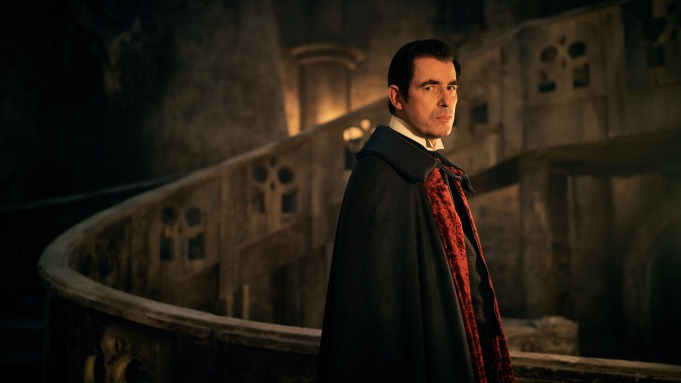
Claes Bang as Count Dracula

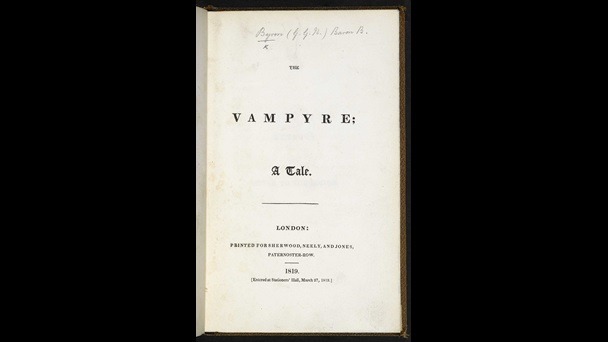
There has been much discussion of the BBC adaptation of Dracula by Steven Moffat and Mark Gatiss, shown this January—and the debate has been highly polarised. The OGOM Project began with a conference on vampires in 2010, followed by our collection of essays Open Graves, Open Minds: Representations of Vampires and the Undead from the Enlightenment to the Present Day, ed. by Sam George and Bill Hughes (Manchester: Manchester University Press, 2013) and a special vampire issue of Gothic Studies. In 2012, we celebrated the centenary of Bram Stoker’s death with a symposium. More recently, in April 2019, we held another symposium for the bicentenary of the publication of John Polidori’s seminal The Vampyre. So it seems appropriate to offer our own thoughts on this new version.

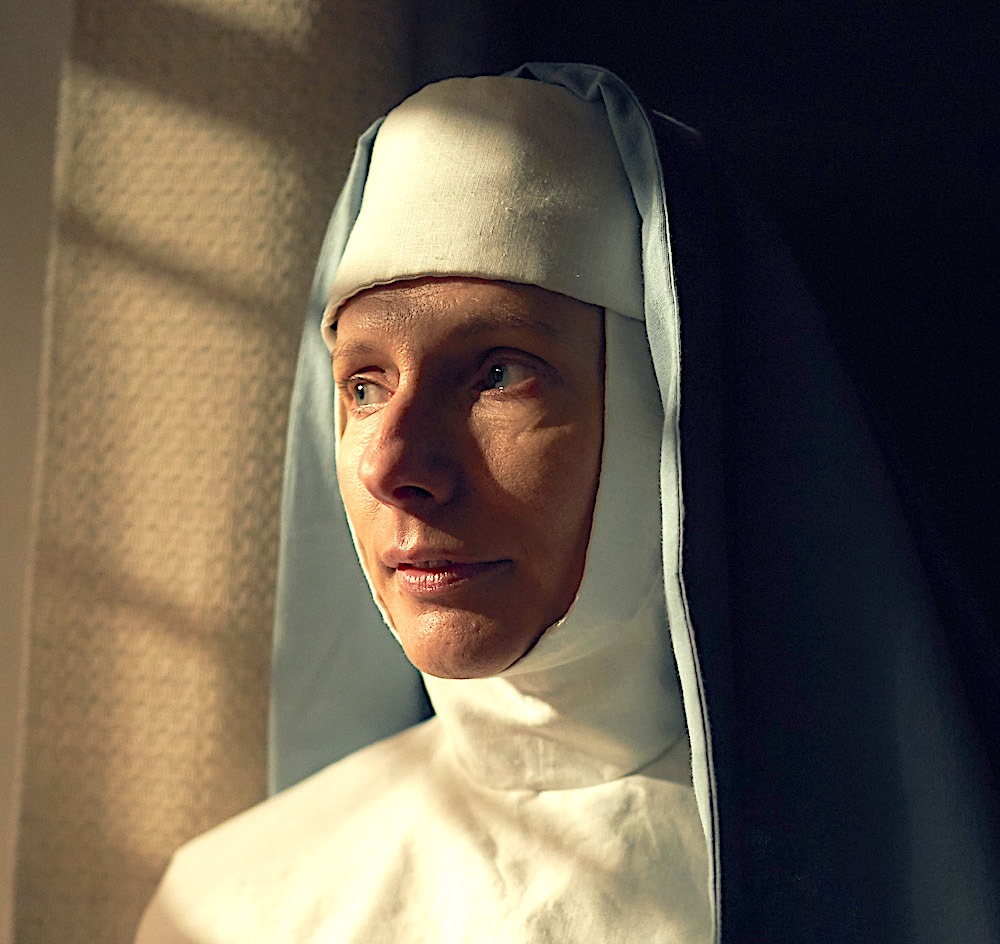
Stoker’s 1897 novel has been a fertile seed for vampire narratives. Endlessly adaptable, the figure of Count Dracula has become a modern myth, perhaps one of those myths of individualism like Robinson Crusoe, Faust, and Don Juan that Ian Watts talks about. Moffat and Gatiss’s three-part drama continues this tradition and self-consciously acknowledges that history of adaptation. In its way, this version is faithful to the narrative structure of Stoker’s novel. In the manner of hypertextuality that Gérard Genette talks about in Palimpsests (where an earlier hypotext is transformed into new texts by various operations), this new Dracula reconfigures minor plot episodes in the original in some startling ways. Thus Jonathan Harker’s recovery in the Hospital of St Joseph and Ste Mary in Budapest is expanded into a sequence that introduces the fascinating Sister Agatha (excellently portrayed by Dolly Wells), who here is ingeniously conflated with Van Helsing. The voyage of the Demeter is likewise developed into a new subplot (incorporating John Polidori’s foundational vampire, Lord Ruthven) that takes up the second episode. Other episodes in the original are condensed or transposed; the third part takes place in the present day, updating the characters of Lucy Westenra, Dr Seward, and Quincey P. Morris.

The whole is suitably horrifying; the plot is gripping; and it is visually spectacular. The original novel is known for its hybrid use of different narrative techniques (Harker and Mina’s journals, newspaper accounts, Dr Seward’s phonograph recordings, and so on); this retelling cleverly draws attention to the centrality of storytelling.

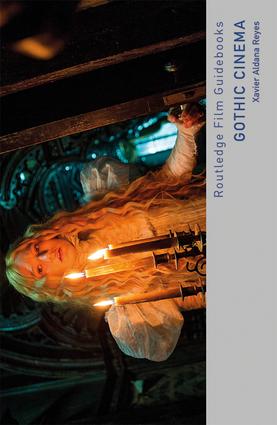
Gary Oldman as Dracula in Frances Ford Coppola’s Bram Stoker’s Dracula

Count Dracula in Stoker’s novel, after Harker’s account of him in the castle, is notably voiceless. The focalisation from then on is entirely through his foes; he is monstrous object, completely alien and unknowable. Like most vampires of the late twentieth and early twenty-first century (since, in particular, Fred Saberhagen’s 1975 The Dracula Tape, Anne Rice’s 1976 Interview With the Vampire, and Frances Ford Coppola’s 1992 film Bram Stoker’s Dracula), this Dracula (Claes Bang) has a voice. In such narratives, this has enabled all sorts of explorations of otherness, morality, and mortality. But what voice has Moffat and Gatiss granted him? Unfortunately, it is an all too familiar one: the delivery of superficial wisecracks, so much in the manner of other roles by Moffat (such as the Doctor in Dr Who) that he becomes indistinguishable from them (or even a seedy James Bond). Some of his powers of persuasion and manipulation emerge at moments but the opportunity to do anything original with his subjectivity is mostly not taken.

Sister Agatha identifies Dracula as simply a parasite. And perhaps, in the end, this is all he is: pure voraciousness. He replies that he is a connoisseur. There is an interesting paradox about identity that is raised here but not pursued. Dracula ingests many of the mental characteristics and faculties of his victims along with his blood. As ‘connoisseur’, he selects his victims for their knowledge, sophistication, or the complexity of their experiences. Does his connoisseurship then precede the sophistication of the mentalities he has acquired?

All post-Dracula vampire narratives at some point try and justify or explain vampire ‘lore’—the now-conventional vulnerabilities of the creature such as garlic, sunlight, lack of reflection in a mirror, the crucifix, and so on. This happens here, too—the audience is teased from the beginning about the role of the mirror and the reasons for Dracula’s aversion to sunlight and holy symbols. At the climax, there is the trite revelation that Dracula’s greatest fear is—death; and, bathetically, he dies. This shallowness pervades the drama. The character of Mina, for instance, so full of strength and complexity in the novel, is much diminished here and she is soon eliminated. Lucy’s original light flirtatiousness is transformed into a shallowness and vanity that is punished somewhat moralistically; there is some misogyny here, I feel. None of the characters are developed enough for us to feel much empathy with them, though Sister Agatha van Helsing has justly attracted approval. Her religious doubts and her courage add a moment of substance.

So there are aspects to enjoy in this reworking but there is a lack of depth, typified by the empty cipher of Count Dracula and his often platitudinous one-liners and lack of motivation. Likewise, the allusiveness (admired by many viewers, it seems) is equally shallow; the myriad references to other Draculas and to Gothic and horror in general are there purely to be allusive—they don’t add to the depth or assist the plot. I’m not sure I would be eager to watch this again.

However, Catherine Spooner makes a convincing case for this version’s contemporary relevance during Brexit and amidst anxieties about migration. Lucy Mangan in The Guardian is thrilled by it, admiring its cleverness and humour (as does Spooner). Sally Minogue praises it but finds the third episode disappointing (a common sentiment, judging from social media commentary on the production). Gerard Gilbert of The Independent interviews Moffat and Gatiss and supplies some background to the making of the drama. There’s also a short clip from the BBC about the production here.

Posted in Reviews | Tagged , , , , , , | Leave a comment

OGOM Gothic New Year Tour

Happy New Year OGOMers. Why not catch up on the dark fest that was Gothic Advent and celebrate 2020 by joining us on 18th January to explore the magical and spectral history of St Albans. Your hosts will be vampire expert Dr Sam George and Dr Kaja Franck (a specialist in werewolves); together they will draw on the dark folklore of Hertfordshire’s finest supernatural city, home to hidden tombs, ghostly monks, pagan gods, grotesque carvings, a medieval dragon’s lair, succubi, winged skulls, witches, Sir Guy de Grevade, a notorious wizard, Wicca communities, folklore rituals and more!!

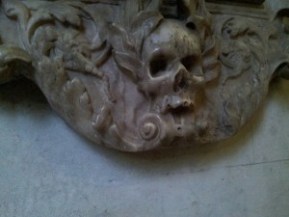
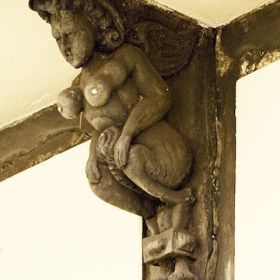
Gothic carvings in the abbey

Highlights of the tour will include a cloven-footed succubus, a path made out of gravestones and a winged skull or ‘death’s head’, which represents death taking flight and the soul’s journey to the afterlife. This memento mori has become a symbol of studying Open Graves with an Open Mind, which is what we will be encouraging on the night.

‘I absolutely loved the tour. I learnt so much about the dark side side of the town that I have lived in for 32 years’ (Angela Silverman, 2018 Tour)

Date 18 January 2020
Venue meet at the Clock Tower, St Albans at 14.30
Tour lasts 90 minutes
Price £10.00 (£8.00 concession)
Booking Required (Email: sam@opengravesopenminds.com)
Please have appropriate footwear for graveyards & muddy paths

Posted in Events, OGOM News | Tagged , , , , , , , | Leave a comment

Hans Andersen’ s Dark Musings From A Discarded Christmas Tree

I have been reading Hans Andersen’s unsettling account of a Christmas fir tree that feels pain. I was reminded of this story last year when I came across Lars Ostenfeld’s beautifully sad and poignant adaptation of  The Fir Tree (Danish: Grantræet) on the BBC iPlayer. I  do not think you will ever contemplate your tree in the same way again following these dark musings.

The tale was first published with ‘The Snow Queen’ on 21st December 1844. The story is narrated by the tree itself (which appeals to my botanical sensibilities) and like all of Andersen’s tales there is an emphasis on physical pain and suffering. The tree is vain and so impatient to grow up that it cannot live in the moment because it expects a greater glory. When it is pulled up for a Christmas tree its life is subject to the whim of the humans whose admiration it craves. They profess to love it dressing it with candles before depriving it of light and discarding it on a fire. The tree is entirely sentient and like the tale’s creator is afflicted with a melancholy sensitivity. It’s sensibility is so great that it not only feels the Christmas tree decorations weighing down its branches, and the candles burning its parched leaves, it also feels the pain of rejection from those who had seemingly loved it. When it is discarded and thrown in an outhouse it endures the deprivation of light, its life source, before being dragged outside and set alight. Andersen had written tales with unhappy endings before (The Little Mermaid’ and ‘The Steadfast Tin Soldier’, for example) but a new darker note is struck with ‘The Fir Tree’. It suggests not only the mercilessness of fate but the futility of life itself, only the moment is worth embracing.

If you like a winter’s tale (and a sad tale is best for winter) you will enjoy the beauty of this story. The forest is deeply lush and the Danish speaking tree is extremely uncanny. It does make you question the beauty of something that is dying from the moment it is brought into the house. Andersen’s Nordic sensibilities are very eco gothic here and the tale is wonderfully dark. The tree is both tragic and narcissistic. Still time to be unsettled by its arboreal sensitivities.  You can find the story in any complete Andersen collection. and there is an online version here (though I am not sure about this translation). I am lucky to have an M.R. James translation of the tale in an original Faber edition from 1930. I am truly amazed by the meeting of those two minds.

It is worth noting that in the UK 6 – 7 million Christmas trees are discarded every year and 250 tonnes of Christmas trees are thrown away after Christmas, when they could be used for compost. 

Posted in Critical thoughts | Tagged , , | Leave a comment

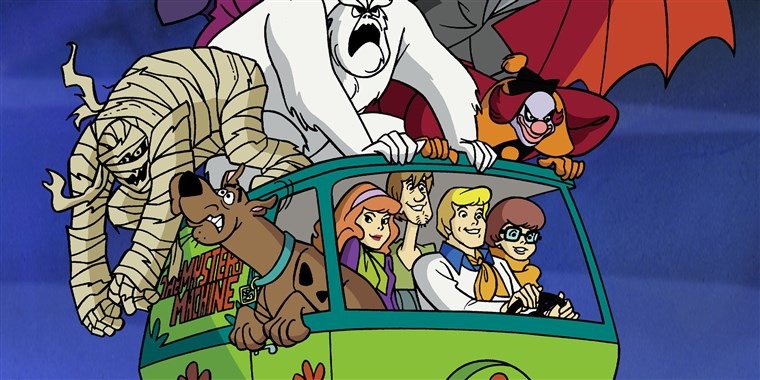
How Scooby Doo Influenced A Whole Generation of Gothic Scholars

If you were one of those kids who rushed home from school in the 70s to watch Scooby Doo it might just have influenced you in your Gothic thinking and in your understanding of the way Gothic stories are told. Even today those who only know it from watching the reruns (possibly with their own kids) may be surprised to hear about its influence on a whole generation of Gothic scholars – maybe this applies to one of your supervisors if you are a PhD student in the Gothic! Now you can read about its influence on Gothic minds in the insightful article below:

Fifty years ago, on September 13, 1969, Scooby Doo, Where Are You! premiered on CBS. The premise of the show was always the same: whether it was a ghost, a phantom, a ghoul, or a poltergeist, it was back from the dead and it was out a’haunting. “Meddling kids” Fred, Shaggy, Velma, Daphne, and their talking great dane Scooby Doo tackled the supernatural, followed clues, and uncovered the culprit. The mood of the show made up for its predictability; the mysteries were set in haunted houses, dark forests on full-moon nights, dilapidated ghost towns or deserted museums and circus grounds. Rife with suspense and tinged with horror that was watered down with slapstick comedy, Scooby Doo masqueraded as a cartoon mystery but really was surprisingly gothic.

Follow the link below to read the full article published on www.crimereads.com September 13, 2019 by Eleni Theodoropoulos]

Posted in Critical thoughts | Tagged , | Leave a comment

Vampire criticism: Slayage and Angel; Holly Black’s Coldtown

Angel, the tormented ‘vampire with a soul’, was, through his love affair with Buffy in Joss Whedon’s TV series Buffy the Vampire Slayer (1997‒2003), one significant archetype of the romantic vampire of paranormal romance. Whedon then developed his character further in the brilliant noir spin-off series, Angel (1999‒2004). The online journal Slayage: The Journal of Whedon Studies has now published the first special issue devoted to the series (17.2 [50], Summer / Fall 2019). There are some brilliant articles here (and an excellent introduction by Stacey Abbott), covering domestic space and noir, intertextuality with the Orpheus myth, Angel’s altruism and existentialist ethics, disability and redemption, embodiment, and the place of Angel in Whedon’s later work.

I have my own essay (thanks to Stacey Abbott and Simon Brown for their encouragement and attentive editing!), ‘“Through a glass darkly”: Reflection, Representation, and Mortality in “Eternity”’. In this I take the prevalent motif of the vampire not being reflected in mirrors and analyse the episode ‘Eternity’ (1.17), drawing on Sam George’s research into shadows and reflections. I see this episode as dramatising the vampiric, utopian appeal of eternal life and beauty and how that is connected to the commodification of fictional representation in the very media that Angel is presented in.

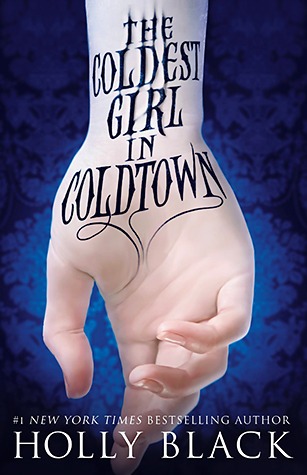
I have some further research on vampires which is in the process of publication. In my chapter ‘Genre mutation in YA Gothic: the dialectics of dystopia and romance in Holly Black’s The Coldest Girl in Coldtown’, I examine the ways that genres mutate and interpenetrate to create new forms. Black’s novel sets up an encounter of the YA dystopia (in the wake of Hunger Games) with the vampire romance. I show how the emancipatory humanism that can be found in paranormal romance is set against a devastating critique of the vampiric condition of neoliberal capitalism—an era of paranoia, universal surveillance, and the reduction of everything human to commodities.

Black’s Coldtown novel is a set text on Sam’s BA module ‘Generation Dead: Young Adult Fiction and the Gothic’, so this may be helpful for students on that course. The chapter will be appearing in a collection of essays on YA Gothic edited by Michelle Smith and Kristine Moruzi, Young Adult Gothic Fiction: Monstrous Selves/Monstrous Others (Cardiff: University of Wales Press, 2020). The link above is to a prepublication version in the Resources section of our site, so be aware that it may differ from the published article.

Posted in Generation Dead: YA Fiction and the Gothic news, OGOM Research, Resources | Tagged , , , , , , , , | 2 Comments

OGOM postgraduate successes: Matt Beresford and Daisy Butcher

Dr Sam George has supervised some very fruitful research projects at the University of Hertfordshire with her PhD students and we’d like to announce two great achievements.

First, we’d like to congratulate Dr Matt Beresford for successfully defending his thesis, ‘The Lord Byron/John Polidori relationship and the foundation of the early nineteenth-century literary vampire’. Matt passed his viva this week after studying for a PhD under OGOM on a part-time bursary and fee waiver from the University of Hertfordshire.

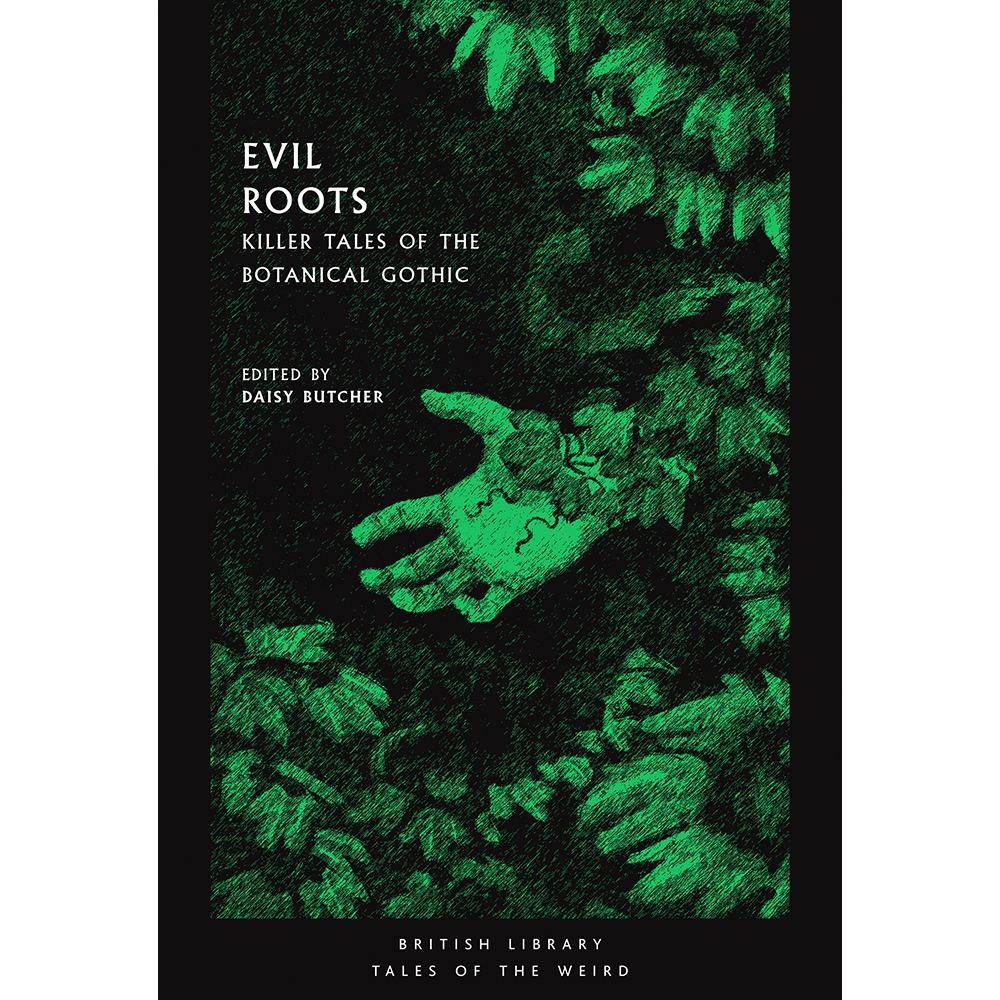
And Daisy Butcher, the recipient of another OGOM PhD bursary, is working on her thesis on vampires, mummies, and killer plants and the representation of the female monster from nineteenth-century literature to contemporary film and television. She has edited and compiled a fabulous collection of tales of the botanical Gothic: Evil Roots: Killer Tales of the Botanical Gothic.

Daisy launched her book at the Odyssey in St Albans and she has been spotted at book signings on the university campus in October and November. She has done an interview/podcast with Radio Verulam in the series ‘Local Life – Talking About Books’, which is available for seven days on Listen Again (via the website here). Congratulations are due to Daisy, too, for being nominated for the Dean’s Award for outstanding contributions to culture and the Humanities.

If you are interested in doing PhD research into the Gothic, the fantastic, and the folkloric with the OGOM Project at the University of Hertfordshire, look at the web page here. Sam also convenes an undergraduate module on Young Adult fiction and the Gothic and an MA module on Reading the Vampire.

Posted in OGOM News, OGOM Research | Tagged , , , , , , , | Leave a comment

CFPs: Reimagining the Gothic, Gothic politics, Byron, folklore, Vampire Diaries, Japanese horror

A batch of conference calls for papers and calls for chapters:

1. Reimagining the Gothic 2020: Bodies and Genders, University of Sheffield, 1-3 May 2020. Deadline: 2 December 2019.

Reimagining the Gothic is an ongoing project that seeks to explore how the Gothic can be re-read, re-analysed, and re-imagined. We encourage both public interest and new academic avenues from students and scholars who wish to present on the Gothic using interdisciplinary and creative methods. Bodies and genders have long been a key focus for Gothic texts and creators: either through positive, powerful self-identification with the Other or the expression of repressed fears and prejudices manifested in monstrosities.
Papers for ‘Reimagining the Gothic: Bodies and Genders’ should explore the way in which the Gothic mode has constructed and deconstructed physical and metaphorical bodies across various .

2. Politics and Horror, University of Stirling, 31 July – 1 August 2020. Deadline: 28 February 2020.

The University of Stirling invites paper, panel, and poster proposals focused on the role of horror and fear tactics in political commentary, political policy, and in film, literature, video games, comics, web series, and other media that demonstrate a clear connection to political sensibilities using horror imagery or affect.

3. Byron: Wars and Words: The 46th International Byron Conference, Aristotle University of Thessaloniki, Greece, 29 June-5 July 2020. Deadline: 31 December 2019.

The aim of this conference is to look at how war in all its meanings, symbolisms, and manifestations influenced Byron’s words and worlds, and shaped his poetic and political sensibility. Drawing on recent scholarship in Romantic studies, it will also explore Romantic authors’ preoccupations with war, and how these intersected with Byron’s.

4. Folklore, Learning and Literacies: The Annual Conference of the Folklore Society, London, 24-26 April 2020. Deadline: 12 January 2020.

Lore is learning: folklore is a body of knowledge and a means of transmission. Vernacular knowledge, and vernacular transmission, each rooted in language. [. . .] Formal education and training is no more – or less – formative than the informal, everyday vernacular literacies that we absorb from our peer groups or families. A proverb is a condensed lesson; a ballad or a fairy-tale has a moral more often than not; a rite of passage may encapsulate a trade’s culture. And the landscape, whether rural or urban, is a theatre of memory and the backdrop of local legend.
So yes, lore is learning. But how do we learn folklore? How do we learn about folklore?

5. Critically Reading “The Vampire Diaries” – call for Papers/Abstracts: edited collection. Deadline: 1 March 2020.

Contributions can cover television studies, intertextuality, the role of social media in the TVD fandom, gender, adolescence, mind control, the Gothic, and can also relate to the original novels, the spin-off novels, or either or the television spin-offs.

6. Call for Chapters: Japanese Horror: New Critical Approaches to History, Narratives and Aesthetics (Extended Deadline). Deadline: 25 November 2019

The cultural phenomenon of Japanese Horror has been of the most celebrated cultural exports of the country, being witness to some of the most notable aesthetic and critical addresses in the history of modern horror cultures. Encompassing a range of genres and performances including cinema, manga, video games, and television series, the loosely designated genre has often been known to uniquely blend ‘Western’ narrative and cinematic techniques and tropes with traditional narrative styles, visuals and folklores. Tracing back to the early decades of the twentieth century, modern Japanese horror cultures have had tremendous impact on world cinema, comics studies and video game studies, and popular culture, introducing many trends which are widely applied in contemporary horror narratives. The hybridity that is often native to Japanese aestheticisation of horror is an influential element that has found widespread acceptance in the genres of horror.
Posted in Call for Articles, CFP (Conferences) | Tagged , , , , , , , , , , | Leave a comment

The Haunted Landscape: Magic and Monsters of the British Isles; 23rd November, Conway Hall, London

‘The Haunted Landscape: Magic and Monsters of the British Isles’ is a one-day symposium on folklore, magic and beyond. Authors and researchers discuss fairies, witchcraft, werewolves, vampires, dragons, the lore of autumn, and the magic of common folk.

Up the airy mountain, Down the rushy glen, We daren’t go a-hunting, For fear of little men (William Allingham)

Programme of Talks

‘The Rites and Wrongs of Autumn’ , Doc Rowe

‘Magical House Protection: The Archaeology of Counter-Witchcraft’ , Brian Hoggard

‘The Croglin Grange Vampire’, Deborah Hyde

‘Old Stinker and Other UK Werewolves’, Dr Sam George

‘Fairies: A Dangerous History’, Dr Richard Sugg

‘English Witches and their Familiars’, Dr. Victoria Carr

‘England’s Historic Graffiti: Voices Preserved in Stone’, Crystal Hollis

‘Hollow Places: The Dragon Slayer’s Tomb’, Christopher Hadley

The event is at Conway Hall, London, Saturday 23rd November 10:00 am – 5:30 pm Tickets are available here £22.00 £16.00 concession

Posted in Events | Tagged , , , , , , , , | Leave a comment

YA Gothic, fairytale retellings, demon lovers, mermaids and Scottish myths

Here’s a selection of interesting articles on OGOM-related topics.

First, an article on YA Gothic with some recommended novels in the genre. Much of our research has focused on these texts–they are often more adventurous than their adult counterpart, especially in the realm of paranormal romance. Dr Sam George has pioneered the teaching of these novels in her BA module Generation Dead: Young Adult Fiction and the Gothic. This is Amanda Pagan,of the New York Public Library, on ‘Dark and Beautiful: Young Adult Gothic Fiction‘.

Much YA Gothic involves the retelling and reworking of the vast heritage of myth and fairy tale; intertextuality of this sort is again this a special area of interest for OGOM. Angel Cruz has compiled a very useful list of ‘100 must-read retellings of myths, folklore, and classics‘.

The upsurge of tales of loving the vampire and the monstrous in the genre of paranormal romance is part of this Gothic intertextuality. The figure of the Demon Lover from ballads and folklore that these stories build upon is explored here by Lewis Hurst in ‘“Well met, well met, my own true love”: Five Demon Lovers’.

Mermaids figure frequently in these narratives of love between human and supernatural Other. The scholar Cristina Bacchilega, who has just published The Penguin Book of Mermaids, writes here on ‘How Mermaid Stories Illustrate Complex Truths About Being Human: The Tropes, Tricks, and Tools We Find in Tales of Merfolk‘.

Vampires and fairies are among these otherworldly creatures, too. Scottish folklore is rich in these and Karin Goodwin writes here on ‘Scottish myths and legends: vampire fairies, shape shifting selkies and the Loch Ness monster‘.

And finally, to complete this set of resources on folklore reworkings and intertextuality, here’s a list by Courtney Rodgers of ‘7 books of folkloric fiction‘.

Posted in Generation Dead: YA Fiction and the Gothic news, Reading Lists, Resources | Tagged , , , , , , , , , , | 1 Comment

OGOM Halloween Countdown: 31 Days of Spookiness

Those who believe that the spirit world and the living world co-exist, always hidden from each other, will see the barrier between them open in the witching hour. Here at OGOM we are leaving the doors of perception open. We have been celebrating 31 days of Gothtober. You can view our Twitter ‘moment’ to mark this below. Have a wonderful Halloween OGOMERS!!!

Posted in Fun stuff | Tagged , , , , , | Leave a comment