CFPs: Gothic Interruptions, New Romanticisms, Byron, Angela Carter, Romance

Some exciting CFPs for forthcoming conferences. The one we have all been waiting for, the International Gothic Association 2022 conference in Dublin is out at last!
** Note that the deadline for the Angela Carter symposium is very soon–30 November.

1. Gothic Interruptions, 16th International Gothic Association Conference, Trinity College Dublin, Ireland, 26-29 July 2022. Deadline: 31 January 2022

While it would be easy to become mired in the plethora of challenging and destabilising events around us, IGA 2022 adopts the conference theme ‘Gothic Interruptions’ in order to encourage an interrogation of the ways in which Gothic and horror frame can frame such contemporary (and historical) events as moments that are also loaded with possibility. How do these Gothic circumstances, terrifying as they may be, lead to change, looking toward new futures? How might they link to the ludic or cathartic potential of the Gothic as a mode which is itself forever evolving?

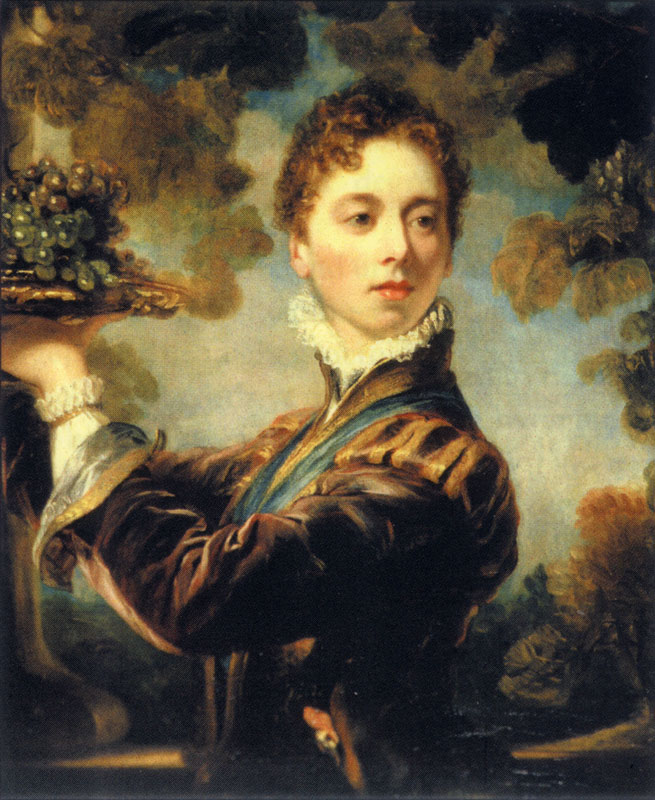
2. New Romanticisms, British Association of Romantic Studies / North American Society for the Study of Romanticism conference, Edge Hill University, 2-5 August 2022. Deadline: 13 December 2021

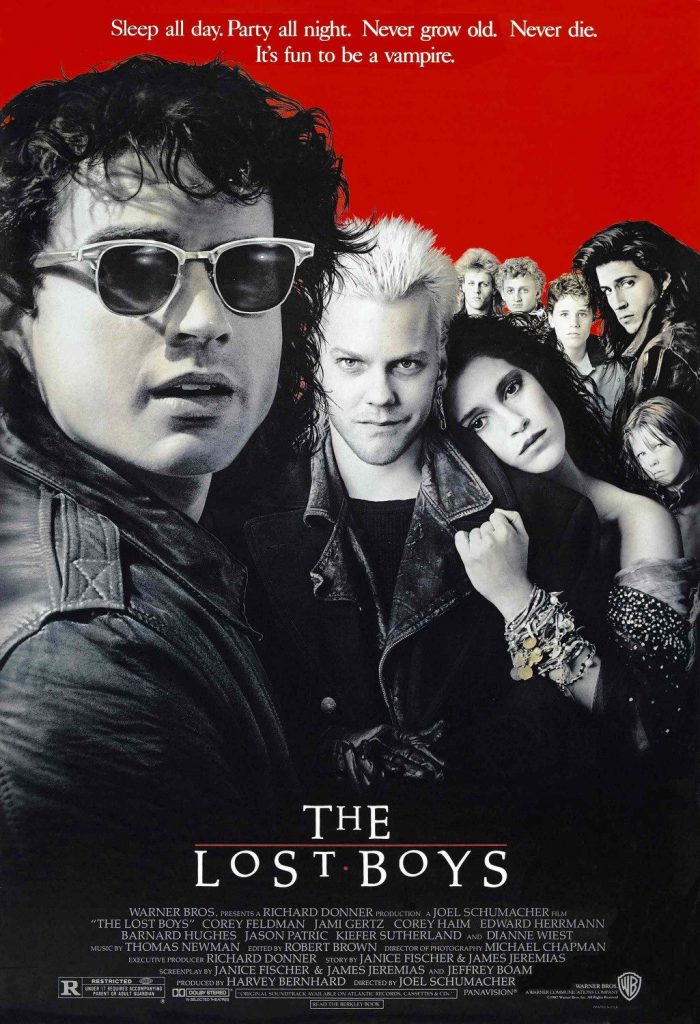
‘New Romanticisms’ invites explorations of both the concept of newness in and about the Romantic period and new approaches to Romantic Studies today. The title for the conference also plays on the term ‘New Romantics’, referring to post-punk bands of the late 1970s and 1980s influenced by Romantic-period aesthetics, especially ‘dandy’ fashions (roughly equivalent to ‘new wave’ artists in America). The conference organisers are therefore particularly interested in responses to the call for papers which think about Romantic legacies and receptions in music, theatre, pop culture, and beyond. We would also welcome areas of research distinct from literary and cultural studies, which might include, but is not limited to: art history, material culture, cultural heritage, public engagement, and knowledge exchange.

3. Dracula and Beyond: Vampiric Anniversaries, online conference, 29-30 October 2022. Deadline: 30 June 2022

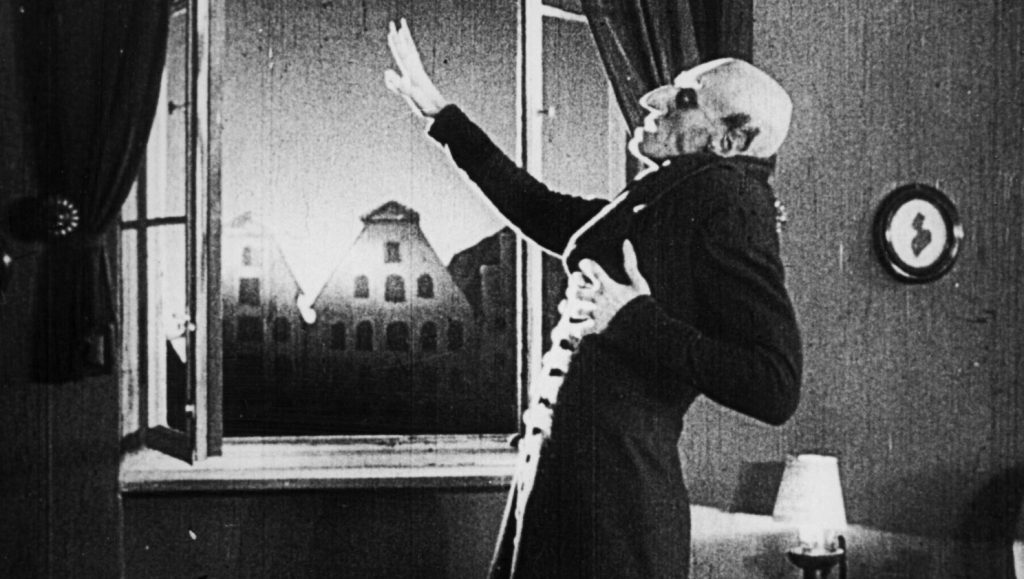
Bram Stoker’s Dracula (1897) is one of the most famous novels written in English. The interest it arises in scholars, artists and the general public alike is rarely equalled by other narratives. The numerous approaches given to the analysis of Stoker’s best text range from the historical figures of Vlad the Impaler and Elizabeth Báthory to the Victorian Gothic among others. This online conference celebrates the anniversaries of Bram Stoker’s ground-breaking Dracula and its film adaptations Nosferatu: A Symphony of Horror (1922) and Bram Stoker’s Dracula (1992).

4. Byron: Poet and Reade, 47th International Byron Conference, The A.M. Gorky Institute of World Literature of the Russian Academy of Sciences & The Maxim Gorky Institute of Literature and Creative Writing, Moscow, Russia, 26 June-3 July 2022. Deadline: 14 February 2022

The theme of this conference is “Poet & Reader”, where Byron himself might be perceived as an acute and genuine reader of texts composed in different modes and languages. There are also readers of Byron, who were inspired by the poet’s brisk and alluring verse style and his commitment to liberty and freedom. Famous writers, revolutionaries, philosophers, historians, artists, composers, travelers, and inventors belong to the international community known as Byron’s readership. Some of them claimed that they had learned English in order to read Byron in the original. Special attention will be given to the Russian reception of Byron and his works.

5. Angela Carter: A Radical Prescience?, symposium, The Centre for Fairy Tales, Fantasy and Speculative Fiction at the University of Chichester, 5 March 2022. Deadline: 30 November 2021

The symposium will mark the thirtieth anniversary of the death of Angela Carter, whose reputation as a leading British writer of fantastical literature remains undiminished three decades after her untimely passing. Its theme also reflects the new decolonial and multi-genre direction of the Centre. In face-to-face and online events, we will highlight, celebrate and interrogate Angela Carter’s legacy, wrestle with her angels and demons, and pickpocket im/pertinent answers to a wealth of questions.

6. Fantasy and escape in romance and romantic media, PCA Romance area, Virtual PCA National Conference (on line), 13-16 April 2022. Deadline: 5 December 2021. Accepts undergraduate submissions.

Felski highlights a core pleasure of the romance genre: an escape from the everyday, to a place where something that is often considered fantastical – true love – is possible. However, “escapism” is also the criticism most frequently levied against romance narratives, with realism held up as the ideal. Because romances engage with this fantasy and provide this escape, they are idealistic, not realistic – and thus, for some commentators, imagined as socially irresponsible or even deleterious to their audiences (audiences usually assumed to be predominantly female).

Posted in CFP (Conferences) | Tagged , , , , , , , , , , , , , | Leave a comment

Lady Caroline Lamb (13 November 1785–25 January 1828) – Byronic vampires and romance

Portrait of Lady Caroline Lamb

Lady Caroline Lamb, whose birthday it would have been on 13 November (I’m a bit late!), famously judged Lord Byron ‘Mad, bad, and dangerous’, having had a brief and tempestuous affair with him. This relationship inspired her novel Glenarvon (1816), which is usually read as a roman à clef which enacts revenge on Byron and, with its sharp satire on her own social circle, led to scandal and her public shaming. Lamb, who was a fine mimic of Byronism (and Byron himself) was herself perhaps a little mad, denounced as bad, and had an aura of danger about her.

Cover of Everyman's Library edition of Glenarvon

But Glenarvon can be read as more than an act of personal revenge. It’s a compelling (though wild and excessive in parts) Gothic novel that also delves into political issue, particularly with its setting of the Irish Rebellion of 1798. The Byronic figure of the titular hero, Glenarvon, also known as Lord Ruthven, serves as a critique of Byron’s own ambivalent radicalism (and of his Whiggish peers). And the social satire is acute and very amusing.

Glenarvon is characterised with the melancholy nobility and satanic allure of the classic Byronic hero; he is ‘arch fiend’ and ‘fallen angel’, and howls at the moon (his ancestor drinks blood from a skull). He takes part in the anti-colonial Irish Rebellion, inciting the people with his rhetoric and personal charm. Glenarvon’s political persuasiveness is linked to his sexual glamour. Glenarvon’s women themselves become Byronic, denouncing God, family, and society, and swearing satanic vows of abjuration; Byronism is an infection, like vampirism. Glenarvon ultimately betrays both his women lovers and Ireland, yet remains an inspirational force, though the rebellions of transgressive women and nation are both doomed. With all these conflicting forces, Lamb’s novel shifts between an anti-Jacobin stance and radicalism.

Cover of Empress Gothic edition of Glenarvon

John Polidori took the name Lord Ruthven for his creation of the first vampire in English prose fiction, possibly his own revenge on Byron, in the novella The Vampyre (1819). Glenarvon himself anticipates the vampirism of his avatar in Polidori and also a whole strand of Gothic-tinged fictions that feature a seductive demonic lover as hero, from the Brontës, through the Gothic Romances initiated by Daphne du Maurier that peaked during the 1970s, to the vampiric lovers in contemporary paranormal romance such as Stephenie Mayers’s Twilight. So it’s not as inappropriate as it seems to see Glenarvon in this dramatically kitsch cover, an edition from 1973 in the Empress Gothics series. (Compare this to these Gothic Romance novels discussed here.)

Cover of Lady Caroline Lamb by Eva McDonald

Lady Caroline Lamb’s own colourful and emotionally fraught life, even without the self-dramatisation she performs in Glenarvon, had enough wildness and pathos to furnish a romance story – as this 1968 novel by Eva McDonald shows. Yet, with its clumsy appropriation of Lamb’s life as a contrived subplot to the dreadful main story, this is not the best tribute to her neglected genius.

Polidori’s revision of Ruthven strips away Lamb’s ambivalence, but by clearly marking the aristocratic demon lover as both Byronic and a vampire, inaugurates a literary archetype. Yet many of Ruthven’s descendants, both those that are only metaphorically vampiric and the more explicit incarnations in paranormal romance, resurrect the alluring mix of rebellion and faithlessness that Lamb depicted. I will be writing on this in a chapter in OGOM’s forthcoming book, The Romantic vampyre and its progeny: The legacy of John Polidori, edited by myself and Sam George. This book comes out of our 2019 symposium, ‘Some curious disquiet’: Polidori, the Byronic vampire, and its progeny. We now have the contract for this with Manchester University Press and I promise it will be very exciting – more details soon!

Posted in OGOM Research | Tagged , , , , , , , , | Leave a comment

Coffin Boffin’s #31DaysofHalloween

Halloween is finally here! @DrSamGeorge1, The ‘Coffin Boffin’, would like to thank all those who have accompanied her on this Gothtober Halloween journey. If you are still to view the gothic wonders she has uncover, click to enjoy her spooky #Halloween Twitter ‘moment’ HERE!!

Posted in Events, Fun stuff, OGOM News, Uncategorized | Tagged , , | Leave a comment

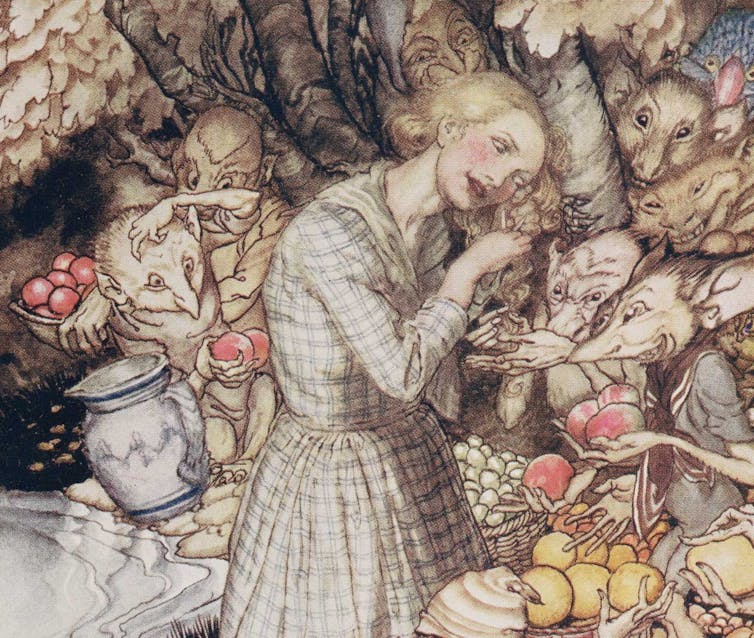
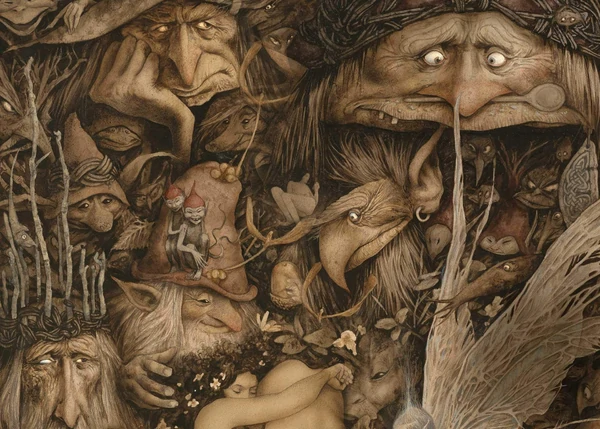
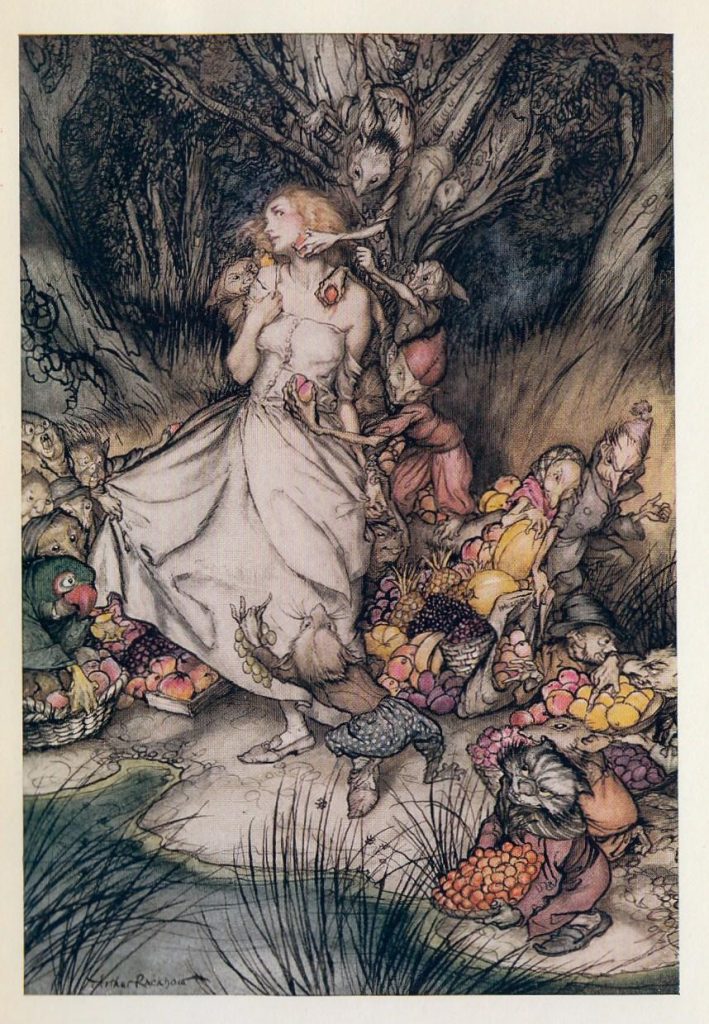
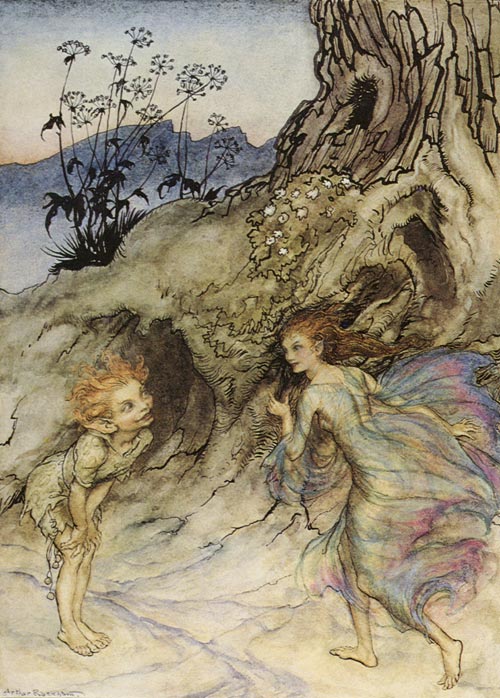
Fairies weren’t always cute – they used to drink human blood and kidnap children

A painting from the 1800s of a sleeping woman surrounded by fairies. Wikimedia, CC BY-SA

Sam George, University of Hertfordshire

When most people think about fairies, they perhaps picture the sparkling Tinker Bell from Peter Pan or the other heartwarming and cute fairies and fairy godmothers that populate many Disney movies and children’s cartoons. But these creatures have much darker origins – and were once thought to be more like undead blood-sucking vampires.

In The Secret Commonwealth of Elves, Fauns and Fairies (1682), folklorist Robert Kirk argued that fairies are “the dead”, or of “a middle nature betwixt man and angels”. This association is particularly prominent in Celtic lore. Writing in 1887, Lady Jane Wilde popularised the Irish belief that:

fairies are the fallen angels who were cast down by the Lord God out of heaven for their sinful pride…and the devil gives to these knowledge and power and sends them on earth where they work much evil.

At first sight the current innocent idea of fairyland seems as far away from the shadowy realms of the dead, and yet there are many resemblances between them. Despite their wands and glitter, fairies have a dark history and surprisingly gothic credentials. So why did we lose our fear of fairies and how did they come to be associated with childhood?

How fairies lost their bite

When JM Barrie’s Peter Pan debuted in the early 1900s, it was widely believed in society at that time that fairies were inhabited a shadowy spirit world. Fascinated by angels, ghosts and vampires, Victorians (subsequently Edwardians) increasingly saw fairies as the souls of the dead. Rather than dispelling fairies, the First World War and the loss of many loved ones heightened a belief in airy spirits and occult methods of communicating with them.

However, due to Peter Pan’s great success and the prominent “pixie” character of Tinker Bell the creatures would eventually lose their malevolence as they became confined to the nursery.

Barrie famously equated the origin of fairies with children:

When the first baby laughed…its laugh broke into a thousand pieces…that was the beginning of fairies.

A baby being carried off by fairies.
An illustration for Barrie’s Peter Pan book by Arthur Rackham.

This is far from the malevolent fairies and their shadowy history in folklore. In these stories they steal children, drive people insane, blight cattle and crops – and drink human blood. Barrie, of course, was aware of their dark side. Despite the fairy dust and glamour, Tinker Bell is dangerous and vengeful like a deadly fairy temptress. At one point in the story, she even threatens to kill Wendy.

Peter Pan, or the Boy Who Would Not Grow Up, debuted on stage at Christmas in 1904. It was inspired by performing fairies in popular shows such as Seymour Hicks’s Bluebell in Fairyland. Peter Pan was canonised by Disney in 1953 and the sentimental celluloid fairy was born. The cutesy and youthful fairies of contemporary children’s TV are a result of this Disneyfication.

Blood hungry demons

But in folklore, fairies are often a demonic or undead force; one which humans need to seek protection against. As folklorist Katharine Briggs has noted. In her Dictionary of Fairies, she wrote:

People walking alone by night, especially through fairy-haunted places, had many ways of protecting themselves. The first might be sacred symbols, by making the sign of a cross, or by carrying a cross, particularly one made of iron; by prayers, or the chanting of hymns, by holy water, sprinkled or carried, and by carrying and strewing Churchyard mould in their path. Bread and salt were also effective, and both were regarded as sacred symbols, one of life and the other of eternity.

What is more, fairyland has a hunger for human blood. This links fairies to the vengeful dead and to vampires. In early accounts, vampires are defined as the bodies of the dead, animated by evil spirits, which come out of their graves in the night, suck the blood the living and thereby destroy them – as an entry in the Oxford English Dictionary from 1734 notes.

Diane Purkiss’s history of fairies includes a Scottish Highland legend which warns that you must bring water into the house at night, so the fairies don’t quench their thirst with your blood. Very old fairies, like vampires, were said to wrinkle and dry up without fresh blood.

The Baobhan Sith are vampiric Scottish fairies. These beautiful green banshees have hooves instead of feet, they dance with and exhaust their male victims then tear them to pieces. Like many fairies, they can be killed with iron.

Dearg-Due are Irish vampiric fairies or “Red Blood Suckers”. They were thought to be influential on Sheridan Le Fanu’s female vampire tale Carmilla (1871).

Halloween is supposedly a time when the veil between our world and the shadow world is extremely thin. A time when you are more likely to hear stories of encounters between humans and fairies. So if this Halloween you go seeking winged friends, a warning to the curious, they might not be as sweet as you think.

Tread carefully and never enter a fairy ring. Circles of mushrooms, they are believed to have been created by fairies dancing in rounds. According to folklore, if you do happen to step into such a circle of mushrooms, you may become invisible and be made to dance around until you die of exhaustion. So a healthy fear of fairies is always wise.

Sam George, Associate Professor of Research, University of Hertfordshire

This article is republished from The Conversation under a Creative Commons license. Read the original article.

Posted in OGOM Research | Tagged , , , , , , , , | Leave a comment

Mina’s Paprika Hendl, inspired by Bram Stoker’s Dracula

Guest recipe post from Ella Buchan, co-author of A Gothic Cookbook (featured here also)

Paprika Hendl

Unlike Dracula’s cold cuts, this traditional Hungarian dish – also known as Paprika Hendl – is a warm welcome in a bowl, thick, rich and shot through with the subtle smokiness of paprika. Jonathan Harker loves it so much, in fact, that he writes in his diary a memo to “get recipe for Mina”.

Serve the pink-sauced stew spooned over ribbons of black tagliatelle – usually coloured by squid ink or activated charcoal – for full Gothic effect. It’ll taste just as lovely accompanied by noodles, potatoes or rice, though. Or simply eat it with a spoon, perhaps with some chunky bread to mop up the sauce.

For a vegetarian version, try roasting squash and mushrooms until tender and add to the pan in place of the chicken after step 2, simmering for 15-20 minutes until the sauce is nicely reduced.

Make it dairy-free or vegan by substituting a nut butter and cashew cream.

Serves 2

Ingredients

2 tbsp olive oil
500g boneless, skinless chicken thighs, cut into strips
2 tbsp butter
1 onion, sliced into fine strips
1 clove garlic, finely chopped or minced
3 tbsp smoked paprika
1 tsp hot paprika
400g tin of chopped tomatoes
350ml of chicken or vegetable stock
150ml sour cream
Black tagliatelle, to serve (optional)

Method

1. Gently heat the olive oil in a large, heavy-bottomed saucepan or stewpot and add the chicken, cooking for around 4-5 minutes on each side to brown. Remove and set aside.

2. Using the same pan, reduce heat and add the butter. Once melted, add the onion, garlic and pepper, cooking for a minute before adding the paprika.

3. Return the chicken to the pan, add the tomatoes and simmer for a few minutes before adding the stock. Bring back to a simmer, cover and cook on a low-medium heat for around half an hour, until the chicken is tender and the sauce is nicely reduced. Meanwhile, cook pasta according to packet instructions.

4. Combine a few ladlefuls of the sauce with the sour cream, then add back to the pan, stirring gently. Continue cooking until heated through, and serve over the pasta – or your chosen accompaniment.

A Gothic Cookbook

A Gothic Cookbook is an illustrated celebration of food and drink in Gothic literature, discussing edible motifs and the significance of food in novels and short stories including Frankenstein, Dracula, Jane Eyre, Rebecca and The Haunting of Hill House.

The book, written by Ella Buchan and Alessandra Pino and with original drawings by Lee Henry, is signed with Unbound Publishing, which works by crowdfunding the initial production costs.

People can help make the book a physical, cloth-bound being by reserving a copy and merchandise with original artwork, such as posters, dinner party kits, limited-edition cocktail booklets and bespoke pet portraits. More information about the book, its authors and recipes – and how you can support – is here: https://unbound.com/books/a-gothic-cookbook/

Posted in Fun stuff | Tagged , | 2 Comments

Events for Hallowe’en and elsewhen: Gothic bodies, Gothic nature, Lud-in-the-Mist, Irish women, YA and COVID, Melmoth

Some spookily exciting events coming up soon for Hallowe’en (and afterwards too):

1. North West Long Nineteenth-Century Seminar series, hosted by Manchester Metropolitan University (on line), 3 November 2021, 16:30 – 19:00 GMT.

OGOM’s Dr Sam George will be talking again on The Black Vampyre (the topic of a very successful online event for Being Human). Sam is accompanied by Charlotte Chassefière (Université Paul Valéry, Montpellier), on ‘Confinement and Masquerade: Charlotte Dacre and the Gothic body’; and Rebecca Gibson (University of Lancaster) ‘[T]he Corruption Implicit’: Liminal Faces and Ambiguous Moralities In Late Nineteenth and Early Twentieth-Century Gothic’.

This Halloween seminar will focus on Gothic bodies from the Romantic period to the early twentieth century. Three speakers will consider the resonances of the Gothic body in terms of race and gender, examining themes of monstrosity, confinement, facial transformation and masquerade.

2. Gothic Programme at Chawton House: When nature strikes back. A series of displays, tours, online talks, and other events till 31 October 2021.

From Frankenstein’s monster to The Day of the Triffids; Ann Radcliffe’s wildly sublime literary landscapes to the environmental apocalypse of films such as The Day After Tomorrow; from eighteenth-century Gothic to its modern sci-fi descendants, we have always been preoccupied with the effects of the natural world on humankind – when nature strikes back. As Autumn draws in, join us for dark folklore, plants and plagues: Gothic tours and talks, a new garden trail, atmospheric dining, and a movie night that’ll put a spell on you.

3. Visit Lud-in-the-Mist for Halloween, plus Lolly Willowes. BBC Radio 4, 30 October 2021.

Dramatisations of two brilliant novels (I gave a paper on Lud-in-the-Mist at our Gothic Faerie conference).

Doctor Who writer Joy Wilkinson has adapted the groundbreaking fantasy novel Lud-in-the-Mist into a play for BBC Radio Drama, which airs in October.

The novel by Hope Mirrlees was published in 1926 and is considered a pioneer of the fantasy genre that is all too often overlooked. Wilkinson aims to put that right – with the help of one of the book’s greatest advocates, Neil Gaiman, who has a star cameo in the production. [. . .] in a Halloween double-bill with Lolly Willowes a feminist classic with fantasy elements by Sylvia Townsend Warner, adapted by Sarah Daniels. Both dramas will be available on iPlayer following the broadcast.

4. Irish Women, Bodies, and the Gothic Tradition, BARS Digital Events (on line), 9 December 2021, 17:00 – 18:30 GMT

In Irish literature from the eighteenth century well into the twentieth and twenty-first centuries, the Gothic tradition has been shaped by the spectrality and the perceived vulnerability of the female body. [. . .] This roundtable will consider the paradoxical role of women and feminized others in the long tradition of the Irish Gothic.

5. Young People and YA Fiction in the Time of Covid-19, Dr Alison Waller, Centre for Childhood Cultures, Queen Mary University of London, 28 October 2021, 17:00 – 19:30 BST

Researchers have argued that reading has provided ‘refuge’ for young people during the Covid-19 pandemic (Clark & Picton 2020), but there are still concerns about adolescent mental health following this period of disruption to ‘normal’ life. There are signs that the crisis is in retreat in the UK, but the future is uncertain. In this talk, I will discuss my British Academy-funded ‘Reading for Normal’ project, which offered enthusiastic teen readers a temporary community for talking about their own lives in relation to YA fiction during a period of lockdown.

6. Ragged, livid & on fire: The Wanderings of Melmoth at 200 – Symposium, Marsh’s Library, Dublin, 29 October 2021, 09:30 – 18:00 IST

A day of events to celebrate the 200th anniversary of the publication of Charles Robert Maturin’s infamous gothic novel Melmoth the Wanderer

Posted in Events | Tagged , , , , , , , , , , , , , , | Leave a comment

A British Werewolf Scholar on YouTube

Lon Chaney Jr as Larry Talbot in The Wolf Man (1941)

As part of OGOM’s foray into the real world during Spooky Season, Dr Kaja Franck will be part of two-part Monstrum special on werewolves for PBS’ YouTube channel Storied. The first episode will be released on 21st October – following the Hunter’s Moon, and the second, on 28th October. Hopefully, you’ll enjoy this fascinating insight into lycanthropes. Looking forward to your responses.

Posted in Events, OGOM News | Tagged , , , , | Leave a comment

Gothic Bodies: North West Long Nineteenth Century Seminar 3 November, 2021

Join us in November for the North West Long Nineteenth-Century Seminar series, hosted by Manchester Metropolitan University

This Halloween seminar will focus on Gothic bodies from the Romantic period to the early twentieth century. Three speakers will consider the resonances of the Gothic body in terms of race and gender, examining themes of monstrosity, confinement, facial transformation and masquerade.

Any queries, please contact the seminar organisers Emma Liggins and Sonja Lawrenson from Manchester Metropolitan University, on e.liggins@mmu.ac.uk or s.lawrenson@mmu.ac.uk

The Picture of Dorian Gray (1945) - Moria

Schedule

Date and time

Wed, 3 November 2021

16:30 – 19:00 GMT

16.30 – 17.30 Sam George (University of Hertfordshire), ‘America’s First Vampire was Black and Revolutionary: Is it time to remember ‘The Black Vampyre’?

17.30 – 17.45 break

17.45 Charlotte Chassefière (Université Paul Valéry, Montpellier), ‘Confinement and Masquerade: Charlotte Dacre’s gothic bodies (1772-1825)’

18.10 Rebecca Gibson, (University of Lancaster) ‘[T]he Corruption Implicit’: Liminal Faces and Ambiguous Moralities In Late Nineteenth and Early Twentieth-Century Gothic

Abstracts and Bios

Sam George, ‘America’s First Vampire was Black and Revolutionary: Is it time to remember ‘The Black Vampyre’?

In April of 1819, the New Monthly Magazine, published ‘The Vampyre: A Tale’ by Lord Byron. Notice of its publication quickly appeared in papers in the United States. Byron was at the time enjoying remarkable popularity and this new tale, supposedly by the famous poet, caused a sensation as did its reprintings in Boston’s Atheneum (15 June) and Baltimore’s Robinson’s Magazine (26 June). By July, Byron’s denial of authorship was being reported and by August the true author was discovered, John Polidori. In the meantime, an American response, ‘The Black Vampyre: A Legend of St. Domingo’, by one Uriah Derick D’Arcy, appeared. D’Arcy explicitly parodies ‘The Vampyre’ and even suggests that Polidori’s vampiric aristocrat had his origins in the Caribbean. A later reprinting in 1845 attributed ‘The Black Vampyre’ to a Robert C. Sands; however, many believe the author was more likely to be Richard Varick Dey (1801–1837), a near anagram of the named author.

This anti-slavery narrative from the early 1800s contains America’s first vampire who is Black. It is also the first short story to advocate the emancipation of slaves, released 14 years before Lydia Child published ‘An Appeal in Favor of That Class of Americans Called Africans’, which is widely considered to be one of the first anti-slavery books. ‘The Black Vampyre’, is also noteworthy for its idea of mixed marriage at a time when interracial love was deemed taboo.

In this paper I ask why this ground-breaking text is still relatively unknown, even in Gothic circles? It appears in none of the seminal histories of the vampire, for example. Important for being the first American vampire text, and for depicting the first Black vampire in literature; it has a contemporary resonance. The racism cultivated by slavery lives on; the struggle against it and the dreams of universal humanity expressed in the Haitian Revolution continues. I argue that the links ‘The Black Vampyre’ makes between racial oppression and a vampiric society, though ambivalent, make its resurrection worthwhile, and that the crude goriness and spookiness of Gothic vampire narratives can still have an ethical force.

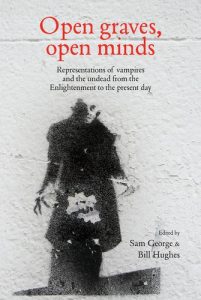
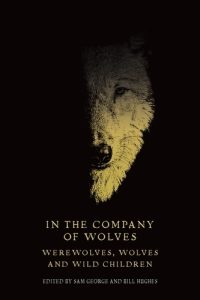
Sam George is Associate Professor in Research and the Convenor of the popular Open Graves, Open Minds Project at the University of Hertfordshire. She is a writer of feature articles on literature, folklore and the Gothic in the national and international press. Her reads for The Conversation alone are 140,000. Her interviews have appeared in newspapers from The Guardian to The Independent and the Wall Street Journal. Her research interests span from women and botany to vampire studies, werewolves and dark fairies. She is the author of Botany, Sexuality and Women’s Writing (2007); In the Kingdom of Shadows; Optics, Dark Folklore and the Gothic (forthcoming 2022), and the co- editor of Representations of Vampires and the Undead from the Enlightenment to the Present Day (2012); In the Company of Wolves: Werewolves, Wolves and Wild Children (2020). She co-edited the first ever issue of Gothic Studies on ‘Vampires’ with Bill Hughes in 2013 and ‘werewolves and wildness’ followed in 2019. She is currently working on an edited collection on The Legacy of John William Polidori: The Romantic Vampire and its Progeny and researching a book on gothic fairies for Bloomsbury. You can follow her on Twitter at @DrSamGeorge1

Charlotte Chassefière, ‘Confinement and Masquerade: Charlotte Dacre’s gothic bodies (1772-1825)’

Writing from a culture that prized its women as symbols of moral property, the bearers of home and nation (Barlaskar 2020), Charlotte Dacre was (and still is) famous for her depictions of trespassing and hypersexual female characters. Concerned with issues of femininity as well as with the traditional Gothic emphasis on confined heroines, and the delimitation between ”inside” and ”outside” spaces, her four novels published between 1805 and 1811 expose the complex relationships between (anti-)heroines and their gothic bodies. This talk will be dedicated to the concepts of confinement and masquerade as developed in the novels of Charlotte Dacre, and will demonstrate the extent to which these notions can be ”harnessed” by the heroines, in order to assert their agentivity, in quite a suprising fashion when compared to other gothic texts from the time. In this presentation, I will analyse the dynamics of confinement of the heroines’ bodies—within an enclosed space, or within the traditional middle-class expectations of feminine behaviour—showing how Dacre appropriates and rewrites the sentimental motif of the blushing heroine. We shall also see how this blush (a mask among many others) can be appropriated by female characters in order to navigate their way in society, in a form of feminine masquerade that both endorses, subverts and criticises the ninteenth-century gendered double standard, and the discipline of sensibility.

Charlotte Chassefière is a PhD student in late eighteenth and early nineteenth-century British literature at EMMA (Etudes Montpelliéraines du Monde Anglophone), Université Paul Valéry (Montpellier, France), where she is also a lecturer for the English department. Her doctoral research is centred on the constructions of the self in the novels of Charlotte Dacre (1772-1825), under the supervision of Prof. Christine Reynier. Her other fields of interest include Gothic fiction, early nineteenth-century poetry, and Romantic Satanism. She is also the author of a review of Laurence Talairach’s Gothic Remains for Cahiers Victoriens et Edouardiens (https://journals.openedition.org/cve/8387), and of the chapter “’Reason, honour, and the usage of society’ in Charlotte Dacre’s The Libertine”, in the post-conference volume “I have a dream”: From a Culture of Violence to a Culture of Non-Violence edited by Anna Hamling (LCIR).

Université Paul Valéry, Montpellier 3 (France)

EMMA – Etudes Montpelliéraines du Monde Anglophone

https://emma.www.univ-montp3.fr/fr/annuaire_recherche/charlotte-chassefiere

Rebecca Gibson, ‘[T]he Corruption Implicit’: Liminal Faces and Ambiguous Moralities In Late Nineteenth and Early Twentieth-Century Gothic’

The late nineteenth century marks the moment when discourses of appearance-altering technologies, morality and the Gothic began to crystallise in literature. Novels from this era commonly incorporate characters whose disfigured appearances map directly onto their moral corruption or vice versa. Often the two are so tightly bound together that to separate the strands is to dissolve the characters altogether, as in the case of Oscar Wilde’s Dorian Gray, who sows the seeds of his own destruction in attempting to rid himself of the painting depicting his actual appearance. This paper will expand upon the implications of these representations and situate Gaston Leroux’s The Phantom of the Opera (1910) in the context of this tradition, focusing specifically on the mystery of the Phantom’s appearance, the horror of his true face, and his outsider status as a person unable to communicate with such a face. In Phantom, The Picture of Dorian Gray (1890), and other texts I will discuss, facial transformation calls identity into question, reflecting Gothic’s response to the scientific and social turbulence of the fin-de-siècle era.

Rebecca Gibson is a Gothic researcher and academic who recently passed her viva at Lancaster University. Her thesis is titled ‘Uncanny Incisions: Plastic Surgery in the Gothic Mode’. Her research interests include body Gothic, the medical humanities, ecoGothic, gender studies, and queerness.

ATTENDING: This event is FREE but you need to book via the link to Eventbrite HERE

Looking forward to seeing you!!

Posted in Events, OGOM News | Tagged , , , , , , , | Leave a comment

Online Talk: Dr Sam George, Dark Folklore: A Journey into the Botanical Gothic, 19 October 2021

#BotanicalGothic

Inspired by the eighteenth-century botanist Tournefort, who voyaged in search of plants and found instead a plague of vampires on the island of Mykonos (1702), Sam George’s botanical studies have taken a gothic turn. Following the publication of Botany, Sexuality and Women’s Writing (2007), and her contribution to New York Botanical Garden’s Poetic Botany she became the convenor of the Open Graves, Open Minds project. She now researches botany alongside the gothic, unearthing depictions of the vampire and the undead in literature, art, and other media, embracing werewolves (and representations of wolves and wild children), fairies, and other supernatural beings and their worlds. In this talk she presents a snapshot of the material that led to her research project coining the term ‘botanical gothic’. She explores a new darker, shadowy world of plants, found at the intersection between folklore and the gothic. As Halloween approaches, she demonstrates how our knowledge of plants is magically transformed when viewed through this lens of dark folklore. Did you know for example, that the seed heads of Snapdragons resemble tiny skulls, that Bluebells are a dangerous and potent fairy flower (the Scottish name for the plant is ‘Dead Men’s Bells’); that Hawthorne is the favoured wood for staking vampires? A surprisingly dark history of plants will be uncovered via this special Halloween journey into the botanical gothic.

This image has an empty alt attribute; its file name is image.jpeg

Dr Sam George, Dark Folklore: A journey into the Botanical Gothic, 19 October 2021. This is an online event. Ticket holders will be emailed links on the day of the event. The interview, pre-recorded to ensure quality, will premier on YouTube at 7pm but will be available to watch for those with the link afterwards. Please note the Zoom Q&A is live and will not be recorded.

Tickets £6

#BotanicalGothic @DrSamGeorge1

If you do not receive joining details by midday (UK time) on the day of the event, please email info@chawtonhouse.org with your order number.

Posted in Events, OGOM News | Tagged , , , , | Leave a comment

Cats’ Protection: Transylvania Trek

Lynx in Romania

TEAMWORK MAKES THE SCREAM WORK ON THE TRANSYLVANIAN TREK!

Cats Protection is looking for intrepid fundraisers to challenge themselves and raise money for cats on a thrilling new fundraising event next September. The Transylvanian Trek is a once-in-a-lifetime, six-day walk through Romania, including a climb across the Transylvanian alps and a stop at Count Dracula’s famous abode Castle Bran!

Participants will take in small mountain villages where they will stay in local guesthouses to soak up the rich cultural atmosphere while tackling the rugged wilderness and the region’s impressive mountain ranges – which are 2,200 metres above sea level.

There will also be a visit to King’s Rock National Park, home to the Carpathian Large Carnivore Project which shelters wolves, lynx and bears. In addition, there will be an optional one-day extension to the Putna-Vrancea Natural Park to meet biologists and wildlife experts who are seeking to protect the ecology of the lynx species.

The charity is looking for people to join this challenging adventure which takes place on 6-11 September 2022.  The registration fee is £250 and there’s a minimum sponsorship pledge of £2,975 which would cover the funding of a new cat pen.  

With trekking of up to eight hours per day, participants will need to be fit and healthy and ideally have undertaken some training. 

This trip is being organised for Cats Protection by Charity Challenge (ATOL 6546). Cats Protection is acting as an agent for Charity Challenge. To sign up to this event or to find out more, visit https://www.cats.org.uk/transylvania, call 01825 741 960 or email events@cats.org.uk

Cats Protection doesn’t just care for homeless or abused cats, it provides education for cat owners, helps with treatment/neutering, campaigns for change on behalf of cats and even provides services for bereaved cat owners and those fleeing unsafe homes. It is estimated we help on average 200,000 cats and kittens a year, and in the past 18 months we’ve still managed to rehome over 20,000 homeless cats during the pandemic thanks to our Hands Free Homing service. 

Posted in Events | Tagged , , , , , , | Leave a comment