CfA: The Victorian Roots of Fantasy

A Call for Articles on the Victorian roots of fantasy for the journal Fantasy Art and Studies (deadline 10 December 2017).

Undoubtedly the Victorian era was a fruitful period for the emergence of imaginative fiction. Now, at a moment when Neo-Victorian fiction (which includes Gaslamp Fantasy, and the Steampunk subgenre in Science Fiction) has become increasingly popular,  such as Susanna Clarke’s Jonathan Strange and Mr Norrell (recently adapted into a TV series by the BBC), Diana Wynne Jones’s Chrestomanci Series, Lilith Saintcrow’s Bannon and Clare Series, Marie Brennan’s Memoirs of Lady Trent, and the recent Shades of Magic Series by V. E. Schwab, alongside live action Disney movies such as Alice in Wonderland and Alice Through the Looking Glass that reinvent Carroll’s famous character into a Fantasy heroine, it seems necessary to go back to the Victorian roots of Fantasy. What can they tell us about the fictional genre we know today? And what is the legacy of Victorian Fantasy works?

So, for its fourth issue, Fantasy Art and Studies invites you to explore the Victorian roots of Fantasy, from the works which created the genre to their influence on current Fantasy fiction, through the development of folklore studies, the rediscovery of medieval romances and the importance of the fairy figure during the Victorian era.
 

Posted in Call for Articles | Tagged , , , , , , , | Leave a comment

CfP: The Bicentenary Conference on Mary Shelley’s Frankenstein, Venice, 21-22 February 2018

A fabulous place for a conference on Mary Shelley’s Frankenstein, hosted by the University of Venice, 21-22 February 2018 (deadline 1 November 2017).

Although it is difficult to add new and original interpretations of Frankenstein, the pressure and the pleasure to celebrate the novel remains strong and authentic. In this spirit, the conference welcomes participants to share old and new interpretations, and contributes to the promotion of the worldwide events which will be held in 2018, all paying tribute to what is unarguably one of the most famous novels in world literature. When Mary Shelley, in her long Introduction to the1831 edition, wrote about the ‘invention’ of Frankenstein, she did not know that two hundred years later others would enjoy ‘moulding and fashioning’ her original idea, fulfilling the writer’s wish for her ‘hideous progeny [to] go forth and prosper’. 

This conference aims to explore, analyse, and debate Mary Shelley’s novel and bicentenary, its reception in European culture and its influence on the media.

Posted in CFP (Conferences) | Tagged , , , , , | Leave a comment

The Cuckoo in the Nest: Changelings in YA Literature

‘Changelings. The eagerness of FAIRIES to possess themselves of human children is one of the oldest parts of the fairy beliefs and is a specific form of FAIRY THEFT. Mentions of the thefts of babies are to be found in the MEDIEVAL CHRONICLES of Ralph of Coggeshall and Jacobean times, and right down to the beginning of the present century. The fairies’ normal method was to steal an unchristened child, who had not been given proper PROTECTION, out of the cradle and to leave a substitute in its place. This ‘changeling’ was of various kinds. Sometimes it was a STOCK of wood roughly shaped into the likeness of a child and endowed by GLAMOUR with a temporary appearance of life, which soon faded, when the baby would appear to die and the stock would be duly buried. More often a fairy child who did not thrive would be left behind, while the coveted, beautiful human baby was taken. More often still the changeling would be an ancient, withered fairy, of no more use to the fairy tribe and willing to lead an easy life being cherished, fed and carried about by its anxious foster-mother, wawling and crying for food and attention in an apparent state of paralysis’.

(Katharine Briggs, Encyclopaedia of Fairies [1976], pp. 69-70)

Later this year, Sam will be giving a keynote at the ‘Investigating Identities in Young Adult (YA) Narratives’ symposium (16 December 2017, University of Northampton). This looks like it will be an exciting and innovative event. Unfortunately, I am unable to make it but looking at the CFP made me think about one of my favourite figures in recent YA literature – the changeling.

The figure of the changeling is an unsettling and uncanny element of folklore. The changeling is an imposter hidden in the heart of the family. Changelings can be a fairy child or convincing automaton which has replaced the human child, the ‘stocks’ which Briggs describes above. Though they are first accepted, their true nature is revealed through their monstrous appetites, violent behaviour or simply as they disintegrate. Desperate parents must trick the changeling, often through abuse, into revealing their true nature in the hope of their true child being returned. Briggs and others have acknowledged that the folk beliefs surrounding the changeling may be a way of dealing with childhood illness, absolving parents of guilt for the destruction of their child. She writes: ‘Infantile paralysis or any other unfamiliar disease among the various BLIGHTS AND ILLNESSES that came on suddenly would be accounted for by supposing that the child had been changed, and as a rule the parents would be advised to beat it, expose it on a fairy hill or throw it on to the fire’ (Briggs, Fairies, p. 71). Such a reading lends a heartbreaking element to the final sentences of the changeling folk tale ‘The Trow Steals a Child’. The changeling child screams solidly for eight days. Thus, ‘Jamie [the child’s uncle] knew it was a changeling, so he set the cradle outside the house-door, beyond the shadow of the lintel, and the changeling was no more. There was just an image left lifeless in the cradle’ (County Folk-Lore, Vol. 3collected by G. F. Black[1903], p. 29). Rather than mourning the loss of the child or the pain of the child placed on a fire, changeling folklore concentrates on the horror of the parent rather than the experience of the changeling.

However, in recent YA literature the role of the changeling has shifted. By focalising the novels through the changeling, the reader is asked to shift allegiances. In YA texts, the changeling has come to symbolise young adult identity. Contemporary adaptations of changeling folklore depict this creature as unaware of their true nature. Their growing alienation and sudden awareness of the fairy world forces them to decide who they are and where they belong. Tropes which encapsulate teenagers struggle with their changing identity. These narratives navigate the fear that the teenager’s emerging identity will not be accepted by loved ones as well as the freedom that self-discovery brings.

While changelings abound in folklore and have been reimagined for a new generation of readers, I also noted during my research another interesting meaning. According to UrbanDictionary.com, a ‘changeling’ is a term for someone who trolls a community on their online forums and after they have been blocked, returns under a new identity to continue their harassment. The new identity of the troll is of interest to me as well but it is the overlap in contemporary culture of the troll and the changeling which is rather poetic. In the various folklore tales of the changeling which I have found, troll children are often swapped for human children. This is especially true of Scandinavian changelings. One example is the following tale from Denmark:

‘Another changeling was got rid of in the following manner. The mother, suspecting it to be such from its refusing food, and being so ill-thriven, heated the oven as hot as possible. The maid, as instructed, asked her why she did it.

“To burn my child in it to death,” was the reply.

When the question had been put and answered three times, she placed the child on the peel, and was shoving it into the oven, when the troll-woman came in a great fright with the real child, and took away her own, saying, “There’s your child for you. I have treated it better than you treated mine,” and in truth it was fat and hearty’.

                                                          (Thomas Keightley, Fairy Mythology [1850], pp. 125-126).

Though I suspect that the connection between online trolls and changelings is not a direct adaptation of Scandinavian belief systems, it still intrigues me to see this relationship forged anew in 21st century culture.

The variety of forms of changelings can be seen in recent YA incarnations. Below is a brief discussion of three of my favourite texts that feature changelings as the protagonist of the stories. As this is the start of a research project, please forgive the bullet points.

The Replacement (2010) by Brenna Yovanoff

  • Mackie Doyle, the protagonist of the text, is a ‘replacement’ or a changeling. He and the other characters are aware of his non-human status but it is tacitly accepted.
  • Mackie is slowly dying as he is allergic to iron, blood and consecrated ground.
  • The community in which Mackie lives, Gentry is haunted by fairies who steal the local children. The adults fail to protect these children as they refuse to entirely accept that there is a threat. Instead they use folklore to attempt to protect their children without acknowledging the supernatural happenings taking place beyond the human world.
  • Mackie attempts to save himself and his friend’s sister who has been taken. In order to do this, he must acknowledge his identity as fairy and human.
  • Though Mackie appears to be accepted by the community, this acceptance is fractured as the violence of the fairies escalates. The ideas of community and identity are pushed to their limits allowing Mackie to understand who he is and who he must become.

Cuckoo Song (2014) by Frances Hardinge

  • Unlike Mackie, Triss is unaware of her identity until two men attempt to drown her. When she comes round from the ordeal, she is filled with a sense that her family are not really her family. Something which is confirmed through her little sister Pen’s behaviour towards her. It is only someway into the book that she realises she is a changeling.
  • Hardinge writes Triss to be a ‘stock’ rather than a fairy child and she slowly falls apart throughout the novel. She has a monstrous appetite and suffers with pica, eating non-food items which seem to sustain her.
  • The novel is set in the aftermath of the Great War and Triss’ older brother Sebastian has been killed in the conflict. Her parents are dealing with this trauma which may explain their behaviour towards their eldest daughter whom they mollycoddle, in an increasingly suffocating manner. Triss’ new identity is as much a boon as a curse as it allows her to escape her confinement with the home.
  • Hardinge effectively engages with folkloric beliefs: Triss’ parents are advised to force her to betray her true nature by drinking out of eggcups (something which is discussed in Briggs’ work) and then they are told they must burn her in order to rescue their human daughter.
  • As in The Replacement, adults are either evil, threatening to kill Triss, or they are ineffective, blind to what is taking place around them.
  • Triss goes on to save the human version of herself working alongside her little sister Pen. Unlike the adults, once Pen realises Triss’ true nature, she becomes more forgiving. It appears that Pen only needed to know the truth to learn to accept Triss for who she is. The adults want to pretend that everything is just fine.
  • The only exception to the adults’ behaviour is Sebastian’s girlfriend, Violet. Violet is a modern young woman and her proto-feminist ideals seem out of time in her community. She sees through the hypocrisy of Sebastian’s parents and their inability to acknowledge and process their grief over his death. Violet’s behaviour marks her as different and for this reason she becomes a saviour to Triss, helping her escape and start a new life.

Tithe: A Modern Faerie Tale (2002) by Holly Black

  • As with Triss, Kaye Fierch is unaware of her status as a changeling at the beginning of the novel, although she is aware that she can see fairies.
  • Kaye is a pixie and her true identity only becomes apparent when she saves the life of an elf knight, Roiben, becoming entangled in the complexities of fairy court life.
  • Like Mackie, Kaye is allergic to iron unless she has been glamoured. She has magic of her own and is able to create her own glamour.
  • As with the previous novels, the fairy world is shown to be strange, amoral, and yet also scintillating to humans. However, Black’s narrative acknowledges to a far greater degree, the pleasure (laced with BDSM overtones) of losing oneself in fairy land – especially for dissatisfied teenagers. Kaye, like Mackie and Triss, must learn new rules of behaviour in order to navigate these new worlds, unlearning many human mores. In many ways, this parallels the way in which our understanding of human morality and behaviour is challenged as we enter the adult world.
  •  In a later novel in the series, Kaye admits her identity to her human mother. Her mother reacts badly, turning her out of the house. Kaye promises to return her mother’s ‘real’ daughter. When she does so, her mother has had time to reassess her feelings and accepts both Kaye and her human daughter. The suggestion is that family is not blood but emotional connection. Kaye decides to split her time between the human world, where she has many close friends, and the fairy world, where she continues her romantic relationship with Roiben.

Holly Black returns to the idea of changelings in her later novel The Darkest Part of the Forest (2015). However, in this text the changeling is not a central character as such. Rather he is the love interest of the lead female character. I want to mention this text briefly because Black overlaps European changeling mythology with the Nigerian figure of the Abiku which features in Yoruba folk tales. In the novel, the changeling character Jack remembers his Nigerian grandmother telling him the story of Bola’s son which Black found in A. B. Ellis’ The Yoruba-Speaking Peoples of the Slave Coast of West Africa (1894), which features a very hungry changeling child. Like the North European changeling, the Abiku is often betrayed by the monstrous appetite and must be physically threatened in order to return the human child. Unlike the North European changeling, in this story, the Abiku is a spirit which inhabits the child and it is beaten out of it at the end of the tale. The Abiku is also connected to the idea of reincarnation and are referred to as the ‘born to die’. These are children who ‘are generally believed to have made pacts from the spirit world, to visit the earth briefly. And as such they initially please their earthly parents by their rapid growth, beauty, intelligence or cleverness, only to die prematurely when they would be of use to their parents’ (African Indigenous Religious Traditions in Local and Global Contexts [2015], ed. by David O. Ogungbile  p. 220). The body of these ‘born to die’ children must be marked in order to prevent them from returning. In this regard, they differ from North European folklore and Black elides the two. In the novel, Jack’s human mother burns him with a poker, in the style of European folklore, in order to have her human son returned. When the fairy mother brings her child back, she insists that she will keep both boys as she cannot believe the indifference of the fairy mother. Jack goes on to make a connection with his fairy mother. He is continually aware of his ‘difference’ but ultimately chooses the human world and his human love, Hazel.

Changelings, I believe, are the perfect way of discussing the difficulties of teenage identity and their sense of isolation. By putting the changeling in the role of the protagonist, making the subject of the text, the reader can inhabit their experience. Thus the alienation of the changeling mirrors the sense of isolation felt by teenagers and the fracturing of their identity. However, rather than accepting this state as an inevitability, the changelings make choices about who they are, allowing the them to actively navigate the creation of their own identity. Modern changelings, like teenagers, must make active choices in defining their own identities.

If anyone has any comments or thoughts on the above, I would be delighted to hear them. Alternatively, please let me know your favourite changeling texts.

Posted in Critical thoughts | Tagged , , , | Leave a comment

In Celebration of the Owl – Gothic Creature of the Week!

I have just revealed in Alan Garner, Flower Maidens and Gothic Creatures that this week’s gothic creature is the owl.  I’ve always been an enormous fan of Ray Harryhausen (1920-2013), the American visual effects creator, who invented stop motion model animation. His genius brought us  The 7th Voyage of Sinbad (1958) and  Jason and the Argonauts (1963),  featuring a famous sword fight with seven skeleton warriors.  One of his less celebrated and most magical creations is Bubo, the mechanical golden owl, who was sent by the Gods of Olympus to aid Perseus on his quest in Clash of the Titans (1981). I was absolutely mesmerised by this as a child and it still enchants:

I am also currently obsessed by this wonderfully eccentric, rather excitable, gothtastic owl which was Tweeted by a would-be David Attenborough (@Attenboroughs_D). One can only imagine what mischief he is capable of. I’m so pleased with my choice of gothic animal. Do get in touch with any suggestions of representations of owls that might feature!


Posted in OGOM Research | Tagged , , | Leave a comment

Alan Garner, Flower Maidens and Gothic Animals

This post is a clue to the creature I have chosen to write about for the Gothic Animals edited collection. My choice is influenced by Alan Garner’s The Owl Service (London: Collins, 1967). The novel draws on ‘Math, son of Mathonwy’, an eerie Celtic legend in the medieval collection, The Mabinogion, in which a wizard, Gwydion, creates a woman out of flowers, named Blodeuedd:

They took the flowers of the oak, and the flowers of the broom, and the flowers of the meadowsweet, and from those they called forth the fairest and best endowed maiden that mortal ever saw  (The Mabinogian, trans. by Gwyn Jones, J. M. Dent, 1949)

When she strays from the path of virtue and refuses to marry Llew, the wizard turns Blodeuedd into an owl, renaming her Blodeuwedd:

Go in the form of a bird and because of the dishonour thou hast done to Llew though shalt ever be called Blodeuwedd (flower face), ‘owl’ in the language of this present day and for that reason all other birds are hostile to the owl (The Mabigonion).

in 1960 Garner came upon an old dinner service, the design of which could be seen as either owls or flowers (below). It made him think of the legend and the idea of turning the three tragic characters in The Mabinogion into a novel.

The story sees three emotional teenagers forced together by fate and caught in an endless cycle of  violence and thwarted love. It is set in a decaying mansion in Wales. In 1987, Channel Four viewers were treated to Sunday morning screenings of Granada Television’s telefantasy masterpiece The Owl Service. It is unthinkable that something as complex, eerie and potentially disturbing as this could be broadcast on British television in a prime time slot these days but I was lucky enough to see it and for those who had not come of age in 1987 I’m excited to say it is still available to watch (follow the above link).

The copy of the novel which sat on my bookshelves as teenager looks like this and it still unsettles and delights in equal proportions.


Bill posted his childhood copy of the book in a previous post on Garner Fifty years on. Unsurprisingly, Garner features in the CFP for OGOM’s next conference on the Urban Weird (Elidor, 1965, might be more of a fit than The Owl Service, 1967).

If you are still looking for inspiration for your gothic animal, you might like to look at 17 of the world’s most goth animals (warning: this is a very idiosyncratic but fun list).

So now finally I can reveal that I am going to be writing about this one whoo hoo!!

Posted in Generation Dead: YA Fiction and the Gothic news, OGOM News, OGOM Research | Tagged , , , , , | Leave a comment

Look out the window – it’s a Harvest Moon

If you haven’t already, I urge you to look outside at the full moon tonight. It’s a special one because for the first time since 2009 the Harvest Moon has fallen in October. The Harvest Moon is the full moon which falls closest to the autumn equinox and usually this happens in September. However, this year the autumn equinox was on 22 September making the October full moon closer than the one in September.

The Harvest Moon is, apparently, so called because its light allowed farmers to take in the last of their crops before the nights became too short and dark. (It should not be confused with the Harvest from Buffy the Vampire Slayer which occurs every century on the first crescent moon following the summer or winter solstice, and allows a master vampire to absorb energy from one of his minions as they feed).

Regardless of the meaning behind this moon, it’s the perfect excuse to listen to a lycanthropic anthem. And in that vein, for your delight and delectation, may I suggest TV on the Radio’s ‘Wolf Like Me’.

Posted in Fun stuff | Tagged , , | Leave a comment

Bram Stoker and the History of the Vampire’s Reflection 19th October

Hoping to see some of you in London on the 19th October for an early Hallowe’en treat Bram Stoker and the History of the Vampire’s Reflection organised by Royal Holloway Centre for Victorian Studies. This event is free but you need to book using the above link. You get to see the wonderful Victorian Picture Gallery for free too. It really is something! 


Posted in Events, OGOM News, OGOM Research | Tagged , , , , | Leave a comment

Booking Opens for OGOM at Being Human Festival on Monday 2nd Oct

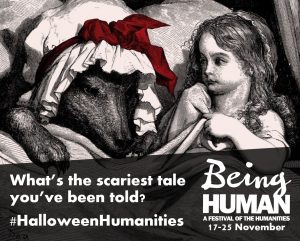
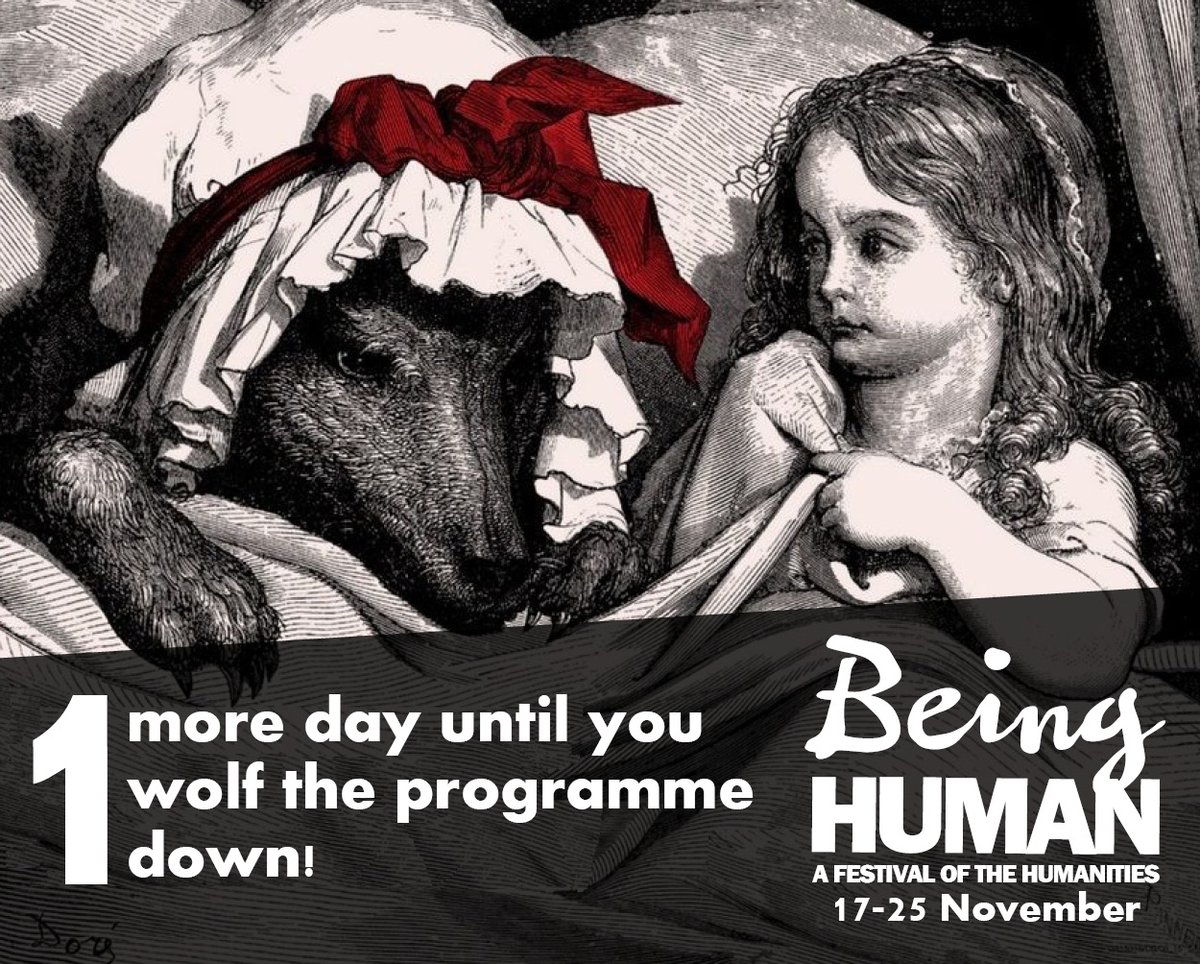
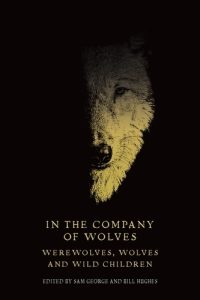
It is finally here: the programme for the Being Human Festival 2017  goes live on Monday 2nd October and you can book for ‘Redeeming the Wolf: A Story of Persecution, Loss and Rediscovery’ (University of Hertfordshire, 18th November) directly from the site. This is a free event but is likely to sell out, so do be quick. If you have not met the Open Graves Open Minds gang yet, Kaja, Bill, and Sam will be delighted to chat to you. We will be joined by the chief Wolf Keeper at the UK Wolf Conservation Trust and the UK’s leading wolf expert Prof. Garry Marvin. WOLFTASTIC!!! Book soon to avoid disappointment and look out for our Hallowe’en features on the Being Human blog!! So exciting!


Posted in Events, OGOM News, OGOM Research, OGOM: The Company of Wolves | Tagged , , , , | Leave a comment

‘Horror Literature through History: An Encyclopedia of the Stories That Speak to Our Deepest Fears’

Last year I was lucky enough to contribute to this wonderful project: Horror Literature through History: An Encyclopedia of the Stories That Speak to Our Deepest Fears, edited by Matt Cardin. I’m delighted to say that it is being released today. It’s an amazingly useful resource and an excellent addition to the library of any budding or well-seasoned horror enthusiast. Matt has written about the project here which outlines what is in the text and how you can buy it. Happy reading!

Posted in Books and Articles | Tagged , | 1 Comment

My 10 must-read YA books …

This morning I awoke to a tweet from the YA Literature, Media and Culture Research Network which made me a little angry to say the least. It was a link to The Telegraph‘s list of ‘The 10 must-read YA books’. What followed was a great online discussion about the limitations of this list and a promise that I would write by own list which you will find at the end of this blog.

It should be said, before I go too far off the deep end, that by their nature any list of the ‘Top 10 …’ will be subjective. Moreover, YA literature is being produced at such a rate that it is difficult to keep up with the trends. My concerns are not specifically with the choices themselves, some of which I have read and others I haven’t even heard of, but rather with what appears to be intent (conscious or not) of this list. (Nor is The Telegraph the only publication guilty of some of the issues which I will be discussing). Unfortunately, it reads like a list compiled by well-meaning authors whose intention is to prove that YA literature is ‘worthy’ of study and appreciation.

I would argue that some of these texts are not YA literature rather they are children’s literature. The boundaries of YA literature are obviously flexible but I tend to consider it to be teenagers up to people in their early twenties. (Although, there is a huge adult readership for these texts as well). Within those parameters certain texts may be suitable for older and younger teens, something which allows YA literature to be so diverse and innovative. By choosing texts that are aimed at younger readers, the list seems to be prioritising children’s literature over teen fiction. Take for instance Louis Sacher’s Holes (1998), a text which is suitable 10-12 years old children. It is a brilliant novel and one which I thoroughly enjoyed when I first read it. However, I first read it as a teenager and at the time I was felt that it was for a younger audience than myself. In the intervening years, Holes has become a touchstone for ‘good’ children’s literature. Its inclusion in this list seems to be an attempt to validate YA literature. Children’s literature has been more readily accepted into academia than YA literature and, from this list, it appears to be used to prop up teen fiction. The presence of Sacher’s work validates the discussion of YA literature as an extension of children’s literature rather than as a genre in its own right.

Similarly, many of the texts in the list seem to have been chosen because they deal with ‘issues’, suggesting that YA literature needs to be didactic in some form. This reminds me of my mother’s earnest attempts to get me to read Jacqueline Wilson so that I had a better idea of what life was like for people who were not as privileged as me. Instead, I read Enid Blyton because I wanted to be Carlotta, have midnight feasts and lashings of ginger beer. Books helped me to escape the difficulties of my own life, small though they may have been, and the ordered system of the boarding schools that Blyton presented were nostalgic fantasy. We have to be careful when talking about YA literature that as adults we are not dictating what we think teenagers should be reading rather than looking at what they are reading. Fiction can allow us to understand the world and explain complex issues but when it comes to non-adult readers, we are sometimes guilty of enforcing the political and social elements of the text over the pleasure of reading itself.

There are two other noticeable absences from this list. Firstly, there are very few fantasy, SF or Gothic (romance) texts. This surprises me. Whilst YA literature has a longer history than the past 20 years, the most recent swell in this area of publication was precipitated by texts such as Stephenie Meyer’s Twilight series and Suzanne Collins’ Mockingjay trilogy. I would suggest that this omission is based on the fact that even in adult literature, the genres of fantasy, SF and Gothic are still seen as not entirely literary. In order to legitimise YA literature, a canon has to be created. In and of itself, this is understandable and is exactly what lecturers do every time they create a syllabus. However, there is an issue when the canon becomes the means by which we can police the boundaries of acceptability. In her discussion of the genre of Gothic literature, Catherine Spooner writes: ‘While canon formation is an inevitable result of the focus of critical attention on hitherto neglected areas of literature, and helps to consolidate new fields of study as well as challenge pre-existing canons, it just as inevitably constructs new principles of inclusion and exclusion’ (Post-Millenial Gothic: Comedy, Romance and the Rise of Happy Gothic, 2017). It is important, then, that in order to be accepted into the academy, the field of YA literature does not neglect texts simply because they are in the wrong genre or are too popular.

It follows, therefore, that my next point is about female readership, especially in regard to the Gothic genre. Tellingly, there is a limited number of female authors and female protagonists in The Telegraph‘s list. Enter any library or bookstore and go to their YA section and you will discover that it is very female weighted. Meyer’s Twilight created a supremely successful blueprint for Gothic romance aimed at teenage girls. (Although, arguably, huge swathes of early Gothic novels have always attracted a young female readership. Hence Jane Austen was able to successfully parody the Gothic romance in Northanger Abbey [1817]). Collins’ Hunger Games was similarly successful although using a dystopian framework. However, as with my comments about legitimate genres in the previous paragraph, female readers and authors are often dismissed as niche. Young, female readers in particular are derided for their bad taste and slavish following of popular trends. Thus to ensure that YA fiction as a genre is respected, it appears that young women have been extirpated from this list in order to make it more palatable. As with the other problematic elements of this list, we return once more to matters of taste regarding literature and the wider issue of what is ‘good’ literature. YA literature finds itself in the peculiar position where the taste makers are often not those who judge what is deemed to be literary and worthy of study. Although this is only a brief discussion of the issues facing the study of YA literature, hopefully, it has acknowledged some of problems in policing a genre and offered some ideas for moving forward in this field.

For something a little more enjoyable, below then is my purely subjective, based entirely on my own interests, list of my top 10 must-read YA texts. These are the novels that opened my eyes to new worlds, the books that bonded me with my friends and the works that I still read now.

  1. How I Live Now (2004), Meg Rosoff – I agree with The Telegraph on this choice. Rosoff’s novel is heart-breaking. I stayed up until the early hours reading How I Live Now and it ended with me sobbing into my pillow so my parents wouldn’t be woken up by the sound. I have only been able to read it four times in my life because it still affects me so deeply. It’s about WW3 but it’s also not. Just read it.
  2. Twilight (2005), Stephenie Meyer – It’s the novel we all love to hate! Most people I’ve met who critique Meyer, however, have never read it. Despite all the furore it’s caused and the debates about literary merit, let’s not forget that The Times (pre-paywall) described this text as ‘recounted in hypnotic, dreamy prose, [and] encapsulates perfectly the teenage feeling of sexual tension and alienation’ (Amanda Craig, ‘New Age Vampire Stake their Claim’, The Times, 14 Jan. 2006). It deserves to be part of both the YA and Gothic canon – think of it as Ann Radcliffe for the twenty-first century but with a lot more of the female gaze.
  3. Stargirl (2000), Jerry Spinelli – In many ways, now that I look back, Stargirl is a classic MPDG but at the time I read it I didn’t know what that meant. Instead, it seemed to be that she was a joyful, original being, just this side of the fairy kingdom. I wasn’t sure if I wanted to be her but she let me see the lightest, brightest parts of being a teenager. Also, I had never been to Arizona and Spinelli’s descriptions brought the desert to life for me.
  4. Tithe (2002), Holly Black – This book is another one where I can remember exactly where I was when I finished it: leaning over the back seat of our family car whilst my parents were doing the family shop in Morrisons. I begged to be left in that car so that I could read my new favourite book. Tithe opened a whole new world for me, a world of dark fairies, a reality that existed on the edges of my world. On some level, I’m still waiting for Rath Roiben Rye to let me know that I am a changeling. (Or get my letter for Hogwarts).
  5. The Replacement (2010), Brenna Yovanoff – I love changelings! I can’t think of a better vehicle to describe and explore the alienation of being a teenager. As with Black, Yovanoff makes her fairy world darker than the one I had read about as a child. It’s enticing and cruel, and the adults do little to protect their children and teenagers from its worst excesses. Yovanoff also writes excellent male characters who are well-rounded and do not conform to the typical ‘Brooding YA Hero’ tropes.
  6. Angus, Thongs and Full-Frontal Snogging (1999), Louise Rennison – This was the book that got me thrown out of a library for laughing too hard. It’s funny and clever. The heroine isn’t drop-dead gorgeous but she’s funny and resilient. No other book I have read manages to capture the amount of laughing that is involved in groups of female friends. It also spawned a whole new lexicon for my friends and me.
  7. Generation Dead (2008), Daniel Waters – Like How I Live Now, this book hurts to read. It’s a book about zombies that makes you go online and almost end up ranting about zombie rights. (*Almost*. I only came close to it once). It’s angry and political without ever losing the central story line or undermining the world it has created. The characters are well written and even the bad guys are given complex internal lives that help you understand how they end up being so cruel.
  8. Carry On (2015), Rainbow Rowell – I love this book because it is pure twenty-first-century metafiction. So, this novel is based upon a novel that Rowell talks about in her other novel Fangirl (2013). Fangirl is about fandom. The lead character is a huge fan of Carry On, a highly successful series of novels about a boy wizard and his arch nemesis. As you may have realised, Carry On is an homage to both Harry Potter and the fanfiction which it has inspired. This book has layers. So many layers. In many ways though, the success of fanfiction and the parodic quality of Rowell’s novel confirms that the YA genre has come of age.
  9.  The Earth, My Butt and Other Big Round Things (2003), Carolyn Mackler – When I was 16, I had a huge Mackler phase so I also recommend Love and Other Four-letter Words (2000). However, I have chosen The Earth, My Butt and Other Big Round Things because it was one of the first texts I read that dealt with rape as well as binge-eating. Obviously, it’s not an easy read but one of the things that is good about this text is the fact that it doesn’t give you easy answers. Instead it acknowledges the hypocrisy at the centre of a culture that sexualises young women and then punishes them for what they wear.
  10. Chicken Soup for the Teenage Soul (1997), ed. by Jack Canfield, Mark Victor Hansen and Kimberly Kirberger – I got given this book as my Year 10 prize for academic achievement. I was a total nerd before nerds were cool. We can all admit that being a teenager can be horrible. My teen years involved my first bouts of depression, an eating disorder, and a lot of self-hatred. Chicken Soup might be schmaltzy and mawkish but it spoke to me at a time when I needed a bit of love and comfort. I ended up passing it on to my sister who loved it as much as I did.
Posted in Critical thoughts | Tagged , , | Leave a comment