The Literary Lycanthrope, or, How I Came to Love the Wolf

This post is written with the modest aim of introducing myself and what I study. So, hello, I am Kaja. As the introductory post says I am one of two PhD research students who are funded by the University of Hertfordshire via OGOM.

My research is on the literary lycanthrope and my thesis is entitled ‘The Development of the Literary Werewolf: language, subjectivity and animal/human boundaries’. In a nutshell then (and please bear in mind that it is almost impossible for any PhD student to summarise their research in fewer than 60,000-80,000 words) I discuss how the introduction and representation of the werewolf in English Literature is influenced by the mythologising of the wolf in folklore, science and fairytales. My aim is to show how the ‘Gothicising’ of nature – and wolves are exemplars of this – has maintained boundaries between humans and animals based on ideas regarding language and subjectivity. I open with discussions regarding the tropes of Victorian werewolf stories and then use Dracula as a way of cementing my argument on the creation of a Gothic nature by reading Count Dracula as werewolf.

Following the emergence of the ecological movements of the late twentieth century, the idea of animal rights began to move from the benign paternalism of its Victorian roots to questioning whether animals could be subjects in their own right, problematising subject/object-based boundaries between humans and animals. My later chapters show how this shift has affected the representation of wolves, and thus werewolves, and how this is explored in lycanthropic literature in the twenty-first century. My primary texts for this section are the Shiver series by Maggie Stiefvater; The Last Werewolf series by Glen Duncan; and The Wolf Gift series by Anne Rice. (For those who might be concerned, I will not be omitting discussion of Angela Carter’s work on fairytales and werewolves because anyone who misses the opportunity to discuss Carter is a dunderhead, in my humble opinion).

Werewolves are a new field for me as I was previously a vampire-girl (Go Team Edward!) inculcated into their dark delights when, as a child, I stayed up one night to watch Interview with the Vampire. My introduction to the OGOM project came when I was writing my MA thesis, Consuming the Vampire: Commodity Culture and the Twilight Phenomenon’, at the University of Sheffield which looked at the Twilight novels in the context of early Gothic literature and the female reader. Given that I was writing this in 2010, and the first Twilight novel came out in 2005, there was a dearth of information on the subject. Whilst this can be a blessing (hey, how can you help but be original if no-one else is writing on a subject?), it can also mean that you have no framework to start from and your research becomes nebulous. Thus the OGOM Conference (2010) came as a rare gift: there is nothing more liberating and refreshing than finding yourself in a room of like-minded academics. It may seem strange to say this given the current popularity of the Gothic and vampires but there was a time when I felt that I must forever be apologising for my subject choice.

And now I study werewolves, in the words of Emily Gerard the hirsute ‘First-cousin to the vampire’. Though as I regularly point out not actual werewolves – they don’t exist, even I know this. At the moment I am coming to the end of my first year meaning that my enthusiasm remains high but I tend to growl at anyone who tells me that I ‘don’t really do anything’. I am also starting to become too attached my research and am now strangely protective of wolves. My favourite discovery so far has been that a colloquial French phrase for losing your virginity is ‘seeing the wolf’. As part of my studies I run the ‘Reading the Gothic’ group with Matt Beresford. We are just about to re-emerge for this academic year with the first session being posted shortly.

When I am not studying, I am working as a tour guide, reading YA novels, cycling around London, or trying to perfect the fish-finger sandwich. I plan to post about werewolves in popular culture and the odd insight into the life of a PhD student (not sure how many ways I can say ‘Read, Write, Sleep, Repeat’).

Posted in Critical thoughts | Tagged , , , , , , , , , , | Leave a comment

A Return to Folklore: My Swordhand is Singing

The first of the YA novels I’m going to be blogging about is My Swordhand is Singing by Marcus Sedgwick. Marcus has been a contributor to the OGOM project from its beginnings in 2010 and even wrote an original story for us on Stoker for our Centenary celebrations in 2012. His research notes for the novel are published in the Open Graves, Open Minds book (‘The Elusive Vampire: Folklore, Fiction and Writing My Swordhand is Singing’, Open Graves, Open Minds, pp. 264-276)

I didn’t know anything about Marcus back then but when I picked up a copy of the novel in St Albans I knew I had found the text that would complete my reading list for ‘Reading the Vampire’. What struck me on first encountering it was the fact that the word ‘vampire’ never once appears in the book. It is a moving and original novel set in the wintry forests of Romania in the seventeenth century. It tells the story of a woodcutter, Thomas, and his son, Peter, who begin by arousing suspicion as outsiders and end up saving the village of Chust, their temporary home, from a plague of vampires. Sedgwick’s novel marks a departure from the alluring teen vampires of late, returning the creature to its folklorist roots in Eastern Europe and recasting it as ‘hostage’ or ‘revenant’, capturing the flavour of early reports of vampirism (such as Calmet or Tournefort). The novel is scrupulously researched and imaginatively written, dealing sensitively with ‘otherness’, ethnicity, and death.

The secret to the novel’s main theme lies in the strains of the gypsy melody, The Miorita, which allows those who understand it to go to their deaths singing, returning the ‘hostages’ to the ground forever. Sedgwick ingeniously combines the myths of the forest—the ‘Shadow Queen’ and the ‘Winter King’—with real life ceremonies still practised in parts of rural Romania. This includes the gruesome custom of marrying a young girl to a corpse in the ‘Wedding of the Dead’, one of the most striking scenes of the book. This is undertaken to prevent young men who die prematurely going to their graves unmarried. The powerful strain of the gypsy music is evocative of the novel’s themes and like the work itself remains in the mind for a long time after the music ceases.

I argued earlier that there are some subjects too large for adult fiction that can only be dealt with adequately in YA fiction and Sedgwick’s novel certainly exemplifies this. He is writing about prejudice, rootlessness and the heart breaking loss of a parent, through the theme of vampirism (drawing playfully on the plot conventions of Joseph Campbell’s twelve steps in the hero’s journey). The writing is delightful, terrifying and strangely moving, whilst showing that there are as many kinds of vampires as there are villages in Transylvania. I’m going to be offering my suggested approaches to this text in the next post and positing some of our study questions on it. Congratulations to Marcus for She is Not Invisible which was voted into the top ten YA novels of 2013 by The Observer and is currently awaiting my attention at the foot of my bed…

Marcus is continuing to win prizes and inspire debate. His novel Midwinterblood, won the 2014 Michael L. Printz Award. One of the themes of his new book is coincidence and fortune,  which seems very apt for this post. We were in some ways brought together through  fortune, which as the novel suggests is ‘blind’ but ‘not invisible’ (Bacon).

http://www.theguardian.com/childrens-books-site/2014/aug/26/marcus-sedgwick-guardian-childrens-fiction-prize-she-is-not-invisible

http://www.marcussedgwick.com/.

Posted in MA Reading the Vampire module news | Tagged , , , , | Leave a comment

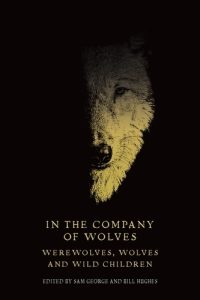
OGOM: ‘Company of Wolves’, conference July 2015

Going to be blogging too about the fabulous ‘Company of Wolves’ event OGOM is  presenting in July of this year. I am holding off posting the full CFP for a few days until I have heard from the wonderful duo that is Anne Rice and Neil Jordan. Shouldn’t be long now. So far the plenary speakers include Sir Chris Frayling doing the closing keynote on Angela Carter and werewolves and two of the original  OGOM  researchers, Dr Catherine Spooner and Dr Stacey Abbott.

Stacey’s talk, “Creatures of the Night, What Music They Make’: The Sound of the Cinematic Werewolf’, will consider the aural landscape of the werewolf film from the Werewolf of London to the Underworld franchise and Catherine, forever straddling the boundaries between comfort and outrage, will present on ‘Wearing the Wolf’: Wolves, Fur and Fashion, from Nineteenth-Century Werewolf Stories to Alexander McQueen’. This is going to be a wolfishly one off conference! Approaching some gifted writers too. More soon.

Posted in Conferences, OGOM News, OGOM: The Company of Wolves | Tagged , , , , , , , , , , , | Leave a comment

Young Adult literature and the National Book Award

An interesting article on YA fiction in The Guardian, making points about its seriousness and diversity. I often think that much YA fiction is more challenging than the average Booker nominee–especially in the more fantastic fictions. Hence our celebration here of Gothic/Paranormal Romance and Dark Fantasy (the genre classification really needs sorting out and I might post on that sometime). Of the books discussed here, not many seem that Gothic; I also am a bit wary of YA fiction that earnestly deals with ‘issues’. Still, worth a read.

Posted in Critical thoughts | Tagged , | Leave a comment

Generation Dead: YA Fiction and the Gothic

After much deliberation I’m excited to reveal that my ‘Generation Dead: YA Fiction and the Gothic’ course list is finally complete!! Choosing the final list has been tricky. Phillip Pullman once said ‘There are some themes, some subjects, too large for adult fiction; they can only be dealt with adequately in a children’s book’ (Carnegie Medal Acceptance Speech, 1996). This is even truer of YA fictions. The novels I have chosen are strangely affecting and deeply questioning, and they explore undeadness and difference in surprising and interesting ways. There are those who will ask ‘why study YA fiction in universities?’ I will seek to respond to some of these criticisms. I am no stranger to sneeriness having taught vampire studies at MA level at the University of Hertfordshire since 2010, introducing   the undead into the academy via my own research. We  first began to discuss the importance of YA fictions of the Undead in the intro to the Open Graves, Open Minds book in 2013. Here we argue that:

‘Some vampire fictions have a stylistic competence and ingenuity and a certain daring that raises them above many contemporary ‘literary novels’. Often, intriguingly, it is among the Young Adult novels of the Undead that these are to be found. Why this is so may be worth further investigation […] perhaps reader expectations are less ossified and commercial constraints less determining’ (OGOM, p. 6).

Whatever the case, Young Adult Fictions will receive due attention here as they did back then. Our vampire collection includes chapters covering Twilight (of course), L. J. Smith’s The Vampire Diaries, Daniel Waters’s Generation Dead, and Marcus Sedgwick discussing his research notes for My Swordhand is Singing.

My course description for ‘Generation Dead’ had begun with a high school theme:

‘All over the country in the world of young adult fiction teenagers who die aren’t staying dead. This module will interrogate the new High School Gothic, exploring the representation of the Undead or living dead (werewolves, vampires and zombies) in dark or paranormal romance and other sub genres of young adult fiction featuring Undead teens. Texts range from Twilight, Vampire Diaries and Daniel Waters’s zombie trilogy Generation Dead, to Isaac Marion’s Warm Bodies and Eden Maguire’s series The Beautiful Dead. We’ll also look at examples of werewolf fiction (Shiver, Lonely Werewolf Girl) and at the folklore inspired novels of Marcus Sedgwick. Y.A. F. has attracted some of the most gifted and inspiring writers who address these themes as a means of confronting death or discrimination or to engage with religious faith and embrace the enduring power of love. We will be theorising folklore, investigating the ethics of writing for young adults, and grappling with Undead issues such as redemption and damnation, religious denomination, the sexualisation of early teens, prejudice and the politics of difference’. (Sam George, ‘Generation Dead’, Definitive Module Description, University of Hertfordshire)

I have deviated from High School Gothic slightly in the final list which embraces beauty and the beast type folk narratives more (though the fact that this is a theme in Twilight shows that these strands are very closely related). I’ll be interrogating the representation of vampires, werewolves, zombies and those dark fairies (much loved by William the Bloody) in YA novels. The texts I have chosen are as follows (grouped under the Undead or fantastical creatures they represent):

Zombies
Daniel Waters, Generation Dead
Isaac Marion, Warm Bodies.

Vampires
Marcus Sedgwick, My SwordHand is Singing
Stephanie Meyer, Twilight
Alyxandra Harvey, My Love Lies Bleeding
Holly Black, The Coldest Girl in Coldtown

Werewolves and Wolf Children
Maggie Stiefvater, Shiver
Cynthia Leitich, Tantalize
Marcus Sedgwick, The Dark Horse

Beasts and Dark Fairies
Robin Mckinley, Beauty
Marissa Meyer, Scarlet
Julie Kagawa, The Iron King

I’ll be workshopping these novels each week with reference to theories of genre, intertextuality, utopianism, folklore and fairy tale theory, animal studies, undeadness, Gothicism, and theories around the politics of difference. I will draw too on The Vampire Goes to College: Essays on Teaching with the Undead (McFarland, 2013), a work I contributed to, and which I wholeheartedly recommend to any budding teachers of the Gothic.

I’ll be pairing the texts with short stories and extracts from larger works such as Dracula, Carmilla, Dracula’s Guest, Sabine Baring Gould, Wagner the Wehr-wolf, Clemence Housman’s Were-wolf, Arthur Conan Doyle, Carter’s wolf stories, versions of Beauty and the Beast, Red Riding Hood, and more adult novels that feature child or teenage protagonists, such as Let the Right One In, The Last Werewolf and The Last Vampire which are darker than most.

I’m going to be seeking out scholarly articles (and writing them) and linking to other blogs and discussions. I’ll also be blogging about the student’s responses to each book once the course gets under way. I have over 50 expectant students signed up for this module. Beyond exciting. Love to know what you make of the list.

Posted in Generation Dead: YA Fiction and the Gothic news | Tagged , , , , , , , , , , | Leave a comment

Body Gothic: new book from Xavier Aldana Reyes

OGOM contributor, Xavi, has an exciting new book out, Body Gothic: Corporeal Transgression in Contemporary Literature and Horror Film:

http://www.uwp.co.uk/editions/9781783160921?language=en

Posted in Books and Articles, Publications | Tagged , , | Leave a comment

Hello!

Lucy Northenra and your co-host, William the Bloody, have spent several hours setting up this blog for the Open Minds, Open Graves Project and it now seems to be working. So please feel free to add your comments.

Posted in OGOM News | Leave a comment

Welcome to the OGOM Blog

Welcome to the Open Graves, Open Minds blog…enter freely and of your own will! This is my first post and I have some exciting news. I am happy to announce that OGOM will reconvene in 2015 for a new werewolf inspired conference: ”Company of Wolves’: Sociality, Animality, and Subjectivity in Literary and Cultural Narratives- Werewolves, Shapeshifters and Feral Humans’. We are currently drafting the cfp which will be posted shortly.  There are lots of publications and related projects to catch up on too. For now I just want to invite you in…bid you to come and afterwards you can come as you please…..

‘FINIS’

Posted in Events, OGOM News, OGOM: The Company of Wolves | Tagged , , , , , | Leave a comment

Introducing the Open Graves, Open Minds blog

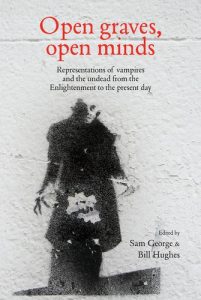
OGOM_book_webThe Open Graves, Open Minds: Vampires and the Undead in Modern Culture Research Project is led by Dr Sam George at the University of Hertfordshire, in collaboration with Dr Bill Hughes. The Open Graves, Open Minds project relates the undead in literature, art, and other media to questions concerning gender, technology, consumption, and social change, and was initiated by a prominent and exciting conference in April 2010.

The project has generated a series of events, publications, and inspiring discussions. Select papers from the 2010 conference have appeared in a special edition of Gothic Studies (May 2013); other papers and specially commissioned chapters appear in a monograph, Open Graves, Open Minds: Representations of Vampires and the Undead from the Enlightenment to the Present (Manchester: MUP, 2013). Further publications will follow and more conferences are planned, including ‘The Company of Wolves’: Sociality, Animality, and Subjectivity in Literary and Cultural Narratives—Werewolves, Shapeshifters, and Feral Humans’—a conference to be held at UH in July 2015.

The founding OGOM researchers are:

  • Stacey Abbott (vampires in film and TV)
  • Sam George (the literary vampire)
  • Bill Hughes (the genre of paranormal romance)
  • Marcus Sedgwick (writing vampire fiction)
  • Catherine Spooner (contemporary Gothic culture)
  • Ivan Phillips (undead interfaces)

And currently involved are two PhD research students whose research is funded by the generous bursary from the University of Hertfordshire:

  • Kaja Franck (the werewolf in fiction from the nineteenth century to today)
  • Matt Beresford (Polidori and the Byronic vampire)

We include with gratitude, too, the contributors to the journal and book, and all the presenters and attendees of the 2010 conference and the Bram Stoker centenary symposium of 2012.

Kaja and Matt currently host the UH Gothic Reading Group which meets fortnightly to discuss creative and critical works in the field; you can follow their activities on the blog here.

The Open Graves book, though of wider interest, serves as a reader for the MA module, ‘Reading the Vampire: Science, Sexuality and Alterity in Modern Culture’ which Sam has pioneered at the University of Hertfordshire and which is an integral part of the Project. You can view the course schedule for the introductory module here. For enquiries, please contact Dr Sam George directly on s.george@herts.ac.uk.

Graves open up, and ghastly but fascinating creatures of the imagination emerge, spurring creative and analytic responses of many kinds. As with Bram Stoker’s Van Helsing in Dracula, encounters with the Undead have facilitated, in Dr Seward’s words, ‘an absolutely open mind’. The phrase, ‘Open Graves, Open Minds’, which graces this project, appears in Daniel Waters‘s young adult novel, Generation Dead. Dan very kindly allowed us to use this slogan, which we found aptly witty and inspiring. Waters’s powerful, often very funny, and moving novel (and its sequels) dramatises with great intelligence many of the striking themes in fictions of the undead which have been explored throughout this project. We would very much like to recommend his work to you.

Posted in Events, OGOM News | Leave a comment