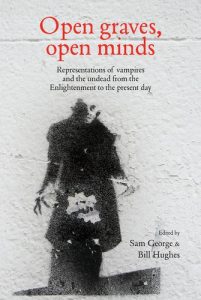
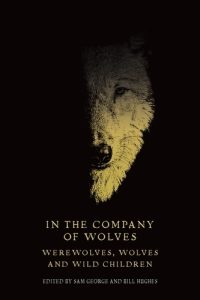
Open Graves, Open Minds: Gothic Writing Evening 7th Nov, St Albans Literary Festival

Excited to report that I will be joined by Dr Catherine Spooner, leading spokesperson for the contemporary Gothic, and Matt Beresford, writer, archaeologist and folklorist for a Gothic Writing Evening to mark the St Albans Literary Festival on 7th November, 2014.  The evening will take place in the unique Gothic setting of the Old Gate House and former C15th prison. Book early to avoid disappointment and wear something gothicky (Gothic inspired drinks and canapes served) Open Graves, Open Minds, Gothic Writing Evening Sponsored by the University of Hertfordshire.

Event venue

Event venue

Posted in Events, OGOM News | Tagged , , | Leave a comment

The Sparkly Vampire Returns

It appears that the Twilight Saga will be returning to our screen in the form of a series of short films to be released on Facebook – so less big screen, more mini-screen. Each short film will deal with one of the characters in the novels/ films leading to an interesting engagement with fan-fiction and fan-lead engagement with the text. (Let’s not forget that the Fifty Shades series started as fan-fiction). The power of fan-fiction and online fan response is making producers, writers, and directors increasingly empower their fans allowing them to make decisions. This is incredibly interesting in terms of the effect it has on the relationship between the author, the text, and the reader. Something which has always been area of discussion especially in regards to the Gothic and the female readers.

Lions Gate and Stephenie Meyer will be looking for five aspiring female directors to take the reins. The use of female directors raises some questions: Is this decision informed by the criticisms regarding the decision to replace Catherine Hardwicke? (Although it was later shown that this decision was on the part of Hardwicke herself). Or is it in retaliation to critics who suggest that the Twilight Saga is anti-woman or at least anti-feminist?

Whatever the reasons, it will be interesting to see what happens with these shorts and to see how they are received. And as a fan of vampires who sparkle I will be waiting with bated breath.

Posted in Reviews | Tagged , , , , , , | Leave a comment

Our Monsters: Ourselves — Café Culture Debate, Newcastle, 1 December 2014

Alison Younger will be talking about how ‘Monsters reflect the cultural anxieties of their times, raising important questions about what is most fearful to us’. Click on the link below for more details

Our Monsters: Ourselves

Posted in Events | Tagged , , | Leave a comment

Locating the Gothic Conference, Limerick, 22-25 October 2014

This looks a fantastic conference: “‘Locating the Gothic“, [. . .] is an international conference and series of interlinked events exploring the concept of Gothic locations.’

Posted in Conferences | Tagged , , , | Leave a comment

Bram Stoker Festival, Dublin, 24-27 October 2014

Exciting events at the Bram Stoker Festival in Dublin, 24-27 October!

Bram Stoker Festival Dublin

Posted in Events | Tagged | Leave a comment

Vampires Make it Into Academia – Wall Street Journal video of Open Graves, Open Minds back in the day..

I have just realised that the Open Graves, Open Minds project is five years old today!!! We started to plan the first OGOM conference at this time in 2009 and the first conference was in March 2010. HAPPY BIRTHDAY OGOM!!! An enormous and heartfelt thanks to everyone who has contributed along the way…its been a complete joy. To celebrate I am posting a link to ‘Vampires Make It into Academia’ a video from the Wall Street Journal  (they came over to cover the event). Aww….surely the most fun you can have at an academic conference!!!

OGOM Three ‘Company of Wolves’ coming soon in 2015!! CFP pending…

Posted in OGOM News | Tagged , , , | Leave a comment

In Oxford with a Vampire Slaying Kit

Wonderful things are happening behind the scenes at OGOM. I am compelled to write about the vampire slaying kit I collected in Oxford. It dates back to around the time of British vampirologist Montague Summers (1880-1948) and has been in circulation since the 1920s. Here it is in my hotel room (imagine the chamber maid’s face!)

Unusual item in my luggage on my trip to Oxford. Vampire Slaying Kit (circa 1920).

Unusual item in my luggage on my trip to Oxford. Vampire Slaying Kit (circa 1920).

These kits were sold to capitalise on the popularity of Dracula as a form of entertainment but the contents point to darker, more unsettling undead issues. The box contains a crucifix, Bible, holy water, wooden stakes and a mallet together with the book of common prayer (1851 edition). Inside there is an unnerving handwritten passage from Luke 19.27 which reads: ‘but those mine enemies, which would not that I should reign over them, bring hither and slay them before me’. I’ll leave you with that thought!! Hope to bring this along to some of our events for you to see in person (we have a Gothic Writing Evening in St Albans on 7th November). It really is deeply curious, troubling and entertaining. Like to know your thoughts..

Posted in OGOM News | Tagged , , | Leave a comment

Review of ‘SF/Fantasy Now’ Conference, 22nd-23rd August 2014, University of Warwick

I write in praise of going to conferences that aren’t really to do with what you study. Much like attending conferences when you are not giving a paper, you are giving a little more leeway to enjoy the other speakers. As luck would have it I gave my paper, ‘Howling at the Moon, or, How the Werewolf got his Voice’, for the ‘SF/ Fantasy Now’ conference in the first session of the first day so I could enjoy learning about a new field of studies without any ongoing nervousness. I was pleased to see that my panel was really well chosen: the papers led on from one another and there was a good balance of theory and close-reading in all the papers. Rather than the panel staying at the front once the paper was given, the layout of the room meant that we sat within the audience. This actually helped to break down conversation barriers and set things up for more of a discussion than a formal question and answer. This worked well given that what often happens at conferences is that ‘questions’ dissolve into ‘statements of interest’ which are generally more suited to discussions. I noted that in this particular room (which was named the ‘experimental’ teaching space), this regularly happened and it was something I enjoyed given that the audience numbers were rarely more than 10 people.

Another change to the normal conference protocol were the workshop sessions. This did involve some preparation reading which can be off-putting. Again, though, I found this a useful exercise that challenged my field of studies and which theorists can be of use to me. Whilst this approach wasn’t quite interdisciplinary – this was a mainly literary conference – it was intergenre and drew attention to the way that certain areas of study recycle ideas beyond their usefulness. Helping matters was the fact that most of the selections to be accessible and not too long. The workshops started with two papers – so if you hadn’t done the reading, you still had something to talk about – before the audience split into tables to talk about what they had seen and then create a question to pose to the speakers. This approach continued to promote discussions and it meant that people built upon these workshops in the panels thus the audience had shared reference points. It was also interesting to note that themes from the previous conference I attended, ‘Reading Animals’ recurred here. The environment, animals, science, and the post-human were all discussed in the workshops – of particular interest was the way in which the speakers during the workshops saw literature as pivotal in fleshing out the theory.

A conference on SF and Fantasy was never going to speak directly to my studies. However, by being able to engage in these debates with an open mind, this conference gave me fresh material to take back to my area of research. It cleared a space for me to think originally and, by adapting and utilising other fields of study, gave me new frameworks to shape my thesis.

Posted in Reviews | Tagged , , | Leave a comment

Review of ‘Reading Animals’ Conference, 17-20 July 2014

As part of my endeavours to help capture what PhD life is like, I will be posting reviews of conferences which I am attending as part of my research. Hopefully, this will show how useful conferences can be for encouraging your creativity and helping you re-engage with your thesis topic. It is also worth noting that conferences are incredibly exhausting and will leave you with an overheated brain. So don’t forget to drink plenty of water and get lots of rest. Seriously, they are like the music festivals of academia but with nicer toilets.

The first conference I attended as part of my PhD was ‘Reading Animals’ which took place at the University of Sheffield. It was also the first conference that I have attended which was not rooted in a specific genre, literary trope, text or author. Instead it was centred around the growing field of Animal Studies and specifically, Literary Animal Studies. It was a lesson in applying theory to a variety of texts but also engaging with the purely theoretical in a way that reclaimed the animal from the anthropocentrism of literary studies. The conference took place over the course of four days.

Given that Animal Studies, and its partner Eco-Criticism, are relatively new schools of thought, the conference included keynotes from some of the leading thinkers within these fields. (Or perhaps it would be truer to say people who I have quoted and studied in my relatively brief career studying the representations of animals and nature within literature). The keynote speakers took an active part within the conference by chairing/ attending the other panels and making themselves available for wider discussion. The newness of Animal Studies means that there is not the heavy framework of definitive authors, theorems and thinkers that can stultify originality or freeze creativity when starting out in academia. The atmosphere of conference was incredibly supportive and encouraged the easy sharing of ideas. It also meant that the panels were very interdisciplinary.

Perhaps the stand out panel was ‘Reading Shapeshifting Narratives’. This panel had been proposed in its entirety for the conference so that the three papers intertwined. The papers explored the trope of shape-shifting, especially as it pertained to female characters. However the panellists were from a creative writing background so that the audience was treated to literary analysis, storytelling, and poetry – an engagement with the subject from the inside out (very suitable for the topic of shape-shifting). This panel exemplified the overall ethos of the conference which challenged the boundaries of animals and humans exemplified in simplistic, linear, humanised systems of reading.

A recurring theme was the tension between imagination as a positive means of bridging the physical and mental gap between animals and humans, and imagination as a negative force which reinforces the symbolic/ semiotic animal over the diegetic/ “real” animal. (It should be mentioned that this ‘gap’ is rooted not in fundamental, “real” difference but has been constructed, and reinforced, in order to deify the human in binary power structures). Language, then, has been used to denote the key difference between animals and humans – we have it, they don’t; to create the all-powerful human subject – the ultimate ‘I’ and “eye”; and to maintain this separation by exalting the signifier over the signified. How do we create the animal-subject? How do we read agency onto pre-existing literary animals? The conference perhaps posed more question than it could answer.

Werewolves were sparse on the ground, though dogs (domesticated wolves) were not. Interestingly there were a number of shape-shifters including human/wolf shape-shifters but as they were presented in a positive light and with no mention of werewolfery it cannot be said they were ‘truly’ werewolves. This seems to be a recurring difference: werewolves are figured as monsters and shape-shifters are presented in a more positive light. As I was not presenting I found that this conference could be used for brain-training. It challenged my ways of thinking and suggested how I can incorporate animal studies and criticism into my thesis in a more engaged manner. The final panel was specifically on Gothic animals and suggested new ways of looking at animals in Gothic texts. The term ‘dark ecology’ specifically in regards to the work of Timothy Morton was used – something which I hope to investigate in greater detail. Rats, vivisection and the anti-vivisection movement were looked at in the context of late Victorian narratives attitudes to animals. This was incredibly interesting and could certainly be brought into my thesis.

At the end of this conference I consolidated my notes into four A4 pages of points and reading lists, and wrote a poem. Which I think speaks highly of the inspirational quality of ‘Reading Animals’.
Posted in Reviews | Tagged , , , | Leave a comment

‘Company of Wolves’: Wolf Children

Thanks to Kaja for her wonderful post on wolves and weres. Wolves seem very current just now hence our OGOM ‘Company of Wolves’ conference in July. The Guardian have today chosen the wolf to front their article on the rewilding of disappeared species in Britain. Wolves cannot fail to provoke an emotive response since they are so tied to folklore and fairy tales. I laughed out loud at natural historian Buffon’s mistaken idea that wolves who specifically prey on humans are known as ‘ware-wolves’ since you should ‘be aware’ of them!! A little gem uncovered by Kaja!! She didn’t mention this but she has compiled a ‘Table of Werewolves’ that would put Sir Christopher Frayling or Casaubon to shame. She is looking for shifts in thinking about these creatures in fiction so is documenting their appearances in literature. It will be a useful key to all mythology surrounding the representation of werewolves and is going to form an appendix to her thesis!

I don’t want to give too much away but I am researching wolf children for my plenary talk re: ‘Company of Wolves’. The feral child and human pet ‘Peter the wild boy’ will feature heavily as he lived out much of his later life in Hertfordshire (quite near to my office at the university). He was captured in the forests of Hamlin in 1724. At the time of his discovery he was thought to be quadruped and lived solitary in the woods. Stories grew up that he was raised by bears or wolves. I was heart broken on seeing his grave pictured below, he was such a symbol of natural innocence, despite appearing wild, a genuine example of the noble savage.

Grave in Christchurch, Herts

Grave in Christchurch, Herts

I was tearful too on learning about the collar he was made to wear when older. It bore the inscription ‘Peter the Wild Man’

Iron collar inscribed for 'Peter the Wild Man'

Iron collar inscribed for ‘Peter the Wild Man’

and asked that he be returned if he strayed as he never learned more than a few words.

There are links back to Kaja’s research on wolves, subjectivity and voice here and to Marcus too. He revealed recently that his character Alice is a wolf child in The Dark Horse and he also has a Kasper Hauser inspired story, The Book of Dead Days. His US publicist is writing on werewolves in medieval literature! Serendipity or wolfish fortune again!!! ‘Company of Wolves’ is proving a very appropriate theme just now as Matt, the second OGOM  PhDer I supervise has published The White Devil: The Werewolf in European Literature (Reaktion, 2013). I will ask him to post on here and introduce himself……

Posted in OGOM: The Company of Wolves | Tagged , , , | Leave a comment