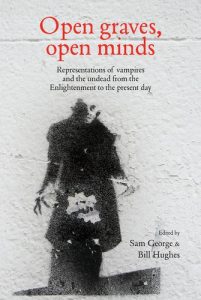
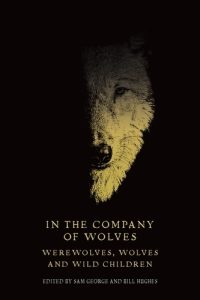
Something to Howl About: OGOM Gothic Studies Special Issue, ‘Werewolves and Wildness’

We’re excited to announce that we have submitted our special issue of Gothic Studies on ‘Werewolves, Wild Children and Wilderness to Edinburgh University Press for publication in May, 2019.  This is the first of two publications that have developed from our now legendary Company of Wolves conference and programme of events.  You can see the line up of this special issue, including the abstracts below. Big thanks to our wonderful contributors…..woo hoo… definitely something to howl about!!
Gothic Studies: Werewolves, Wild children and Wilderness

Sam George and Bill Hughes,  Intro: ‘Werewolves and Wildness’.

Sue Chaplin, ‘‘Daddy, I’m falling for a Monster’: Women, Sex and Sacrifice in Contemporary Paranormal Romances Featuring Vampires and Werewolves’ 

Abstract. This article examines a key trope within much contemporary paranormal romance: the absence, or ineffectiveness, of the father. The first part of the essay develops an analysis of this aspect of the genre (in the Twilight Saga especially) through the work of René Girard, Luce Irigaray and Juliet MacCannell. Of particular importance here is the extent to which Twilight and similar narratives stage female self-sacrifice as a pre-condition for the redemption of the hero and the restoration of patriarchal bonds initially compromised by some crisis in the effective functioning of paternal authority. The second section extends this analysis to consider ways in which paranormal romances featuring werewolves and vampires shift away from this conservative and reductivist romance paradigm so as to affirm and contest heteronormative, paternalistic models of masculinity and sexual desire.

Tania Evans, ‘Full Moon Masculinities: Werewolves, Emotional Repression and Violence in Young Adult Fiction’

Abstract. Gothic monsters have recently experienced a period of focused scholarly analysis, although few studies have engaged with the werewolf in terms of its overt alignment with masculinity. Yet the werewolves of young adult fantasy fiction both support and subvert dominant masculine discourses through their complex negotiation with emotional repression and violence. These performative masculine practices are the focus of this article, which analyses how hegemonic masculine ideals are reinforced or rejected in a corpus of young adult fantasy texts, including Cassandra Clare’s young adult series The Mortal Instruments (2007-2014) and Stephenie Meyer’s Twilight Saga (2005-2010). Both texts feature masculine characters whose lycanthropic experiences implicitly comment upon gender norms, which may shape young adult audiences’ understanding of their own and others’ gender identities.

Simon  Marsden, ‘One look and you recognize evil’: Lycan Terrorism, Monstrous Otherness and the Banality of Evil in Benjamin Percy’s Red Moon’

 Abstract. Benjamin Percy’s novel Red Moon (2013) navigates the problem of the ‘monster’ in the context of post-9/11 representations of Islamist terrorism. Structured around a series of terrorist atrocities carried out by lycan extremists, Percy’s novel employs the werewolf as a figure of monstrous otherness in order to deconstruct the very processes of othering by which the monster is produced culturally and politically. Focusing on the distorted ethical justifications of the terrorists and on the roles of political opportunism and media manipulation in shaping US responses, the narrative allows both lycan terrorists and their political antagonists to emerge as more clown than monster. This article draws upon Hannah Arendt’s account of the banality of evil, and its development by more recent privation theorists, to situate Red Moon within contemporary popular and theoretical discourses of evil and to read the novel as an interrogation of the processes by which our modern political ‘monsters’ are created.

Curtis Runstedler, ‘The Benevolent Medieval Werewolf in William of Palerne’

 Abstract. This article argues that the werewolf of the medieval romance displays behaviour comparable with modern studies of the wolf. In the dualistic medieval world of nature versus society, however, this seems inconsistent. How does the medieval werewolf exhibit realistic traits of the wolf? I examine the realistic lupine qualities of the werewolf Alphouns in the Middle English poem William of Palerne to justify my argument. Citing examples from his actions in the wilderness, I argue that Alphouns’s lupine behaviour is comparable to traits such as cognitive mind-mapping and surrogate parental roles, which are found in contemporary studies of wolves in the wild. Recognising the ecology of the (were)wolf of the medieval romance helps us to understand better the werewolf’s role as metaphor and its relationship to humans and society.

Sam George, ‘Wolves in the Wolds: Late Capitalism, the English Eerie, and the Weird Case of ‘Old Stinker’ the Hull Werewolf’

Abstract. British folklore reveals a history of werewolf sightings in places where there were once wolves. This article draws on theories of the weird and the eerie and on the turbulence of England in the era of late capitalism in its analysis of the representation of werewolves in contemporary urban myths. Werewolves are deliberately excluded from Mark Fisher’s notion of the ‘weird’, because they behave in a manner that is entirely expected of them. I contradict this by interrogating the werewolf as spectre wolf, bringing it within the realms of the weird. In examining the Hull Werewolf, I put forward the suggestion that he represents not only our belief in him as a wolf phantom, but our collective guilt at the extinction of an entire indigenous species of wolf. Viewed in this way, he can reawaken the memory of what humans did to wolves, and redeem the Big Bad Wolf of our childhood nightmares

Lisa Nevárez, ‘Playgrounds in the Zombie Apocalypse: The Feral Child’

Abstract. In the episode `The Grove’ (4.14) from AMC’s The Walking Dead, Lizzie and Mika Samuels, sisters and two of the child survivors of the zombie apocalypse, brutally meet their ends. Lizzie, no longer able to distinguish between life and death, kills Mika, and Carol in turn shoots Lizzie, claiming that Lizzie ‘can’t be around people’. These characters call into question the dividing line – if one remains, as established society crumbles – between human and animal, feral and civilised. The texts analysed in this article, AMC’s The Walking Dead and Max Brooks’s novel World War Z, include themes of re-socialising children and forming communities, or packs, in which the children can perhaps become rehabilitated into productive contributors. Viewing children in this light summons up viewer and reader responses to ‘horror’ that are more in keeping with reactions to real-life cases of abused and neglected ‘feral’ children than with the ‘horror’ produced by a zombie-themed text.

Michael Brodski, ‘The Cinematic Representation of the Wild Child: Considering Trouffaut’s L’enfant sauvage (1970)’

Abstract. This article, in examining François Truffaut’s L’enfant sauvage (1970), will consider the feral child Victor (Jean-Pierre Cargol) with regard to the film’s cinematic portrayal as typifying the cultural construction of a child. Following James R. Kincaid, the figure of the child can be seen as a ‘hollow category’, seemingly featureless in its alleged innocence. As a result, it functions as an adult ‘repository of cultural needs or fears’. For this reason, the child, and especially the feral child, can serve as a projection screen for a variety of different and even opposed questions and symbolic constructions. The film effects this subliminally through the portrayal of Victor. This is mainly achieved by constantly shifting between a Romantic discourse of the noble savage and child of nature and the Lockean empiricist view, with the infant’s mind as a tabula rasa condition and the doctor’s, Jean Itard (played by Truffaut himself), consequent need to educate Victor.
 

Posted in OGOM: The Company of Wolves, Publications | Tagged , , , , | Leave a comment

Deviant Burial of ‘Vampire’ Child in C15th Italy

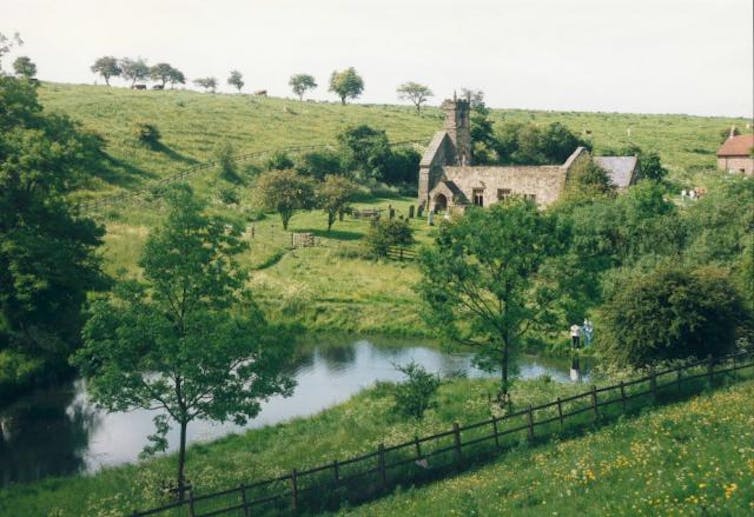
I am mapping ‘deviant’ burials for a piece I am writing on Wharram Percy, the medieval English village that mutilated its own dead, including many women and children. Whatever these people believed eventually took hold completely and led to them deserting the village. It is a famous case within archaeology but I will be bringing it within the realms of literature and supernatural beliefs regarding vampires and revenants in my new research article. An earlier short piece, How Long have We Believed in Vampires? was written last year, and again I draw connections between deviant burials, the folklore of the undead, and its legacy in literature.

Yesterday, I was made aware of a new article in Science Daily which reports on a similar ‘deviant’ burial, this time involving a ten year old child, a suspected revenant  in fifteenth-century Italy. The severed skull has a large rock inserted in the mouth to prevent biting and the child’s corpse from returning, thus spreading the plague which may have killed her:  Vampire Burial Reveals Efforts to Prevent Child’s Return from the Grave 

What is most striking about this for me is that despite Wharram Percy and the Southwell Vampire, a skeleton found with metal spikes through its shoulders, heart and ankles, dating from 550-700AD and buried in the ancient minster town of Southwell, Nottinghamshire, most still believe these practises only took place in Eastern Europe, in Slavic regions. This new discovery takes us outside of that realm and on to Italy, paving the way for my forthcoming article on the English Vampire and deviant burials a little closer to home in Yorkshire in the UK.


Posted in Critical thoughts, MA Reading the Vampire module news, OGOM Research | Tagged , , , , | Leave a comment

OGOM: Spectral St Albans Hallowe’en Tour – booking now

OGOM is proud to announce a special Supernatural St Albans Hallowe’en Tour. We will be exploring the magical and spectral history of Hertfordshire’s finest gothic city. The event is informed by the research we carried out for our ‘Urban Weird‘ project in collaboration with Supernatural Cities.   We have explored the weird and the eerie, and those uncanny or submerged histories that give play to the imagination and rise up to frame spacial narratives.

St Albans is home to tortured martyrs, ghostly monks, pagan Gods, grotesque carvings, an ancient dragon or wyrm’s lair, succubi, winged skulls, witches, Wicca communities, folklore rituals and more. Join us on 31st October. Your tour guides are OGOM’s very own Dr Sam George and Dr Kaja Franck. Meet at the Clock Tower, St Albans, 4.00. The tour lasts 90 minutes with optional drinks to follow at the most haunted Inn. Price 8.00.

To book please email: K.A.Franck@gmail.com

Posted in Events, Gothic Hertfordshire, OGOM News, OGOM Research | Tagged , , , , , , | 2 Comments

CFP: Reading Group on Animals and Mythical Creatures

The Myth Reading Group at the University of Essex Centre for Myth Studies have announced a CFP on Animals and Mythical Creatures for the Autumn Term 2018. They invite proposals from anyone who is interested in any aspect of mythological animals and creatures and addresses the theme from a mythological perspective across cultures, periods, and media. Please contact them with suggestions for works or topics to read and discuss. They are also accepting proposals for video conferencing (by Skype) for those who cannot travel to Colchester.

The Myth Reading Group meets on alternate Wednesdays in term time, between 5.00 and 6.30 p.m. (North Teaching Centre: Room NTC.2.05) at the University of Essex Colchester Campus. The sessions include a short presentation of up to 30 minutes, followed by discussion or a reading session. The first session will take place on 17 October. Email: mythic@essex.ac.uk

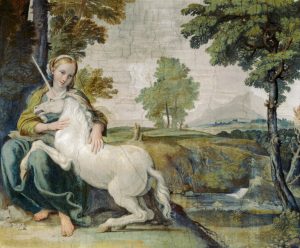
ca. 1602 — The Maiden and the Unicorn by Domenichino — Image by © Alinari Archives/CORBIS

Posted in CFP (Conferences), Events | Tagged , , , | Leave a comment

Vampire Myths and Vampire Lore

Posted in MA Reading the Vampire module news, OGOM Research | Tagged , , , , , | Leave a comment

Why Are Witches So Popular?

The Guardian Newspaper has just featured an article entitled Coven Ready: from Instagram to TV:Why are Witches so Popular? It appears that there is a spate of new occult dramas about witches. A Discovery of Witches, an adaptation of Deborah Harkness’s novel about a young witch who finds an ancient manuscript that brings her to the attention of vampires and demons,  began on Sky One last week. Other upcoming witchy dramas, include Netflix’s Chilling Adventures of Sabrina, and CBS All Access’s Strange Angel. Serendipity has also dictated that Spellbound, an exhibition featuring witchcraft, opened last month at Oxford’s Ashmolean museum. Among the exhibits is The Discovery of Witches, a 1647 work by the notorious Witchfinder General Matthew Hopkins, which inspired the title of Harkness’s novel. If you are researching witches yourself it’s a very sexy topic just now.

OGOM has always celebrated the figure of the witch. Witches feature heavily in our Gothic Hertfordshire Tour described here in relation to our celebration of The Urban Weird.  There you will encounter Mother Haggy, who crossed the River Ver in eggshells and a kettle drum, Rosina Massey, who was seen conducting her cups and saucers in a dance around the table, and sending her 3 legged stool on errands, together with Sally Deards, the Witch of Rabley Heath. Most terrifying of all is the story of Ruth Osbourne, the Gubblecote Witch. Ruth was swum for a witch in 1751, even though the death penalty for witches had seemingly been abolished in 1735. St Albans, which houses the OGOM headquarters, was also home to Gerald Gardner, the founder of contemporary modern day witchcraft, later termed ‘Wicca’. There are some useful resources on witches on the blog including 100 Must Read Books About Witches and a review of Witches, Magic and Demons at the John Rylands. My early engagement with stories of witches is laid bare in How Did I Choose Me My Witchcraft Kin: My Past and Future in Witches.


Posted in Gothic Hertfordshire, OGOM News | Tagged , , , , , , , , | 1 Comment

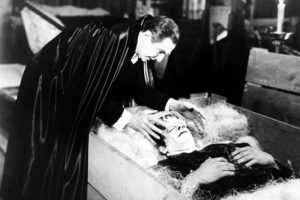
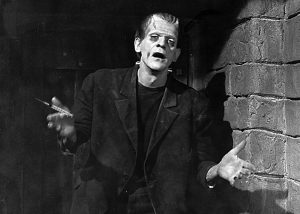
Frankenstein Vs Dracula: Battle of the Books

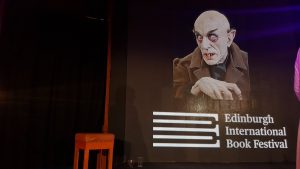
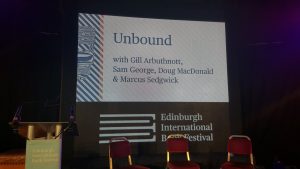
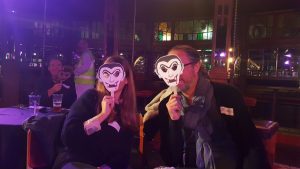
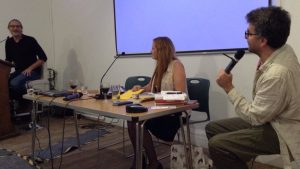
Thanks to all those who attended the Monsters We Deserve: Dracula Vs Frankenstein events with myself and Marcus Sedgwick at Edinburgh International Book Festival  and at Conway Hall in London.

Frankenstein won both rounds but Marcus and I drew 1-1 in the battle. Both books are wonderful of course but only one of them was life-changing for me – Dracula

There was a lively interview beforehand in The Skinny and coverage in The Edinburgh News and The Edinburgh Reporter.

If you missed the debates you can see all the images and comments in these two Twitter ‘Moments’:

Dracula V Frankenstein Round 1 Edinburgh International Book Festival, 26th August

Dracula V Frankenstein Round 2 Conway Hall, London, 4th September 

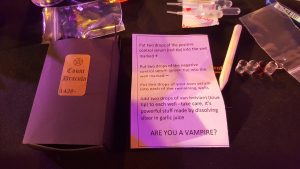
A large wolf was spotted on the loose in Cardiff later on Tuesday evening. It  must have been Dracula in wolf form out for revenge….and who can blame him. OGOM will have news of a very special vampire event in April – all will be revealed shortly.

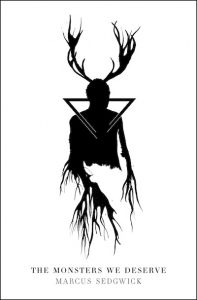
Thanks to the publishing team at Head of Zeus, Kaja for her live tweeting and of course Marcus and everyone who contributed.  The book is out now!

Do monsters always stay in the book where they were born? Are they content to live out their lives on paper, and never step foot into the real world?

Published in 1818, Shelley’s Frankenstein is one of the most influential tales of all time. Two hundred years later, in a remote mountain house, high in the French Alps, an author broods on that creation. Reality and perception merge, fuelled by poisoned thoughts.

People make monsters, but who really creates who in the end?


Posted in Events, OGOM News | Tagged , , , , | 2 Comments

Yōkai & Me: Introducing #YōkaiFriday

The world of yōkai has been fascinating me of late. These creatures are currently popular in anime, manga, film and computer games, but they originated in local legends in Japan, folktales and regional ghost stories. I was excited to attend the Japanese Gothic panel at the recent IGA (pictured below)This featured research by Alex Watson on the films of Kurosawa, Jenevieve Van-Veda on Japanese gothic art, and Catherine Spooner on hybridising Shōjo manga and British Gothic in Yana.

I had begun my own journey to the East some months earlier when, in relation to my book on the shadow, I’d been browsing Tales of Old Japan by A. B. Mitford.  Mitford, a British traveller to Japan in 1866-70, had witnessed the hara-kiri ceremony first hand and collected gripping tales of vampires and samurai, Buddhist sermons, and the plots of 4 Nō plays. His work was the first collection of Japanese tales to be published in English in 1871. From this I discovered the work of  Toriyama Sekien, 1712-1788, 鳥山 石燕, an eighteenth-century scholar, poet, and artist. Sekien, his pen name, is best known for the illustrated books of yōkai that appeared in Hyakki Yagyō monster parade scrolls. The last of which features yōkai mainly out of Sekien’s own imagination. I have since found Michael Dylan Foster’s Pandemonium and Parade: Japanese Monsters and the Culture of Yōkai (2009) and discovered the work of the artist and scholar, Shinonome Kijin, but I’m only at the very beginning of my journey to the East and the wonderfully weird world of yōkai.

Do comment below with any suggestions re: useful books on Japanese folklore. Here is my first contribution to yōkaiology which I’ve entitled ‘Yokai & Me’. If you are interested you can use the hashtag #YōkaiFriday and join me in celebrating these wonders in the forthcoming weeks.  They’re incredible, terrifying and amusing in equal proportions. I can’t wait to lean more.

Posted in OGOM News, OGOM Research | Tagged , , , , , , , | Leave a comment

My Favourite Werewolf Film: Hasting LitFest

Next weekend (30th August – 2nd September), I will be a guest speaker at Hastings LitFest. On Saturday 1st September, I’ll be introducing my favourite werewolf film in the world Ginger Snaps (2000) and then fielding a Q and A session afterwards.

It should be a wonderful event where I can explore my love for this film, the first time I watched it and a quick foray into some academic ways of looking at the female werewolf.

Tickets are available from the venue, the Electric Palace Cinema.

Posted in Events | Tagged , , | Leave a comment

CFP: Dolls, Robots, Automatons – The Artificial Body in Global Culture

At the IGA, the following CFP was brought to my attention. It looks to be incredibly interesting:

‘Dolls, Robots, Automatons – The Artificial Body in Global Culture

International conference celebrating the 200th anniversary of Frankenstein.

3rd to 5th December, 2018, Institute of World Literature (Russian Academy of Sciences) and National Research Institute “The Higher School of Economics”

Working languages: Russian, English, German, French.

The aim of the conference is to explore the status of artificial body in global culture, both artistic and scientific, from antiquity to the present time.

Abstracts are accepted up to 25th October, from foreign contributors who need a visa – up to 25th September. You should send them to artbody2018@mail.ru.

The organizing committee will decide which abstracts to accept no later than 1.11.2018.

Travel expenses and accommodation fee are paid by the participants. We will help them with visas.

The abstract can be in any of the working languages. You should also give the following information: your full name, affiliation, e-mail, the title of your paper. The abstract should be 250-300 words long. All of this should also be translated into English (if not originally written in this language)’.

Posted in CFP (Conferences) | Tagged , , | 1 Comment