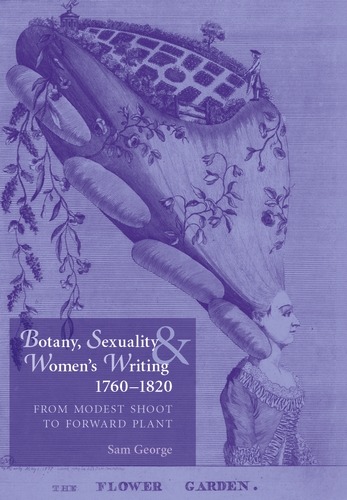
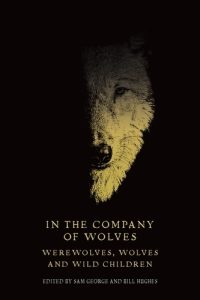
The Open Graves, Open Minds Project began by unearthing depictions of the vampire and the undead in literature, art, and other media, then embraced werewolves (and representations of wolves and wild children), fairies, and other supernatural beings and their worlds. The Project extends to all narratives of the fantastic, the folkloric, and the magical, emphasising that sense of Gothic as enchantment rather than simply horror. Through this, OGOM is articulating an ethical Gothic, cultivating moral agency and creating empathy for the marginalised, monstrous or othered, including the disenchanted natural world.
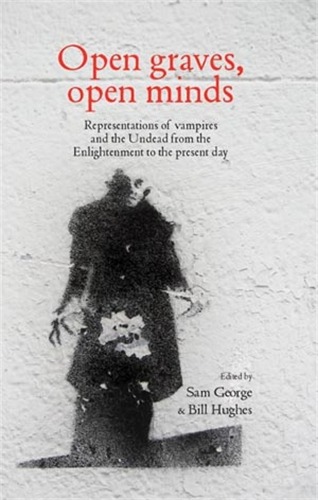
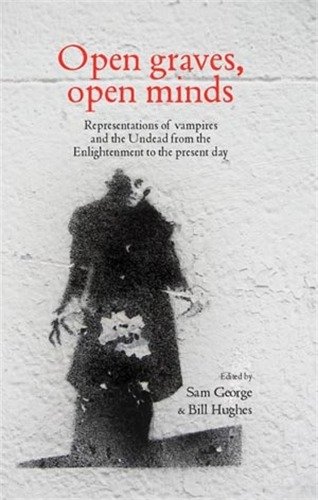
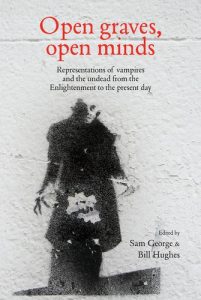
Sam George and Bill Hughes, eds., Open Graves, Open Minds: Representations of Vampires and the Undead from the Enlightenment to the Present Day (Manchester: Manchester University Press, 2013)
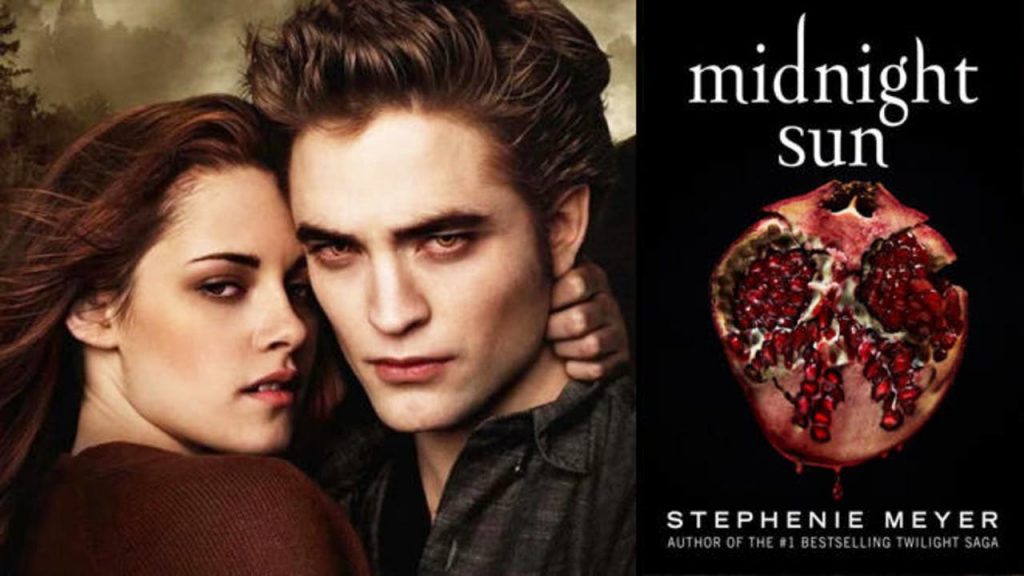
The Open Graves, Open Minds Project began in 2010, in part as a response to Stephenie Meyer’s hugely successful Twilight series; a Young Adult vampire romance series, the first of which was Twilight (2005). We launched the Project with an exciting conference on the role of the vampire in culture, out of which came our first edited collection, Open Graves, Open Minds: Representations of Vampires and the Undead from the Enlightenment to the Present Day (2013). Since then we have explored a host of other supernatural creatures in all modes of fantastic and Gothic writing but centred upon the paranormal romance, frequently that for YA readers, and with the vampire always lurking in the background. Now, Meyer’s sparkling revenant Edward Cullen is back, with her new book, Midnight Sun, which tells the paranormal romance between the mortal Bella and Edward in the latter’s voice. The first chapters of this appeared on line in 2008 but Twilight fans have had to wait twelve years to get the full novel.
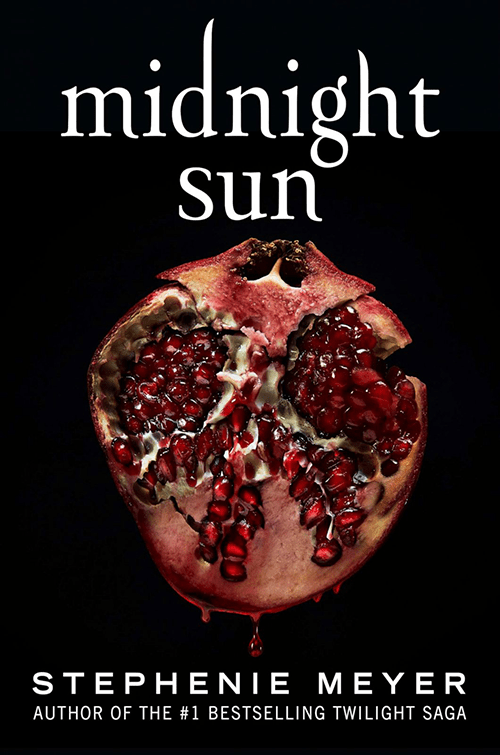
Stephenie Meyer, Midnight Sun (London: Atom, 2020)
The release of Midnight Sun has inspired some useful articles on vampire romance. On Goodreads, there are some very interesting interviews about YA vampire romances, with Meyer herself, and with Renée Ahdieh, author of The Damned; Caleb Roehrig, author of The Fell of Dark; Zoraida Córdova and Natalie C. Parker, editors of Vampires Never Get Old: Tales with Fresh Bite. They discuss why there has been a resurgence in the genre and what directions it might take.
Vampire romance is not confined to Young Adult readers; the Times of India has some suggestions for ‘Vampire Romances To Sink Your Teeth Into‘, both YA and adult. The Tor website (always an excellent resource on fantastic fiction) has an informative article on the persistence of vampire fiction by Zoraida Córdova, ‘Vampires Never Left: A History of Vampires in Young Adult Fiction‘. This mentions some novels that I’ve not come across before and which sound very interesting.
Of course, the vampire has a history from way before Twilight. In this BBC Radio 4 broadcast, ‘Vampires in Gothic Literature‘, Greg Jenner, Dr Corin Throsby, and Ed Gamble ‘look at the role of vampires in Gothic Literature of the 19th century and the effect on modern day pop culture.’
Hybridity is something that I have always found interesting to explore in relation to the gothic. I’ve blogged about fairy tale hybridity in relation to Beauty and the Beast and commented on the Wellcome’s ‘Making Nature’ exhibition on faux taxonomy and hybrid creatures as well as responding to a BBC article on fictional and folkloric representations of hybridity: Hybrid Creatures from the Owl Man to the Demon Dog In this post I approach hybridity via demonology for the first time.
One of the reasons why a negative view of hybridity has developed (apart from those taxonomies which outlawed anything that was not ‘pure’ stock labelling them ‘monstrous’) is because of the iconography surrounding demons. The process of cross-fertilisation can of course create something new, more than the sum of the original parts. It moves us away from notions of identity which are either/or, either one thing or another. Demons work against this positive idea of hybridity because they are shown to be flawed, malformed, and akin to the devil, and also because they are cast out and forever in a state of exile or unbelonging.
In Christianity demons have their origins in the Fallen Angels who follow Satan when he was cast out of heaven. As Christianity spread, Pagan gods, goddesses, and nature spirits were incorporated into the ranks of demons. Descriptions from antiquity portray demons as shapeshifters who can assume any form, animal or human or hybrid. Some theologians and witch hunters say that demons have no corporeal form, and only give the illusion that they are in animal or human form (they create voices out of air that mimic people, for example).
In Judaic lore, demons are invisible, but can see themselves and each other. They cast no shadows (linking them to Dracula). They only assume bodies to copulate. In Christian lore demons assume forms that are black, such as black dogs, and other animals. Because they are evil they are imperfect, shown in flaws such as malformed limbs and cloven feet. Demons are described as unclean, if they make their bodies out of air, or occupy a living body, they exude a stench. Throughout history the activities of demons has been thought to cause illness and disease. Demons can send bad weather, pests such as armies of rats and mice and swarms of locusts. Such belief holds that humankind is in constant danger of demonic attack in some form, and constant vigilance is required. The greatest danger occurs at night when sleeping humans are at their most vulnerable, births and deaths are perilous times, as are nights on which marriages are consummated. At these times demons are better able to wreak havoc!
Demons were believed to aid witches during the inquisition, they acted as familiars, taking the form of animals, participating in sabbats. They can also assume beautiful and seductive forms, acting as sexual predators. By the C14th it was accepted that demons had sex with humans, in the form of Incubi and Succubi, or even as Satan himself. They are organised into hierarchies, according to GRIMOIRES or inquisition writings. Such magic books give the names, duties, seals, incantations and rituals around summoning and controlling demons.
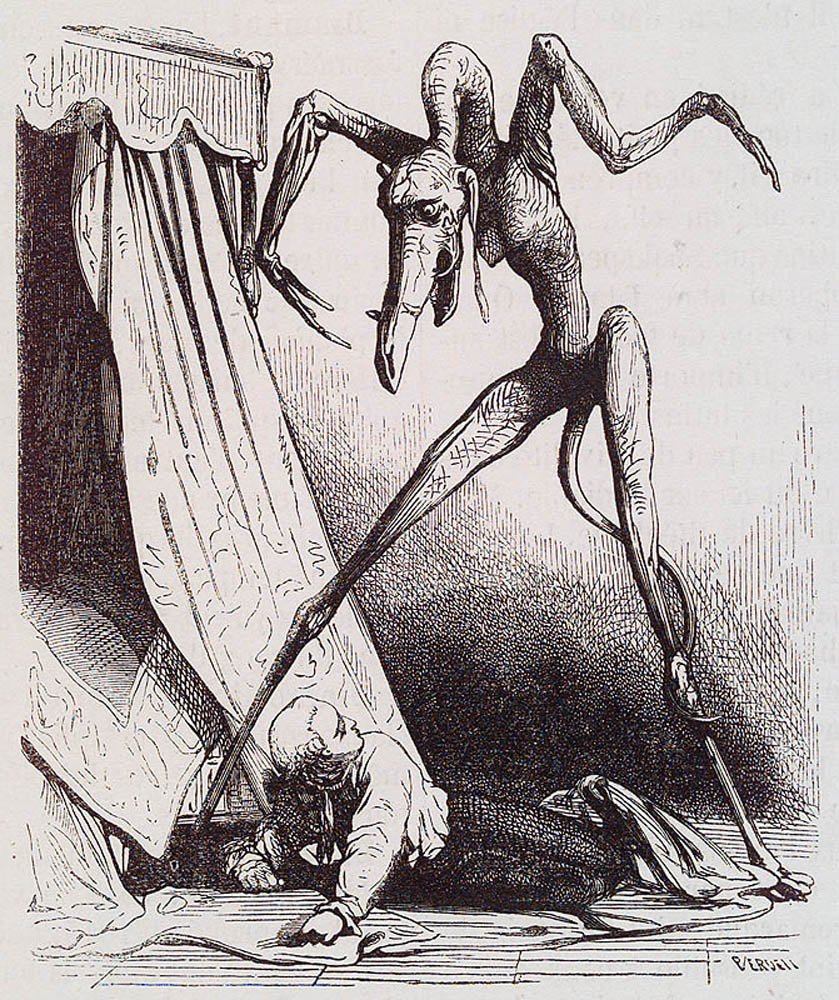
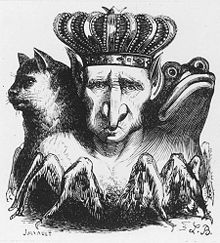
The DICTIONNAIRE INFERNAL describes demons which are organised into hierarchies. It was written by Jacques Auguste Simon Collin de Plancy and first published in 1818. There are several editions of the book; perhaps the most famous is the 1863 edition, which included illustrations by Louis Le Breton depicting the appearances of several of the demons. I am excited to say that the Bibliothèque nationale de France has scanned this book and made it available for download here
This work together with James, George Frazer’s The Golden Bough (1890) and a used copy of Rosemary Ellen Guiley’s Encyclopedia of Demons and Demonology (2009), inspired my initial interest in demons. My research is not about poltergeists or demonic possession, it is instead focused on discovering wonderfully hybrid, magical creatures. You might like to browse some of my favourites below:
MARCHOSIAS. Fallen angel and 35th of 72 Spirits of Solomon. He is a marquis ruling 30 legions of demons. He appears as a she-wolf with griffin wings and a serpent’s tail. A shapeshifter he will take human form. Once a member of the angelic order of dominions, he is set to return after 1,200 years.
ADREMLECH. A Chieften of hell. Grand Chancellor of Demons, President of the Devil’s General Council. Governor of the Devil’s Wardrobe. Often portrayed as a mule with a peacock’s tail.
ANDRAS. Fallen angel and 6rd of the 72 Spirits of Soloman. Wonderfully hybrid, he appears in the form of an owl-headed demon who rides a black wolf! He creates discord and kills his enemies with a gleaming silver sword.
AMDUSCIAS. Fallen angel 67th of the 72 Spirits of Solomon. Appears first as a unicorn. He will take on human shape but this will cause musical instruments to be heard but not seen. Trees sway at the sound of his voice He gives humans the power to make trees fall and he gives excellent familiars!
HALPAS. Fallen angel and demon. He is an Earl who appears in the form of a giant female stork and speaks with a croaky voice. He burns whole towns and takes a sword to the wicked. He rules over 26 legions of Hell.
BAAL. Fertility deity now a fallen angel and demon. 1st of the 72 Spirits of Solomon. A King ruling 66 legions of demons. He is triple-headed with a cat, human and toad head. He can bestow the gift of invisibility and wisdom.
GAAP. Fallen angel and 33rd of the 72 Spirits of Solomon. Prince in Hell, ruling 66 legions of demons. Humanlike, with huge bat wings, he can make you insentient or move you from place to place. Takes familiars away from magicians!
The editors of The Swan’s Egg invite submissions for the journal’s first issue. Essays on Hans Christian Andersen by undergraduate, MA, and PhD students written in English or in Danish are welcome, and should be around 4,000 words in length.
The Chichester Centre for Fairy Tales, Fantasy and Speculative Fiction seeks articles, book reviews and creative writing relating to literary and historical approaches to fairy tales, fantasy, Gothic, magic realism, science fiction and speculative fiction for Gramarye, its peer-reviewed journal published by the University of Chichester.
This call for papers reaches out to scholars interested in working on interpretations of the CBS series The Vampire Diaries. This American supernatural teen drama features a diverse set of characters, both dead and undead, while touching on topics such as friendship, romance, adulthood, as well as depression, and aging. So far, no book length work has dealt with this complex series, and it is our aim to publish an in-depth analysis consisting of 10-11 chapters that offer critical and creative readings of this series
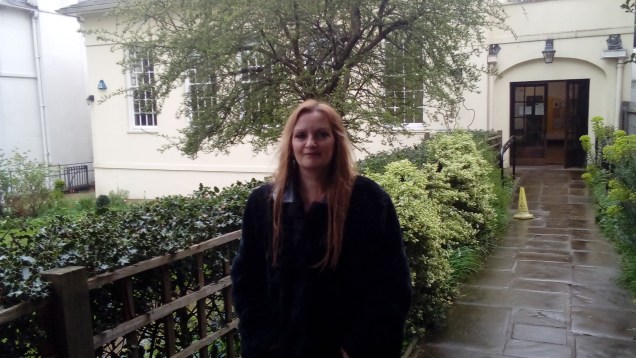
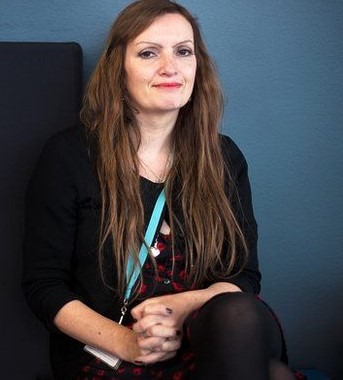
Prof. Sam George at the Polidori symposium, 6-7 April 2019, Keats House, Hampstead
It is with great pleasure that I announce the promotion of Sam George to Associate Professorship. I’ve known Sam for many years and for the last ten we have worked together founding and developing the Open Graves, Open Minds Project.
Sam’s current research is exploring Gothic fairies, with the prospect of a book on the topic (see, too, our forthcoming ‘Ill met by moonlight’ conference). She is also formulating ideas towards an ethical Gothic; this is included in an impact case study for REF entitled ‘Open Graves, Open Minds: Promoting empathy and interrogating difference through public engagement with Gothic narratives’ and there will be a symposium and publications. And she is conducting an investigation into the cultural significance of the shadow, which will bear fruit as her next monograph, In the Kingdom of Shadows; Optics, Dark Folklore and the Gothic.
I am very proud of what Sam has achieved with OGOM; it has been immensely rewarding to work with her and it is wonderful that her work has been recognised in this way.
We’ve added some useful links to various resources from the website. These appear in the Related Links and Journals sections on the right-hand side of the Blog and Resources pages.
We also have created a new page for general online talks and interviews under the Resources menu. Here, you can find my recent interview with Brian from Toothpickings on vampires and werewolves, the folklore of these creatures and its transmutation into literature.
Congratulations to Prof. Owen Davies who has just become the new President of The Folklore Society. The Folklore Society is a learned society devoted to the study of traditional culture in all its forms. It was founded in London in 1878 and was one of the first organisations established in the world for the study of folklore.
Owen, a historian with expertise in witchcraft, magic and ghosts, is my mentor and esteemed colleague at the University of Hertfordshire; he’s a long standing friend of OGOM. We are excited to announce that he will be joining us for our fairy conference ‘Ill Met by Moonlight’ 8-10 April, 2021. His plenary talk is entitled ‘Print Grimoires, Spirit Conjuration, and the Democratisation of Learned Magic’. We wish Owen success and happiness in his new role and look forward to future collaborations.
Those who are wondering how the Gothic might respond to the current crisis will be interested in this new event. It is called Coronagothic and it is an online flash conference hosted by @UMGothic (Gothic Research Network at the University of Macau in China). It takes place via Zoom 10am BST Tues 30 June. I will be one of nine academics from Asia, Europe, and the UK and we will discuss the cultural implications of Covid-19. It is free to register but there are limited places .
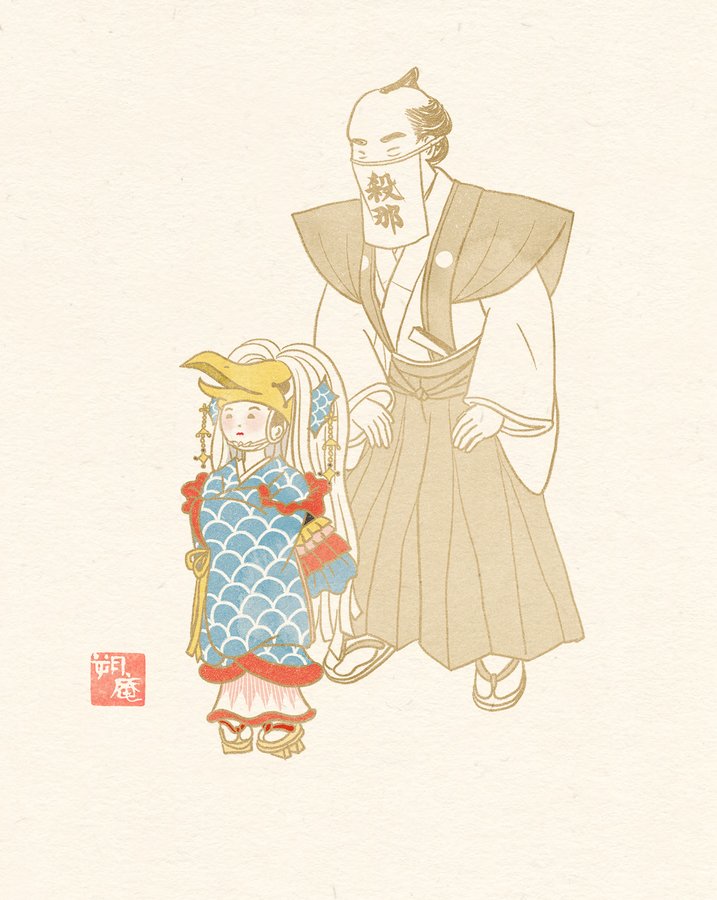
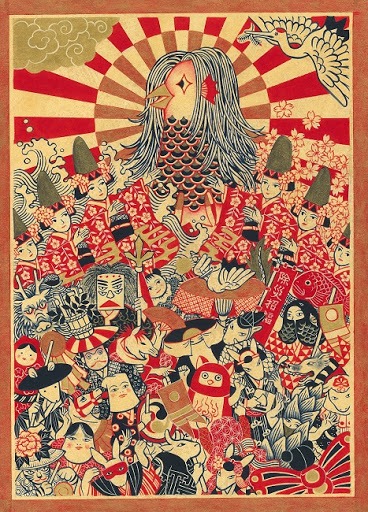
Amabie Festival
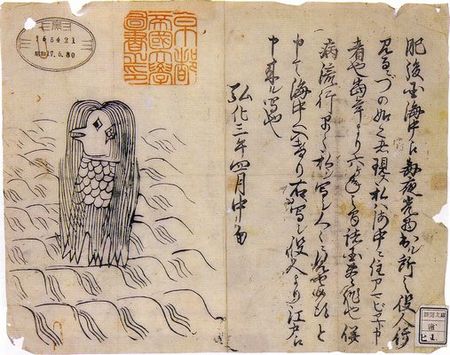
My paper is entitled ‘Analysing Amabie: A fragment in the Life of the monstrous mermaid revived to ward off coronavirus’.
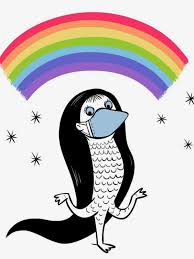
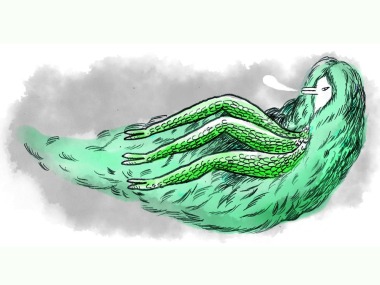
I will draw on Jeffrey Jerome Cohen’s seven theses of monster culture to examine Amabie, a Japanese mermaid monster from the Edo- period, revived to ward off Coronavirus in 2020. I argue that in cultural moments such as this, our understanding of crises is best understood via the hybrid creatures they engender.
Amabie
So who is Amabie? Japanese Twitter is currently inundated with depictions of this yōkai , a squat, duck-billed creature with a scaly body, long hair and three webbed feet. But why? For the answer, you have to go back to mid-May 1846, when a town official from what is now Kumamoto prefecture on the island of Kyushu went down to the sea to investigate reports of glowing lights. There he encountered a strange mermaid-like creature. “I am Amabie who lives in the sea,” it said. “For the next six years, there will be abundant crops across the land, but there will also be epidemics. Show my picture to people as soon as you can.” Then Amabie was gone.
Continue reading about the pandemic defeating monster here
If you are intrigued, please do register and keep an eye on @UMGothic on Twitter
The Proposed Schedule
Prposed 30 June 2020
30th June 10 a.m. British Summer Time / 5.p.m Macau time
09.55 – Welcome from Prof. Victoria Harrison (University of Macau)
10.00 – Prof. Nick Groom (University of Macau)
10.10 – Prof. Bill Hughes (University of Macau)
10.20 – Questions
10.30 – Prof. Mariaconcetta Costantini (G. D’Annunzio University of Chieti-Pescara)
10.40 – Dr Sam George (University of Hertfordshire)
10.50 – Questions
11.00 – Prof. Steve Hinchliffe (University of Exeter)
11.10 – Prof. Darryl Jones (Trinity College, Dublin)
11.20 – Questions
11.30 – Prof. David Punter (University of Bristol)
11.40 – Prof. Corinna Wagner (University of Exeter)
11.50 – Questions
12.00 – Closing questions/remarks from Prof. Victoria Harrison (University of Macau)
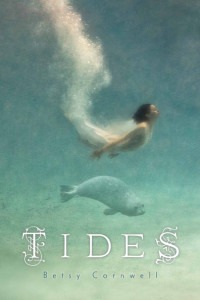
We are delighted to announce an addition to the guest speakers at our ‘Ill met by moonlight’ Gothic Faery conference. Betsy Cornwell, the esteemed author of YA fantasy, will be talking about her creative adaptation of fairy lore in her novels.
Betsy’s first novel, Tides (2013), is a brilliant and sensitive exploration of young love, sexuality, and body image through a paranormal romance that reworks the selkie figure—that liminal creature of Celtic Faerie which transforms from seal to human and transverses ocean and land. Sam teaches this novel on her ‘Generation Dead: Young Adult Fiction and the Gothic’ BA module.
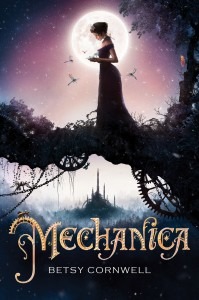
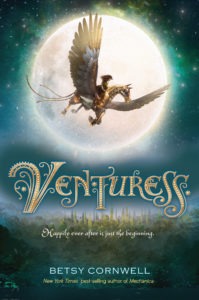
Betsy’s later novels Mechanica (2015) and its sequel Venturess (2017) recreate the ‘Cinderella’ tale in a dazzling encounter of steampunk technology with Faery. There is here an urge towards a re-enchantment of the modern world—an impulse found in similar fantasy and paranormal romance novels which feature fairies. In the world of these novels, the land of Faerie is depicted as the colonised Other (there is a suggestion of Britain’s domination of Ireland, the source of much fairy lore). Cornwell’s heroine, Nicolette first refashions herself into entrepreneurial engineer, then helps liberate the fairy realm through a war of independence. Faerie challenges the utilitarian rationality of Esting (the colonising power) but it also offers an alternative way of loving that resists the gendered rigidities of conventional couplings. And Betsy Cornwell is cleverly metafictional in the way that she subtly analyses how fairy stories themselves shape reality; Nicolette develops her autonomy through resisting and rewriting such narratives. Cornwell has also written a feminist adaptation of the Robin Hood story, The Forest Queen (2018) which takes place in the same world as Mechanica. And in 2020, her queer retelling of the Grimms’ tale ‘Snow White and Rose Red’ will appear.
Marina Warner
Marina Warner is a writer of fiction, criticism and history; her works include novels and short stories as well as studies of art, myths, symbols and fairytales.
Centre for Myth Studies, University of Essex
The Centre It promotes the study of myth, from ancient to modern, and raises awareness of the importance of myth within the contemporary world.
Mythopoeic Society
The Mythopoeic Society is a non-profit organization devoted to the study of mythopoeic literature, particularly the works of members of the informal Oxford literary circle known as the “Inklings.”
Sheffield Gothic
Sheffield Gothic is a collective group of Postgraduate Students in the School of English at The University of Sheffield with a shared interest in all things Gothic.
American Gothic Studies
American Gothic Studies is the official journal of the Society for the Study of the American Gothic (SSAG), which promotes and advances the study of the American Gothic
Echinox Journal
Caietele Echinox is a biannual academic journal in world and comparative literature, dedicated to the study of the social, historical, cultural, religious, literary and arts imaginaries
Folklore
Journal of The Folklore Society. A fully peer-reviewed international journal of folklore and folkloristics, in printed and digital format
Gothic Nature
Gothic Nature: New Directions in Ecohorror and the Ecogothic
Gothic Studies
The official journal of the International Gothic Association considers the field of Gothic studies from the eighteenth century to the present day.
International Journal of Young Adult Literature
an academic peer-reviewed journal dedicated to publishing original and serious scholarship on young adult literature from all parts of the world.
Irish Journal of Gothic and Horror Studies
The Irish Journal of Gothic and Horror Studies (ISSN 2009-0374) is a peer-reviewed, interdisciplinary, electronic publication dedicated to the study of Gothic and horror literature, film, new media and television.
Journal of Popular Romance Studies
The Journal of Popular Romance Studies is a double-blind peer reviewed interdisciplinary journal exploring popular romance fiction and the logics, institutions, and social practices of romantic love in global popular culture.
Journal of the Fantastic in the Arts
An interdisciplinary journal devoted to the study of the fantastic in Literature, Art, Drama, Film, and Popular Media
Monsters and the Monstrous
Monsters and the Monstrous is a biannual peer reviewed global journal that serves to explore the broad concept of “The Monster” and “The Monstrous” from a multifaceted inter-disciplinary perspective.
Studies in the Fantastic
Studies in the Fantastic is a journal devoted to the Speculative, Fantastic, and Weird in literature and other arts
Supernatural Studies
Supernatural Studies is a peer-reviewed journal that promotes rigorous yet accessible scholarship in the growing field of representations of the supernatural, the speculative, the uncanny, and the weird.
The Lion and the Unicorn
The Lion and the Unicorn, an international theme- and genre-centered journal, is committed to a serious, ongoing discussion of literature for children.
Victorian Popular Fictions Journal
Victorian Popular Fictions is the journal of the Victorian Popular Fiction Association. The VPFA is a forum for the dissemination and discussion of new research into nineteenth- and early-twentieth-century popular narrativeo
Related Links
Aarne-Thompson-Uther Index
The Aarne-Thompson-Uther Index is a classification numeric system created to group similar folktales from different cultures
ACADEmy
LSAD centre for research into Art, Curatorial Studies, Applied Design and Art and Design Education
African Religions
With the Yoruba Religion Reader and similar resources
Angela Carter Society
Promoting the study and appreciation of the life and work of Angela Carter
Art Passions
Art Passions: Fairy Tales are the Myths We Live By
Asian Gothic
Asian Gothic appears as an attempt to make sense of the vast and diverse body of Asian literature, film, television, games, comics and other forms of cultural production by reading these texts from a Gothic perspective
British Association for Romantic Studies (BARS)
The UK’s leading national organisation for promoting the study of Romanticism and the history and culture of the period from which it emerged.
British Association for Victorian Studies (BAVS)
The British Association for Victorian Studies (BAVS) is a multidisciplinary organisation dedicated to the advancement and dissemination of knowledge about the Victorian period.
Byron Society
The Byron Society celebrates the life and works of Lord George Gordon Byron (1788-1824), a poet, traveller and revolutionary
Cambridge Research Network for Fairy-Tale Studies
The Cambridge Research Network for Fairy-Tale Studies is an open space at the University of Cambridge aimed at connecting researchers with an interest in fairy tales across different disciplines and scholarly perspectives.
Carterhaugh School
We give lectures and teach courses on fairy tales, folklore, witches, writing, and more. Basically, your ultimate fantasy college courses
Centre for Myth Studies, University of Essex
The Centre It promotes the study of myth, from ancient to modern, and raises awareness of the importance of myth within the contemporary world.
Deborah Hyde
Deborah Hyde wants to know why people believe in weird stuff. She attributes her fascination with the supernatural to having spent her childhood with mad aunties. She approaches the subject using the perspectives of psychology and history.
Fairyist: The Fairy Investigation Society
A website that will gather together sources, links, bibliographical references and discussions on fairies and related supernatural creatures
Folklore Society
The Folklore Society (FLS) is a learned society, based in London, devoted to the study of all aspects of folklore and tradition, including: ballads, folktales, fairy tales, myths, legends, traditional song and dance, folk plays, games, seasonal events, ca
Ghoul Guides
Home to the Ghoul Guides – a digital multimedia project devoted to exploring, understanding, and enjoying the wonders and weirdness of the Gothic
Gothic Feminism
Gothic Feminism is a research project based at the University of Kent which seeks to re-engage with theories of the Gothic and reflect specifically upon the depiction of the Gothic heroine in film
Gothic Herts Reading Group
This site is our one-stop platform for discussing our latest Gothic texts, from journal articles and press pieces, to full length books both old and new
Gothic Women Project
2023: The Year of Gothic Women. An interdisciplinary project devoted to spotlighting undervalued and understudied women writers
Haunted Shores
Haunted Shores Research Network, dedicated to investigating coasts and littoral space in Gothic, horror, and fantastic multimedia
Hellebore magazine
HELLEBORE is a UK-based small press devoted to British folk horror and the occult. Maria J. Pérez Cuervo publishes the magazine twice a year, on Beltane and Samhain
MEARCSTAPA
monsters: the experimental association for the research of cryptozoology through scholarly theory and practical application
Mermaids of the British Isles
a history of mermaids in the arts and cultural imagination of our early islands, which will map the place of these beguiling, and often deadly, figures in the national maritime imaginary, and explore our ancestors’ persistent reimagining of the mermaid
Open Folklore
Open Folklore is devoted to increasing the number of useful resources, published and unpublished, available in open access form for folklore studies and the communities with which folklorists partner
PCA Vampire Studies
A site dedicated to the Vampire Studies Area of the Pop Culture Association
Pook Press
Publisher of Vintage Illustrated Fairy Tales, Folk Tales and Children’s Classics
Romance Scholarship DB
This Romance Scholarship Database is therefore intended as a tool to assist popular romance scholars in their research into modern popular romance novels
RomanceWiki
A wiki resource for romance fiction authors, texts, and publishers
Science Fiction and Fantasy Research Database
The Science Fiction and Fantasy Research Database is a freely available online resource designed to help students and researchers locate secondary sources for the study of the science fiction and fantasy and associated genres.
Sophie Lancaster Foundation
The charity, known as The Sophie Lancaster Foundation, will focus on creating respect for and understanding of subcultures in our communities.
Supernatural Cities
Supernatural Cities is an interdisciplinary network of humanities and social science scholars of urban environments and the supernatural.
Supernatural Studies Association
The Supernatural Studies Association is an organization dedicated to the academic study of representations of the supernatural, the speculative, the uncanny, and the weird across periods and disciplines.
The Association for the Study of Buffy+
The mission of the Association is to promote the scholarship of Buffy+ Studies, focusing on inclusivity, intersectionality, and excellence. We define Buffy+ Studies as the scholarly exploration of Buffy the Vampire Slayer and its related texts.
The Society for the Study of the American Gothic (SSAG)
The Society for the Study of the American Gothic (SSAG) was established in 2023 to promote and advance the study of the American Gothic through research, teaching, and publication
The Thinker's Garden
we also love Plotinus and the Renaissance Platonists, as well as the Transcendentalists and Romantics. We are also drawn to the peculiarities of the Theosophists and hermeticists of the nineteenth century
Vamped
Vamped is a general interest non-fiction vampire site. We publish interviews, investigations, lists, opinions, reviews and articles on various topics.
Vampire Studies Association
TThe Vampire Studies Association (VSA) was founded by Anthony Hogg . . .“to establish vampire studies as a multidisciplinary field by promoting, disseminating and publishing contributions to vampire scholarship
Victorian Popular Fiction Association
The Association is committed to the revival of interest in understudied popular writers, literary genres and other cultural forms.
Wells at the World's End
I am reading through the complete works of H G Wells, in chronological order. This blog is for my jottings, as I go along.
YA Literature, Media, and Culture
YALMC is a resource for those of us researching, writing, writing about, interested in Young Adult Literature, Media, and Culture.
YA Studies Association (YASA)
The YA Studies Association (YASA) is an international organisation existing to increase the knowledge of, and research on, YA literature, media, and related fields