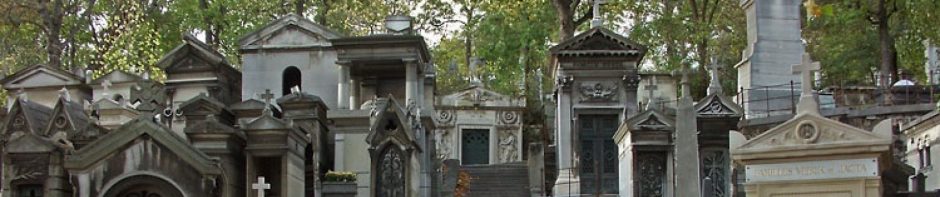
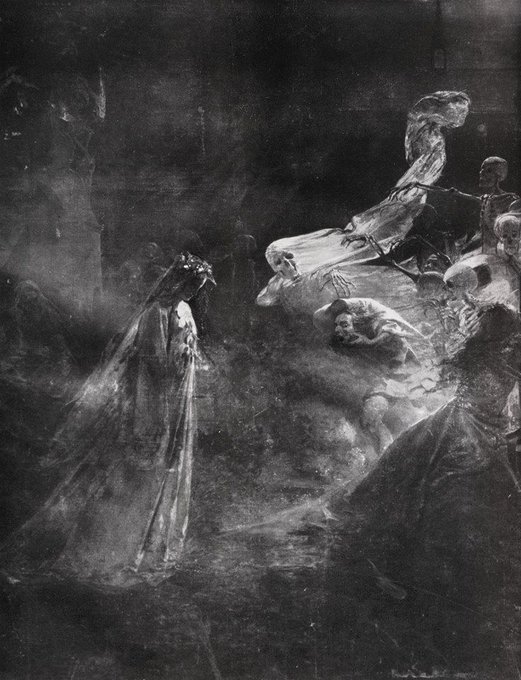
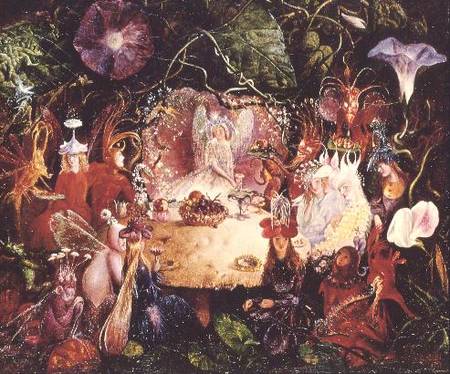
The Open Graves, Open Minds Project began by unearthing depictions of the vampire and the undead in literature, art, and other media, then embraced werewolves (and representations of wolves and wild children), fairies, and other supernatural beings and their worlds. The Project extends to all narratives of the fantastic, the folkloric, and the magical, emphasising that sense of Gothic as enchantment rather than simply horror. Through this, OGOM is articulating an ethical Gothic, cultivating moral agency and creating empathy for the marginalised, monstrous or othered, including the disenchanted natural world.
A quick post to draw your attention to the following free online event at the university. Hope to see some of you there.
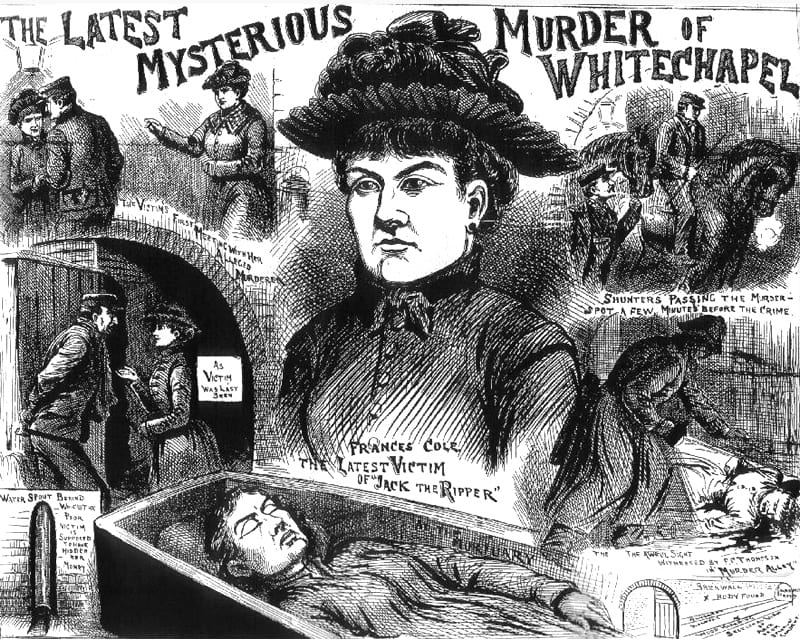
The School of Humanities at the University of Hertfordshire’s Creative Conversations continues with a special guest, historian and author Hallie Rubenhold on 22 February 17:00-18:00 via Zoom. Hallie will talk about her award-winning non-fiction book The Five: The Untold Lives of the Women Killed by Jack the Ripper . The Five has featured in The New York Times, Sunday Times, Daily Mail, GQ, The Washington Post, the Oprah Winfrey Magazine and many more. For more information see the Press Release.
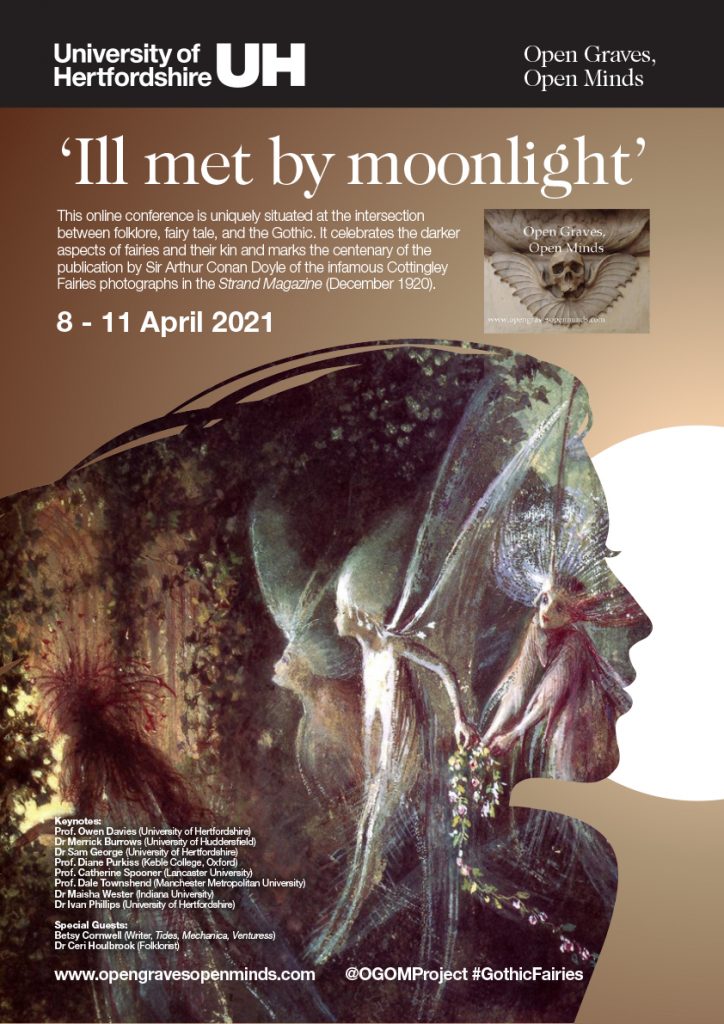
Prof. Owen Davies (President of The Folklore Society, University of Hertfordshire), ‘Print Grimoires, Spirit Conjuration, and the Democratisation of Learned Magic’
Dr Sam George (Associate Professor of Research, University of Hertfordshire), ‘Fairy Lepidoptera: the Dark History of Butterfly-Winged Fae’
Prof. Diane Purkiss (Keble College, Oxford), ‘Where Do Fairies Come From? Shifts in Shape’
Prof. Catherine Spooner (Lancaster University), ‘Glamourie: Fairies and Fashion’
Prof. Dale Townshend (Manchester Metropolitan University), ‘“The fairy kind of writing”: Gothic and the Aesthetics of Enchantment in the Long Eighteenth Century’
And we have just added Dr Maisha Wester (Indiana University; Global Professorship Fellowship, University of Sheffield) who will be speaking on ‘Precious Revisions of Greedy Glass Bottle Tricks: Nalo Hopkinson’s Folkloric Revisions of Classic Fairytales and Myths’.
And Dr Merrick Burrows (Head of English & Creative Writing, University of Huddersfield) who is the curator of forthcoming Cottingley Fairies Centenary Exhibition. December 2020 marked the centenary of the publication by Sir Arthur Conan Doyle of the infamous Cottingley Fairies photographs in the ‘Strand Magazine’. You can read about the exhibition below:
Despite the pandemic isolation, scholars in Gothic and allied fields are finding creative ways to keep literary and cultural dialogue flourishing with on-line events. here are a few we’ve noticed:
The British Association for Romantic Studies is delighted to welcome you to the fifth session of our Digital Events series: ‘The Late Mary Shelley’. Please join us on Thursday 18 February at 5pm GMT on Zoom for a roundtable discussion between Dr Antonella Braida, Kathleen Hurlock, Professor Michael Rossington, Professor Angela Wright, and Carly Yingst, chaired by Dr Amanda Blake Davis. During the session, our guests will belatedly mark the anniversary of Mary Shelley’s death on February 1st by discussing her later life, works, and legacy, celebrating Shelley’s many achievements beyond and after Frankenstein. After this, the audience will be invited to take part in a moderated Q&A session.
A confluence is the place where two rivers meet. It is a place of not only great energy but great power and creativity. Located at one of the great confluences, the Twin Cities occupy this place called Bdote – “where two waters come together” – that is sacred to the Dakota people. The Octavia E. Butler Literary Society invites you to join us virtually at this sacred place of power and creativity for the third biennial conference where we will feature work honoring Butler. Our host is St. Catherine University in St. Paul MN.
Returning to the Gothic Ocean is a one day interdisciplinary virtual symposium dedicated to an exploration of the haunted waters stretching around and across Australia, the oceans, seas and inland waterways. The symposium title is inspired by Elspeth Probyn’s (2018) ominous description of the otherness and toxic “return” of the “mercurial” ocean, as well as the fluid regional geographies of “Australia” that stream into the realms of Australasia, Melanesia, Micronesia, the Asia-Pacific, and Indo-Pacific.
The Chichester Centre for Fairy Tales, Fantasy and Speculative Fiction seeks articles, book reviews and creative writing relating to literary and historical approaches to fairy tales, fantasy, Gothic, magic realism, science fiction and speculative fiction for Gramarye, its peer-reviewed journal published by the University of Chichester.
As recent forays into Carter’s interest in translation and her engagement with French feminist theory uncover ever more areas of exploration, researchers have yet to fully highlight the ways in which her works, both fictional and essayistic, respond to the texts of Roland Barthes. We welcome contributions on the intertextual connections between Carter and Barthes
3. Call for Chapters: Sex and Supernatural, edited volume. Deadline: 1 March 2021
As the long-running series Supernatural (2005-2020) comes to a close, fans and scholars can finally consider the text as a closed canon that offers new possibilities for analysis. While previous volumes from throughout its run have examined the series through the lenses of genre, theology, and philosophy, this collection will analyze the show through the thus-far underused lenses of fan, gender, sexuality, and porn studies. Supernatural’s use and interpretations of sexualities, queerness, consumption of pornography and human bodies (sometimes literally) speaks to both horror tropes and to cultural anxieties. The longevity of the show also allows it to act as a litmus test for changing mores in sex and gender representation. The goal of this edited volume will be to analyze these topics across the breadth of the show and its related texts, including licensed novels and comics and fan fiction and meta.
The present is dark. With the rise of Covid-19, right-wing populism, global migrations and immigrations, continued violence, abuse and crime, prejudice and intolerance, there is increasing anxiety about the future. The Earth itself is under threat from environmental catastrophe and a mass extinction event is anticipated. The collapse of society, morality, and the environment was often also feared in the past, particularly in Gothic, horror and dystopian fictions and texts. What were the monsters of the past? What are our monsters now?
This online symposium, hosted by the Centre for the History of the Gothic at the University of Sheffield, seeks to unpack the history, theory, and sociopolitical commentary neatly woven into the series Lovecraft Country. Remaining mindful of the show as a Horror series, this symposium will evaluate Green’s manipulations of Gothic and Horror tropes in conveying a powerful and complex critique of contemporary America.
The zombie as an allegory for cultural, social, and scientific analysis spans almost every discipline including humanities, biology, mathematics, anthropology, economics, and political science. This range of use for the zombie narrative is a clear indication of its adaptability and viability as a distinct framework for critical theory. Theorizing Zombiism 2: Undead again will thus serve as a timely and much-needed platform for the development of international and interdisciplinary relationships between researchers, educators, practitioners and other interested parties.
Virginia Woolf’s (whose birthday is today) short story ‘A Haunted House’ is a superb modernist reworking of the classic Gothic haunted house tale. In its tenderness, it might be a fine example of what Catherine Spooner calls ‘happy Gothic’.
As it’s Burns Night, here’s a link to Robert Burns’s delightfully Gothic poem Tam O ‘Shanter (1791), in which, after a heavy bout of drinking, Tam narrowly escapes the clutches of a horde of witches.
Zoom symposium, the Department of English, Tübingen University
From John Gower’s account of Robert Grosseteste’s construction of a talking head to George Herbert’s depiction of the heart as a place for divine encounters; from Ben Jonson’s pride in his literary offspring to Victor Frankenstein’s horrified reaction to the physical reality of his own creation, creativity has long been thought of in bodily terms. Imagery centred on the human body – and, frequently, on its procreative propensities – serves to configure the relationship between creator and creation or to describe interpersonal exchange and mutual dependence; bodily metaphors are useful both in celebrating human achievements and castigating Promethean pride and solipsistic self-involvement.
Our workshop aims at collecting and discussing medieval and post-medieval examples of creative metaphors which draw on the corporeal and to consider their communicative functions and ideological implications. Due to the ongoing COVID-19 pandemic, the workshop will be held virtually on Zoom.
We invite abstracts from all researchers interested in conceptualisations of human creativity and/or ability, especially – but not exclusively – as they relate to (notions of) the corporeal.
‘CoronaGothic’, Critical Quarterly 62.4 (2020), ed. by Prof William Hughes and Prof Nick Groom from the University of Macau, arrived in this morning’s post. Thank you to all who contributed to this ground-breaking discussion from a symposium organised by @UMGothic and featuring many leading scholars including Roger Luckhurst and David Punter. You can access the issue via Wiley online at the link above.
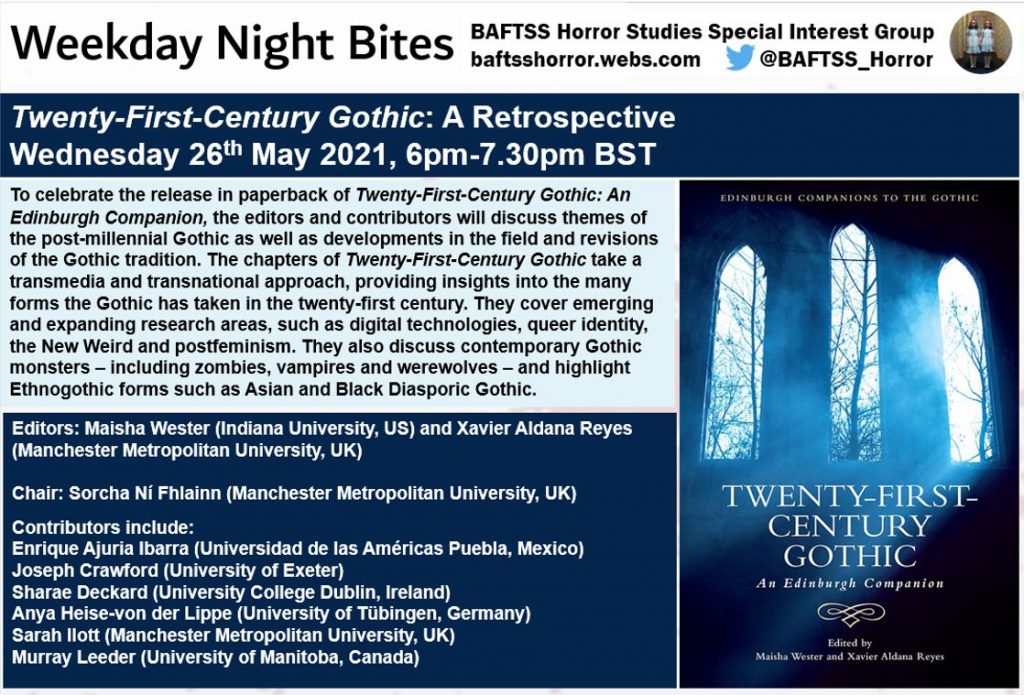
If you missed the event you can view the full symposium programme here and there is an excellent review of the days proceedings from scholar and attendee Dr Joan Passey. @UmGothic’s next free online symposium is on ‘The Future of the Gothic’ on Friday, 26 February 2021
OGOM are pleased to announce the publication on line of our Educational Packs. If you teach Literature (or related subjects)to sixth-formers or A Level students (or their equivalent internationally), please take a look by following the links below. We really welcome your feedback and suggestions for improvement!
The packs are developed as a taster session to show sixth-formers what it is like to study literature at university. Our aim is to demonstrate that literature is a living subject that feeds into current concerns such as extinction and rewilding, otherness and prejudice, and so on. Students also gain an insight into how different literary forms and genres work, focusing on the Gothic.
Our ‘Redeeeming the Wolf’ educational pack was developed through intensive live use in several sixth-form schools and colleges before being made available on line. The original pack has been used by 16 sixth forms to date, in workshops facilitated by Dr Sam George and Dr Kaja Franck. Dr Sam George is Associate Professor of Research at the University of Hertfordshire. She specialises in the Gothic and in Literature and Folklore, including the representation of wolf children. Dr Kaja Franck is a Visiting Lecturer and Gothic scholar who holds a doctorate in the representation of the literary werewolf.
The session is comprised of a mini-workshop, two mini-lectures, and a seminar, with interactive tasks, to demonstrate how the teaching of literature is delivered in universities. Three short stories are provided to be read by students. These stories have been researched and chosen carefully to show three different representations of the wolf and the stereotypes that have emerged so that these can be challenged in the twenty-first century.
Dr George is joined for the second pack, ‘Understanding Otherness’, by Dr Bill Hughes, whose research is centred on the interplay of genres in Paranormal Romance. The session is comprised of a mini-workshop, a lecture, and a seminar, with interactive tasks. Various fictional and poetic texts (or extracts from texts) are provided to be read by students. These have been researched and chosen carefully to show the Gothic mode in literature can foster creative discussion about difference and intolerance in society. There is an emphasis on literature and folklore too and the pack explores how the Selkie (seal maiden) can be used to facilitate discussions around otherness and animal/human boundaries.
Both packs are now available online here for the first time so that tutors can hold their own sessions. The ‘Redeeming the Wolf’ session lasts about 1 hour 30 minutes. The running time for ‘Understanding Otherness’ is 3 hours and 30 minutes; it could best be carried out over three days.
The packs have been put on line as password-protected subsections of the OGOM website so that other institutions both nationwide and internationally can be encouraged to make use of them. To access the packs, you must first log in or join us as a member if you are not yet registered.
Marina Warner
Marina Warner is a writer of fiction, criticism and history; her works include novels and short stories as well as studies of art, myths, symbols and fairytales.
Centre for Myth Studies, University of Essex
The Centre It promotes the study of myth, from ancient to modern, and raises awareness of the importance of myth within the contemporary world.
Mythopoeic Society
The Mythopoeic Society is a non-profit organization devoted to the study of mythopoeic literature, particularly the works of members of the informal Oxford literary circle known as the “Inklings.”
Sheffield Gothic
Sheffield Gothic is a collective group of Postgraduate Students in the School of English at The University of Sheffield with a shared interest in all things Gothic.
American Gothic Studies
American Gothic Studies is the official journal of the Society for the Study of the American Gothic (SSAG), which promotes and advances the study of the American Gothic
Echinox Journal
Caietele Echinox is a biannual academic journal in world and comparative literature, dedicated to the study of the social, historical, cultural, religious, literary and arts imaginaries
Folklore
Journal of The Folklore Society. A fully peer-reviewed international journal of folklore and folkloristics, in printed and digital format
Gothic Nature
Gothic Nature: New Directions in Ecohorror and the Ecogothic
Gothic Studies
The official journal of the International Gothic Association considers the field of Gothic studies from the eighteenth century to the present day.
International Journal of Young Adult Literature
an academic peer-reviewed journal dedicated to publishing original and serious scholarship on young adult literature from all parts of the world.
Irish Journal of Gothic and Horror Studies
The Irish Journal of Gothic and Horror Studies (ISSN 2009-0374) is a peer-reviewed, interdisciplinary, electronic publication dedicated to the study of Gothic and horror literature, film, new media and television.
Journal of Popular Romance Studies
The Journal of Popular Romance Studies is a double-blind peer reviewed interdisciplinary journal exploring popular romance fiction and the logics, institutions, and social practices of romantic love in global popular culture.
Journal of the Fantastic in the Arts
An interdisciplinary journal devoted to the study of the fantastic in Literature, Art, Drama, Film, and Popular Media
Monsters and the Monstrous
Monsters and the Monstrous is a biannual peer reviewed global journal that serves to explore the broad concept of “The Monster” and “The Monstrous” from a multifaceted inter-disciplinary perspective.
Studies in the Fantastic
Studies in the Fantastic is a journal devoted to the Speculative, Fantastic, and Weird in literature and other arts
Supernatural Studies
Supernatural Studies is a peer-reviewed journal that promotes rigorous yet accessible scholarship in the growing field of representations of the supernatural, the speculative, the uncanny, and the weird.
The Lion and the Unicorn
The Lion and the Unicorn, an international theme- and genre-centered journal, is committed to a serious, ongoing discussion of literature for children.
Victorian Popular Fictions Journal
Victorian Popular Fictions is the journal of the Victorian Popular Fiction Association. The VPFA is a forum for the dissemination and discussion of new research into nineteenth- and early-twentieth-century popular narrativeo
Related Links
Aarne-Thompson-Uther Index
The Aarne-Thompson-Uther Index is a classification numeric system created to group similar folktales from different cultures
ACADEmy
LSAD centre for research into Art, Curatorial Studies, Applied Design and Art and Design Education
African Religions
With the Yoruba Religion Reader and similar resources
Angela Carter Society
Promoting the study and appreciation of the life and work of Angela Carter
Art Passions
Art Passions: Fairy Tales are the Myths We Live By
Asian Gothic
Asian Gothic appears as an attempt to make sense of the vast and diverse body of Asian literature, film, television, games, comics and other forms of cultural production by reading these texts from a Gothic perspective
British Association for Romantic Studies (BARS)
The UK’s leading national organisation for promoting the study of Romanticism and the history and culture of the period from which it emerged.
British Association for Victorian Studies (BAVS)
The British Association for Victorian Studies (BAVS) is a multidisciplinary organisation dedicated to the advancement and dissemination of knowledge about the Victorian period.
Byron Society
The Byron Society celebrates the life and works of Lord George Gordon Byron (1788-1824), a poet, traveller and revolutionary
Cambridge Research Network for Fairy-Tale Studies
The Cambridge Research Network for Fairy-Tale Studies is an open space at the University of Cambridge aimed at connecting researchers with an interest in fairy tales across different disciplines and scholarly perspectives.
Carterhaugh School
We give lectures and teach courses on fairy tales, folklore, witches, writing, and more. Basically, your ultimate fantasy college courses
Centre for Myth Studies, University of Essex
The Centre It promotes the study of myth, from ancient to modern, and raises awareness of the importance of myth within the contemporary world.
Deborah Hyde
Deborah Hyde wants to know why people believe in weird stuff. She attributes her fascination with the supernatural to having spent her childhood with mad aunties. She approaches the subject using the perspectives of psychology and history.
Fairyist: The Fairy Investigation Society
A website that will gather together sources, links, bibliographical references and discussions on fairies and related supernatural creatures
Folklore Society
The Folklore Society (FLS) is a learned society, based in London, devoted to the study of all aspects of folklore and tradition, including: ballads, folktales, fairy tales, myths, legends, traditional song and dance, folk plays, games, seasonal events, ca
Ghoul Guides
Home to the Ghoul Guides – a digital multimedia project devoted to exploring, understanding, and enjoying the wonders and weirdness of the Gothic
Gothic Feminism
Gothic Feminism is a research project based at the University of Kent which seeks to re-engage with theories of the Gothic and reflect specifically upon the depiction of the Gothic heroine in film
Gothic Herts Reading Group
This site is our one-stop platform for discussing our latest Gothic texts, from journal articles and press pieces, to full length books both old and new
Gothic Women Project
2023: The Year of Gothic Women. An interdisciplinary project devoted to spotlighting undervalued and understudied women writers
Haunted Shores
Haunted Shores Research Network, dedicated to investigating coasts and littoral space in Gothic, horror, and fantastic multimedia
Hellebore magazine
HELLEBORE is a UK-based small press devoted to British folk horror and the occult. Maria J. Pérez Cuervo publishes the magazine twice a year, on Beltane and Samhain
MEARCSTAPA
monsters: the experimental association for the research of cryptozoology through scholarly theory and practical application
Mermaids of the British Isles
a history of mermaids in the arts and cultural imagination of our early islands, which will map the place of these beguiling, and often deadly, figures in the national maritime imaginary, and explore our ancestors’ persistent reimagining of the mermaid
Open Folklore
Open Folklore is devoted to increasing the number of useful resources, published and unpublished, available in open access form for folklore studies and the communities with which folklorists partner
PCA Vampire Studies
A site dedicated to the Vampire Studies Area of the Pop Culture Association
Pook Press
Publisher of Vintage Illustrated Fairy Tales, Folk Tales and Children’s Classics
Romance Scholarship DB
This Romance Scholarship Database is therefore intended as a tool to assist popular romance scholars in their research into modern popular romance novels
RomanceWiki
A wiki resource for romance fiction authors, texts, and publishers
Science Fiction and Fantasy Research Database
The Science Fiction and Fantasy Research Database is a freely available online resource designed to help students and researchers locate secondary sources for the study of the science fiction and fantasy and associated genres.
Sophie Lancaster Foundation
The charity, known as The Sophie Lancaster Foundation, will focus on creating respect for and understanding of subcultures in our communities.
Supernatural Cities
Supernatural Cities is an interdisciplinary network of humanities and social science scholars of urban environments and the supernatural.
Supernatural Studies Association
The Supernatural Studies Association is an organization dedicated to the academic study of representations of the supernatural, the speculative, the uncanny, and the weird across periods and disciplines.
The Association for the Study of Buffy+
The mission of the Association is to promote the scholarship of Buffy+ Studies, focusing on inclusivity, intersectionality, and excellence. We define Buffy+ Studies as the scholarly exploration of Buffy the Vampire Slayer and its related texts.
The Society for the Study of the American Gothic (SSAG)
The Society for the Study of the American Gothic (SSAG) was established in 2023 to promote and advance the study of the American Gothic through research, teaching, and publication
The Thinker's Garden
we also love Plotinus and the Renaissance Platonists, as well as the Transcendentalists and Romantics. We are also drawn to the peculiarities of the Theosophists and hermeticists of the nineteenth century
Vamped
Vamped is a general interest non-fiction vampire site. We publish interviews, investigations, lists, opinions, reviews and articles on various topics.
Vampire Studies Association
TThe Vampire Studies Association (VSA) was founded by Anthony Hogg . . .“to establish vampire studies as a multidisciplinary field by promoting, disseminating and publishing contributions to vampire scholarship
Victorian Popular Fiction Association
The Association is committed to the revival of interest in understudied popular writers, literary genres and other cultural forms.
Wells at the World's End
I am reading through the complete works of H G Wells, in chronological order. This blog is for my jottings, as I go along.
YA Literature, Media, and Culture
YALMC is a resource for those of us researching, writing, writing about, interested in Young Adult Literature, Media, and Culture.
YA Studies Association (YASA)
The YA Studies Association (YASA) is an international organisation existing to increase the knowledge of, and research on, YA literature, media, and related fields