CFP: Monstrum – the peer-reviewed scholarly journal of monsters and all things monstrous

I’m very honoured to have been appointed to the Editorial Board of Monstrum, a new and exciting journal for the study of monsters and the monstrous from the Spectral Visions Press.

Contributions are being sought for the inaugural issue, which I will be co-editing with Dr Colin Younger of the University of Sunderland,

Posted in Call for Articles | Tagged , | Leave a comment

Review of Mark Bruce’s ‘Dracula’

At the end of November, I treated myself and a friend to a performance of Mark Bruce’s Dracula. It is a sign of the how good the reviews had been that I was willing to trek from South-West London to North-East London to see it. And, frankly, I have nothing to add but more praise. The following review is testament to the quality of the adaptation. My knowledge of dance is limited to watching Strictly. My knowledge of Dracula both in all its guises appreciably better, and it was with my Gothic hat firmly on that I reviewed this piece.

The set and the lighting were Gothic splendour at its best. The backdrop was beautiful wrought-iron gates through which swirled tendrils of dry ice caught in rays of light. What occurred on this stage was a subtle and intelligent adaptation of the novel. The storyline picked up on the key moments of Stoker’s original but also paid homage to other versions of this story. This was perhaps most noticeable in the omission of Van Helsing and Quincey Morris, replaced instead with a young priest, and the representation of Lucy which owed a great deal to Francis Ford Coppola’s film. There was a knowing edge to the coquettishness of Lucy which was both a source of humour but also highlighted her frustrations with the patriarchy. Mina and Lucy were dancing within the strictures of their society. Their brushes with Dracula were full of fear and release.

This adaptation assumed a certain knowledge of the symbolism, critiques, and metaphors within the original novel. Harker’s journey into Transylvania was tinged with Orientalism that questioned the relationship between the Gothic and the foreign ‘Other’. The presentation of women within the piece was influenced by feminist criticism. The staking of Lucy was suitably unpleasant and cleverly interplayed with the Harker’s wedding night. This coupling between Mina and Jonathan was awkward and uncomfortable, two people never quite complementing one another’s rhythm. In contrast, Dracula’s dance with both Lucy and Mina was, if not more natural, full of desire with a potential for pleasure. Dracula’s final attack on Lucy was beautifully imagined: a succession of images such as Fuseli’s ‘The Nightmare’ and Henry Wallis’ ‘The Death of Chatterton’ echoed through this scene.

The star of the show was, of course, Dracula. By the end, I was thoroughly convinced that Dracula was always meant to be performed by a dancer. Jonathan Goddard manage to convey grace and grotesqueness in his movements. The infamous scene in which Dracula crawls out of the window of his castle and down the wall was unnerving as Goddard’s body took on a reptilian fluidity. Animality occurred throughout the performance – the three vampiresses were also the horses that carried Dracula’s carriage through the night and wolves howled silently in the background. The sense of humans becoming prey to the animalistic vampires was replayed. Dracula donned a top hat and cane in order to perform a vaudevillian song about being a hunter of the wild beast. This moment came just before he travelled to England in order to put forth the pretence that he was an English gentleman. But by the end of the ballet, Harker et al were following a trail of blood through the snow having wounded Dracula. The relationship between hunter and prey was inverted, subverted, and perverted.

Having thought that I was becoming cynical towards adaptations of Dracula, it was wonderful to be shocked, amused, and challenged once more.

Posted in Reviews | Tagged , , , , , | Leave a comment

Review of Witches and Wicked Bodies exhibition at the British Museum

Last Monday, I decided to treat myself to the Witches and Wicked Bodies exhibition at the British Museum. It was my kind of treat because it covers a subject matter of much interest to me and it was also free.

The exhibition is based in Room 90 which is dedicated to prints. You follow a circular route which starts in antiquity and moves through to the late Victorian period. Given the medium of the exhibition, the focus is on depiction and representation rather than historical context. There is a timeline that shows some events, including European Witchcraft Trials during the 1600s and early 1700s, and a little historical context of what is shown in the prints but this is kept to a minimum. Most of the explanation of the different images tends toward stylistic analysis.

I would assume that most people who attend an exhibition like this have some knowledge of the history of the Witchcraft Trials, and the very real implication that the hatred of witches had on those who were executed, but even without this it was still possible to appreciate the differing visual representation of supernatural entities. Personally, I enjoyed the lack of sensationalism and the understated nature of the exhibition. This meant that it was respectful to those people who lost their lives due to accusations of witchcraft but wasn’t pushing any agenda.

The images could speak for themselves and, through their invocation of different versions of witches, they did. It was interesting to see the heritage of contemporary witches in popular culture. The focus in the prints tended to be on the monstrosity or grotesqueness of the female witch – something which was presented through haggard age, or quasi-masculine features, or animal appendages. Where the witch was presented as young and beautiful, this was shown to be a lie or a means of deceiving her intended victim. The exhibition highlighted the inherent fear of the female form when it is deemed to transgress the boundaries of normative gender and sexuality. In prints from the 1500s, images of aged crones doing unnatural things to male corpses were returned to time and again. These motifs suggested necrophilia as an unmanageable sexual appetite, and pointed the way to the Gothic witchcraft of science that awoke Shelley’s Frankenstein (1818).

The blurb next to the prints often drew your attention to the relationship between humans and animals, and the animality of the witches’ bodies. It was strange therefore that there was no mention of werewolves particularly since the Werewolf Trials ran almost concurrently to the European Witchcraft Trials. After the execution of Peter Stumpp in 1589, there were some incredibly gruesome prints circulated depicting the crimes and execution of this suspected werewolf. A brief excursion into this area of history would have balanced the exhibition by showing the wide spread fear of devilish practises beyond those committed by women. (Though I admit some bias on this point).

If you are of a Gothic sensibility, I would highly recommend spending a couple of hours at this exhibition before it closes in early January 2015. As a Gothicist, it was treat to see some of Fuselli’s drawings – he was a big fan of the witches from Macbeth – given his influence on Gothic literature. The British Museum is also only a 20 minute walk from the British Library so you can make a day of it by visiting their exhibition Terror and Wonder: The Gothic Imagination and drawing connections between the two.

Posted in Reviews | Tagged , , , , , , | Leave a comment

Midas Fall, ‘Carol of the Infected’

A serendipitous Facebook recommendation introduced me to this cheery little seasonal song–a Christmas carol for zombies. Ethereal Goth music, I suppose, a touch psychedelic.
I’ve heard a few snatches more from the Midas Fail website–hope you enjoy it!

Posted in Fun stuff | Tagged , , | Leave a comment

So Snape isn’t a Vampire …

In a pre-Christmas treat, J. K. Rowling has written more about Severus Snape and vampires. Apparently, you would be wrong to think that Snape is a vampire because of the clear evidence to the contrary – of course arguably, Rowling would be wrong to suggest that all vampires burn in sunlight or drink blood to the point of killing their victim but that is a debate for another day.

However, her reasoning is entirely in line with Potterverse vampires described in Fantastic Beasts and Where to Find Them by Newt Scamander. The main point of contention for me in this piece is why she decided to excise the vampiric ‘Trocar’ from her novels. We get a wonderful werewolf in Professor Lupin – it would have been nice to see a vampire character other than the decidedly pallid Sanguini who briefly shows up at Professor Slughorn’s party in Harry Potter and the Half-Blood Prince.

Posted in Reviews | Tagged , , , | Leave a comment

Company of Wolves Conference – Twitter Updates

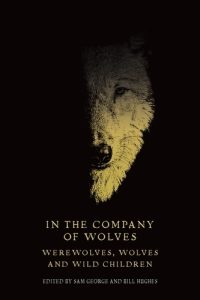
As the abstracts start coming in thick and fast, it seems to time to start creating a diminutive for the ‘Company of Wolves’ conference. This seems particularly important on Twitter where it takes up 17 characters! With this is mind, we’ve decided to refer colloquially to ‘Company of Wolves’ as CoW (or #CoW) like the domestic animals that wolves prey on. This will come into its own during the conference, no doubt, and I can’t wait to follow all the discussions.

Posted in OGOM News, OGOM: The Company of Wolves | Tagged , , | Leave a comment

Sharing Our Lives with Wolves on Radio 4

Since starting my PhD on werewolves, I have discovered that whilst I don’t see lycanthropes everywhere (I’ve not started hallucinating through exhaustion yet), I do see wolves where ever I go. On a brief sojourn to my home county, Lincolnshire, I was informed by my friend that there was a pack of Hudson Bay wolves living six miles outside Lincoln at the Woodside Wildlife and Falconry Park. Which I wasn’t really expecting. As further evidence, this morning I received a text from both my mother and aunt to tell me that there was a programme about wolves on Radio 4. Part of the Shared Planet series presented by Monty Don, the programme’s blurb was as follows:

“Few creatures have infiltrated our psyche as much as wolves. They haunt our imagination and appear in our stories, myths and legends. They are at once the embodiment of the devil and of the wild, enough dog that we relate to them, but also rugged, unpredictable and wild. They roam vast, untamed landscapes and then appear in our midst, hunting sheep and spreading fear. Our relationship has been so conflicting that they were almost eradicated from the earth by the end of the 19th Century. But since being protected they are slowly coming back in both Europe and America. Are we now able to live with them? Do we want to? Monty Don explores the enigma that is the wolf and looks at how our attitudes have shaped their destiny”.

Given the breadth of what was covered on the programme it managed to be very subtle. The discussions regarding our ‘idea’ of the wolf and the reality of the wolf were nuanced. Of particular interest to me were the time frames that were discussed. The 1970s was quoted as a period of increasing sympathy towards the wolf – concurrent with the emergence of, broadly speaking, environmental rights including the movement towards deep ecology.

There was a very sensible comment made by Dr Thomas Heberlein that suggested that although people may have more positive attitudes towards wolves this is often in a theoretical sense. In the same way that the wolf has become a poster child for the rewilding movement, there is a danger about moving from a position from uncritical hatred for the wolf to uncritical approval for the wolf. In both cases, the emotional response is based on ideological version of the wolf that is being used to extend human concerns.

Anyway, I would recommend giving the programme a listen yourself via BBC iPlayer. And if you want to read a little more about wolves I recommend Barry Lopez’s Of Wolves and Men and Garry Marvin’s Wolf, part of the Reaktion series on animals. Both are accessible, well-researched, and thoroughly interesting. These are both non-fiction but for those who fancy a fictive representation of wolves, I would urge you to read Melvin Burgess’s Cry of the Wolf. Based on the idea that a group of wolves survived in the South of England, it perfectly encapsulates the spirit of ‘wild writing’. I’d even go as far as saying it allows the reader to move between human and wolf in an act of literary lycanthropy.
Posted in Reviews | Tagged , , , , , | Leave a comment

Greg Buzwell, ‘Bram Stoker’s stage adaptation of Dracula’

Another useful article from the BL’s excellent series. This might be useful for OGOM MA researchers as well as those concerned with the transmutation of the vampire through various media:

To coincide with the British Library’s current major exhibition, Terror and Wonder: The Gothic Imagination, curator Greg Buzwell explores the story behind Bram Stoker’s adaptation of Dracula for the theatre
Posted in Books and Articles, Critical thoughts, Resources | Tagged , , , , , | Leave a comment

Marina Warner, ‘How fairytales grew up’

More from the always-insightful Marina Warner on the fairy tale and its transformations and adaptations. Here, the essay revolves around Disney’s Frozen to encompass the many variations, dilutions, and intensifications of the original folk motifs through the ages.

Posted in Critical thoughts | Tagged , , , , , , , , , , , , , , | Leave a comment

M.O. Grenby, ‘Fantasy and fairytale in children’s literature ‘

Professor M O Grenby explores the relationship between fantasy and morality in 18th- and 19th-century children’s literature.’

This is another excellent article by Prof. Grenby of Newcastle University, from the BL website (whose collection of articles is a very useful resource), exploring the relationships between fairy tale and children’s literature. It’s fascinating in any case, but would be very useful for anyone researching contemporary adaptations of fairy tales in YA fiction.

Posted in Books and Articles, Critical thoughts, Resources | Tagged , , , , , , , , , , , , , , , , , | Leave a comment