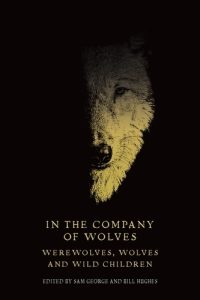
There’s a She-Wolf in the Closet

I am not ashamed to admit that I am enamoured of the song ‘She Wolf’ by Shakira. Not only does it find a convincing rhyme for ‘lycanthropy’ but she looks fierce in the video. (I am also not ashamed to admit that I use the word ‘fierce’ non-ironically in my day-to-day life).

In fact, I am generally all for lycanthropic ladies. I have previously mentioned my love of Florence + the Machine’s ‘Howl’ and my ensuing disappointment that she never made a video for this single. Whilst there are some interesting fan made videos- it appears to have been *the* only music video to make for your Media Studies A-level for about two years – it displeases me that the artistic vision of Florence Welch was never applied to this darkly sadistic track.

So it was with great joy that I watched the video for Marika Hackman’s ‘Animal Fear’. The song is gorgeous with lush Gothic undertones behind the lilting guitar melody. It is quite overtly about werewolves as the video makes abundantly clear. I love the 1970s technicolour aesthetic to the blood splatter and Hackman’s Teen-Wolfesque transformation. In an interview she gave to DIY Magazine about this album, she explicitly states that the song was inspired by werewolves. The album artwork, which she describes as being inspired by the television series True Detective, has a film noir/Southern Gothic sensibility. (I’m sure Elisabeth Bronfen would have a lot to say about the abundance of female ‘corpses’ in these shots).

These songs show the power of the female werewolf in the artistic imagination. (I will now pause to state: if you haven’t read Clemence Housman’s ‘The Werewolf’ go and do that immediately). With a new publication on entitled She-Wolf: A cultural history of female werewolves coming out this April, there seems no better time to discover why the female of the species is more deadly than the male.

Posted in Fun stuff | Tagged , , , | Leave a comment

New Vampire Study Centre: OGOM’S proudest moment

sign images Maybe we had found the perfect moment in history, the perfect balance between the monstrous and the human, the time when the ‘vampire romance’ born in my imagination […] should find its greatest enhancement (Lestat).

I am beyond excited to announce that the impact of the Open Graves, Open Minds project has not gone unnoticed at the university and I have been invited to complete the necessary paperwork to have our work recognised universally and to create our very own vampire research and study centre!! The new research centre will seek to have further PhD studentships attached to it, special archives and regular research seminars and events. A new offshoot of the project will be the multidisciplinary research strand ”Books of Blood’: a cross-disciplinary investigation into blood as representation, symbol, and text in modern culture’. This new strand will be supported by a bid to the Wellcome Institute and will lead to an exhibition, series of talks, catalogue and further publications. Generation Dead: YA Fiction and the Gothic is another strand that is being further developed. Preparations for the next international conference Company of Wolves are well underway and I think it is fair to say that OGOM is in very good shape in 2015!! It has taken five hard but wonderful years to achieve this breakthrough and so I just wanted to say a huge thank you to everyone who has contributed since OGOM’s rise in 2010. Wow..I’ll keep everyone informed about this exciting development…..more details to follow soon. academy images i

Posted in Events, OGOM News, OGOM Research | Tagged | Leave a comment

Wolf Packs and Feral Children

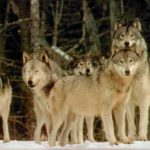
A couple of tweets caught my eye this week. I have the uncanny ability to pick out the word ‘wolf’ from a page of text. Not sure if this is something that should go on my CV but it is a by-product of the PhD.

Anyway, the two tweets were about films which thematically fitted within the Company of Wolves conference. The first is called The Wolfpack (2015) which was shown at this year’s Sundance film festival. This documentary follows a group of six brothers who have lived in isolation despite residing in New York. Their father, an old-school hippy, has brought them up away from the influence of the outside world and they have been encouraged to never leave the house. These young men have learnt about the outside world through iconic films and television. The action in this movie is based around the brothers’ decision to move away from their father’s household.

In a review in The GuardianJordan Hoffman suggests that the film consciously plays on the theme of feral children by capturing the brothers dancing to Baltimora’s Tarzan Boy and playing with the trope of the ‘noble savage’. Now, I haven’t seen this film and I probably never will as it doesn’t feature a) werewolves, vampires, zombies, et. al; or, b) a high school during the 1990s. But the name caught my attention because it links back to calling children who had been brought up with minimal human contact, ‘wolf children’.

This is in some part because many of the early cases of ‘feral children’ appeared to involve human infants being brought up by wolves – the classic example of this being the case of Amala and Kamala who were ‘discovered’ in India. Over the years, the variation shown in these types of cases has caused the terminology to evolve.

This documentary appears to celebrate the possibilities of such isolation – as long as it leads to you dressing like the lead characters in a Tarantino movie. The title also plays on the idea of the ‘wolf pack’ as a way of describing a group of men with penchant for action (see: The Hangover).

The next lupine film that caught my eye was a request for animators/ artists to collaborate on a short animation called WolfBlood. The production company behind this are called HitRecord and they specialise in open collaboration in order to create their works. What really struck me about the request for artists was the repeated use of the word ‘dark’ to describe the atmosphere of WolfBlood rather than the term Gothic – despite the overt fairytale feel of the piece.

The almost pointed absence of the word ‘Gothic’ was intriguing in light of some of the reading that I have been doing on American Gothic. The relationship between American writers and the Gothic is strained. Whilst there is no denying that a huge number of influential Gothic authors have emerged from America, especially in recent years, the appropriation of the term has taken some time. Certainly early American authors seemed to be unwilling to take up the mantle Gothic.

The reasons for this intertwine practical and stylistic issues with notions of taste and decency in regards to genre. On the one hand, Gothic draws on the idea of the past returning as haunted and haunting history. For this you need a landscape replete with castles, abbeys, and blood-splattered history – things which were seen to be lacking in the newly form USA. (Clearly turning a blind-eye to the War of Independence, the Civil War, and slavery). Part of creating the national identity of the USA, as with any country, is drawing on sources of national pride especially through the arts. The Gothic was redolent of the corpulent, gentrified, and overly-refined Western Europe. If American authors were to create a literary heritage of which to be proud, it would be untainted by the Gothic.

This attitude was shot through with the fears, insecurities, and ghosts that haunt any nation – established or not. Thus the Gothic found its way into many example of American literature regardless of attempts to prevent its entrance. The lack of crumbling castles was made up for by the extensive wilderness; a wilderness that was described as ‘howling’, voiced by the sound of wolves. More recently American authors have been at the forefront of Gothic in YA literature and culture. (Pause to think about Buffy the Vampire Slayer). It is this form of the Gothic that WolfBlood appears to draw on without consciously using the term.

The short clip, or animatic, that was posted uses tropes from ‘Little Red Riding Hood’, especially with the red hoodies, and I was again struck at the relationship between wolves and feral (masculine) children. Lycanthropy was alluded to in the idea of taking the wolf’s skin and wearing in order to ‘become wolf’. The bullied child loses control releasing his active masculinity so that he can take on and, by extension, become the bully. The references to lambs and other herbivores versus the Big, Bad Wolf continues to pit domesticated, human-owned animals against wild, untamed animals embodied in the wolf itself.

The soundtrack, lyrics/ poem, and imagery of the piece tie in with a more urban type of Gothic especially in the use of hip-hop. This draws on recent music videos by Kanye West, A$ap Rocky, Jay-Z and Rihanna which feature a Gothic urban landscape that is as much a wilderness in its spirit as the wolf-infested forests on the outskirts of the city.

It is interesting note how the trope of the wolf can be adopted and adapted in a variety of forms to give an untamed, feral, or wild feeling to an artistic endeavour. These two examples show both the idea of the noble wolf untainted by human desires and the malevolent wolf who has crept from the dark corners of childhood fairytales into newly Gothic spaces.

Posted in Critical thoughts | Tagged , , , , , , , | Leave a comment

Generation Dead: Teaching the new High School Gothic

northanger abbey images

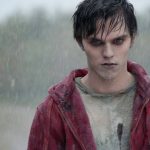
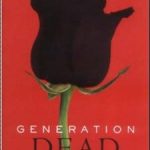
‘All over the country’ (in the world of young adult fiction) ‘teenagers who die aren’t staying dead’ (blurb for Generation Dead). This module will interrogate the new high school Gothic, exploring the representation of the undead or living dead in dark or paranormal romance. Texts range from Daniel Waters’s Generation Dead and Isaac Marion’s Warm Bodies to Twilight and the Gothic fairy tale.

The above is a synopsis of the course spec for my new module Generation Dead: YA Fiction and the Gothic, which finally got under way this week. There are two 2 hour workshops each week and around 50 students. My introductory session was structured around the following texts:

Workshop 1 YA Fiction and the Gothic: Catherine Spooner, Contemporary Gothic, ‘Teen Demons’, pp. 87-123; Alison Waller, Constructing Adolescence in Fantastic Realism, pp. 1-22; Simon Armitage, Black Roses: The Killing of Sophie Lancaster.

I choose Spooner and Waller to introduce students to Gothic subculture and to ways of theorising adolescence, prior to looking at our first primary texts. Also, because I wanted to introduce the crucial concepts of ‘outsiderness’ and ‘otherness’ and to begin to interrogate the politics of difference more broadly.

In the new teen Gothic […] the outsider takes on a new and different role, […] a recurrent feature is sympathy for the monster: those conventionally represented as the ‘other’ are placed at the centre of the narrative and made a point of identification for the reader or viewer [in the new teen Gothic] the freaks and geeks are no longer pushed to the edges of the narrative but become the protagonists (Spooner, p. 103).

‘Adolescence is always ‘other’ to the more mature phase of adulthood, always perceived as liminal, in transition, and in constant growth towards the ultimate goal of maturity’ (Alison Waller, p.1).

As we progress through the texts, we’ll engage with the following approaches:

Contemporary Gothic/Urban Gothic/ High School Gothic
Subculture/Theorising Adolescence/Teen Culture
Difference/Otherness/Outsiderness
Intertextuality/appropriation (relationship to Gothic)
Genre Theory/Mixed Modes/Paranormal Romance
Theories of Folklore/The Gothic Fairy Tale
Animal/Human Boundaries/Eco Gothic
Faith/Free Will/Redemption/Retribution
Undeadness/Damnation/Existentialism

As it was the first session, I needed to talk about assessment. I had decided to ask students to write a critical introduction to one of the novels in the first part of the course, to give these writers some of the scholarly treatment they deserve but are never subject to. The idea, then, is that students will prepare a scholarly, critical introduction to a given text highlighting the issues addressed, bringing in theoretical approaches, posing research questions, and including a bibliography, and suggested further reading. @50%.

The students seemed to like this challenge but wanted reassurance as to the word count and they also wanted to see examples of the sort of contribution I had in mind. This will be tricky as this is the first time the course has run, so I have no previous coursework!! I will find some good critical intros to discuss with them, however. I’d be interested to hear any responses to this type of assessment.

We finished the session with a performance/reading of Simon Armitage’s The Killing of Sophie Lancaster. We wanted to engage with ‘difference’ as fully as possible and to give Sophie her voice back. Simon’s comments made this the perfect text for such beginnings:

‘It seemed to me that Sophie had been killed because she was different, and for no other reason, and as well as feeling angry and upset about it, I probably felt some underlying kinship with her, having grown up in a small northern community not unlike Bacup where to be different was to risk ridicule or aggression. Also, in images and photographs that begin to circulate, Sophie seemed so innocent, beautiful and vulnerable, yet she met with terrifying and almost unimaginable violence’.

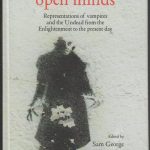
Black Roses is unsettling and harrowing as a text but it allowed for further discussions around difference and issues arising from adults voicing teenagers. To end the session, I guided students towards ideas around ‘Broken Britain’ and mainstream culture’s attempts to minimise otherness, in Sophie’s case, whilst simultaneously demonising the ‘feral’ kids who had attacked her. I used ‘Gothic Charm School’ in the Open Graves, Open Minds book as it brilliantly captures the complexities of this position:

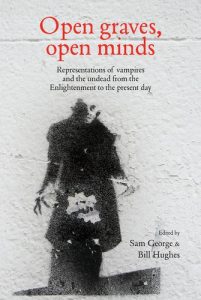
In Dick Hebdidge’s account of ideological incorporation of youth subcultures by main stream culture, he emphasizes how, over time, the media inevitably attempt to minimize their Otherness by returning them to the family, or by emphasising the Otherness of other kinds of unruly youth. It is not that surprising therefore that the press responses to Goth subsequent to Sophie Lancaster’s death follow this pattern with unnerving accuracy, particularly as it gave the right wing media a platform to pontificate on what would […] eventually become known as ‘Broken Britain’. What is more unexpected is the reaction to the murder from inside the subculture itself. In the weeks and months following Sophie’s death, Goths both within the UK and further afield, mounted a series of campaigns to promote awareness and tolerance of alternative lifestyle choices. Indirectly, these campaigns also sought to minimise the otherness of Goth , by demanding its recognition and protection by mainstream society (Open Graves, Open Minds, p.160).

Next Week: Zombies and the politics of difference
Daniel Waters, Generation Dead
Clive Bloom, ‘Day of the Dead’, THE, 24th June, 2010, pp. 38-41
Bill Hughes, ‘Legally Recognised Undead’: Essence, Difference, and Assimilation in Daniel Waters’s Generation Dead (from Open Graves, Open Minds, pp 245-63)

Follow our progress here and keep reading…….
Posted in Generation Dead: YA Fiction and the Gothic news | Tagged , , , , , , | Leave a comment

Michael Dirda reviews five fairy-tale books

A review of new books on the fairy tale by Marina Warner and Jack Zipes (including the first translation into English of the first edition of Grimm’s Tales), but also of two books from Princeton University Press’s Oddly Modern Fairy Tales series. I wasn’t aware of this series, but it looks well worth exploring. Dirda looks at Walter de la Mare’s Told Again and at Naomi Mitchison’s The Fourth Pig. The title tale of the latter collection looks particularly interesting in the light of OGOM’s forthcoming Company of Wolves conference; Dirda calls this a ‘Kafkaesque fable’:
Sometimes the Wolf is quiet. He is not molesting us. It may be that he is away ravaging in far places which we cannot picture, and do not care about, or it may be that he lies up in his den, sated for the time, with half-slumberous, blood-weighted eyes, the torn flesh hot in his belly provoking miasmic evil which will turn, as he grows cold and hungry again, into some new cunning which may, after all, not be capable of frustration by the meek.

Posted in Books and Articles, Reading Lists, Reviews | Tagged , , , , , | Leave a comment

‘The Terror of London’: Spring-heeled Jack and the Victorian Metropolitan Press, 29 January 2015, The Vaults Bar, Dirty Dicks, London

Karl Bell gives a talk on Spring-heeled Jack, the monster of Victorian urban legend who was further disseminated by melodramas and penny dreadful, and perhaps fuelled the development of vampire fiction (through Varney and other figures).

For more information, the Wikipedia article on Spring-heeled Jack seems reliable and authoritative.

Posted in Events | Tagged , , , , | Leave a comment

Demon Lovers: Embracing the Monster in Paranormal Romance (slideshow)

Posted in Critical thoughts | Tagged , , , , , , , | Leave a comment

Bill Hughes, ‘Demon Lovers: Embracing the Monster in Paranormal Romance’

This is rather late, I know, but I just wanted to give a brief account of the Halloween 2014 Spectral Visions event at the University of Sunderland, where I was honoured to be invited to give a keynote talk on paranormal romance. This talk—‘‘Demon Lovers: Embracing the Monster in Paranormal Romance’—is available to download here, and the accompanying slides will be posted soon (this is the long version of the talk and it hasn’t been scrupulously edited).

I’d like to thank Alison Younger, Colin Younger, Steve Watts, Stephanie Gallon, David Newton, and everyone else involved for organising such an inspiring event, and everyone present for being so welcoming and for their general enthusiasm.

After a welcome by Dr Steve Watts (Head of Culture), I began the evening by delivering my talk.

Next, Dr Alison Younger presented a fascinating—and, at times, gruesomely amusing—account of the body snatchers Burke and Hare and how they were created as monsters in popular culture, predominantly because of their Irishness.

We then had James Hogg and Robert Murray impressively demonstrating the Victorian martial art of Bartitsu.

This was followed by Michelle McCabe, who gave a fascinating talk on the Victorian murderer Mary Ann Cotton (‘she’s dead and she’s rotten’).

Finally, Dr Colin Younger read from one of his Gothic tales (published in the Spectral Visions anthology).

Posted in Critical thoughts | Tagged , , , , , , , , , | Leave a comment

monsters: the experimental association for the research of cryptozoology through scholarly theory and practical application

MEARCSTAPA–A useful site relating to the discussion of monsters and monstrosity and their cultural significance

Posted in Resources | Tagged , , | Leave a comment

Suzanne Burdon, ‘Mary Shelley’s Frankenstein and the birth of modern science’

A stimulating discussion of the attitude towards science in Mary Shelley’s Fankenstein:

Mary Shelley wrote ‘Frankenstein’ when she was just 18, and it is often read as a gothic horror story and prophetic warning about the dangers of taking science too far. Author Suzanne Burdon, however, argues that the book can teach us a lot about science’s early optimism.

Posted in Critical thoughts | Tagged , , , , | Leave a comment