Some very exciting events coming up; some are very soon, so be sure to catch them! First, a reminder that Dr Sam George has two talks forthcoming, one next week:
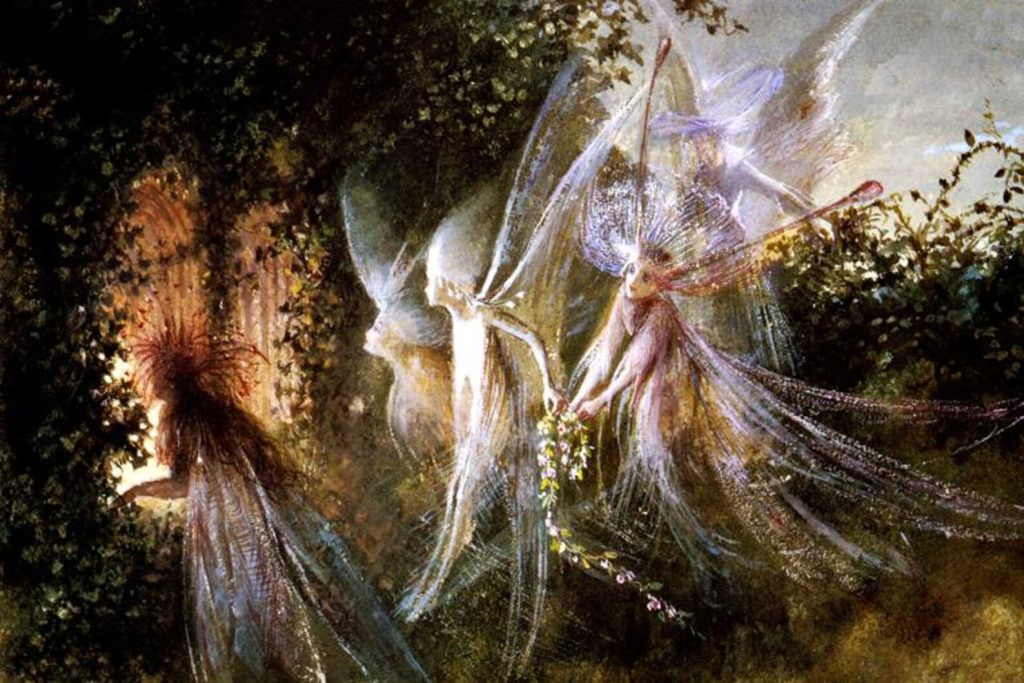
First, on 5 May, ‘Gothic Fairyland: A dark history of butterfly-winged fairies’, at the international on-line seminar ‘Reinterpretations of Celtic and Iberian Fairies Myths & Lore’.
Then, on 20 May, another on-line talk, ‘The Luck of the Ningyo: Japanese human-fish Yokai and the rise of the fake museum mermaid’.
Lily-of-the-valley Customs: a Window on France
Cozette Griffin-Kremer, The Folklore Society, Tuesday 5 May 2026, 19:00 BST (on line)
There is a wealth of customs associated with the lily-of-the-valley (Convallaria majalis L.) in France and this can only be a sampling that runs from the iconic plant’s botanical being, on to how it is associated with bringing good luck, and hence, with some of the famous people who have used the muguet to construct their own legends.
The History of Folk Horror
Dr Barbara Chamberlin, Seed Talks, Wednesday, May 6 • 7 PM – 9:30 PM GMT+1 (on line)
Folk horror taps into our fascination with fear, superstition and the uncanny, revealing how ancient stories continue to echo in our modern lives. In this talk, Dr Barbara Chamberlin traces the genre from M. R. James’s ghost stories to cult classics like Witchfinder General, Blood on Satan’s Claw, and The Wicker Man, and today’s revivals with new voices and perspectives.
The History of Zombies
Dr Maisha Wester, Seed Talks, Monday, May 11 • 6:30 PM – 8:30 PM GMT+1 (online workshop)
This 2-hour workshop will explore the origins and transformations of one of the world’s most popular monsters, through films such as I Walked with a Zombie (1943), Night of the Living Dead (1968), Shaun of the Dead (2004) and more.
Telling it Otherwise: How Fairy Tales Foster Diversity in Children’s Literature
Anna Finozzi, In-person workshop, Buckingham House Seminar Room, Murray Edwards College, University of Cambridge; Monday, 11 May, 5:30 pm – 7:00 pm
This workshop takes fairy tales as a lens through which to examine how children’s literature shapes ideas of identity and difference, paying particular attention to the dynamics of visibility and invisibility: who is represented, who is excluded, and why.
An Evening of Fairy Tales & Folklore
Dr Sharon Blackie, Seed Talks, Tuesday, May 12 • 7 PM – 9:30 PM GMT+1
Discover how fairy tales have guided women through the ages – and why we need them now more than ever. Followed by Q&A. Fairy tales are powerful because at their heart is transformation. Long before princesses were pink and perfect, these stories showed women how to face the unfaceable, find hidden strength, and transform challenges into growth and empowerment.
GIFCon 2026: Technologies of the Fantastic
Centre for Fantasy and the Fantastic, Wednesday, May 13-Friday, May 15 • 12 PM-5 PM GMT+1 (on line)
Join us for GIFCon, a three-day virtual conference featuring researchers worldwide discussing technology and fantasy.
Though scholars have attempted to clarify the division between science fiction and fantasy by suggesting that the latter is solely concerned with the impossible whilst the former is concerned only with fact, such binaries disregard the foundations of the fantastic prevalent in science fiction
The History of Mermaids, Sea Spirits & Women
Dr Monica Germana, Seed Talks, Friends’ Meeting House, Manchester, England; Wednesday, May 20 • 6:30 PM – 8:45 PM
Dive beneath the surface of mermaid lore, tracing their long histories and what they may reveal about wider society. Followed by Q&A.
Mermaids and sea creatures of various kinds have existed in legends and myths from coastal areas all over the world. They are often, though not always, female, and their gender also performs an ambiguous role in relation to human models of femininity, womanhood, and heterosexuality; mermaids, selkies, and female sea creatures can uncannily be familiar and unfamiliar, charming and repulsive, caring and deadly.
Women in White and the New Gothic Cinema: Reinventing the Gothic Heroine
Prof. Catherine Spooner; Ann Radcliffe, Then and Now; Showroom CinemaSheffield City Centre, England; Thursday, June 18 • 6 PM – 9 PM
There has been a revival of interest in the Gothic heroine in the twenty-first century, in big budget films such as Crimson Peak, Poor Things, Nosferatu, Frankenstein and Wuthering Heights. This talk traces the history of the Gothic heroine back to the eighteenth-century novels of Ann Radcliffe, the highest paid author of her day. Paying particular attention to costume and the iconic image of the woman in white running from a dark house, Professor Catherine Spooner explores the ways in which contemporary writers and film-makers have positioned the Gothic heroine as embodying feminist resistance and dark romance.
Editing A Sicilian Romance
Prof. Robert Miles; Ann Radcliffe, Then and Now (podcast)
Emeritus Professor Robert Miles is editing Radcliffe’s A Sicilian Romance as part of The Cambridge Edition of the Works of Ann Radcliffe.
From the evolution of Radcliffe’s poeticism to her defining of the Gothic heroine, Miles highlights the importance and brilliance of Radcliffe’s second novel.
Discover more from Open Graves, Open Minds
Subscribe to get the latest posts sent to your email.
