Review of Gothic Manchester’s ‘What Lies Beneath’

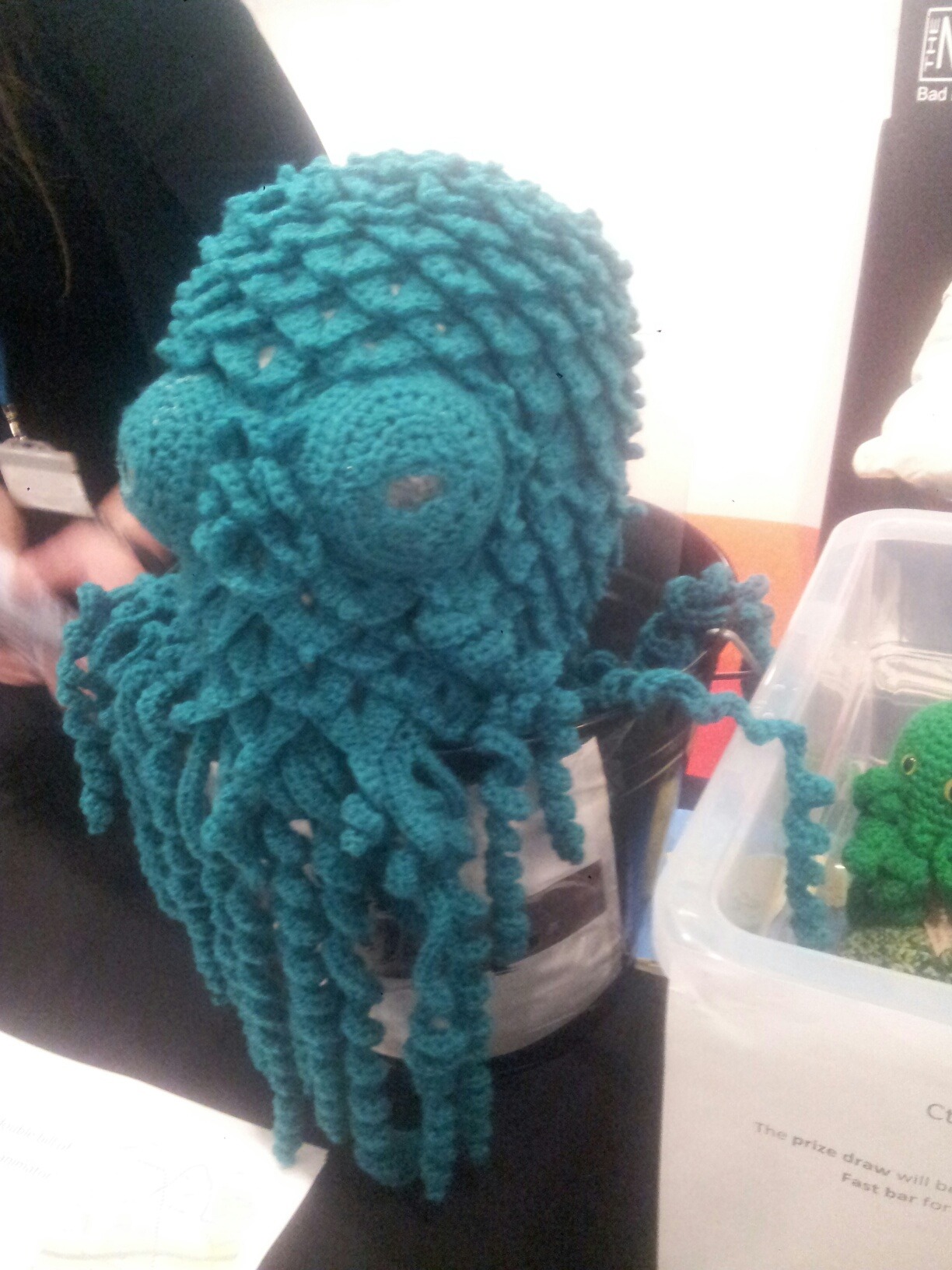
20151024_091243_resized

There was a deep irony to my journey north for ‘‘What Lies Beneath’, the symposium to mark the Gothic Manchester Festival because what lay beneath the venue was a very big part of my youth – The Cornerhouse. Cornerhouse was founded by the Greater Manchester Visual Arts Trust in 1985. It specialised in contemporary arts and was a champion for independent film which it showcased over its three screens.When it closed after thirty years I had not imagined that it would one day become part of MMU!! Growing up in North Manchester, Cornerhouse was about as cosmopolitan as it got in the eighties. I can still remember the thrill of first encountering the arty bookshop and bar (the only place in Manchester where you could pick up a copy of the New York Review of Books). Friends from my teens would go on to exhibit there as contemporary artists and Cornerhouse publishing invested in Misdirect Movies, a book I contributed to in 2013. I was sad to see its demise and to view it as one of the forgotten attractions of Manchester (along with Belle Vue and Meng and Eckers).
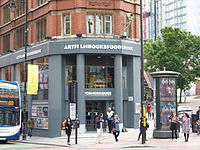
Cornerhouse_Cinema_in_Manchester_(7428498866)

‘What Lies Beneath’ was quite unsettling as a concept for me therefore. I’m sure the current MMU staff were open to the irony, even if they did not perhaps have a deep connection to the history of the building they had occupied.

Now an interloper on the Northern Gothic scene; I travelled to the conference via a 6 a.m. train from St Albans, accompanied by my dissertation student Daisy. I was keen to meet up with old friends, Sue Chaplin and Bill Hughes go back to my MA studies in Manchester and I would have the chance to talk to Tracy Fahey (having spoken with her about the ‘Books of Blood’ project) and Lorna Piatti-Farnell of GANZA fame who was visiting from NZ. I was looking forward to seeing Xavier, the bright star of Gothic MMU, too. We met at the first OGOM conference in 2010 when he was still a student of Catherine Spooner’s (she is a now a good friend and contributor to OGOM).

The papers for the symposium were richly diverse, a heady mix of dark romance (Bill Hughes), holy ghosts (Simon Marsden), gothic food (Lorna Piatti-Farnell), Lovecraft (Jon Greenaway), The Rocky Horror Show (Sarah Cleary), going underground (Anna Powell) and sickness and death (Tracy Fahey, Claire Nally, Siobhan Maguire-Broad). Sadly I missed the last panel on ‘The Weird’ (Sarah Winter, Richard Gough Thomas, Morag Rose) which also looked very pertinent.

The stand out papers (apart from Bill’s entertaining foray into gothic romance and Lorna’s kitchen kitsch) were by Claire Nally and Tracy Fahey. Their presentations opened up new areas of inquiry for me,  combining imagination and rigour. Tracy works at the interface between fine art, medicine and the gothic and her paper ‘Unveiling Occluded Patient Narratives’ looked into the liminal landscapes of chronic illness. I learned a lot from this, how embroidery could represent rage and not contentment, and how ‘host’ could have a multiplicity of meanings when used by cancer patients. That wounds when showcased can evoke the holy saints and tie in to a wider theme of sinning and that silent patient narratives can shout, refusing to whisper in the presence of the many witnesses to their pain. I was genuinely stirred up by this material and wanted to know more about what fine art could bring to gothic studies.

Claire Nally’s chilling exploration of Crossbones (‘Graveyard Writing, Memory and Submerged Sites of Mourning’) focussed on the final resting place of Victorian fallen women, and was darkly engaging and genuinely unsettling. Such forgotten child/women are the gothic doubles of the Victorian angels in the house. Nally disinterred history and questioned the meaning of gothic tourism. The secret histories of the women who lay there made me think of An Inspector Calls (because we are all implicated in such deaths) and  Wilkie Collins’s The Woman in White. In this novel the young Anne Catherick is a physical resource for many a Victorian patriarch and lies in another woman’s grave, whilst Laura, whose name is inscribed on it, is imprisoned in an institution (Anne is in fact the impoverished illegitimate daughter of Laura’s father). The darkness of Nally’s paper made visible the violent and unspoken history of such women.

‘What Lie’s Beneath’ came to mean a lot on this trip, a symbol of the dark history of Victorian women, occluded patient narratives, desire beneath the darkness, and my own misspent youth, buried forever in the vaults of the forgotten Cornerhouse.

Thanks to Cornerhouse which opened my eyes and to Gothic MMU – the dark phoenix to rise from its ashes….my mind is blown.
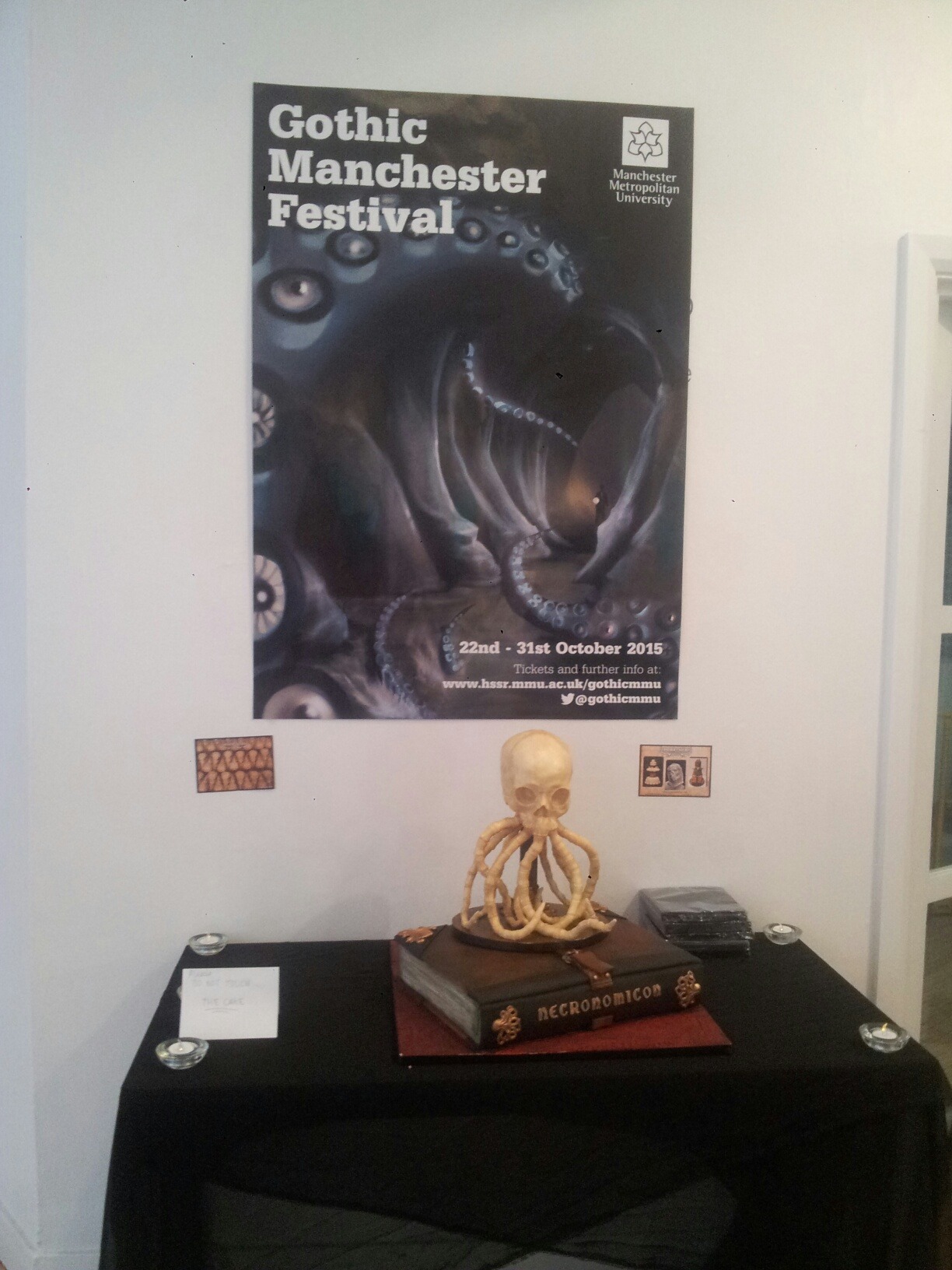
20151024_143031_resized

Posted in CFP (Conferences), Critical thoughts, Events, Reviews | Tagged , | 3 Comments

Black Dogs and Hell Hounds

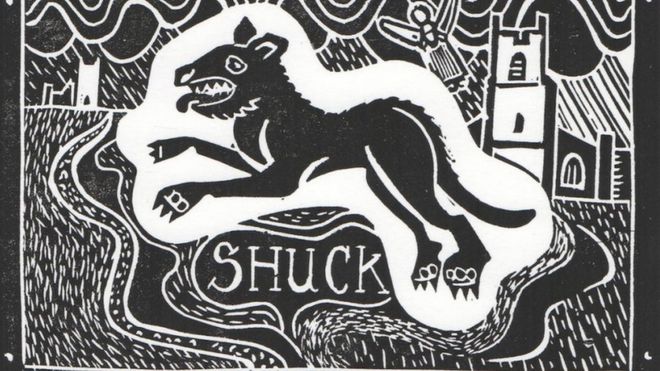
Ted Hughes described this time of year as ‘The month of the drowned dog’ in his evocative poem ‘November’ where after long rain ‘the land  was sodden as the bed of an ancient lake/ Treed with iron and was bird less’. With the darkening days and inevitable rain November also brings with it ‘the black dog’ (the name Churchill famously gave to his depression). The actual legend of the Black dog or ‘Barghest’ is very intriguing. The spectral black dog is found in many parts of England. There are many Black Dog Lanes up and down the county. As a rule the Black Dog is described as about as big as a calf, shaggy and with burning, fiery eyes. It is sometimes called Capelthwaite, Padfoot or Shag in the North and it is generally death to touch or strike it. There is an interesting article on the Black Dog in vol 59 of Folklore published by Folklore Society  and it also gets a mention in Katharine Briggs, Fairies in Tradition and Literature (which is an excellent source for most things fay).

Whitby, the setting of Bram Stoker’s novel Dracula is often linked to this mythical dog (and of course Dracula arrives in Whitby in the form of a dog or wolf). In a fun twist an app has been launched exploring the black dog legend to coincide with the 125th anniversary of Stoker’s visit to Whitby. It takes visitors on a tour of places linked to the mythical dog  (a six-mile walk along the Cleveland Trail from Kettleness to Whitby – so not for the faint hearted)

_85576867_85576866

By coincidence there also appeared this month a well researched BBC feature on The Terrifying Story of the Hell Hound

_86408226_dog2

Black dog, drowned dog, phantom dog, dog eat dog. Does anyone remember Dogtanian the canine musketeer? Just the tune of this animation alone is guaranteed to chase away the black dog or what Kaja has called the Post Hallowe’en Blues……absolutely dogtastic!!!

Posted in Critical thoughts, Fun stuff | Tagged , , , | Leave a comment

Wilderness, National Parks and Hybrid Wolves

My good friend Karen Graham (who I met at the inaugural OGOM conference) sent me this very interesting article, ‘Coydogs and Lynxcats and Pizzlies, Oh My’. Though the title is a little ridiculous, it is an interesting look at science’s attitude towards hybridity in animals and how taxonomy has created and maintained, what are sometimes false, categories. This desire to label and separate species reflects the desire to reinforce boundaries. In relation to wolves and their ability to breed with dogs, I think the fear and hatred towards wolf-dogs is caused by the mingling of the wild and the domestic. During my current research I have read a number of articles about the re-introduction of wolves in southern France and rural Norway. Despite being on the other side of the Atlantic, similar themes occur. Wolf-dogs are considered tainted by both proponents of wolf re-introduction and those who are against it.

For those who support the arrival of the wolves, wolf-dogs represent a dilution of the ‘pure’ essence of wilderness that the wolf represents. For those who are against the arrival of wolves, the wolf-dog shows the ease with which wolves can invade domestic spaces. There is a recurring narrative that wolves have been re-introduced by nefarious ecological groups and that these wolves are not ‘natural’. The evidence for this is often that they do not show the correct amount of fear towards humans and have been seen in areas of human habitation: they are not wolf-like enough to be real wolves. From the point of view of my research, this is particularly powerful as it acts a counter-narrative to the fear of werewolves. Rather than fearing that man is becoming more wolf-like, there is a fear that wolves are becoming more domesticated and losing their connection to the wild. Indeed, some anti-wolf activists consider the wolf to be symbolic of urban ecologists who have lost touch with the reality of rural existence.

What intrigues me, however, is that on both sides of the argument regarding the re-introduction of wolves certain descriptive words are used time and again. Wolves are ‘pure’, ‘wild’, and related to the ‘wilderness’. Those who support the return of the wolf see it as way that we can regain a lost innocence of the landscape and return to a time before mankind spoiled the wilderness. The re-emergence of the wolf is a symbol that the damage we have done to the natural world is not irredeemable. Conversely, those who are unhappy with the re-introduction of the wolf consider the areas where they are returning to be rural areas rather than ‘wilderness’ areas since the wilderness can only exist where there has been no human contact. The wolves are a threat to historical human practices specifically those around farming and wolf populations should be moved further away to a nebulous space of wilderness. In both cases, the wolf is not the issue rather it is what the wolf symbolises and what it tells us about the human notion of the ‘wilderness’ that is being debated.

These concerns are explored in the BBC series, ‘Unnatural Histories’, specifically the episode on the creation of the Yellowstone National Park. At one point, one of the academics interviewed states that he wishes the word ‘wilderness’ had never been created as he sees it as incredibly pernicious. I think what he is expressing is the ongoing battle in understanding the relationship between humanity and the natural world. What seems to recur in my studies regarding wolves, werewolves, and the wilderness is that whether the wolf-as-symbol-for-wilderness is invoked for positive or negative, there is a tendency to frame this within terms of absolute separation. The wilderness stands in direct opposition to human civilisation and humans stand opposite the wolf regarding it, to quote John Berger’s ‘Why Look at Animals’ (1980), across an ‘abyss of non-comprehension’. Hybridity of experience and the possibility that humans have a place in the wilderness without leading to its destruction are eschewed in favour of binary opposition. What this means is that the werewolf is a powerful figure to consider this division and motion to what the monstrous werewolf has to tell us about the enmity between wolves and mankind.

Posted in Critical thoughts, Resources | Tagged , , , , , , | Leave a comment

Fear Itself on the BBC

Though I haven’t caught up with it yet, I am very excited to watch the BBC’s programme ‘Fear Itself’ (2015) at some point this week. It describes itself as a journey through 100 years of horror film and the blurb includes trigger warnings. If anyone has watched it or plans to watch do let us know your thoughts.

Posted in Fun stuff, Resources | Tagged , , , , , , | Leave a comment

Chris Riddell’s Goth Girl and the Wuthering Fright

I have been lucky enough to finish reading Chris Riddell’s latest book in the Goth Girl seriesGoth Girl and the Wuthering Fright (2015). The series follows the adventures of Ada Goth, the daughter of the renowned poet Lord Goth who is ‘mad, bad and dangerous to gnomes’.

Riddell has spoken about his research into Lord Byron and his daughter Ada Lovelace who were the inspiration for the series. The first novel in the series Goth Girl and the Ghost of a Mouse (2013) went down a storm over on Reading the Gothic and you can read our review here. What’s got me very excited about this offering though is that it has a werewolf in it! It’s absolutely delightful!

Posted in Books and Articles, Fun stuff | Tagged , , , , , , | 1 Comment

Britain’s Medieval Vampires – Review

Last night I caught up with ‘Britain’s Medieval Vampires’ on Channel 4. The programme looked at a number of ‘deviant’ burials which had occurred in the Anglo-Saxon period in Britain and related them to a 12th-century text, the ‘Life and Miracles of St. Modwenna‘. ‘Deviant’ burials were described as burials in which the body had been manipulated in a way that was apparently to prevent or stop the corpse from returning from the dead. (I should point out here that I am not as well versed in deviant burials as my PhD colleague in OGOM, Matt Beresfordan archaeologist who has worked on a number of deviant burials). In the stories of St. Modwenna, there are accounts of local people returning from the dead in order to plague the living. When those accused of returning were dug up they were discovered to be ruddy in hue, have distended bellies and blood leaking from their mouths onto their shrouds. These bodies were then beheaded and had their hearts removed. Though deviant burials have often been related to people who died violent or aggressive deaths and thus may be bodies that have been buried away from holy ground, ‘Britain’s Medieval Vampires’ considered cases in which this was not the case. Rather the programme attempted to humanise the people who were disinterred and the people who were undertaking such acts. In some cases the pinning of the body, breaking of the legs or removal of the head was done as a preventative measure rather than following an accusation of a vampire attack. Whilst the documentary explained that deviant burials were rare in the British Isles and that they died out after the Medieval period, the viewer was also taken to Bulgaria, Italy and Romania.

In Bulgaria, we were shown another set of Medieval burials that included bodies that had been pinned with stakes and had their legs broken. And, in Venice, we were told about a woman who died during a period of plague who had had a piece of stone inserted into her mouth. This practice was associated with the idea of shroud eaters – a type of undead persons who chewed at their death shrouds. There was also an interview with the gentleman who was key to the disinterment of Petre Toma, a Romanian man who was accused of being a vampire after death. This case received a relative large amount of coverage in the media because it was so recent and seemed to confirm the idea that Romania was the home of vampires. Despite some unnecessarily spooky music and hype (it was a Halloween special after all), the interview was interesting and not patronising. In fact throughout, this documentary was relatively respectful and non sensationalist given the content matter. Though there was a delightful interlude into the effects of decomposition in the human body as a way of explaining the blood leaking from the mouths of the suspected revenants. (I was excited to find out that the human body is much like that of a pig. Could this explain why human flesh is often described as being porcine to the taste buds – mind boggles).

In keeping with international account of deviant burials and ‘vampire slayings’, it was also good to see that attention was drawn by Dacre Stoker to Bram Stoker’s notes from a 1896 New York World newspaper cutting that covered the exhumation of a number of bodies in New England who were considered to be vampires. The idea that Stoker solely relied on Romanian folklore for his novel has become self-perpetuating. This ignores the other meticulous research that he did for the novel. Perhaps his interest in the New England case inspired the inclusion of Quincey Morris, the American with a curious amount of knowledge about vampire bats and hunting wolves.

There were a few moments in the programme that caused me some perturbation. Though the programme in general managed not to ‘avoid surrendering to the cliché (often utilised in vampire fiction) that it is as ‘ancient’ as the human race itself’ (Ken Gelder, Reading the Vampire, London: Routledge, 2002, p. 24), there were a few moments where the narrative made sweeping statements. The etymology of the word ‘vampire’ was simply presented as generally Eastern European. This is problematic as it does not acknowledge how words are absorbed, adapted and appropriated. Though ‘vampire’ might be the correct translation when discussing the undead and deviant burials in different countries today, it is worth remembering the cultural weight that comes with it. Within Britain, the word vampire comes with a specific set of cultural beliefs and ideas many of which are linked with the misappropriation of Romanian folklore. To continually re-assert the power of the word ‘vampire’ by using it repeatedly rather than using ‘undead’, ‘restless dead’ or ‘revenant’ can simply affirm this connection. Yet this did not  undermine the documentary’s interesting exploration of the different international cases as expressions of shared fear of death and the undead rather than a vampiric conspiracy enveloping the whole world.

Equally, though I agreed with the idea that times of plague would have created great consternation amongst communities that may have lead to a fear of the dead returning, I was frustrated by the brief attempt to explain vampirism as a mistaken diagnosis. Both tuberculosis and porphyria were presented as diseases that made people believe in vampires. Aside from porphyria also being regularly described as the ‘werewolf disease’, I suspect that given its rarity, it is unlikely that it was the root cause of a belief that the dead were returning. Many of the aspects of the disease seem to link to a more modern conceptualisation of the vampire than one presented in the programme.

However, the programme did not try to link all the cases of deviant burial practices across nations, and I suspect that this section was trying to give a clearer insight into what caused period moments of ‘vampire panic’. My only other comment about this section was that when trying to contextualise the historic fear of plagues and the concurrent hysteria within contemporary concerns, this was illustrated with images from the most recent Ebola outbreak in West Africa. Though it was a laudable attempt to help the viewer connect with past, due to the problematic representation of the Ebola outbreak in the media and its geographical removal, I felt that this just further ‘othered’ folkloric beliefs and practices. It would have been more sensitive and uncomfortable to illustrate how similar we are to our ancestors with coverage from the panic over HIV/AIDS, Mad Cow disease, SARS, Avian flu, Swine flu, smallpox as biological terrorism, and/or foot-and-mouth disease – to name just a few of the recent Western plague panics that have occurred in my life time.

Generally, though, I felt that the documentary was sensitive to the fact that we should not be demeaning towards early practices surrounding death. By linking the fear of death and undeath to the promise of eternal life, the final section of the programme made an interesting link to why the vampire has become a creature to which to aspire in recent popular culture. Indeed, in exploring the celebrity-like status of vampires, I think some very interesting points were raised regarding how the vampire can still be an uncanny reflection of the contemporary desire to achieve immortality – whether through vampirism or the cult of celebrity. No matter how much modern vampires may shine, or sparkle, under the spotlight of popular culture, their glossy packaging only distracts from the uncomfortable realisation that what they offer may not truly satisfy: immortality always comes with a price. The final words of the programme echoed Nina Auerbach in Our Vampires, Ourselves (1995) by promising the return of the vampire, always evolving and ready to feed from our abject fears.

Posted in Critical thoughts, Reviews | Tagged , , , , , | Leave a comment

Octavia Butler’s ‘Fledgling’ and Queer Black Vampire Mythology

For my sins, I have not read Octavia Butler’s Fledgling (2005). However this article ‘Fledgling and Queer Black Vampire Mythology’, part of Autostraddle’s ‘Hidden Gems of Queer Lit’ series, makes me think I may need to get hold of a copy,

Posted in Books and Articles | Tagged , , , , , | Leave a comment

Shakespeare’s Vampires

My two worlds collide in this article: ‘Shakespeare’s Vampire: Hubris in Coriolanus, Meyer’s Twilight, and Stoker’s Dracula’ by Patrick Gray.

Posted in Books and Articles, Resources | Tagged , , , , | Leave a comment

The Man Who Brought Zombies to America

Following on from the article ‘The Tragic, Forgotten History of Zombies’, there is this thoughtful biography of William Seabrook by Roger Luckhurst. Seabrook helped introduce the figure of the zombie into Western popular culture following his travels to Haiti where he learnt about Haitian beliefs regarding the return of the undead. Seabrook published what he learnt in The Magic Island (1929) which would go on to influence the arrival of zombies onto the silver screen.

Posted in Critical thoughts, Resources | Tagged , , , | Leave a comment

CFP: Promises of Monsters

Temptation comes in the form of this CFP for the conference, ‘Promises of Monsters’ taking place in Stavanger, Norway on the 28th-29th April 2016. Abstracts are due by 15th December 2015.

Posted in CFP (Conferences) | Tagged , , , , , , , , , , , | Leave a comment