15 Most Anticipated Debut Novels of 2017

Here’s a list by Melissa Albert from the always-useful Barnes & Noble Teen Blog (now added to the Blogroll list of links on the right-hand side). These 15 debut YA novels all look very promising; many of them fall into the genres of paranormal romance and fantasy; there are reworkings of African and Asian folklore, Shakespeare, and fairytale; and dark fairies and science fiction.

Posted in Books and Articles, Reading Lists | Tagged , , , , , , | Leave a comment

CFA: Edited collection – Oh, The Horror: Politics and Culture in Horror Films of the 1980s

A call for articles for an edited collection, Oh, The Horror: Politics and Culture in Horror Films of the 1980s.

The editors are developing a new collection of essays with McFarland Books and seek essays investigating the ways horror films during the 1980s responded to the cultural, social, and governmental politics of the decade. We welcome essays from a variety of critical stances (theoretical, psychological, formal, and so forth), but the volume’s purpose is to explore how horror films functioned as a site of political, cultural, and social engagement and/or critique.

Posted in Call for Articles | Tagged , , , , , , | Leave a comment

CFP: Rereading Stephen King: Navigating the Intertextual Labyrinth, Kingston University, 11 November 2017

Only a week left before the deadline for proposals for this conference on Stephen King, Rereading Stephen King: Navigating the Intertextual Labyrinth, Kingston University, 11 November 2017.

In Stephen King’s Gothic (2011) John Sears asserts that rereading King represents ‘an exercise in the extension of repetition, in the act of rereading an oeuvre already deeply structured … by its own engagement in the Gothic habit of rereading … To reread King would be to enter … and perhaps to become lost within, a labyrinth of intra- and intertextual relations, an immense and complex textual space’ (2). Sears’s framing of King’s writing is a critical response to David Punter’s question about the susceptibility of King’s writing to rereading (1996). To celebrate the publication of the inaugural issue of Pennywise Dreadful: The Journal of Stephen King Studies, this one-day symposium will extend critical dialogues concerning the intertextuality that permeates King’s fiction, and the variant ways in which King’s work is both haunted by his literary and cultural heritage, and haunts contemporary configurations of Gothic and horror.

Posted in CFP (Conferences) | Tagged , , , , , | Leave a comment

The Making of ‘An American Werewolf in London’

This is a very interesting, albeit brief, article from The Guardian on the making of An American Werewolf in London (1981). I particularly enjoy the comment about making it look painful. During the ‘Company of Wolves’ conference, my mother watched the transformation scene in Landis’ masterpiece for the first time. She’s quite a sensitive little flower and I remember watching her eyes water as she took in the pain expressed in this scene. Viewing it with her made me realise how blase we are about its gruesome quality.

Posted in Books and Articles | Tagged , | Leave a comment

Reworking Myth and Fairytale in YA Literature–Again!

If you visit this site often, you’ll know that many of the Gothic and fantastic narratives that OGOM research involve reworkings and rewritings of fairy tales or myths. The transformations and interminglings of genre involved fascinate me on a formal level but also allow some impressive writing on contemporary issues using the old narrative structures. Many of these fictions are for a young adult audience but are by no means puerile or simplistically didactic and some are very sophisticated.

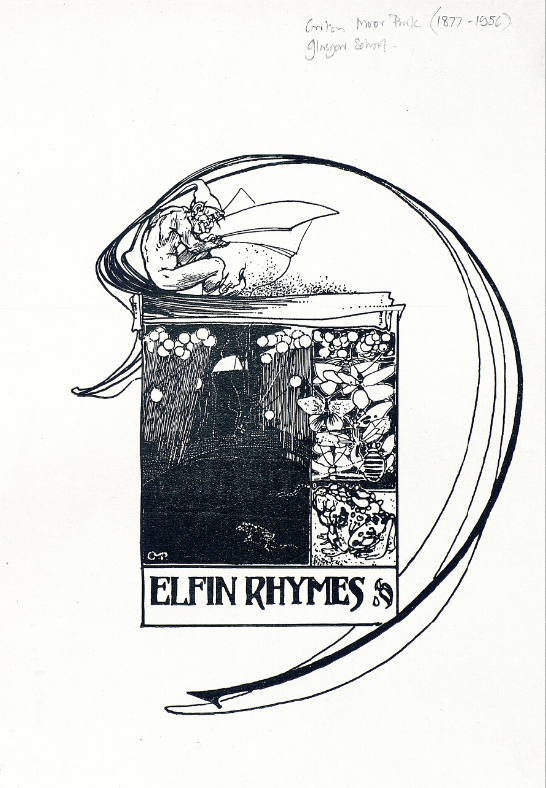
Dahlia Adler, on the Barnes and Noble blog (itself very often interesting and useful), reviews here ‘6 New Retellings for Fairy-Tale Fans‘. These all look very intriguing; there are adaptations of ‘Snow White’, ‘Beauty and the Beast’, ‘Cinderella’, ‘Rumpelstiltskin’, and ‘The Little Mermaid’. What adds to the appeal is that some of them also draw on Chinese or Russian folklore, or Norse myth, adding an extra dimension of intertextuality.  Some also explore gay or bisexual romance, challenging the orthodox reception of the traditional tales.

Here, in ‘Young Adult Fiction Uses Myths To Keep Traditional Storytelling Alive‘, NPR’s Lulu Garcia-Navarro interviews Books Editor Barrie Hardimon about the use of material from Greek, Roman, and Norse myth in YA fiction, from the Olympian gods of the Percy Jackson series through novels featuring Medusa, Daedalus, Persephone, and Loki’s daughter Hel. Again, some of these sound very appealing.

 And finally, Mari Ness reviews a fascinating experiment in children’s fiction, Marilyn Singer’s Mirror, Mirror, where a newly-invented poetic form, reverso, where versified adaptations of classic fairy tales can be read in either direction, yielding different stories. You need to see this from the examples here; it looks fascinating.


Posted in Reading Lists, Reviews | Tagged , , , , , , , , | Leave a comment

Horror and Dark Fantasy, by Women and in Translation

Two very useful reading lists here.

The first, Women of Horror, Dark Fantasy, and the Weird: A Recommended Reading List, lists tales, novels, and even poetry from those genres and looks intriguingly non-mainstream.

Then, a list of Horror in Translation from Rachel Cordasco, which again promises some unusual reading in translation from German, Dutch, Japanese, Spanish, Italian, and Swedish. Rachel Cordasco also has a website which specialises in Speculative Fiction in translation (I’ve added this link to the Related Links column on the right-hand side).

Posted in Reading Lists | Tagged , , , , , , | Leave a comment

The Cottingley Fairies: 100 Years On, University of Bradford, 1 July 2017

Talks on the Cottingley Fairies, the photographs of which in 1917 convinced Sir Arthur Conan Doyle among others of their existence. John Hyatt, musician, artist, and Professor of Contemporary Art and Director of ART LABS at LJMU; children’s author Vivian French; and Dr Merrick Burrow is Head of English at the University of Huddersfield present on this fascinating topic.

Bringing together the British tradition of fairies with fairy-tales from cultures around the world and set against the backdrop of this magical story, academic, Merrick Burrow, photographer, John Hyatt, and author, Vivian French, will examine why it is that children everywhere, no matter how or where they grow up, continue to be fascinated by fairies. They may even try to answer the all-important question: did the Cottingley fairies really exist?

Posted in Events | Tagged , , | Leave a comment

OGOM: Tales from Gothic Hertfordshire 1

I have decided to introduce a new searchable feature on Gothic Hertfordshire on the blog ahead of Supernatural Cities 3 which OGOM will co-host in March 2018.  (‘Gothic Hertfordshire’ is now a Category, found on the right-hand side here.) I’ll be posting regular folkloric stories which may feature in our Gothic tour of the region (part of the conference programme). I began to collect these tales some time ago when I posted the Strange Case of the Gubblecote Witch. Ruth Osborne, ‘the Gubblecote Witch’, was ‘swum’  in sheets or ‘ducked’ by a local mob in 1751 at Long Marston in Hertfordshire, despite the death penalty for witches being abolished in 1735.  Since researching this story I have photographed places of interest and I am building up a grievous gazetteer of the myths and mysterious spectres, superstitions, crimes and calamities of the county. 

In Essendon, there is a tomb in the Churchyard of St Mary the Virgin, with a door to which only the corpse has the key. The occupant died in 1843 and left instructions that his tomb was to be built above ground and fitted with a locked door because he was so fearful of being buried alive. There are stories of the door discovered unsealed in 1881.  The village is 3 miles East of Hatfield via the Hertford Road.

Little Gaddeston would certainly feature in any tour of Gothic Hertfordshire. It was here in an old cottage in Witch Craft Bottom (yes I kid you not) that Rosina Massey (1828-1907) was seen by a child conducting her cups and saucers in a dance around the table! She could likewise make her three legged stool run errands for her. She was commonly thought to be a witch and is buried in the churchyard inside the gate leading to the Vestry. 

Little Gaddeston also has a place called Faerie Hollow, which incorporates the cottage in which Rosina-the-witch lived. Here, according to local folklore, in 1664 two small imps came riding down the chimney on a stick and so bewitched Mary Hall, the Blacksmith’s daughter, that she spoke in two voices, neither of them her own!  

 I photographed the cottage above today and it exists despite it appearing to resemble something from Hansel and Gretel.

That’s all until the next time….look out for regular features on Gothic Hertfordshire.

Posted in Gothic Hertfordshire, OGOM Research | Tagged , , , , , , , | Leave a comment

Colonel Sanders and the Demonic Lover

I love the conjunction of genres and the taming of monsters that occurs in paranormal romance, and much of OGOM’s research centres on this. The demon lovers of paranormal romance range from vampires (of course), through faeries, angels, and werewolves; the odder candidates include mermen, gargoyles, and even ghosts and zombies. But the monstrous lover in KFC’s Tender Wings of Desire, reviewed here by Dan Piepenbring, may be the strangest of them all (NSFW).

Posted in Fun stuff | Tagged , , , , , | Leave a comment

Feminism and the Cinematic Vampire

An excellent article by Genevieve Valentine, ‘How the vampire became film’s most feminist monster‘ on the female vampire in cinema, tracing the figure through shifts in feminist perspectives. Valentine says, ‘Vampirism is a charmingly reliable metaphor for a particular brand of cinematic feminism. There’s no more economical embodiment of the powerful woman as both terrifyingly predatory and soothingly seductive.’

Posted in Critical thoughts | Tagged , , , , , | Leave a comment