CFA: Gothic Animals

I wanted to post the full CFA for ‘Gothic Animals’  (having tweeted it earlier);  an opportunity to get involved with the excellent Palgrave MacMillan ‘Studies in Animals and Literature’ series. Well done Ruth and Melissa this looks soo intriguing and is a fitting response to Black Phillip trending at the IGA!  

CFA: Gothic Animals: Uncanny Otherness and the Animal With-Out

‘The boundary between the animal and the human has long been unstable, especially since the Victorian period. Where the boundary is drawn between human and animal is itself an expression of political power and dominance, and the ‘animal’ can at once express the deepest fears and greatest aspirations of a society’ (Victorian Animal Dreams, 4).

‘The animal, like the ghost or good or evil spirit with which it is often associated, has been a manifestation of the uncanny’ (Timothy Clark, 185).

In the mid nineteenth-century Charles Darwin published his theories of evolution. And as Deborah Denenholz Morse and Martin A. Danahay suggest, ‘The effect of Darwin’s ideas was both to make the human more animal and the animal more human, destabilizing boundaries in both directions’ (Victorian Animal Dreams, 2). Nineteenth-century fiction quickly picked up on the idea of the ‘animal within’ with texts like R.L. Stevenson’s Dr Jekyll and Mr Hyde, Oscar Wilde’s The Picture of Dorian Gray and H. G. Wells’s The Island of Doctor Moreau. In these novels the fear explored was of an unruly, defiant, degenerate and entirely amoral animality lying (mostly) dormant within all of us. This was our animal-other associated with the id: passions, appetites and capable of a complete disregard for all taboos and any restraint. As Cyndy Hendershot states, this ‘animal within’ ‘threatened to usurp masculine rationality and return man to a state of irrational chaos’ (The Animal Within, 97). This however, relates the animal to the human in a very specific, anthropocentric way. Non-humans and humans have other sorts of encounters too, and even before Darwin humans have often had an uneasy relationship with animals. Rats, horses, dogs, cats, birds and other beasts have, as Donna Haraway puts it a way of ‘looking back’ at us (When Species Meet,19).

Animals of all sorts have an entirely different and separate life to humans and in fiction this often morphs into Gothic horror. In these cases it is not about the ‘animal within’ but rather the animal ‘with-out’; Other and entirely incomprehensible. These non-human, uncanny creatures know things we do not, and they see us in a way it is impossible for us to see ourselves. We have other sorts of encounters with animals too: we eat animals, imbibing their being in a largely non-ritualistic, but possibly still magical way; and on occasion, animals eat us. From plague-carrying rats, to ‘filthy’ fleas, black dogs and killer bunnies, animals of all sorts invade our imaginations, live with us (invited or not) in our homes, and insinuate themselves into our lives. The mere presence of a cat can make a home uncanny. An encounter with a dog on a deserted road at night can disconcert. The sight of a rat creeping down an alley carries all sorts of connotations as does a cluster of fat, black flies at the window of a deserted house. To date though, there is little written about animals and the Gothic, although they pervade our fictions, imaginations and sometimes our nightmares.

This collection is intended to look at all sorts of animals in relation to the Gothic: beasts, birds, sea-creatures, insects and domestic animals. We are not looking for transformative animals – no werewolves this time – rather we want essays on fictions about actual animals that explore their relation to the Gothic; their importance and prominence within the Gothic. We invite abstracts for essays that cover all animal/bird/insect/fish life forms, from all periods (from the early Modern to the present), and within different types of media – novels, poetry, short stories, films and games.

Topics may include (but are not bound by):

  • Rats (plague and death)
  • Dogs (black and otherwise)
  • Killer bunnies
  • Uncanny cats
  • Alien sea creatures
  • Horses
  • Bulls
  • Cows (perhaps with long teeth)
  • Killer frogs
  • Beetles, flies, ants, spiders
  • Worms
  • Birds
  • Snakes and toads
  • Whales/Dolphins
  • Animals as marginalised and oppressed
  • Animals in peril
  • Animal and human intimacies and the breaking of taboos
  • Exotic animals/animals in colonial regions (Africa, Australia, Canada, the Caribbean, India)
  • Demonic animals
  • Dangerous animals (rabid dogs, venomous snakes, wolves)
  • Invasive animals
  • Animals and disease
  • Domestic animals
  • Uncanny animals
  • Animals connected to supernatural beings (Satanic goats, vampire bats)
  • Witchcraft and familiar spirits/animal guides
  • Rural versus urban animals
  • Sixth sense and psychic energy

Please send 500 word abstracts and a short bio note by 1 November 2017 to: Dr Ruth Heholt (ruth.heholt@falmouth.ac.uk) and Dr Melissa Edmundson (me.makala@gmail.com). Deadline for submissions November 1st,  2017. The collection is intended for the Palgrave MacMillan ‘Studies in Animals and Literature’ series. Completed essays must be submitted by 1 July 2018.


Posted in Call for Articles | Tagged , , , , | Leave a comment

Reading the Vampire: New Critical Studies

It is that time of the year again when I’m anticipating a new run of my ‘Reading the Vampire’ MA module . I’ll be embarking on all the bloodsucking basics with my new MA students in just a few weeks time (extra credit to anyone who scores an interview with a vampire). In 2010 when the course was launched the undead had a fairly troubled relationship within the academy and I struggled to get it approved amidst a mini media frenzy and much scepticism. In 2017 the dark gift of vampirism as a study within  the university is enduring.  I’ve found new approaches to the texts and I’ve recently added a new strand of study which explores the relationship between Peter Pan, The Lost Boys and Let the Right One In through the trope of invitation (even Dracula has to be invited over the threshold!).

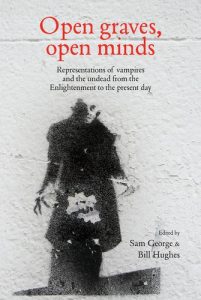
What has struck me most in the last three years is the exciting growth in new critical material on the literary and filmic vampire. The key text for the module is of course the Open Graves, Open Minds book  but there is a wealth of new criticism which (building on the legacy of Ken Gelder and Nina Auerbach) takes vampire studies into the twenty- first century. Fandom, cultural materialism, Neoliberalism, biomedicine, violence and the sacred, and similarities with the sympathetic zombie are all offered up as useful approaches to the post millennial vampire in recent monographs.  In 2017 the course has the following books to enrich and inform it:

Lorna Piatti Farnell, The Vampire in Contemporary Popular Culture (London: Routledge, 2013) 

Aspasia Stephanou, Reading Vampire Gothic Through Blood (Palgrave: Macmillan,  2014)

Stacey Abbott, Undead Apocalypse: Vampires and Zombies in the Twenty-First Century (Edinburgh: Edinburgh University Press, 2016) 

Sue Chaplin, The Postmillennial Vampire: Power, Sacrifice and Simulation in True Blood, Twilight and Other Contemporary Narratives (Cham, Switzerland: Springer, 2017)

These are nicely lodged in the university library! I should also mention the hilariously named Men with Stakes (Manchester: MUP, 2016) by Julia Wright. A new study on masculinity and gothic television from the brilliant MUP Gothic list. For my own part I’ve returned to folklore in much of my analysis. My article on the representation of Romanian folklore in British and Irish Fictions of the Undead (which started life as a plenary talk at the University of Timisoara, Romania) is in press and ‘Spirited Away: The Outsider and the Representation of Transylvania in the Pied Piper and Dracula Myth in Britain and Germany’ is published next month in Dracula: An International Perspective in the Palgrave Gothic Series.  I’m writing on the enigma of  Wharram Percy and I continue to research and have an interest in early accounts of vampirism in the UK, together with the vampire theatre pre-Stoker, the psychic vampires of Victorian and Edwardian popular fiction and the contemporary child/teen vampire. In 2017 the arterial blood of vampire study is far from exhausted – it continues to flow and circulate. I’ll be excitedly initiating new students into this infectious branch of gothic studies in September.   

Posted in MA Reading the Vampire module news, Reading Lists | Tagged , , , , , , , | 5 Comments

CFP: The Vampire in Literature, Culture, and Film, PCA/ACA, 28-31 March 2018, Indianopolis

The Vampire in Literature, Culture, and Film Area is seeking papers for the national joint Popular Culture Association/American Culture Association (PCA/ACA) meeting to be held March 28-31 in Indianapolis, Indiana.

We welcome papers on vampires in literature, culture, and film for presentation at the conference. Topics that are of particular interest include, but are not limited to:

  • Vampires and music
  • The international vampire
  • Twilight and its legacy (2018 marks the 10-year anniversary of the film Twilight and the publication of Breaking Dawn)
  • Werewolves and vampires
  • The work of Nina Auerbach
  • The return of Anne Rice’s vampire Lestat
  • Social justice and vampires
  • The literary vampire
  • The vampire on television (ex: The Vampire DiariesThe OriginalsThe StrainThe Passage)
  • Pedagogy
  • Vampire subculture and lifestyle

Please submit abstracts of 250 words by October 1, 2017 to the PCA/ACA database: https://conference.pcaaca.org/

We welcome the submission of complete panels of 3-4 presenters.

Responses/decisions regarding your proposals will be provided within two weeks of your submission to ensure timely replies. 

For further information, please visit: http://pcaaca.org/the-vampire-in-literature-culture-film/ or contact the area co-chairs: Mary Findley (findley@vtc.edu) or Lisa Nevarez (lnevarez@siena.edu).

Posted in CFP (Conferences) | Tagged , , , , , , , | Leave a comment

CFP: Investigating Identities in Young Adult (YA) Narratives, 13 December 2017, The University of Northampton

This symposium on Investigating Identities in Young Adult (YA) Narratives offers opportunities for researchers in YA Gothic and fantastic genres, which is a core part of OGOM’s own research.

OGOM’s Dr Sam George will be delivering a plenary on identity and YA fiction within the academy, drawing on her very successful undergraduate course Generation Dead: Young Adult Fiction and the Gothic and OGOM’s collaboration with such YA writers as Marcus Sedgewick and Daniel Waters. My own research for OGOM has concentrated on YA paranormal romance and reworkings of fairy tale and I am hoping to present at the symposium.

Investigating Identities in Young Adult (YA) Narratives: Symposium on the 13/12/2017 at The University of Northampton UK

deadline for submissions:
October 8, 2017
full name / name of organization:
The University of Northampton UK
contact email:
anthony.stepniak2@northampton.ac.uk

Investigating Identities in Young Adult (YA) Narratives

Symposium on the 13/12/2017 at The University of Northampton UK

From JK Rowling’s Harry Potter series to Stephenie Meyer’s Twilight, Young Adult (YA) narratives have grown exponentially over the past twenty years. Adopting a range of genres and platforms including the Bildungsroman and the coming of age teen drama, YA narratives represent a significant cultural means to explore the formation of identity in all its varied aspects. This one day symposium at the University of Northampton will investigate the representation of identity constructions in relation to narrative form in YA narratives both past and present.

Suggested topics may include, but are no means limited to:

– Representations of racial/ethnic identity in YA narratives

– Representations of gender and/or sexual identity in YA narratives

– The representation of identity in YA narratives in relation to the notion of class

– Interrogations of YA narrative’s treatment of LGBTQIA+ identities

– The effect of trauma on identity in YA narratives

– YA narratives and the notion of the outsider or other

– The relationship between genre and the notion of identity in YA narratives

– The representation of non-binary identities in YA narratives

– The transition from childhood to adulthood in classic (children’s) literature

– The representation of disability in relation to the notion of identity in YA narratives

– The use and function of supernatural identities in YA narratives

Being an interdisciplinary symposium focused on narrative, papers from across the subject areas of literature, screen studies, history, popular culture and education studies are invited. The symposium welcomes papers on both YA literature and screen adaptations, and from scholars working on earlier periods as well as contemporary culture.

The symposium invites papers from academics, early career researchers and postgraduate research students alike.

Abstracts of no more than 250 words should be sent to both sonya.andermahr@northampton.ac.uk and anthony.stepniak2@northampton.ac.uk by the 8th October 2017.

Posted in CFP (Conferences) | Tagged , , , , , , , | 1 Comment

Gothic Palgrave Handbook – Expressions of interest

Clive Bloom is calling for expressions of interest in contributing to this three-volume Gothic handbook. This this will be a very exciting project to be involved with.

Please email Professor Bloom directly with ideas or any questions at: cbloom4189@aol.com:

As you might be aware the Palgrave Gothic series has really set up a buzz. Now for something really ambitious!

This is a project I am putting together for Palgrave. It is a three volume scholarly compendium of analytic essays on the gothic from its earliest times to now in three large volumes called the Gothic Handbook! It is intended as the ‘go-to’ compendium for academics and students. It is also intended to be comprehensive and cutting edge exploring every aspect of gothic culture from Strawberry Hill to Slender Man and everything in between.

Moreover it will be an excellent chance to work on crossover cultural aspects and long forgotten writers or neglected designers, architects, painters, poets and film makers. I would love articles and chapters on international gothic too. I am looking for new angles and new subjects although traditional gothic areas will need revisiting through contemporary theories and insights. If you’d like to write about gothic entertainment or gothic cemeteries now is the chance!

Word length is by arrangement, but should be between 6,000 and 10,000 words, so plenty of scope. And there may be opportunity for illustrations. Please look below to see what areas I think need covering and add your own ideas if I have missed any. This will be a ‘live’ project for some years to come and I would love to have you all in at the beginning.

The deadline to signal your interest only is September 30 2017. You do not have to suggest a topic. The final deadline for chapters will be no later than Spring 2019, so lots of time. If you know of others who might be interested (doctoral students especially, but also colleagues) then please pass on this information and direct them to me via this address.

Please note: We will start at the end with volume three so that really contemporary issues may be tackled and new areas of research highlighted. Please look carefully at the proposed topics and think about where you might contribute. As I say I am happy for any different suggestions.

VOLUME I: GOTHIC DREAMS 1740- 1848 proposed deadline 2020-22

PART ONE: THE BEGINNINGS: Gothic antiquarianism; graveyard poems; Edmund Burke and the Sublime; the picturesque gothic; gothic architecture before Strawberry Hill; the influence of Shakespeare; the influence of the Faust myth; the influence of the Marquis De Sade; Horace Walpole; Strawberry Hill; The Castle of Otranto; Maria Edgeworth; William Beckford; Fonthill; Vathek; gothic orientalism; Ernst Hoffman; August Burger; Matthew Lewis; The Monk; The Castle Spectre; Friedrich von Schiller; Charlotte Dacre; Anne Radcliffe and her influence; eighteenth century theories of terror and horror; gothic painting and Fuseli; Joanna Baillie; gothic poetry; Lord Byron and his influence.

PART TWO: ROMANTIC GOTHIC: Coleridge, Wordsworth, and gothicism;Sir Walter Scott and Ivanhoe; Abbotsford; Scottish baronial; John Polidori and The Vampyre; Charles Brockden Brown; Washington Irving; American gothic theatre; English gothic theatre; Mary Shelley and Frankenstein; Thomas de Quincey; Edgar Allan Poe (stories;poems;theories); Heinrich Hoffman; the emergence of Keats and the influence of Tennyson; the Pre Raphaelites; Varney the Vampire; Sweeney Todd (the String of Pearls); William Harrison Ainsworth; bibliography

VOLUME II:STEAM AGE GOTHIC 1850 -1900 proposed deadline 2019-21

PART ONE: VICTORIAN TRANSFORMATIONS: Gothic architecture for the steam age: Charles Barrie; Augustus Pugin and family; George Gilbert Scott and family; the rebuilt Houses of Parliament, the restoration of medieval France; Thomas Lovell Beddoes; John Ruskin; the gothic cemetery (Highgate etc) Victor Hugo; the Brontes; Charles Dickens and the ghost story; Sheriden le Fanu; Sabine Baring Gould; domestic gothic; melodrama and the gothic; Egyptian gothic taste; freaks and raree shows;

PART TWO: FIN DE SIECLE: Guy de Maupassant; gothic music- Wagner and Berlioz; Robert Louise Stevenson, Dr Jekyll and Mr Hyde; Ambrose Bierce; magic lantern gothic; Conan Doyle gothic; Jack the Ripper; the cult of Pan; Arthur Machen; J K Huysman; Bram Stoker and Dracula; end of the century decadence -erotic gothic and occult gothic; Oscar Wilde and the Picture of Dorian Gray; Richard Marsh and the Beetle; H G Wells; the ghost tales of Edith Wharton; Isaak Dineson; Robert W Chambers, the King in Yellow; Lord Dunsany; Count Steinbock; John Buchan; end of the century ghost tales -minor writers; bibliography

VOLUME III: MODERN GOTHIC 1900-2019 proposed deadline 2019

PART ONE: TWENTIETH CENTURY GOTHIC Introduction; Industrial and urban gothic; Edwardian Weird Fiction; the influence of Jack the Ripper; the later stories of Bram Stoker; Gaston Leroux; M R James; Algernon Blackwood; Vernon Lee; Edison’s Frankenstein; German Expressionism- Caligari and Nosferatu;Giles Gilbert Scott and modernist gothic; HP Lovecraft; Weird Tales and pulp gothic; Aleister Crowley; Guy Endor; James Whale; Expressionist Gothic film; Universal gothic film; Wartime gothic; Hammer gothic film; 1950s gothic comic books; Roger Corman gothic film; Quatermass, the gothic and science fiction.

PART TWO: GOTHIC REBORN Gothic television – children’s gothic; comic book gothic; the Addams Family; Dr Who; Folk Horror; Italian gothic cinema; the Heirs of Lovecraft; goth music; dark fantasy; tourist gothic; goth culture and fashion; ‘Southern’ gothic; Edward Gorey; Stephen King; Susan Hill; Clive Barker; James Herbert; H R Geiger; Alien; Lemony Snicket; tattoo culture; Steampunk; Internet gothic (Slenderman etc); Asian gothic cinema; the ‘new’ gothic Batman;Tim Burton; Guillermo del Toro; techno-gothic; abjection and body horror; feminism and gothicism; the new gender debate and gothicism; gothicism and the sex club scene; torture porn; backwoods gothic; the gothic legacy; contemporary goth visual art; Aurelio Voltaire, Whitby Goth Festival; internet goth/horror memes; bibliography.

Posted in Call for Articles | Tagged , , , , , , , , , , , | Leave a comment

Books of Blood: Objects Lost and Found @BeingHumanFest

‘All humans are books of blood—wherever you open us, we’re red’ (Clive Barker)

Books of BloodA touring exhibition and festival (2018-19)

An introductory workshop will run for Being Human 17 

Title: Books of Blood: Objects Lost and Found

Date: 23rd November 2017

This gruesome ‘show and tell’ workshop sees images of mysterious, unique, and bloody objects ‘lost’ in the Science Museum’s archives uncovered in a way that enables the curious history of each piece, and its relationship to blood and the body, to be sensationally recovered or ‘found’.  It allows for writing and drawing activities, based on Clive Barker’s notion of the body as a ‘book of blood’ that can be ‘re[a]d’. Our participants’ responses to the curious objects (in words and/or images) will form diverse narratives on ‘being human’ that will be preserved in the public space for others to enjoy.

This workshop, facilitated by Dr John Rimmer and Dr Sam George, takes place at The Old Operating Theatre 1.30-4.30. Details are available from the Being Human Festival site  Books of Blood: Objects Lost and Found  There is no need to book just drop-in and see us! The event itself is fee but entrance to the museum is £6.50 (concession £5.00).

Please note the museum is located on the garret, or attic, of St Thomas’ Church. The entrance is through the bell tower and 52 steps up a spiral staircase. The museum is within walking distance of London Bridge Underground Station, Borough Market, Southwark Cathedral and other major attractions in the area including the rebuilt Globe Theatre, Tower Bridge, HMS Belfast, and the Clink Prison. You should look at the visitor information before making your visit.

Posted in OGOM Research, OGOM: Books of Blood | Tagged , , , , , | Leave a comment

Redeeming The Wolf: OGOM Event @BeingHumanFest

We’re excited to announce that OGOM is involved in two events for the Being Human Festival. Here are details of the first one:

Redeeming The Wolf: A Story of Persecution, Loss and Redemption

Date: Sat 18th November 2.00-5.30

Venue: University of Hertfordshire

Hunted to extinction in Britain, wolves haunt the human imagination. Stories of the wolf have portrayed a vicious, snarling beast that emerges from the wilderness to attack humankind. The werewolves of popular culture have further fomented fear. But the lost wolf is making a comeback: conservation groups are working to reintroduce the animal to the British countryside. This event brings together scholars, writers, and conservationists to explore how literature, folklore, fairytale, and film have shaped our perceptions of the wolf and could be impeding its return. A short film introduced by the UK Wolf Conservation Trust will precede a series of lively illustrated talks from Prof. Garry Marvin (lupophobia), Dr Sam George (wolf children), Dr Kaja Franck (monstrous werewolves), and Dr Bill Hughes (beauties and beasts). The audience will then be invited to debate the implications of redeeming and rewilding this much-maligned ‘big bad wolf’ and what the wolf can teach us about being human.

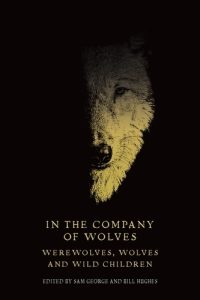
This event builds on the success of the OGOM Research Centre and our Company of Wolves project, which saw the largest conference in the UK on wolves, werewolves, and feral children. We received unprecedented attention in the local, international and global media (10,000 shares for coverage in The Independent, live coverage on the BBC, stories in Russia Today and the South China Post, etc., and the acknowledgement of a first for a UK Academy in the THES).

This year’s festival is taking place nationally 17 – 25 November 2017. Being Human is led by the School of Advanced Study, University of London in partnership with the Arts & Humanities Research Council and the British Academy.

Look out for booking opening on the Being Human Festival site in September

Posted in OGOM News, OGOM Research | Tagged , , , , , , | 1 Comment

CFP Reminder: Gothic Style(s), Gothic Substance; Gothic Manchester Festival Conference, MMU, 28 October 2017

Just a reminder that the deadline for the Gothic Style(s), Gothic Substance; symposium at Gothic Manchester Festival Conference is soon. Here are the details again:

Gothic Manchester Festival Conference
Saturday 28 October 2017
Call for Papers
Gothic Style(s), Gothic Substance

After the great success of last year’s Gothic North conference, our attention turns this year to the topic of Gothic Style(s).
At the start of the twenty first century, the Gothic is ubiquitous. Fiction and film, television and graphic novels have not only made the Gothic’s plots and protagonists their own, but have brought Gothic style(s) even more firmly into the mainstream. Victorian Gothic architecture looms large over modern cities such as Manchester, contemporary Goth fashion and music tirelessly reference the mode, and our streets and bars, clubs and homes have generated new Gothic styles of their own.
But is there substance to the Gothic’s many styles? Does the Gothic continue to reveal the great unspoken truths of our world? Did it ever? Is the Gothic anything more than a commercial product that may be sold, as a recognisable style, to a new generation of consumers? Was it ever thus? What cultural functions do Gothic styles serve? And how have these evolved from the Enlightenment to the neoliberal present?
This one-day conference invites abstracts for papers of 20 minutes on any aspect of Gothic style(s) and / or substance. As such, topics may include, but are most certainly not limited to:
• Literary, Filmic and Popular-Cultural Stylistics – ‘authentic’ Gothic or merely stylistic flourish?
• The Gothic styles of art and architecture
• Gothic fashion – from subculture to haute couture
• The histories of Gothic styles
• Goth-style music, clubs and clubbers
• The singularity (or otherwise) of Gothic style
• The popular perception of Goth(ic) style – from Halloween dress-up to hate crime.

Please submit abstracts of no more than 300 words to Dr Linnie Blake, Head of the Manchester Centre for Gothic Studies, by 1 August 2017.
Email: L.Blake@mmu.ac.uk

Posted in CFP (Conferences) | Tagged , , , , , , , , , | Leave a comment

RIP George Romero

The zombie as it has appeared in popular culture–the abject, shambling, carnivorous undead rather than the animated slaves of Caribbean folklore–was practically invented by the director George Romero, who has sadly died. Romero’s pioneering film Night of the Living Dead (1968) and subsequent films inaugurated a whole new subgenre of horror, one that enabled the undead monster to stand in for and explore many aspects of modern society. In some of these films he even anticipates the sympathetic monster of paranormal romance by suggesting the return of autonomy to the creatures and by focusing on the plight of their dehumanisation. Below are links to three articles on Romero that also give a critical account of his genius. All are excellent starting points for research on the Romero zombie.

First, Dr Xavier Aldana Reyes of Manchester Metropolitan University draws attention to that human aspect in ‘How George A. Romero made humans of violent brain-devouring zombies‘.

John DeFore gives a more general account of Romero’s work in ‘Critic’s Notebook: In George Romero’s Zombie Films, a Cathartic Form of Escapism‘.

The last article is from the LRB (it’s incomplete unless you subscribe, unfortunately); Thomas Jones, in ‘Les zombies, c’est vous‘ (a review of Colson Whitehead’s Zone One), places the Romero zombie in a contemporary context, revealing its enormous influence.

Posted in Critical thoughts | Tagged , , , , | Leave a comment

Catherine Spooner on Goth Culture

The brilliant Dr Catherine Spooner of Lancaster University (who has been an inspirational contributor to the OGOM Project from its inception) gives an erudite and fascinating interview on Goth culture here:

Posted in Interviews | Tagged , , , , | Leave a comment