CFP: OGOM & Supernatural Cities Present: The Urban Weird

To coincide with the eclipse here is the CFP for our next conference! It promises to eclipse all other events….it’s  cosmic!

University of Hertfordshire, 6-7 April, 2018

The permanent link for the CFP, with a PDF version available, is here.

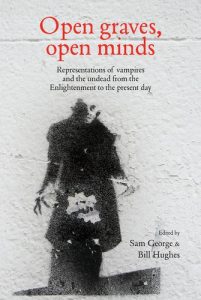
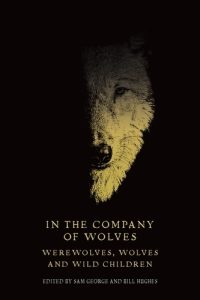
The OGOM Project is known for its imaginative events and symposia, which have often been accompanied by a media frenzy. We were the first to invite vampires into the academy back in 2010. Our most recent endeavour, Company of Wolves: Werewolves, Shapeshifters and Feral Humans enjoyed extensive coverage globally and saw us congratulated in the THES for our ambitious 3 day programme which included actual wolves, ‘a first for a UK academy’. Our fourth conference will be an exciting collaboration with the Supernatural Cities: Narrated Geographies and Spectral Histories project at the University of Portsmouth. Supernatural Cities will enjoy its third regeneration, having previously convened in Portsmouth and Limerick.

The Open Graves, Open Minds Project unearthed depictions of the vampire and the undead in literature, art, and other media, before embracing shapeshifting creatures (most recently, the werewolf) and other supernatural beings and their worlds. It opens up questions concerning genre, gender, hybridity, cultural change, and other realms. It extends to all narratives of the fantastic, the folkloric, the fabulous, and the magical. Supernatural Cities encourages conversation between disciplines (e.g. history, cultural geography, folklore, social psychology, anthropology, sociology and literature). It explores the representation of urban heterotopias, otherness, haunting, estranging, the uncanny, enchantment, affective geographies, communal memory, and the urban fantastical.​

The city theme ties in with OGOM’s current research: Sam George’s work on the English Eerie and the urban myth of Old Stinker, the Hull werewolf; the Pied Piper’s city of Hamelin and the geography and folklore of Transylvania; Bill Hughes’s work on the emergence of the genre of paranormal romance from out of (among other forms) urban fantasy; Kaja Franck’s work on wilderness, wolves, and were-animals in the city. This event will see us make connections with the research of Supernatural Cities scholars, led by historian Karl Bell. Karl has explored the myth of Spring-Heeled-Jack, and the relationship between the fantastical imagination and the urban environment. We invite other scholars to join in the dialogue with related themes from their own research.

From its inception, the Gothic mode has been imbued with antiquity and solitude, with lonely castles and dark forests. The city, site of modernity, sociality, and rationalised living, seems to be an unlikely locus for texts of the supernatural. And yet, by the nineteenth century, Dracula had already invaded the metropolis from the Transylvanian shadows and writers such as R. L. Stevenson adapted the supernatural Gothic to urban settings. Gaskell, Dickens and Dostoyevsky, too, uncover the darker side of city life and suggest supernatural forces while discreetly maintaining a veneer of naturalism.

In twentieth-century fantastic and Gothic, perhaps owing in part to a disillusionment with modernity, all manner of spectres haunt our cities in novels, film, TV, and video games. Radcliffean Gothic saw the uncultivated wilderness and the premodern past as the fount of terror; the contemporary fantastic discovers the supernatural precisely where space has been most rationalised—the modern city. Civilisation, rooted etymologically in the Latin civitas (‘city’), is itself put into question by its subversion by the supernatural.

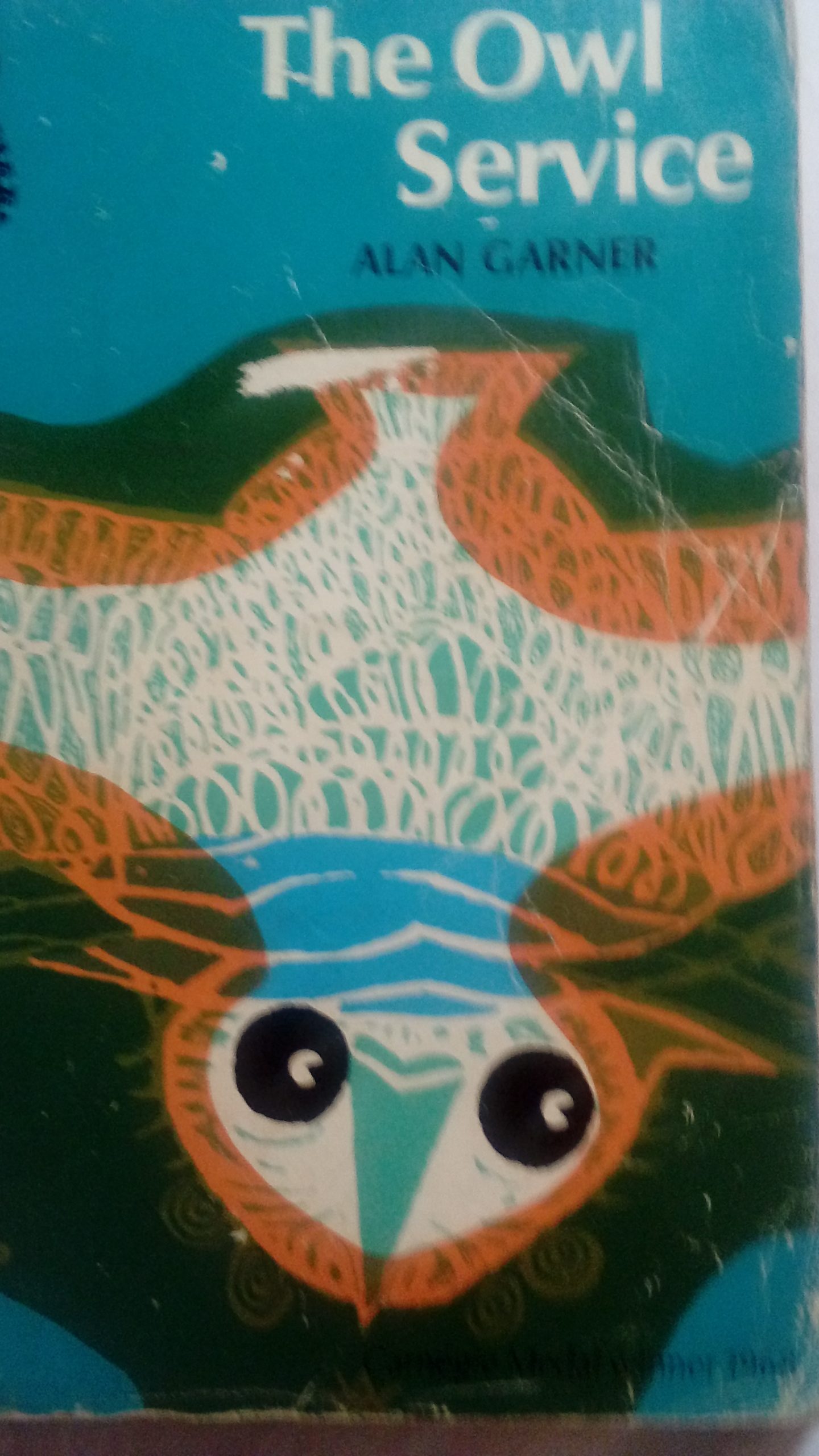
Supernatural cities emerge in a range of contemporary fictions from the horror of Stephen King to the dark fantasy of Clive Barker, the parallel Londons of V. E. Schwaab and China Mieville, magical neo-Victorian Londons in the Young Adult fiction of Genevieve Cogman and Samantha Shannon, and Aliette de Bodard’s fallen angels and dragons in a supernatural Paris. Zombies lurch through scenes of urban breakdown while, in TV, there is the vampire-ridden noir LA of Angel. The large metropolises are not alone in their unearthliness—see the Celtic otherworld that lies behind Manchester in Alan Garner’s Elidor. Then there are the imagined cities of high fantasy, which form a contrast to the gritty familiarity of the cities that feature in the distinct genre of urban fantasy itself or the frequently urban backgrounds of paranormal romance. Supernatural cities are haunted, too, by such urban legends as Spring Heeled-Jack and Old Stinker, the werewolf of Hull.

The conference will explore the image of the supernatural city as expressed in narrative media from a variety of epochs and cultures. It will provide an interdisciplinary forum for the development of innovative and creative research and examine the cultural significance of these themes in all their various manifestations. As with previous OGOM conferences, from which emerged books and special issue journals, there will be the opportunity for delegates’ presentations to be published.

The conference organising committee invites proposals for panels and individual papers. Possible topics and approaches may include (but are not limited to) the following:

The urban weird

The English eerie

Folk horror’s encroachment on the city

Magical cities

Alternative/parallel cities

Urban folklore/legends

Urban fantasy and genre

YA and children’s magical cities

Monsters and demons at large in the city (Dracula, Dorian Gray, Angel, Cat People, King Kong, Elephant Man, The Werewolf of London, Sweeney Todd, Jack the Ripper, Lestat, Zombie ‘R’, mummies, witches, etc.)

Psychogeography

Gothic architecture

Cities and the incursion of the wilderness

Civilisation and nature

Alternative urban histories; neo-Victorianism and steampunk

Gothic/magical fashion, music, and subcultures of the city

Supernatural city creatures (demons, gargoyles, ghosts, vampires, angels)

Animal hauntings and city spectres

Decay, entropy, and economic collapse

Supernatural cityscapes in video games

Gotham City/comic books/dark knights

The disenchantments of modernity and re-enchantment of the city

Dark spaces/borders/liminal landscapes 

Wild, uncanny areas of the city

Drowned/submerged cities

Keynote Speakers:

Prof. Owen Davies, historian of witchcraft and magic, on ‘Supernatural beliefs in nineteenth-century asylums’

Dr Sam George, Convenor of the Open Graves, Open Minds Project, ‘City Demons: urban manifestations of the Pied Piper and Nosferatu Myths’

Adam Scovell, BFI critic and Folk Horror film specialist, on ‘the Urban Wyrd’

Dr Karl Bell, Convenor of Supernatural Cities, on ‘the fantastical imagination and the urban environment’ (title tbc)

Delegates will engage with our Gruesome Gazetteer of Gothic Hertfordshire and accompany us on a tour of Supernatural St Albans and its environs.

Abstracts (200-300 words) for twenty-minute papers or proposals for two-hour panels, together with a 100-word biography, should be submitted by 1 January 2018 as an email attachment in MS Word document format to all of the following:

Dr Sam George, s.george@herts.ac.uk;

Dr Bill Hughes, bill.enlightenment@gmail.com;

Dr Kaja Franck, k.a.franck@gmail.com;

Dr Karl Bell, karl.bell@port.ac.uk

Please use your surname as the document title. The abstract should be in the following format: (1) Title (2) Presenter(s) (3) Institutional affiliation (4) Email (5) Abstract. Panel proposals should include (1) Title of the panel (2) Name and contact information of the chair (3) Abstracts of the presenters.

Presenters will be notified of acceptance by 30 January 2018. 

Posted in CFP (Conferences), OGOM News, OGOM: The Urban Weird | Tagged , , , , , , , , , , , , | 1 Comment

What Happens to Werewolves During a Solar Eclipse

Following on from Sam’s brilliant post about the coming solar eclipse and Bonnie Tyler’s ‘Total Eclipse of the Heart’, I found myself wondering: What about the Werewolves? Will nobody think of the werewolves?

Sure enough, a quick search on the internet showed that not only had people thought about the werewolves, they had also written about them. This article from Mystic Investigationslooks at the effects of the solar eclipse on the werewolf. (I’m assuming it’s tongue-in-cheek, but being on the web, who knows?)

Another thing which caught my eye on Facebook was a post by Justin Alva regarding safety tips during the solar eclipse. These included: ‘Werewolves are not only impossible to kill during an eclipse, they become SUPER werewolves’. The Daily Times has dedicated an entire article to funny safety tips that are spread about during solar eclipses, including the entirety of Alva’s list.

Posted in Fun stuff | Tagged , | Leave a comment

The Dark Side of Studying Vampires

My daily Google search for the word ‘vampire’ brought up a rather disturbing article today. An academic, specialising in vampire studies, has been accused of tacitly encouraging blood drinking during his lectures. (The original story can be found in The Daily Post). As the investigation is ongoing, it would be innappropriate to speculate on this too much. However, during my studies, I have been repeatedly asked whether I a) believe that vampires and werewolves exist, and b) whether I think I am one. The answer is no on both accounts. My research remains in the realm of the fictional and, although I’ve definitely sucked the odd minor cut, I’m actually pretty creeped out by blood.

Whilst there are people who drink human blood for a variety of reasons, many of these people would not think of themselves as vampires other than in the loosest sense and do not behave as fictional vampires do. If you are interested in learning more about these communities, John Edgar Browning’s work is incredibly good and respectful towards the individuals whom he interviews.

However, my main purpose to this post it to assure you, that if you have been keeping up with Sam’s module, ‘Reading the Vampire’, blood drinking is not encouraged and the course is about representations of the vampire!

(If you are thinking of venturing down this path, may I also recommend by own “Vegan Blood” [patent pending], the recipe for which can be found here).

Posted in Fun stuff | Tagged , , | Leave a comment

Forever’s Gonna Start Tonight: The Vampire Eclipse

You maybe surprised to know that serpents, dragons, jaguars, bats and wolves are all associated with the eclipse, according the Smithsonian Magazine’s What Folklore Tells us About the Eclipse.  I’ve long been aware of the myth of the wolf who swallows the sun or moon causing an eclipse or the end of the world. In Germanic tradition it is Mani who guides the moon. When the world is being destroyed (Ragnarὂk), the moon is swallowed by a wolf. To me the eclipse will always be linked to the vampire, not the wolf or werewolf. The vampire is a creature of darkness who loves the shadow and the shade. For this reason I was not surprised to learn that Bonnie Tyler’s ‘Total Eclipse of the Heart’ is a love song for a vampire and was originally named ‘Vampires in Love’. 

Once upon a time there was light in my life
But now there’s only love in the dark
Nothing I can say
A total eclipse of the heart

Love song for A Vampire: A Total Eclipse of the Heart is the full story of my research into these eerie lyrics and as serendipity would have it there is a rumour in Time Magazine and elsewhere that Bonnie Tyler Will Sing ‘Total Eclipse of the Heart’ During the Actual Eclipse!! 

I absolutely love this story so I hope it is true.

Unfortunately the British Press is reporting that

If you want to see a total eclipse, you’ll need to be in one of 11 US states – including Idaho, Wyoming, Nebraska, Kansas, Missouri, Illinois, Kentucky, Tennessee, Georgia, North Carolina and South Carolina. The rest of the United States will witness a partial solar eclipse. 

As for those of us in the UK, we will also witness a partial solar eclipse – although it may be a little underwhelming, as only 4% of the sun will be covered by the moon.

For those watching in the UK, the eclipse will start shortly after 18:30 GMT (19:30 local time), and reach its maximum at about 19:00 GMT (20:00 local time).

As the eclipse occurs very close to sunset in the UK, those in the north have the best chance of seeing it, as it will be lighter for longer.

full details here]


Posted in Fun stuff | Tagged , , | 2 Comments

OGOM: Supernatural Cities 2018

The OGOM Project is known for its imaginative events and symposia, which are often accompanied by a media frenzy. We were the first to invite vampires into the academy back in 2010. Our most recent endeavour, Company of Wolves: Werewolves, Shapeshifters and Feral Humans enjoyed extensive coverage globally and saw us congratulated in the THES for our ambitious 3 day programme which included actual wolves, ‘a first for a UK academy’. Our fourth conference will be an exciting collaboration with the Supernatural Cities: Narrated Geographies and Spectral Histories project at the University of Portsmouth. Supernatural Cities will enjoy its third regeneration, having previously convened in Portsmouth and Limerick.

The Open Graves, Open Minds Project unearthed depictions of the vampire and the undead in literature, art, and other media, before embracing shapeshifting creatures (most recently, the werewolf) and other supernatural beings and their worlds. It opens up questions concerning genre, gender, hybridity, cultural change, and other realms. It extends to all narratives of the fantastic, the folkloric, the fabulous, and the magical. Supernatural Cities encourages conversation between disciplines (e.g. history, cultural geography, folklore, social psychology, anthropology, sociology and literature). It explores the representation of urban heterotopias, otherness, haunting, estranging, the uncanny, enchantment, affective geographies, communal memory, and the urban fantastical.​

The city theme ties in with OGOM’s current research: Sam George’s work on the English Eerie and the urban myth of Old Stinker, the Hull werewolf; the Pied Piper’s city of Hamelin and the geography and folklore of Transylvania; Bill Hughes’s work on the emergence of the genre of paranormal romance from out of (among other forms) urban fantasy; Kaja Franck’s work on wilderness, wolves, and were-animals in the city. This event will see us make connections with the research of Supernatural Cities scholars, led by historian Karl Bell. Karl has explored the myth of Spring-Heeled-Jack, and the relationship between the fantastical imagination and the urban environment. We invite other scholars to join in the dialogue with related themes from their own research.

From its inception, the Gothic mode has been imbued with antiquity and solitude, with lonely castles and dark forests. The city, site of modernity, sociality, and rationalised living, seems to be an unlikely locus for texts of the supernatural. And yet, by the nineteenth century, Dracula had already invaded the metropolis from the Transylvanian shadows and writers such as R. L. Stevenson adapted the supernatural Gothic to urban settings. Gaskell, Dickens and Dostoyevsky, too, uncover the darker side of city life and suggest supernatural forces while discreetly maintaining a veneer of naturalism.

In twentieth-century fantastic and Gothic, perhaps owing in part to a disillusionment with modernity, all manner of spectres haunt our cities in novels, film, TV, and video games. Radcliffean Gothic saw the uncultivated wilderness and the premodern past as the fount of terror; the contemporary fantastic discovers the supernatural precisely where space has been most rationalised—the modern city. Civilisation, rooted etymologically in the Latin civitas (‘city’), is itself put into question by its subversion by the supernatural.

Supernatural cities emerge in a range of contemporary fictions from the horror of Stephen King to the dark fantasy of Clive Barker, the parallel Londons of V. E. Schwaab and China Mieville, magical neo-Victorian Londons in the Young Adult fiction of Genevieve Cogman and Samantha Shannon, and Aliette de Bodard’s fallen angels and dragons in a supernatural Paris. In TV, there is the vampire-ridden noir LA of Angel. The large metropolises are not alone in their unearthliness—see the Celtic otherworld that lies behind Manchester in Alan Garner’s Elidor. Then there are the imagined cities of high fantasy, which form a contrast to the gritty familiarity of the cities that feature in the distinct genre of urban fantasy itself or the frequently urban backgrounds of paranormal romance. Supernatural cities are haunted, too, by such urban legends as Spring Heeled-Jack and Old Stinker, the werewolf of Hull.

The conference will explore the image of the supernatural city as expressed in narrative media from a variety of epochs and cultures. It will provide an interdisciplinary forum for the development of innovative and creative research and examine the cultural significance of these themes in all their various manifestations. As with previous OGOM conferences, from which emerged books and special issue journals, there will be the opportunity for delegates’ presentations to be published.

Keynote Speakers:

Prof. Owen Davies, historian of witchcraft and magic, on ‘Supernatural beliefs in nineteenth-century asylums’

Dr Sam George, Convener of the Open Graves, Open Minds Project, on ‘City Demons: urban manifestations of the Pied Piper and Nosferatu Myths’

Adam Scovell, BFI critic and Folk Horror film specialist, on ‘the Urban Wyrd’

Dr Karl Bell, Convener of the Supernatural Cities project, on ‘Spectral Histories: the fantastical imagination and the urban environment’ ( title tbc) 

Delegates will engage with our Gruesome Gazetteer of Gothic Hertfordshire and accompany us on a tour of Supernatural St Albans and its environs.

Look out for the CFP… coming in a few days time!!!

Posted in OGOM News, OGOM: The Urban Weird | Tagged , | Leave a comment

Gothic Styles: Gothic Substance – OGOM at Gothic Manchester Festival

OGOM will have a strong presence at the Gothic Manchester Festival  this year with Bill and myself both giving talks. This year’s theme is Gothic Style(s). I’m a displaced Mancunian so I always welcome a return to my first city. We will post the full programme shortly so you can see all the speakers but for now here are our own abstracts and titles:

Dr Bill Hughes: Goth Style and Gothic Mode: Subcultural Others and Transformed Genres in Paranormal Romance

In recent years, the new genre of popular fiction Paranormal Romance has made a dramatic emergence, most notoriously with Twilight. Paranormal Romance takes the plot conventions of romance fiction and stylises it with a Gothic mood. All the dark dangers and terrors of the Gothic give an edge to the sunniness of romance by depicting monstrous lovers. Thus humans have love affairs with vampires, werewolves, and all manner of supernatural creatures that once haunted tales of sheer horror, humanising the Gothic mode while problematising romance.

One aspect of the sympathetic monsters of this new genre is that they are a means of tackling issues of the contemporary politics of identity by representing outsiders, or ‘Others’, as the demon lover figure. So racial and ethnic others, people with alternative sexualities, and so on—once the monsters of horror—become assimilated to society through these Gothic-styled love stories. It is often the paranormal romances written for young adults that have the most adventurous angles. And alongside the monsters, such YA novels sometimes feature subcultural outsiders, too—most typically, Goths, who are often the human lovers of the monster. Thus there is a double gothicising of the romance story: the Gothic modulates the form of the narrative and Goth style infiltrates the substance. Monsters can represent a spectrum of otherness, but the subcultural otherness of Goths can exist alongside this, dramatising a complex range of states of alienation and means of reconciliation within contemporary society.

Various writers explore these implications in diverse ways. In this talk, I will look at such novels as Daniel Water’s Generation Dead, Holly Black’s The Coldest Girl in Coldtown, and Melissa Marr’s Wicked Lovely to show how characters performing Goth style, in romances stylised by the Gothic mode, cast light on modern problems of otherness.

Dr Sam George : ‘Black Roses: The Representation and Appropriation of Sophie Lancaster from Broken Britain to Brexit (2007-17)’  

It is ten years since Sophie Lancaster and Robert Maltby were attacked in Stubbylee Park, reputedly for being ‘goths’. This paper interrogates dramatic representations of Sophie’s killing. Black Roses (2012), a poetic sequence by Simon Armitage, is written in the voice of Sophie. It started life as a docu-drama for Radio 4 (2011). I contrast Armitage’s account with Nick Leather’s BBC3 drama ‘Murdered for Being Different’ which aired six years later in 2017 and tells Robert’s story. Armitage gothicised Lancashire as ‘a place where shadows waited, where wolves ran wild’. These marauding wolves, the feral youths who had attacked Sophie were symbols of ‘Broken Britain’ for the right-wing media in 2007.  This paper raises questions about such representations. It asks how hate crime against subcultures is viewed a decade later in Brexit Britain, and why Goth culture still feels a kinship with Sophie.

Maltby recently remarked that ‘The Goth Thing was an Oversimplification’ (The Guardian, 15 June, 2017); that the emphasis should be on the killers and not their Gothic victim. I investigate his claims and bring in counter arguments (has the ‘otherness’ of Goth been minimised in accounts which only seek to demonise the gangs?). Elsewhere, I shed light on the gothicising of Sophie (born under ‘a vampire moon’), raising questions around representation and appropriation. Armitage’s elegy sees Sophie’s own writings interspersed with real life testimonies from her mother. Simon as author is voicing both. Despite my initial problematising of the poem, I seek to celebrate it. Its tragic dénouement, ‘now let me go, now carry me home, now make this known’, resonates more clearly in Brexit Britain. Several police forces now treat crimes against Goths, punks and other alternative subcultures in the same way they do racist or homophobic attacks. Black Roses anticipates such change.

Gothic Styles: Gothic Substance – Gothic Manchester Festival Conference  is only 10.00 for the day and is open to all. It takes place on Saturday, 28 October 2017 at 9.00 a.m. Location: 70 Oxford St, M1 5NH. More details shortly!

Posted in Conferences, Events, OGOM Research | Tagged , , , | Leave a comment

Forthcoming SFF Adaptations for Film and TV

Natalie Zutter, at the always useful Tor blog, has been looking at forthcoming adaptations of SF and fantasy books for film and TV. Some of these are very intriguing; I’m particularly interested in the coming to screen of Kendare Blake’s Anna Dressed in Blood, one of the darker YA paranormal romances I have read, where the human protagonist and narrator (unusually) is male and the monstrous lover a ghost. Other promising ventures are TV’film versions of Alan Moore’s ground-breaking graphic novel Watchmen; Richard K. Morgan’s SF Altered Carbon; Roger Zelazny’s ingenious fantasy series The Chronicles of Amber; China Mieville’s Kafkaesque The City and the City. YA novels that may be adapted include V. E. Schwab’s tale of fantastic parallel Londons, A Darker Shade of Magic; Alexandra Bracken’s tough dystopia of teen mutants, The Darkest Minds. Then there’s a TV adaptation of Deborah Harkness’s witch-and-vampire All Souls Trilogy.

It’s a huge list, but worth browsing; TV and film adaptations are (possibly) forthcoming of comics and novels in a wide range of fantastic literature genres, from children’s, YA, and adult narratives.

Posted in News | Tagged , , , , , , , , | Leave a comment

New book: Werewolves, Wolves and the Gothic, ed. by Robert McKay and John Miller

We’re pleased to announce this forthcoming collection of essays from the University of Wales Press’s excellent Gothic Literary Studies series, Werewolves, Wolves and the Gothic, ed. by Robert McKay and John Miller, due out September 2017.

I should declare an interest: both I and OGOM’s Dr Kaja Franck both have essays in this collection: mine is on Maggie Stiefvater’s YA werewolf romance, Shiver, while Kaja writes on the lupine elements in Dracula. But the collection as a whole looks very promising.

Posted in Books and Articles | Tagged , , , , | Leave a comment

CFP: Gothic Nature: New Directions in Eco-horror and the EcoGothic, Trinity College Dublin, 17-18 November 2017

We’ve posted the CFP recently, but there is now a website for this inspiring conference on Gothic Nature: New Directions in Eco-horror and the EcoGothic at Trinity College Dublin. The deadline for proposals was the 2 April 2017.

Gothic and horror fictions have long functioned as vivid reflections of contemporary cultural fears. Wood argues that horror is ‘the struggle for recognition of all that our society represses or oppresses’, and Newman puts forward the idea that it ‘actively eliminates and exorcises our fears by allowing them to be relegated to the imaginary realm of fiction’.  Now, more than ever, the environment has become a locus of those fears for many people, and this conference seeks to investigate the wide range of Gothic- and horror-inflected texts that tackle the darker side of nature.

Posted in CFP (Conferences) | Tagged , , , , , | Leave a comment

Angela Carter’s The Tiger’s Bride – Oxford Playhouse, 11-16 September 2017

Marvellous Machine will be performing their stage adaptation of Angela Carter’s ‘The Tiger’s Bride’ at the Oxford Playhouse, 11-16 September 2017.

‘The Tiger’s Bride’ is one of Carter’s marvellous transformations of the ‘Beauty and the Beast’ tale in her famous collection of radical fairy tale reworkings, The Bloody Chamber. I have to point out–pedantically, I know–that the ‘Beauty and the Beast’ tale is not by Charles Perrault (as the web page says), but by Madame de Villeneuve–the seventeenth-century women writers of fairy tales do not get the attention they deserve.

Posted in Events | Tagged , , , , , | Leave a comment