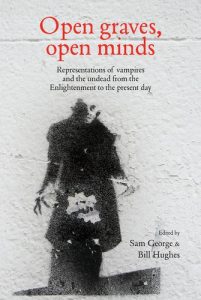
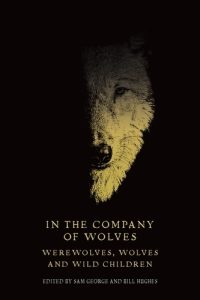
“Werewolves, not Swearwolves” – A Lycanthropic sequel to ‘What We Do In The Shadows’

Fingers crossed there’s going to be a sequel to Jermaine Clement’s and Taiki Waititi’s vampiric mockumentary What We Do In The Shadows (2014). And one which concentrates on its break-out stars, the Werewolf Pack. The “Werewolves, not Swearwolves” line is the most quotable of the movie and viewers fell in love with the gentle, benign werewolves who really didn’t want to hurt anyone. (I like to think their characterisation was an homage to the New-Age masculinity of Oz the werewolf in Buffy the Vampire Slayer, 1997-2003).

As part of the Company of Wolves conference (3rd-5th September, 2015), Lorna Jowett from the University of Northampton will be giving a talk entitled: ‘Swearwolves and Werewolves: Mockumentary, Masculinity and Mundane Monsters’. So to learn more about Rhys Darby’s Anton and his pack before they become mainstream, you’ll need to be in attendance which you can achieve by registering here. (But remember naughty-language will be judged harshly!).

As for movie, I’m just hoping they have open auditions. I think what’s missing from the cast is a foul-mouthed she-wolf to disrupt the pack.

Posted in Fun stuff, OGOM: The Company of Wolves | Tagged , , | Leave a comment

Dark Arts: UCAS student wants to study wandology at Hogwarts, how about ‘reading the vampire’ at Hertfordshire?

6821633-large

I love the story about the prospective student who applied to study wandology at Hogwarts only to get an official letter of rejection from UCAS!! Do they know they can study vampires, werewolves and other dark arts at the University of Hertfordshire thanks to OGOM?  ‘Reading the Vampire’ could be his second choice perhaps or Generation Dead: YA fiction and the Gothic. I teach both of these!!

You can read about Hogwarts student here. For alternative courses that you can actually apply for see

Reading the Vampire

Generation Dead

Posted in Courses, Fun stuff, Generation Dead: YA Fiction and the Gothic news, MA Reading the Vampire module news | Leave a comment

Your chance to walk with wolves – booking open

werewolf-picture

‘Company of Wolves’ is booking up fast folks and generating lots of debate too. There will be some media coverage this weekend which will raise awareness so if you want to ‘walk with wolves’ you really need to book NOW as places are limited!! Please follow the ‘Company of Wolves’ tab above to take you to the booking page. This is going to be some wolf fest!!

Posted in Events | Leave a comment

CFP: Patrick McGrath Symposium, Stirling, January 2016

This looks like a brilliant conference at the University of Stirling on the author Patrick McGrath, one of the leading contemporary writers on psychological terror and horror. The conference will also be looking for 20 minute papers on asylums, madness, Gothic metafiction, McGrath’s contemporaries, and a whole host of related subjects. The deadline is 16th October, 2015.

You can find the full CFP details at The Gothic Imagination.

Posted in CFP (Conferences), Conferences | Tagged , , | Leave a comment

99.9% of all the species that have ever lived are now extinct: re-wild the wolf at Company of Wolves

European grey wolf

It is estimated that 99.9% of all the species that have ever lived are now extinct. You can read the grim facts in ‘The Longer View: Instinct for Extinction’ and view the BBC Timeline of Extinction here
Our Company of Wolves Conference aims to shed light on the projects that are in place for re-wilding and reintroducing rare and endangered species such as the wolf in the UK . Sign up now and learn more!

Posted in OGOM: The Company of Wolves | Leave a comment

Shakespeare’s Irish Werewolves

Maurice Sand, Les Lupins, featured in Montague Summers

Maurice Sand, Les Lupins, featured in Montague Summers

Serendipity is perhaps an overused term but I saw a production of As You Like It today, whilst taking time out from ‘Company of Wolves’, only to find a bardic reference to (were)wolves! In Act V, Scene ii when Rosalind attempts to quell the dispute between Silvius, Phebe, Orlando and herself, she likens their bickering to Irish (were) wolves howling at the moon:

PHEBE
And so am I for Ganymede.

ORLANDO
And so am I for Rosalind.

ROSALIND
And so am I for no woman.

PHEBE
If this be so, why blame you me to love you?

SILVIUS
If this be so, why blame you me to love you?

ORLANDO
If this be so, why blame you me to love you?

ROSALIND
Who do you speak to, ‘Why blame you me to love you?’

ORLANDO
To her that is not here, nor doth not hear.

ROSALIND
Pray you, no more of this; ’tis like the howling
of Irish wolves against the moon.
(V. ii, 81-102)

Shakespearean werewolves? Howling at the moon has become a common metaphor for irrational or futile behavior and Irish wolves might be imagined to be especially disorderly (‘Ireland’s abundance of wolves was for many Elizabethan writers a mark of that country’s lack of civility’(The Norton Shakespeare, eds. Stephen Greenblatt, et al (New York, Norton, 1997), note 6, p 1650)).

The inspiration for Shakespeare’s Irish wolves is apparently a thirteenth-century Latin text on the ‘Wonders of Ireland’ (which drew upon an eleventh-century Celtic poem). It speaks of strange Irish phenomenon such as ships floating in the air. Included in this phenomenon are the tales of Irish wolves, or people given over to lycanthropy, or werewolfism. The Latin text describes a very civilized species of Irish werewolves. They separate from their human body, which they ask their friends to carefully guard, because if their bodies are moved in the slightest, the Irish wolf can never return to human form. Then the re-embodied werewolves go off to eat sheep, not humans.

Intriguingly, the text on the ‘Wonders of Ireland’ that had inspired Shakespeare’s wolves is quoted by Montague Summers over three hundred years later in a study of the werewolf (given below in a free translation):

There are certain men of the Celtic race who have a marvelous power which comes to them from their forebears. For by an evil craft they can at will change themselves into the shape of wolves with sharp tearing teeth, and often thus transformed will they fall upon poor defenseless sheep, but when folk armed with clubs and weapons run to attack them shouting lustily then do they flee and scour away apace. Now when they are minded to transform themselves they leave their own bodies, straitly charging their friends neither to move or touch them at all, however lightly, for if this be done never will they be able to return to their human shape again. If whilst they are wolves anyone hurts or wounds them, then upon their own bodies the exact wound or mark can plainly be seen. And with much amaze have they been espied in human form with gobbets of raw bleeding flesh champed in their jaw.(Montague Summers, The Werewolf in Lore and Legend ([1933], NY: Dover, 2003), p. 206).

I never expected to encounter werewolves in my Shakespearean comedy…seems I just can’t avoid Les Lupins ahead of September’s wolf fest….love the Sands illustration from Summers above.
Posted in Critical thoughts, OGOM: The Company of Wolves | Tagged , , | 3 Comments

Company of Wolves: one of the most talked about social justice issues of the day

Recent events suggest that Animal Rights is quickly becoming one of the most talked about social justice issues of the twenty-first century. Garry Marvin, Professor of Human and Animal Studies at the University of Roehampton will be opening up some of these issues for debate at the Company of Wolves Conference in September. Prof Marvin will be giving a keynote address on ‘Cultural Images of the Wolf and the Wolves’ Re-emergence in Europe’. Once again OGOM seems to have its finger on the pulse of contemporary society as these issues are red hot just now.

Those of you who are following the Cecil the Lion story will be know that Cecil’s death has sparked outrage worldwide, as people everywhere lament the damage that humans continue to inflict on the populations of not just lions, but the planet’s many endangered creatures. On Saturday night, the Empire State Building served as a timely, sky-high reminder of this devastating impact, as images and videos of threatened animals were projected onto the façade of the iconic New York City skyscraper. Cecil was one of the animals featured.

Large images of endangered species are projected on the south facade of The Empire State Building, Saturday, Aug. 1, 2015, in New York. The large scale projections are in part inspired by and produced by the filmmakers of an upcoming documentary called

Large images of endangered species are projected on the south facade of The Empire State Building, Saturday, Aug. 1, 2015, in New York. The large scale projections are in part inspired by and produced by the filmmakers of an upcoming documentary called “Racing Extinction.” (AP Photo/Craig Ruttle)

You can read about this story in Huffington Post

Looking forward to debating some of these issues at the conference.

Posted in Conferences, OGOM: The Company of Wolves | Tagged , , | 5 Comments

Book Prize for Twilight of the Gothic

Congratulations to Joseph Crawford who was just won the Allan Lloyd Smith Memorial prize for his monograph Twilight of the Gothic (University of Wales Press, 2013). Joseph came to speak to UH ‘Reading the Vampire’ students about this work earlier in the year and delighted us with his knowledge and enthusiasm for vampire romance. You can read about this research seminar and our discussions here, together with my favourite quote from the book, now on my updated reading list for vampire fiction!

Dr Crawford will also be presenting a paper, ‘No more than a wild beast or a brute’: Wagner the Werewolf, Sweeney Todd and the Limits of Human Responsibility, at the Company of Wolves Conference in September.

Posted in Events, Publications | Leave a comment

Roger Luckhurst, ‘From Dracula to The Strain: Where do vampires come from?’

A brilliant, concise overview of the origins of contemporary vampire narratives by Prof, Roger Luckhurst of Birkbeck College, London. He traces the vampire story from the Eats European accounts in the eighteenth-century through Polidori, Varney the Vampire, ‘Carmilla’ and (inevitably) Dracula, to the current TV adaptation of Chuck Hogan and Guillermo del Torro’s The Strain, showing how the latter subverts the anti-imigration tendencies in Dracula and suggests something more utopian.

If you enjoyed this, you might want to consider taking an intellectual look at vampire fiction through the ages and signing up for our course: Reading the Vampire: Science, Sexuality and Alterity in Modern Culture on the Modern Literary Cultures MA at the University of Hertfordshire. We study all the books mentioned here plus the early vampire theatre and  contemporary YA fictions of the undead. There is still time to apply to begin in October.

Posted in Critical thoughts | Tagged , , , , , , , , | Leave a comment

Darkness and Light: Exploring the Gothic exhibition, John Rylands Library, Manchester

JohnRylands

Being in the centre of Manchester for the first time in months, I thought I’d drop in to the beautiful Victorian neo-Gothic John Rylands Library and see the Darkness and Light: Exploring the Gothic exhibition. It’s very, very good, with some fabulous first editions of Gothic novels on display, exhibits illustrating Gothic architecture, anatomical plates, photos of Goth people, and work with a Gothic aesthetic from art students at the University of Salford–definitely recommended. Well done, Xavier Aldana Reyes and Linnie Blake from MMU (on first and second wave Gothic literature); Dale Townshend and Rosie Garland who curated the Architecture and Women and the Gothic cases; Peter Linfield, Rachel Fairburn, Gwen Riley Jones, Jill Randall and her students from Salford; and Liza Leonard, the Rylands curator. The exhibition honours diversity and the Sophie Lancaster Foundation. The exhibition is on till 20 December 2015.

Posted in exhibitions | Tagged , , , , , , , | 1 Comment