A Halloween Recipe: Brain Cake

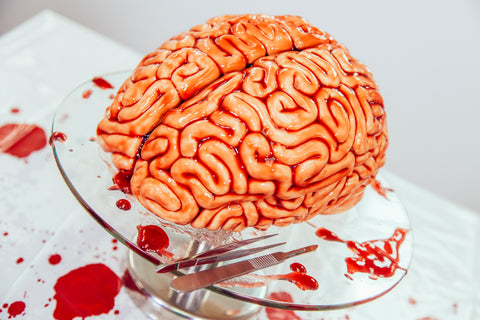
For anyone who is both saddened by the end of this season of Great British Bake-Off but thrilled at the prospect of Halloween, this cake combines the best of both worlds. It is a Brain Cake made with red velvet cake (the superior choice of cake) and it looks like it shouldn’t be too difficult to make. If you’re planning on being a zombie this Halloween this is the perfect post-partying snack.

It is however absolutely horrific to look at (though I am sure it tastes delicious). So you will need a strong stomach to, well, stomach it.

Posted in Fun stuff | Tagged , | Leave a comment

George R. R. Martin’s Skin Trade (1988) optioned by Cinemax

A huge thanks to Curtis Runstedler of Durham University for bringing the following information to our attention on the Open Graves, Open Minds facebook page. According to recent reports, including from the man himself, George R. R. Martin’s werewolf novella ‘Skin Trade’ (1988) has been optioned as a television programme by Cinemax.

The bad news is that the film rights to ‘Skin Trade’ were bought back in 2010 and nothing came of this so potentially the same will happen here. However, with Martin’s recent success with Game of Thrones (2011- ) on HBO, there is a greater possibility that people will want to adapt his other texts. So fingers crossed …

Posted in Fun stuff | Tagged , , | Leave a comment

Review of Xavier Aldana-Reyes’ Body Gothic (2014)

I seem to be getting forgetful in my old age (or it might be my Gothic past catching up on me). Regardless I can’t remember if I posted my review of Body Gothic (2014) by Xavier Aldana-Reyes on ‘The British Society for Literature and Science’ website. If I haven’t, I put it up for your perusal now.

It will be interesting to compare it with Rachey Taylor’s review for the University of Stirling’s ‘The Gothic Imagination’ blog. Both reviews are very positive so if you haven’t already give it a read, I urge you to get hold of a copy.

Posted in Books and Articles, Reviews | Tagged , , , , | Leave a comment

The Emergence of the Sympathetic or Reluctant Vampire in Twentieth-Century Culture

Following my post on the sympathetic witch I should add that I am thinking of Dark Shadows (1966-1971) as being the vampire equivalent of Bewitched (1964-72) and Barnabas Collins as the wonderfully reluctant vampire. Here’s the classic moment when Barnabas Collins is freed from his coffin inadvertently founding the entire modern tradition of the sympathetic vampire (the twentieth-century equivalent of Polidori launching the Byronic vampire in literature in the nineteenth century)

I suppose from this we can look to Fred Saberhagen’s Dracula Tape (1975) which retells the story of the Count from Dracula’s point of view. Once we get a vampire to tell the tale instead of a tale being told about a vampire everything changes and the inversion is almost complete, paving the way for Anne Rice’s Interview With the Vampire (1975). In this as with Saberhagen we get a tape instead of a Tepes, a nod to the fascination with new technologies that so preoccupied Bram Stoker, who references everything from the phonograph to the Kodak camera, all of which are used to track the monstrous vampire in the novel.

Posted in Creative Writing, Fun stuff, MA Reading the Vampire module news | Tagged | Leave a comment

The Emergence of the Sympathetic Witch in Twentieth-Century Culture

MV5BMTU5OTkzNDIyOF5BMl5BanBnXkFtZTcwMjk1OTEzMQ@@._V1._CR30,34,304,426_SY317_CR6,0,214,317_AL_

I’ve been wondering lately how neatly the sympathetic witch corresponds to the rise of the sympathetic vampire in twentieth-century culture?  I was named after one very memorable good witch, Samantha Stephens below, played by Elizabeth Montgomery (my parents were huge fans). I think her dates are 1964-72. The show was written by Claudio Carvalho, Rio de Janeiro, Brazil.  This is of course the same era that gave us I Dream of Jeanie (1965-70) A show in which an American astronaut finds his life vastly complicated when he stumbles on a bottle containing a female genie!! I’d love to know your thoughts on when the figure of the sympathetic witch first emerged in the twentieth century and why?

MV5BMjI3MzgzODIwNl5BMl5BanBnXkFtZTgwMTY5MDgzMjE@._V1_UY100_CR16,0,100,100_AL_

Posted in Critical thoughts, Fun stuff | Tagged | 4 Comments

Gender Flipped Twilight

Following Kaja’s post breaking the news about Beau and Edythe (don’t you just love them already?) I thought I’d post Stephenie Meyer Explains Gender Flipped Twilight from Publisher’s Weekly. Love to hear your views on this. Does Meyer still have her finger on the pulse of middle America or has she flipped along with the gender? Do tell.

Posted in MA Reading the Vampire module news | Tagged , | Leave a comment

The British Library’s Animal Tales

20151008_162813_resized_1

I went along to the British Library’s Animal Tales Exhibition today. The show is divided into subsections which include ‘metamorphosis’, ‘wildness’, ‘animal allegories’, ‘tales for children’ and more. The highlight for me was undoubtedly the manuscript of  Angela Carter’s ‘Mr Lyon’. A short story first published in Vogue in which Carter subtly reworks ‘Beauty and the Beast’. Mr Lyon and Beauty are both transformed in the course of the story: the beast from Lion to Man, and Beauty from selfish socialite to selfless wife. The description of the work argues that the metamorphosis is ironically undercut in the text’s final image of dying petals. The story was later published in ‘The Bloody Chamber’, a collection that inspired and fed into the concept for our ‘Company of Wolves’ conference, being rich in animal/human transmogrifications (new word from today).

Having written on eighteenth-century natural history texts by women, I was pleased that Sarah Trimmer’s History of Robin Redbreast (1793) made it into the exhibition (though not Priscilla Wakefield’s work). Amongst the literary gems were a nineteenth-century illustrated edition of Grimm with wolf image, Keats’s ‘Lamia’, the wonderful Journey to the West (including monkey, a character that has always fascinated), Montaigne’s essay on the cat (1602) and The Bees, a contemporary novel by Laline Paull (2014). I was struck by this unusual cover to Dave Egger’s The Wild Things. Peeking out from the furry binding were lonely nine year old Max’s human eyes from Where the Wild Things Are (creepy).

20151008_161337_resized_1

The exhibition is open until 1st November and is certainly worth a visit. There are tempting  books accompanying the displays in the BL shop too where they are stocking a wide range of animal tales from Ovid to Kafka and Kipling and promoting some classic animal novels such as Moby Dick, Animal Farm, Call of the Wild and Watership Down (I am still traumatised by the ‘Bright Eyes’ theme tune to that animation). Seriously though do go along, it is timely and hugely enjoyable following CoW.

Posted in exhibitions, Reviews | Tagged , | Leave a comment

CFP Books of Blood – with Image

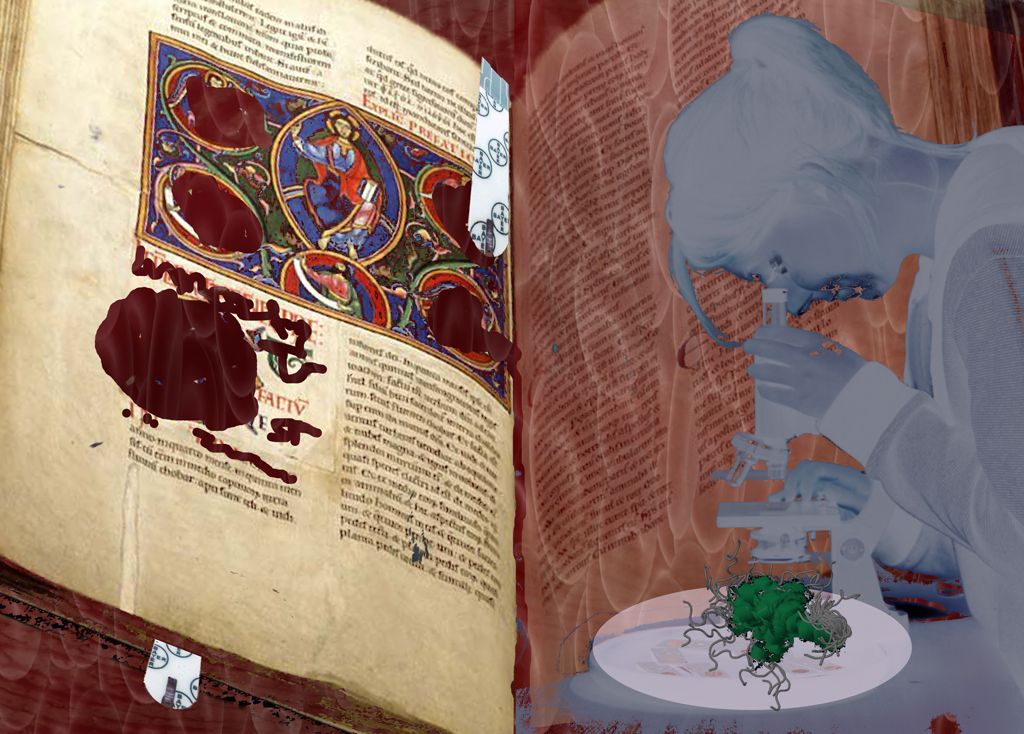
This is the image for our Books of Blood project designed by John Rimmer who will be co-ordinating the exhibition. The CFP closes on November 1st. Further details below. Still time to submit!!

books-of-blood-1024px

CFP: Books of Blood: a cross-disciplinary investigation into blood as representation, symbol, and text in modern culture

All humans ‘are books of blood—wherever you open us, we’re red’ (Clive Barker). If our bodies are books of blood, then they can be read; we invite such readings and contributions where blood is the signifier. We are also interested in analyses and representation of the literal presence of blood in our culture, the importance of the actual material substance of life itself. This is the first stage of a funding bid and collaborative project on blood for the Wellcome Trust http://www.wellcome.ac.uk/Wellcome-Trust-websites/index.htm. Submissions will be chosen to contribute to an exhibition, a series of public talks, and an illustrated book. Initial contributions will be drawn from any of the following fields: science. technology, medicine, forensics, history of science, history of ideas, philosophy, theology, anthropology, myth, legend, folklore, literature, creative writing, painting, sculpture, performance, conceptual art film, TV, video games, song lyrics, popular culture. Topics may include but are not limited to the following:

changing scientific notions of blood in their context
Harvey and the circulation of the blood;
blood lust: vampirism, bloodsucking
consuming blood and its virtues
Landsteiner and blood groups
bloodlines: pure blood, blue blood, bad blood identity; race, genealogy, degeneration; haemophilia; blood libels and racial purity
blood letting, medical practices
blood economy: circulation, exchange; wealth as vampirism
vital fluids: the four humours, creative juices; blood and metonymy with other bodily fluids; blood and semen
true blood, synthetic blood, fake blood
the blood of Christ; the Eucharist and the meaning of transubstantiation
the blood is the life: taboos and rituals; menstrual blood, churching; blood letting, kosher and halal
blood, religion, and sexuality
the bleeding boughs of Virgil and Dante
blood crimes and punishments: retribution; forensics
coughing up blood: consumption and Romantic sensibility
the blood of the body politic
medical practices: blood letting, leeching
blood lust: the appeal of blood; vampirism, bloodsucking; splatter movies, the current vampire vogue
blood disorders: blood poisoning, infection, contagion; tuberculosis, AIDS, CJD
blood money: the economy of blood: circulation/exchange/transfusion; blood tanks/ blood reserves
blood as gift: martyrdom, sacrifice; blood pacts, blood brother ritual; blood donation; the ethics of transfusion and exchange
Please send abstracts of 1,000 words describing how your current research/practice fits the remit of the project and what you would offer in relation to the various outcomes (i.e. exhibition, talks and book). Submissions should be sent by November 1st 2015 as an email attachment in MS Word document format to the following: Dr Sam George, s.george@herts.ac.uk; Dr John Rimmer, johnrimmer62@googlemail.com You should also include a 250 word biographical statement.

Please use your surname as the document title. The abstract should be sent in the following format: (1) Title (2) Presenter(s) (3) Institutional affiliation (4) Email (5) Abstract (6) Biog.
Posted in OGOM News, OGOM: Books of Blood | Tagged , , | Leave a comment

Life and Death: Gender-inverted Twilight

To celebrate the 10 year anniversary of the publication of Twilight (2005), Stephenie Meyer is releasing a re-telling of the first novel entitled Love and Death: Twilight Reimagined later this month. This version re-imagines Bella as Beau (short for Beaufort) and Edward as Edythe.

It is reported that one of Meyer’s aims to counteract the claims that the series was anti-feminist. She is also hoping to correct some grammar. Which I think we can all empathise with – re-drafting is the bane of academic life.

The questions on everyone’s lips, however, must be: “Why Edythe? No, seriously like why make the spelling different. Why not just Edith? Like Edith Wharton? Or Emmanuelle? Or Elizabeth? Or Estella (especially given the already brilliant literary allusions that name has)? Or Eleonora? Or any of the other excellent names beginning with ‘E’?”

Posted in Fun stuff | Tagged , , | Leave a comment

Reflections on ‘The Company of Wolves’

It has been almost a month since ‘Company of Wolves’ and, now that I am back from my holidays, I thought it would be good to reflect on the conference. As is so often the case being an organiser, I wasn’t able to attend as many sessions as I wanted. Instead I want to concentrate on the figure of the wolf which haunted the conference – appearing for a moment on a slide, in the agonised howl of the werewolf, decorating a cupcake, or in an adorable fuzzy version before disappearing back behind the its shadow-version, the werewolf.

The chance to see wolves at the UKWCT  helped to bring home the difference between the Big, Bad wolf of our imagination and the real creature. On our arrival the wolves at the centre came forward to greet us and we were given a talk about communication amongst wolves. The talk clearly demonstrated the subtlety in the relationship between wolves in a pack; there is a huge amount of play involved in lupine relations and dominance is not as clearly demarcated as is often presumed. Following the presentation, we were able to hear the wolves howl. This experience was awe-inspiring. We had picked a glorious, autumnal day and there was an uncanny quality to hearing wolves howling in the brightly lit, English countryside. The uncanniness was exacerbated by the knowledge that once wolves did roam the British landscape. When the wolves had first arrived at the UKWCT, they were kept inside during the night to prevent the sound of their howls carrying to the local communities. Understandably, it was feared that the negative connotations of these noises may disturb local people. After consultation however it was discovered that those who lived nearby learned to enjoy the sound and were happy for the wolves to be outside during the night.

I did wonder whether as fans of horror, the Gothic and the macabre, the delegates may not have negative responses to the sound either. As Stacey Abbott argued in her keynote, ‘Creatures of the Night, what music they make’: The Sound of the Cinematic Werewolf, lupine howling has long been the soundtrack for Gothic movies. Wolves abound in Bram Stoker’s Dracula starting first as a way of signaling Harker’s descent into the dark heart of Romania before ‘invading’ Britain in the form of Count Dracula who leaps from the Demeter in wolf-form. The Gothic quality of wolves has found itself into many classic vampire movies and the wolfish howl signals the transformation of the werewolf starting first as the anguish of the human before becoming the celebration of animal unleashed. Given the delegates familiarity with these Gothic texts perhaps the sound of wolves howling is a signal that we are returning to familiar territory and an imaginative space which we know all too well.

The visit to the wolves was juxtaposed with Garry Marvin’s keynote, Cultural Images of the Wolf and the Wolves’ Re-emergence in Europe, which concentrated on the relationship between man and wolf. His paper made clear that when you speak of wolves it is impossible to strip away the cultural interpretations of the wolf – be they positive or negative. The wolf is always as dangerous as humans want it to be. What Marvin’s work highlighted was that creation of the ‘cultural wolf’ or the wolf of the imagination had a direct affect on our treatment of the animals themselves. The zenith of wolf slaughter was shown to be in the claiming of North America when the wholesale destruction of wolf packs was encouraged: every good cattleman and rancher carried a bag of strychnine in order to poison carcasses and kill wolves. The wolf’s reputation as an outlaw was brought to its bloody conclusion with the introduction of bounties. Individual wolves became notorious through vastly inflated accounts and, when caught, their deaths were recorded as moments of celebration.

Marvin’s paper was met with sombre discussion about how the human imagination and our fear of monsters can be translated into crimes against animals. Having only a few hours before been greeted by wolves to suddenly see images of them about to be dragged apart by horses was shocking and disturbing. In a conference that, amongst other things, closely considered the werewolf, it became clear that it was the ‘were’ that made the wolf monstrous and not the wolf that made the monster. Behind the werewolf is not the wolf itself but humanity’s fear of the wolf.

Posted in Critical thoughts, OGOM: The Company of Wolves | Tagged , , , | Leave a comment