
Alex Hughes is a member of the OGOM Project and a doctoral student in Literature at the University of Hertfordshire. His PhD focuses on the various depictions of fairies in literature and popular consciousness during the late nineteenth and early twentieth centuries.
Francis Young, Fairies: A History (Oxford: Polity: 2026). Review by Alex Hughes.
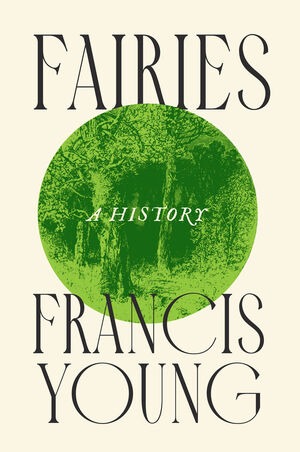
The ongoing scholarly interest in fairies has led to the publication of many books covering many aspects of these folkloric beings. Francis Young’s latest book, Fairies: A History is an excellent addition to the field. Young examines the many changes the fairy has gone through, from their origins in ancient times down to their presence in contemporary culture.
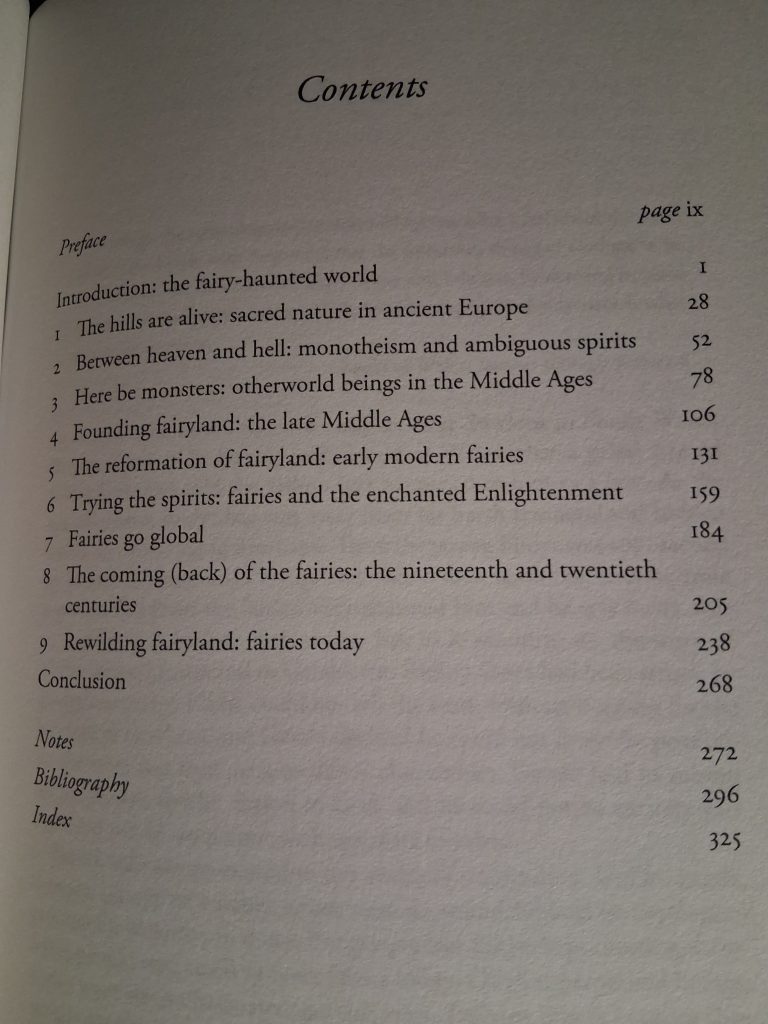
From the start readers are made aware of the complexity of fairies, who refuse to fit neatly into any firm definition or classification. Similarly, Young demonstrates that the fairies do not belong to any one religion. While various spirits and/or ‘godlings’ existed in ancient Europe, the fairies are as much creations of early Christianity as they are survivals of earlier paganism.
Young shows that the attempts of Christians to find a place for fairies in their theology was a difficult one. The typical approach of the established Church was to demonise the fairies, though this was far from the only interpretation taken by Christians. For some, the fairies were benign spirits. This discourse would reach its height during the Reformation, when the fairies were associated with accusations of witchcraft.
By the time of the Enlightenment, views of fairies had changed greatly. There was a tendency of elite thinkers to outright deny the existence of fairies, viewing them as a survival of credulous superstition. However, Young demonstrates that there were plenty of people who still argued for their existence. Furthermore, the period saw a growing cultural interest in the fairies, with depictions of them in the arts becoming increasingly popular.
Young devotes the seventh chapter of his book to examining the presence of fairy folklore in those parts of the world settled by Europeans during the age of colonisation. The topic is fascinating, with Young showing that in some cases the European settlers preserved concepts from their homelands, while others were adapted and changed through contact with indigenous ideas and spirits.
Discussion of the fairies in both the nineteenth and twentieth centuries is disappointingly brief, being contained to a single chapter. This period is a very fascinating time for representations of the fairies, with Victorian Britain alone contributing a rich number of material from both the arts and science. Nonetheless, Young explores some interesting and important events in fairy history from this period such as the growing discussion of them in the developing field of folklore, and the affair and aftermath of the Cottingley fairy photos.
Young ends his book with an examination of fairies in the contemporary period. Fairies are present in many parts of modern culture. They are commercialised for children and tourists. Their existence is asserted by followers of neo-Paganism and some Christians. There are even links between fairy superstition and modern encounters with aliens and cryptids. Readers are left contemplating what the future of fairies may be, as it seems unlikely that we as a culture are prepared to leave them in the past.
Overall, Young’s book is a very thorough exploration of the history of fairies. Readers from many different areas of expertise will find something of interest in Young’s work. Furthermore, it is a useful source for scholars researching the topic of fairies. In short, the book is a worthy addition to anyone’s library.
Alex Hughes is a member of the OGOM Project and a doctoral student in Literature at the University of Hertfordshire. His PhD focuses on the various depictions of fairies in literature and popular consciousness during the late nineteenth and early twentieth centuries.
Discover more from Open Graves, Open Minds
Subscribe to get the latest posts sent to your email.
