David Bowie, science, and Gothic absurdity

A few more Bowie-related links, here. Science Fiction is, one might say, a rationalising mode of the fantastic; SF motifs feature frequently in Bowie’s work from ‘Space Oddity’ to his penultimate single ‘Blackstar’ (the video of which combines elements of SF, fantasy, and Gothic). The SF author Ken McCleod has written an essay, ‘Space Oddities: Aliens, Futurism and Meaning in Popular Music’, summarised here, discussing the use of SF imagery in Bowie’s and other popular music.

In a bizarre outburst of absurdly demonic Gothic and religiosity, the TV evangelist Pat Roberston informs us that Bowie has not died; he has been kidnapped by demons. The fantastic and transgressive forces often found in rock music have always stirred up powerful reactions among conservatives; here, Robertson’s response is itself a hilariously Gothic fantasy of irrational excess. (I’m still not absolutely sure that this piece is not satirical fiction.)

Finally, in tribute to Bowie and to those recurring motifs of Mars, stars, and alienness, astronomers have registered a constellation in his honour, based on the famous zig-zag make-up of his Ziggy Stardust persona. I think this is just wonderful.

Posted in Critical thoughts | Tagged , , , , | 1 Comment

Review of ‘Heartless’ (2014-)

As part of their ‘Walter Presents’ season which celebrates the best of international television drama, Channel 4 are offering the chance to watch the Danish series ‘Heartless’ (2014-). Introduced to viewers as ‘[a]n 18 certificate Twilight‘, ‘Heartless’ is Scandi noir with a supernatural element. (And should not be confused with the British film of the same name). Comparing it to the Twilight series is misleading. Aside from a love affair between a supernatural vampire-like creature and a human, I can think of few similarities. Indeed, the word vampire is not used within the series. The viewer is introduced to an orphaned brother and sister, Sebastian and Sofie, who suck the soul from their victims. If they are unable to stop in time their victim bursts into flames. They must eat souls regularly or they become ‘hungry’ and are called ‘black-eyes’. This name comes from the fact that once their hunger is aroused, their eyes turn entirely black. Their peculiar appetite arises at the age of 12 or 13 suggesting a connection to sexual maturity and puberty. Throughout the series both sexual and romantic desire cause them to become hungry and to kiss means to feed.

Season One, and there is meant to be a second series coming soon, is only eight episodes and follows Sofie and Sebastian as they try to discover how they came to be. This search leads them to Ottman Manor a prestigious private school with a dark past. It is this history, rooted in the witch trials of the 1600s, that is the key to the two siblinds understanding how they can manage their condition. The narrative entwines the past and the present in a particularly Gothic manner. Sofie has a pathological fear of water which is never entirely explained but appears to be a genetic memory related to her ancestor’s unhappy past. The setting also recalls a number of YA Gothic texts with the repressive regime of Ottman Manor presided over by the headmaster, Just, and a trio of prefects being particularly nightmarish. The Gothic trope of the absent mother is also present. Sofie and Sebastian are given up by their mother and Just’s wife is dead leaving his three daughters, Ida, Emilie and Clara (who, it turns out, might be witches). Echoing his control over the school, Just attempts to keep his daughters separate from the rest of the students – although unsuccessfully.

In the opening scenes, Sebastian and Sofie sit in a car discussing how long it has been since Sebastian has fed. Unlike Sofie he is racked with guilt about his actions and wants to discover the reason for their affliction. However, any sympathy we may feel for Sebastian is lost when we release that he is in many ways the more volatile of the two. Having convinced his sister to go hunting, which she does in a club scene redolent of those in the Blade films, he pulls her victim to his own mouth failing to release in time so that they burst into flames. This theme continues throughout the series with Sebastian’s moral consciousness – Sofie tells him it is sick that he falls in love with his food – leading him to become warped: forced into actions he detests and increasingly unable to tell the difference between right and wrong. Sofie though more at ease with her identity is ultimately more sympathetic because in acknowledging her affliction she has more control over it.

Indeed the series concentrates less on physical containment than emotional repression. Though Ottman Manor is the typical Gothic haunted house, the students seem surprisingly free to come and go as they like. They are continually leaving the campus to wander about in the woods. There are repeated shots of individuals and couples moving through huge spaces of wilderness drawing the viewer’s attention to their isolation. It is the emotional undercurrents that make viewing this series uncomfortably. The prefects’ sadistic pleasure in following orders and Just’s increasingly unhinged search for the ‘black eyes’ drives much of the violence. Sofie and Sebastian’s feeding habits hint at both sexual violence and addiction. They are unable to have a healthy relationship. Sebastian starts to regularly feed from Sofie’s room-mate Nadja who is enthralled by him. He does not care for her but relies on her for a food source. Nadja returns to him time and time again apparently addicted to his ‘kisses’ but continually fighting her desire for him. Unlike many YA Gothic texts, she is very conscious that the mysterious and aloof creature she loves is treating her cruelly.

The relationship between Sofie and Sebastian also veers into abusive and incestuous. It is possible to pass energy between them but only through kissing one another. Episodes repeatedly show scenes of the two of them apparently making out. Sebastian also forces himself onto his sister in order to suck from her. Meanwhile, in the Just household, Ida has taken the role of her mother and is submissive to her father’s wishes. Her younger sister Emilie accuses Ida of sleeping with Just though this is never verified. These darker elements make the series far more explicit than other YA Gothic texts. Not only is sex portrayed relatively openly on screen but the metaphors and tropes of Gothic and vampiric texts – sex, violence, death, desire, incest, repression – are far more overt. There is a lack of coyness about what the supernatural represents.

However these elements can also make the series problematic. They are not explored enough to give a clear message regarding sexual violence. There are times when characters and their actions are portrayed too simplistically without a nuanced exploration of their behaviour. In part this is because the script is sparse and much of the story is told without speech. Instead the series relies on beautiful shots of the Danish countryside to create a moody atmosphere. The lighting throughout the episodes is striking: chiaroscuro is used effectively and is supported by the monochrome palate of the costumes. Sofie and Sebastian both wear black whilst Just’s daughters are usually dressed in white – think Sofia Coppola’s The Virgin Suicides (1999). Just’s bright house is juxtaposed by the dark interiors of the manor. Visually ‘Heartless’ is understated Gothic which undercuts the more melodramatic elements of this teen supernatural drama. The soundtrack is equally striking – immediately after finishing the series I started listening to everything ‘Roxy Jules’ has produced.

In some ways ‘Heartless’ is a welcome antidote to the saturated colour of fairytale Gothic whilst in others it falls back on teenage cliché a little too often. Would I recommend it? Yes. Do I think everyone will like it? Not at all. But if anyone does decide to watch, please comment below and let me know what you thought.
 

Posted in Reviews | Tagged , , , , , | 67 Comments

‘Dark Shadows’, Serialisation and Sympathetic Vampires

Decider.com has published an article in its ‘Cult Corner’ entitled ‘”Dark Shadows” attacked Gothic Romance with Pulpy Plots’ which pays homage to the Gothic soap opera ‘Dark Shadows’ (1966-1971). Whilst the article is relatively solid fare – essentially a potted history of the series and its storyline – the title is misleading. By placing Gothic romance in opposition to ‘pulpy plots’, it ignores the overlap between the two genres. Moreover it suggests that the series was a reaction to Gothic romance rather than feeding off its success. ‘Dark Shadows’ is Gothic romance for a television generation. The article does mention the importance of the character Barnabas Collins, an ancient vampire, who re-invigorated the series when he was introduced to viewers and become a ‘housewife’s favourite’. In his work Twilight of the Gothic (2014), Joseph Crawford puts forth the idea that the sympathetic vampire finds its roots in ‘Dark Shadows’. If you are interested in this idea, you can read more about it in Sam’s blog post ‘The Emergence of the Sympathetic or Reluctant Vampire in Twentieth-Century Culture’In his talk of the same name given at the University of Hertfordshire, Crawford connected Collins success with the growing field of paranormal or dark romance novels which over feature supernatural protagonists such as vampires or werewolves.

Later this year, I will be speaking on the subject of sympathetic vampires for the event ‘Vampire Hearts, Modern Killers’. Whenever I am asked to talk about vampires, especially sympathetic vampires, I find myself in the Twilight-conundrum. Given the popularity of the series, it would be remiss of me not to acknowledge the text – similar to ignoring Anne Rice’s Interview with the Vampire (1976). Moreover Meyer’s depiction of vampires strays from the canonical vampire to such an extent that it marks an important point in their evolution. However Meyer’s novels have also been derided to the extent that the mention of ‘sparkling vampires’ is byword for the ridiculous, saccharine and domestication of our favourite blood-sucking fiend. In my talk, I have chosen to concentrate on the multiple strands that feed into the Twilight series and its presentation of the sympathetic vampire. And, to return to ‘Dark Shadows’, one of the aspects I consider is the power of serialisation in creating complex monsters.

One of the earliest vampire protagonists is Varney from Varney the Vampire (1845-47), a Victorian penny dreadful. Though he is introduced as a cruel monster, physically unattractive and with murderous intent, the narrative introduces elements that allow the reader to feel sympathy towards Varney. Other texts from this period tend to follow human protagonists as they attempt to destroy the vampire who is almost always portrayed as monstrous. However within a serialised text such as Varney which needs to extend its storyline, a storyline which follows the history of its vampiric anti-hero, this narrative arc would be too simplistic. Instead Varney is shown to be more complex and his evil nature is more nuanced – indeed he is as much victim as perpetrator. Ultimately he cannot accept his nature and destroys himself. Varney’s story includes romance elements to humanise him further.

I would argue that the impetus of serialisation continues to shape our supernatural (anti)heroes today. Barnabas Collins, though cursed to be a vampire, is not simple antagonist and as his sexual appeal became obvious so too did his character lend itself to romance. It is noticeable that Buffy the Vampire Slayer (1997-2003) started as a film released in 1994. However the ‘girl kicks vampire-butt’ story was not successful until it could be given more space to be explored – which included the possibility that Buffy could fall for a vampire, in this case the emotionally-tortured Angel. Even Spike, introduced as a ‘Big Bad’ in Season Two, is redeemed and the slow reveal of his back story shows him to be a nuanced antagonist.

Within contemporary YA Gothic, series of novels have become a popular trope. Though I would not deny the influence of monetary factors involved in serialisation, I think the desire for multiple volumes looking at the histories of supernatural characters is more complicated. (Following the success of Harry Potter (1997-2007), Twilight (2005-2008) and The Hunger Games (2008-2010), it would be hard to suggest that the possibility of franchise is not tempting). In part the creation of other worlds has a draw for readers’ imaginations and this can be more easily expressed over multiple volumes. But, considering my previous debates, I think it is also a sign that we want our monstrous protagonists to be complicated. In ‘Crush’ (Buffy, S5: E14), Buffy refuses to believe that Spike can truly love her as he is a vampire and lacks a soul. Drusilla tells Buffy: “Oh, we can, you know. We can love quite well … If not wisely”. Though her words reference Shakespeare’s Othello (1604), I think there is also an echo of Dracula’s claim: “Yes, I too can love”. In Stoker’s novel, this statement is never explored and the narrative ends in the death of the monster. A hundred years later, Buffy the Vampire Slayer allows its vampiric protagonists the possibility of both love and redemption.

(On the subject of sympathetic ‘monsters’ and serialisation, Sam wrote a blog considering how the role of programmes such as ‘Bewitched’ (1964-1972) affected the portrayal of witches. It’s interesting to note that the time frames for ‘Bewitched’ and ‘Dark Shadows’ are relatively similar).

Posted in Books and Articles, Critical thoughts, Resources | Tagged , , , , , , , , , , , , | 5 Comments

David Bowie, Neil Gaiman, Yoshitaka Amano

More on the interaction of David Bowie and fantastic literature. If Bowie’s various personae–the masks and images he was constantly recreating and presenting to an audience–can be seen as texts, then they lie in an intertextual relationship with a story by Neil Gaiman, ‘The Return of the Thin White Duke’. These, in turn, relate to paintings by Yoshitaka Amano inspired by this phase of his career.

See this article, which has further links to the story and the paintings:

Neil Gaiman Gives David Bowie a Proper Origin Story in “The Return of the Thin White Duke”

Posted in Critical thoughts | Tagged , , , , | Leave a comment

OGOM: YA Fiction and the Gothic

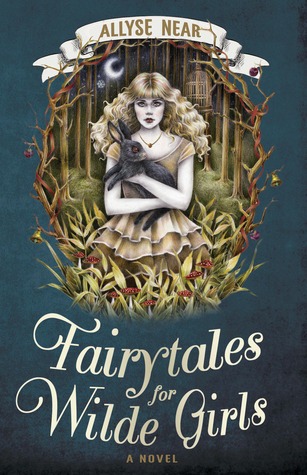
I’ve given a lot of thought to the titles I want to teach on my ‘Generation Dead: YA Fiction and the Gothic’ module but it is hard not to become overwhelmed once you start looking at lists and series. Most book sites now list gothic titles within the YA genre separately so we have YA Gothic on the Books Central site for example and  Good Reads 130 YA Gothic titles . Of the authors I have chosen, only Holly Black makes it on to the Good Reads list oddly (no. 17) but I did find some intriguing and creepy titles browsing on there, such as Fairy Tales for Wilde Girls

16120434

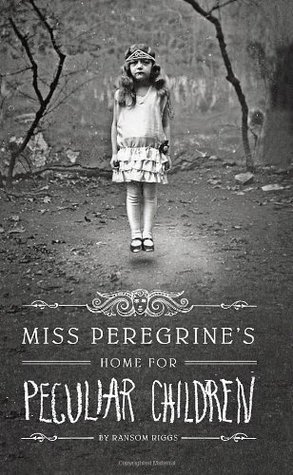
and Miss Peregrine’s Home for Peculiar Children.

9460487

The Books Central site is very easy to browse with built in reviews and buying options and I did enjoy exploring the material on there (whilst at the same time being very conscious of what is missing and how feminised and romance orientated it is). Kaja’s post on fairy tale fashion is apt here as it seems that girls are encouraged to go straight from Disney princess mode to attracting a demon lover! I hope to embrace subversion and try to find texts that can break this mould. I notice that Annette Curtis’s Blood and Chocolate is listed  on this site and I have heard quite a lot about this novel from Kaja who is researching werewolf texts (she has presented conference papers on this book).

598_1038824-1350171709

It is hard to know how impartial these sites are and whether certain authors or series are purposefully being promoted. I would like to know whether these lists are compiled by publishers or readers? Wording on the Good Reads site suggests that anyone can add books to the lists or vote for the titles but there appears to be a point system and the books are arranged numerically from 1-130 apparently showing their readability and appeal (though if you look very closely you can see that even some of the ones quite high up only have two reader’s votes).

These lists did not influence my choices at all. I knew I wanted to address undeadness, high school gothic, otherness, difference, liminality and animal/human boundaries. I was also looking for books which were in an intertextual relationship with gothic novels or fairy tales. Vampires were obviously going to feature (given OGOM and my ‘Reading the Vampire’ MA course) and I wanted to expand into zombies, and werewolves (prior to ‘Company of Wolves’) and dark fairies. I also needed to find books that could appeal to male students too and this proved to be very hard indeed given the marketing.  You only need to look at the covers of the majority of these novels to see that many publishers have given up on male teens as readers and I was aware that I needed to get twenty something male students engaging with these novels.  My final list is below:

Simon Armitage Black Roses: The Killing of Sophie Lancaster; Neil Gaiman, Coraline; Daniel Waters, Generation Dead; Isaac Marion, Warm Bodies; Marcus Sedgwick, My Swordhand is Singing; Buffy the Vampire Slayer [episode 2.13, ‘Surprise’, episode 2.14 ‘Innocence’]; Stephanie Meyer, Twilight; Alyxandra Harvey, My Love Lies Bleeding; Holly Black, The Coldest Girl in ColdTown; Maggie Stiefvater, Shiver; Marcus Sedgwick, The Dark Horse; Robin McKinley’s, Beauty; Julie Kagawa, The Iron King

I seem to have chosen well so far as the student feedback from last year was resoundingly positive but I still have anxieties that I have overlooked some absolute gems and so I keep on looking! Do let me know what you think of the short list.

Resources are fairly limited for my purposes too as they are either promotional and run by publishers or educational and aimed at librarians or secondary school teachers. I would like to see a site that explores these books via theories of contemporary gothic or intertextuality. There are one or two useful sites that I would direct my students to for browsing authors and series such as Cynthia Leitich Smith’s site. Her novel Tantalize made it on to my long list because of its intertextual relationship with Dracula but it did not make the final twelve. I would recommend her YA resource site to students though.

tantalize-sm

Another site that occasionally throws up something interesting is the Scholastic one. I found the promotional video for Shiver  on here and an author page for Maggie Stiefvater. There is also a. page which links to a Q & A on Shiver a Wolves of Mercy Falls discussion guide (for teens) plus Stiefvater reading aloud chapters 1 and 2.

The Beyond Twilight: Young Adult Fiction and the Gothic blog from Lancaster has an original round table discussion with writers and academics and is worth visiting. You can link to it from this blog.  It has not been updated for quite some time now sadly.

I am keen to expand this YA area of the OGOM blog and the posts relating to the ‘Generation Dead’ module should make for an engaging and searchable archive. You can access all our posts and link to YA author sites from this blog.

Do let OGOM know if you are researching in this area or are a writer in this genre with ideas for research we’d be interested to hear from you!!

Posted in Critical thoughts, Generation Dead: YA Fiction and the Gothic news, OGOM Research | Tagged , , , | 2 Comments

David Bowie, Cat People

We’re not quite in the Company of Wolves, but Bowie’s theme song for Paul Schrader’s 1982 remake of the classic Val Lewton/Jacques Tourneur feline shapeshifting film Cat People (1942) is yet another OGOM link.

Posted in Film Clips | Tagged , , , , | Leave a comment

David Bowie, The Hunger

And, of course, David Bowie has a more immediate connection with OGOM because of his role in Tony Scott’s classic vampire film, The Hunger.

Posted in Film Clips | Tagged , , | Leave a comment

David Bowie Narrates Disney’s Peter And The Wolf

Posted in Film Clips | Tagged , , , | 1 Comment

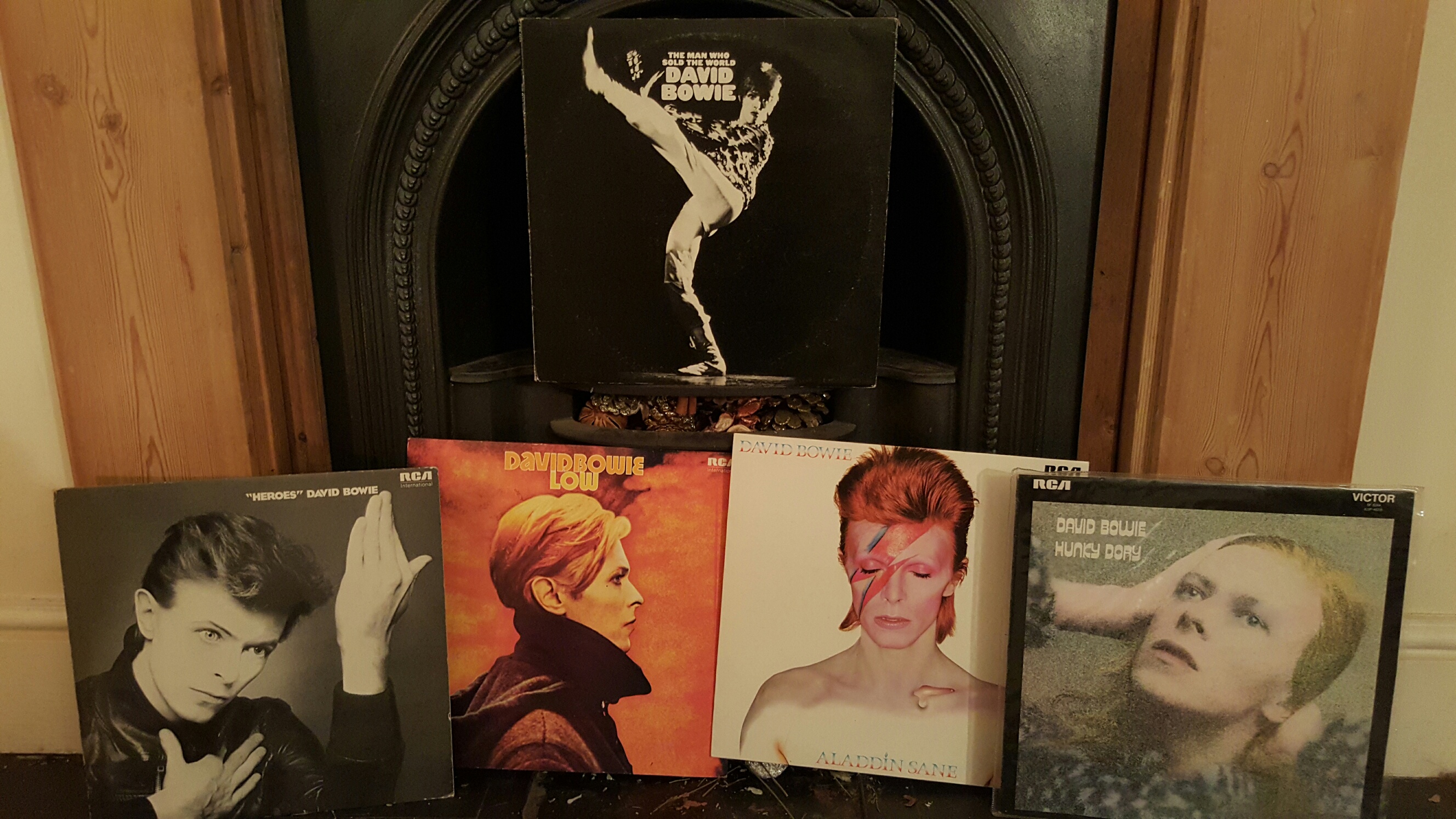
The stars will look very different tonight

“your face, your race, the way that you talk. I kiss you, you’re beautiful, I want you to walk”

Goodnight Star Man x

20160111_204153_resized


Posted in Uncategorized | 2 Comments

Bill Hughes, ‘”But by blood no wolf am I”: Language and Agency, Instinct and Essence – Transcending Antinomies in Maggie Stiefvater’s Shiver series’

More from me on YA paranormal romance. This time, I’m writing about Maggie Stiefvater’s beautifully written and very moving werewolf romance, Shiver. Shapeshifter fictions, for obvious reasons, allow writers to explore all that is animal and instinctive about human beings and thus about what it means to be human. Choosing wolves as the animal involved also brings in notions of hierarchy and, inevitably, sexual pleasures and gender. For wolves are pack animals and the freedom of the wolf allows a heightened, uninhibited sexuality. But that pack nature leads to problematic issues over male dominance (and rank in general) and the joy of animality is also a loss of agency, for wolves’ desire is automatic and instinctual.

Thus many werewolf paranormal romances fall into the trap of reinforcing ideologies both of male dominance and of human beings as reduced to their biology. But Shiver refuses to do that. Stiefvater acknowledges the temptations and pleasures of an instinctual life and intimacy with nature yet, ultimately, she celebrates the human through asserting the distinctive powers of language. It is language that enables free will, creativity, and the possibility of mutual love.

This again is still a draft so it may have its awkward moments.

Download here.

Posted in Critical thoughts, Generation Dead: YA Fiction and the Gothic news | Tagged , , , | Leave a comment