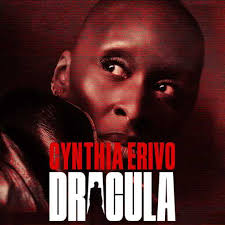
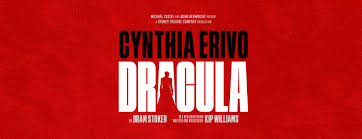
Cynthia Erivo’s performance in Dracula is currently inspiring a lot of debate in the media due to its gender flipped agenda (round up of reviews here). Cynthia plays both The Count and his female victims. The production, adapted and directed by Kip Williams, is aiming to show that Stoker’s bloodsucking vampire is created by desire and the force of psychic repression. It’s showing at The Noel Coward Theatre until May 2026. I was interviewed for the Theatre Programme by journalist Marianka Swain. This feature, available to all theatre goers, can be found here as a PDF entitled The Undying Allure of the Vampire.
Interestingly, the first successful dramatization of Dracula adapted by Hamilton Deane premiered at the Grand Theatre in Derby in 1924 (twelve years after Stoker’s death). At this time, all plays intended for performance had to be examined and approved and given a licence. Deane had to submit his play to the Lord Chamberlain’s office in order to get it licensed. Dracula’s attack on Mina was censored (and Lucy is dead before the start of the action). Also, the censor prohibited the audience from seeing the vampire in the lady’s boudoir or viewing the staking of Dracula. Theatre goers saw the arm movements and then a cloak was drawn over the vampire’s features. Despite this, attendees fainted during this scene and Deane saw the potential for publicity, employing a nurse in uniform to walk nightly down the aisles!
In the twentieth century, Liz Lochhead’s adaptation released the repressed sexuality of Stoker’s novel for theatre audiences, much like the current production. Lucy Beckoned Dracula as her love and his attack on her parodied the marriage night as he wrapped a bridal veil around her naked form and stained the veil and bed with blood from her neck. At the end of the play, both Harker and Lucy are forced to reflect on their attraction to the vampire.
Kip Williams’s new production is also attempting a queering of the vampire through Cynthia’s portrayal of the Count. The novel itself is striking in its contexts; it is linked through 1888 London to the violence of the Jack the Ripper murders, the Wilde Trial in 1895 and also, the coining of the term ‘psychoanalysis’ by Freud in 1896. The Wilde Trial could be seen as a kind of return of the repressed for Stoker during the years he was writing the novel. The first five chapters have been read as a nightmarish meeting between Harker and Dracula, fictionalised projections of Stoker and Wilde. Stoker, some believe, had rejuvenated Wilde in the specific form of the vampire. At this time, sexologist Edward Carpenter had termed homosexuality ‘The intermediate sex’, inhabiting a no man’s land, like the vampire, who is neither alive or dead. If we are to go with this reading of the novel, it makes sense to think of the vampire representing not Wilde himself, but the fears, desires, repressions and punishments that Wilde’s name came to evoke in 1895-7 when Stoker was writing the novel. Dracula spends much of the novel as a hunted man, trying to escape his coffin/prison. You can see Dracula as a dreamlike projection of Wilde’s traumatic trial. The secrets necessary to a vampire’s life becoming ominous emblems of the vampire’s otherness and outsiderness.
In the novel, the construction of monstrosity is often analogous to sexual desire; this is the theme that this current production is developing. Erivo is showcasing a queering of the vampire for twenty-first-century audiences and a feminist retelling. The staking of Lucy is a fatal correction of her dangerous transgressions and violation of gender codes. It’s her fiancé Arthur who drives the stake in.
For me the most disturbing scene in the novel is not the staking of Lucy but Dracula’s attack on Mina, ‘God’s own woman’. Dracula forces Mina to drink from a wound in his chest; he has opened a vein with his sharp nails, forcing her face down on his chest ‘like a child forcing a kitten’s nose into a saucer of milk’. Her night dress is smeared with blood. Despite the lack of censorship in today’s theatre, I have never seen an adaptation of Dracula that has ever done justice to the terror this scene evokes in the novel.
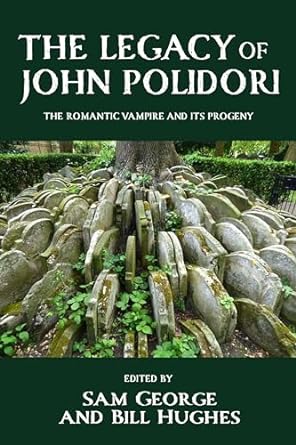
The staging of the vampire has a fascinating history, and this current production is a reminder of it and also the fact that theatrical vampires before Dracula have always been overlooked. If you go to see this production, it might inspire you to find out about earlier vampire theatricals. My essay, ‘Phantasmagoria: Polidori’s The Vampyre from theatricals to vampire- slaying kits’ is in our book on The Legacy of John Polidori : The Romantic Vampire and Its Progeny. It’s out in paperback in June!