We are delighted that five members of OGOM have had papers accepted for ‘Gothic Selves/Artificial Others’, the 18th Biennial Conference of the International Gothic Association, to be held at the University of Hull in July.
We’re very grateful to the IGA, who have also been very supportive of OGOM in the past, such as with funding for events like our recent Sea Changes conference, and have long-listed our recent collection on John Polidori for the Justin D. Edwards Prize for Best Edited Collection). We have many friends in the IGA and have collaborated with members and been inspired by them.
This is a great opportunity for us to present our various strands of research into the encounters of Gothic, folklore, the fantastic and enchantment that our postgraduates and more established members of the Project are pursuing. In keeping with the conference theme, you will see that we are engaging in different ways with the challenge of AI, articulating ways in which Gothic and fantastic texts, narratives of Faerie glamour and enchantment, of doubling, shadowing and replacement, might subvert the reification and dehumanisation that AI threatens. All of these papers indicate how an ethical Gothic can emerge out of this path of research.
We hope you will find, as we do, that the proposals complement each other neatly and show the coherence of OGOM as a project. We hope, too, you will come to hear our presentations and engage in dialogue with us.
We thought it might be of interest to share the abstracts for the papers each of us are presenting at the conference, so here they are:
Shabnam Ahsan, ‘Fairy glamour and deepfakes: An AI-critical reading of Flora Annie Steel’s “The Son of Seven Mothers” and “Princess Aubergine”’
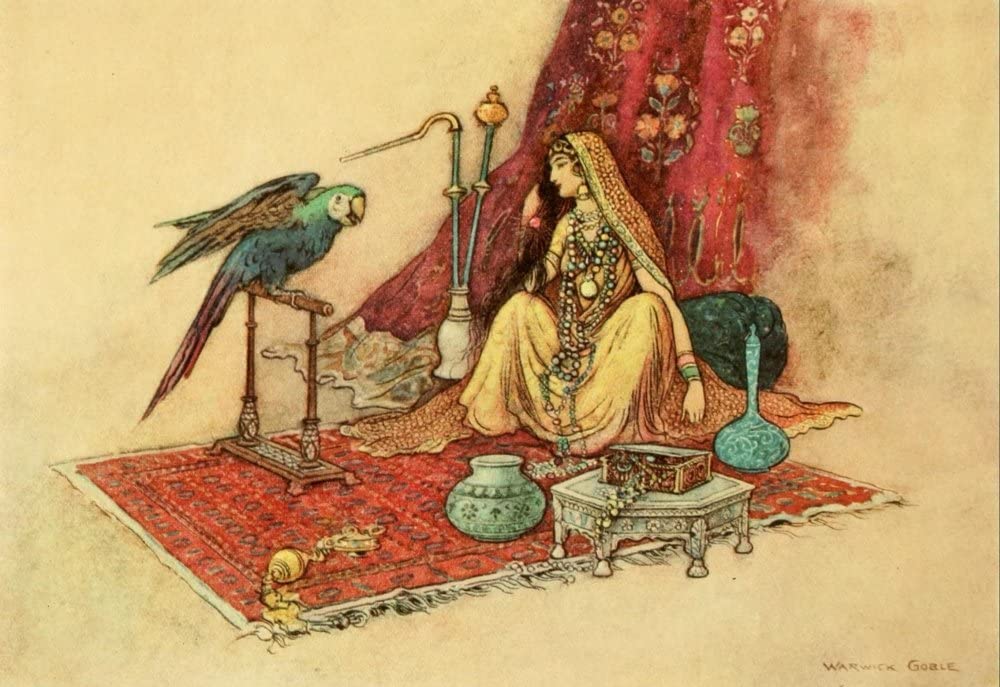
Gothic fairy tales and folklore contain numerous references to the deception of humans by supernatural beings, through the magical alteration of their perceptions: vampires make themselves appear more attractive to their victims; fairies in English and Celtic folklore seduce humans by appearing as beautiful men and women, or offering food that seems tempting but is rotten or poisonous in reality; and in Indian folklore, supernatural entities lure human beings into relationships by bewitching their senses and feelings. These all usually have dark consequences.
Generative AI now has the potential to wield similar power over our perception of reality, with hyper-realistic deepfakes manipulating political and other narratives, and blurring the lines between illusion and truth. While airbrushing and filters have existed for some time, the increasing seamlessness of AI-generated images coupled with voice-cloning has implications for humanity’s ability to distinguish reality from fiction, making it easier to deceive public opinion and simultaneously drive people to seek unrealistic beauty standards.
This paper draws on the ideas of Marina Warner on beauty in fairy tales, and Toni Morrison on the internalisation of colonial beauty standards, to perform an AI-critical reading of Flora Annie Steel’s retelling of the Indian fairy tales ‘The Son of Seven Mothers’ and ‘Princess Aubergine’ (1884). This paper argues that the pursuit of artificial or unnatural beauty in fairy tales directly and indirectly turns humans into a less-than-human version of themselves, ultimately leading to self-destruction and a breakdown of social relationships.
Sam George, ‘Dark sides: Runaway reflections, sentient shades, and lost souls’
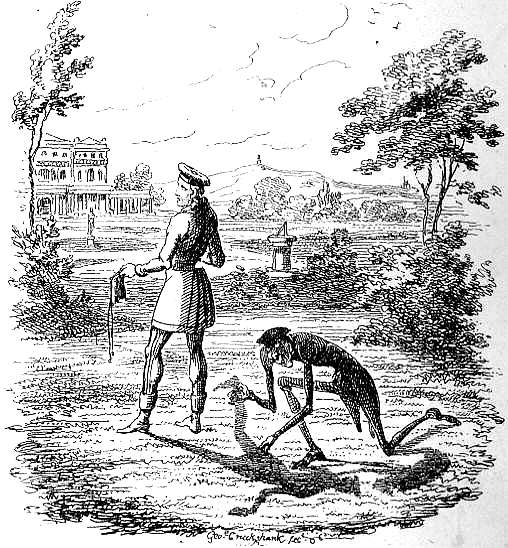
In the twenty first century the threat of AI to our humanity is analogous to losing one’s shadow or soul. Nineteenth-century folklore warns of this detachment. J. G. Frazer records the lore of the shadow in The Golden Bough in 1890, at a time when Bram Stoker, J. M. Barrie and Oscar Wilde were writing. We learn, for example, that the villager ‘often regards his shadow or reflection as his soul, or at all events as a vital part of himself, and as such it is [. . .] a source of danger to him [. . .] if it is detached from him entirely (as he believes that it may be) he will die’.
This paper lays bare the ritualistic and magical beliefs that inform late nineteenth- and early twentieth-century shadow lore. It journeys into the shadowy worlds of Peter Schlemihl in Adelbert von Chamisso’s tale, the protagonist of Hans Andersen’s ‘The Shadow’, Dracula, and Peter Pan, who, on being detached from their shadows, have themselves become shades. Peter Schlemihl sells his shadow with terrifying consequences; Dracula the undead casts no shadow; Peter Pan loses his shadow, and most disturbing of all, Hans Andersen’s scholar is put to death, not by his enemies, but by his own shadow.
I demonstrate how this gothic motif of lost and stolen shadows uncannily mirrors the dehumanising effect of AI in the present. Will losing our shadows to AI (there is no human imprint), render us similarly displaced and in existential crisis?
Jane Gill, ‘Doubles and monstrous AI in Ernst Raupach’s “Wake Not the Dead” (1823)’
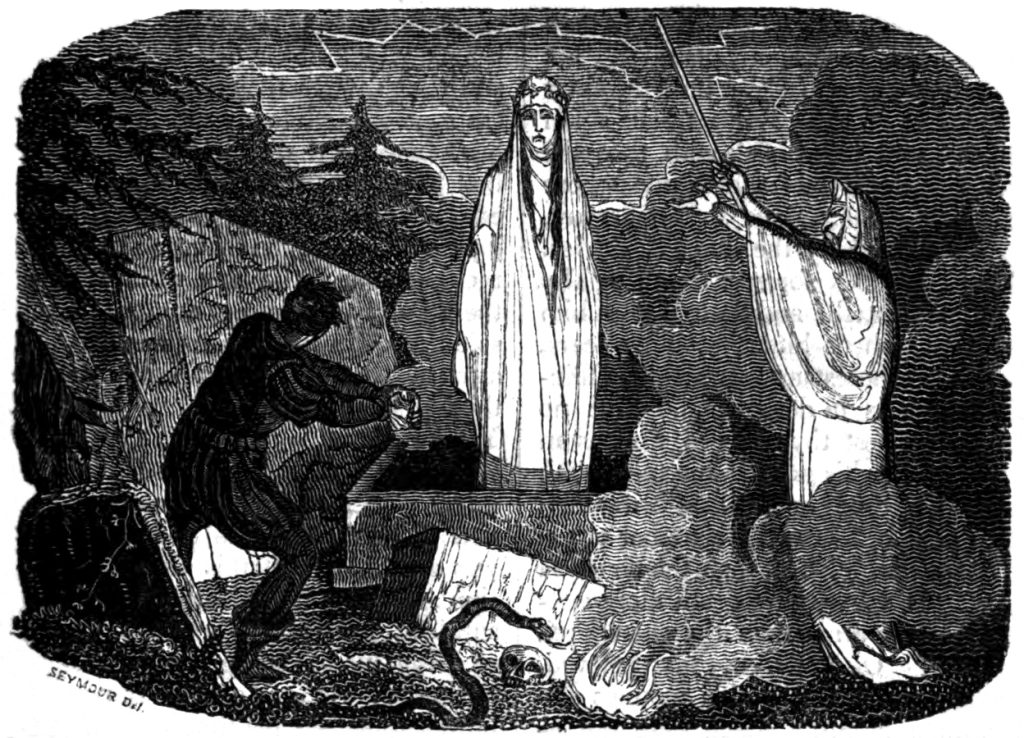
In Ernst Raupach’s short story ‘Wake Not the Dead (1823)’, doubling functions as a mechanism of the uncanny in Freud’s sense. This is also the case for contemporary AI avatars. Each produces anxiety not by transgressing the human form, but by repeating it too closely, transforming the double from a symbolic defence against loss into a destabilizing figure that collapses distinctions between self and other, life and mechanism, and ethical responsibility and technological control. In Raupach’s short story, Walter, driven by grief and guilt, uses forbidden knowledge to resurrect his deceased wife, Brunhilda. Although she returns physically intact, her presence is uncanny and increasingly hostile, revealing that resurrection produces not restoration but a distorted double.
Freud’s concept of the uncanny locates horror not in radical difference but in distorted familiarity. He describes the double as an early psychic safeguard against death, re-emerging as a threat to the integrity of the self. Gothic literature repeatedly stages this transformation, most notably in narratives of artificial creation and resurrection, where imitation replaces continuity and resemblance substitutes for identity. This paper argues that Raupach’s ‘Wake Not the Dead’ dramatises the uncanny consequences of doubling through figures that replicate human presence while remaining ontologically unstable. Contemporary AI avatars intensify this dynamic by producing simulations of human behaviour that lack both consciousness and mortality, extending Freud’s theory into a technological context. Raupach’s story suggests that the uncanny arises not from the presence of the nonhuman, but from the misrecognition of repetition as life, a confusion that destabilises subjectivity and exposes the ethical limits of creation.
Rebecca Greef, ‘The profile picture of Dorian Gray: The dual nature of individual online presence and anonymity’
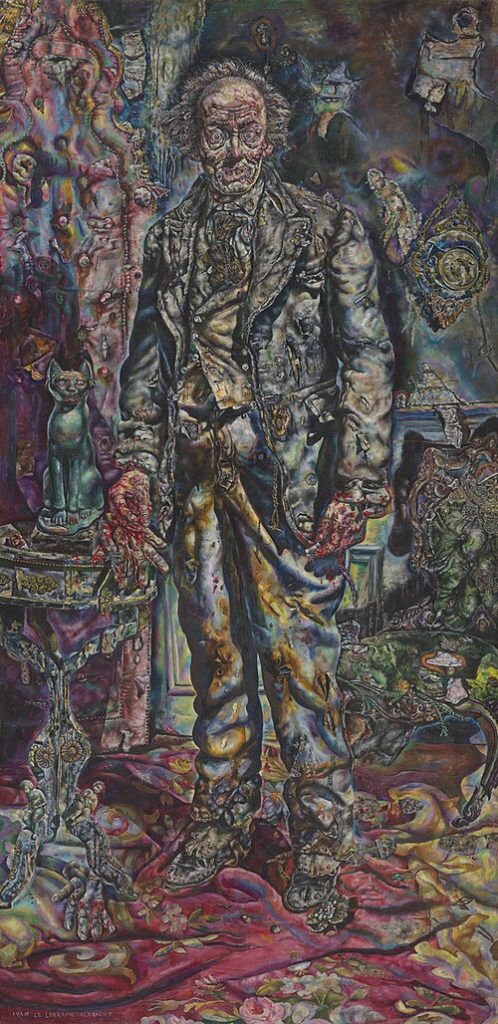
Oscar Wilde and Robert Louis Stevenson created novels that examined the duality of a person, where good and evil were at least visibly separated. Wilde’s The Picture of Dorian Gray saw the eponymous Dorian bargain his soul to remain young and beautiful forever, with the evidence of his true nature confined to a portrait. Stevenson’s The Strange Case of Dr Jekyll and Mr Hyde split human nature into two distinct people so that the publicly respectable Dr Jekyll could give in to his curiosity for debauchery and violence.
In the digital world, it is truly possible to hide away behind a picture and commit whatever atrocities you want beyond the barrier of a screen or keyboard. Moral responsibility in the online sphere can be removed from the conventions of everyday human interaction, leading some people to act maliciously knowing that they can remain anonymous and beyond retribution. From Thomas Hobbes’s Leviathan to posthumanism, the relationship between a person and their actions helps to define what it means to be human. For Hobbes, personal culpability and responsibility were important, but he saw flexibility and allowed for ‘sovereigns’ to overcome individual laws for the sake of society.
This paper will seek to explore the dual nature of the online and offline person, with reference to the boundaries of shifting societal expectations of interactions. In the world of AI and anonymity, what is permissible, and what remains unacceptable – destined to be disguised by a picture that cannot be hidden in the attic.
Bill Hughes, ‘Emancipating artefacts: Gothic enchantment and authentic consciousness in two contemporary changeling novels’
Mary Shelley’s Frankenstein was conceived amidst discussions about ‘whether man was to be thought merely an instrument’, wrote John Polidori. Frankenstein is a warning, among other things, about how to treat autonomous others, and a critique of the kind of science that objectifies and extracts from both human beings and nature (of which AI is the quintessence).
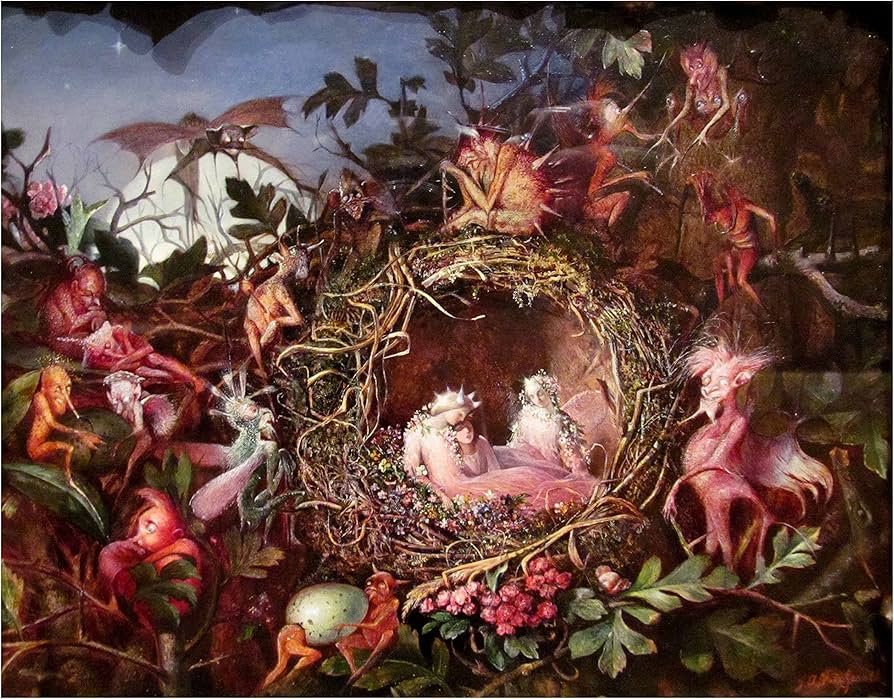
In folklore, the changeling is an intrusion of otherness into human life that is uncanny and threatening. It mimics the human life it replaces, invoking Gothic horror, just as Frankenstein’s creature does. In this paper, however, I look at two contemporary changeling fictions from the perspective of Gothic as enchantment and not merely horror. ‘Enchantment’ is richly polysemic; it may mean the loss of autonomy through enthrallment to another; conversely, an enchanted world may be a utopian alternative to a world enchained by a disenchanted instrumentalism.
In Frances Hardinge’s Cuckoo Song, the changeling Not-Triss is an artefact, but she is able to transcend her artificial nature through an authentic consciousness. It is her enchanted aura that differentiates her from the thing-like and frees her to become a fully moral subject. In H. G. Parry’s A Far Better Thing, Sydney Carton, the human who is doubled, frees himself from Faerie thraldom to realise his autonomy. Yet Faerie is also a realm of enchantment, manifest in the beauty of the changeling replacements. Both protagonists escape their thing-like state through a non-deterministic intelligence, motivated by enchantment. Enchantment is both terror and wonder, enslavement and emancipation; it founds subjectivity and inspires a critique of mechanical reason.
Discover more from Open Graves, Open Minds
Subscribe to get the latest posts sent to your email.
