“Catherine Earnshaw, may you not rest, as long as I am living! You said I killed you – haunt me then….I believe – I know, that ghosts have wandered on this earth. Be with me always – take any form – drive me mad! Only do not leave me in this abyss where I cannot find you!” (Heathcliff on the death of Catherine, Emily Bronte, Wuthering Heights, 1847)
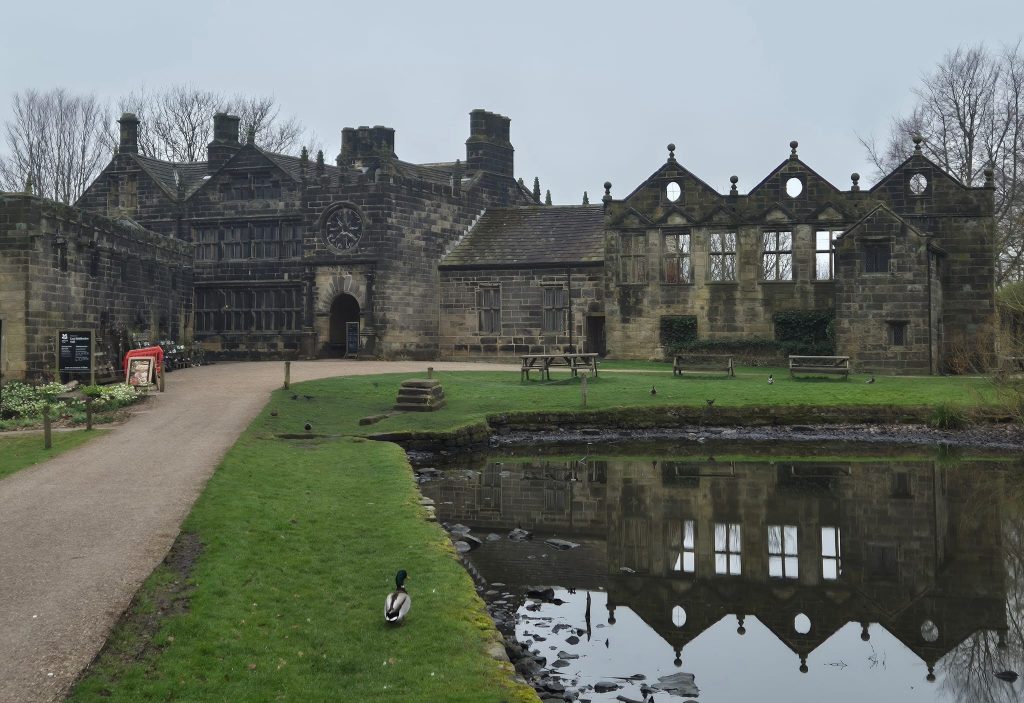
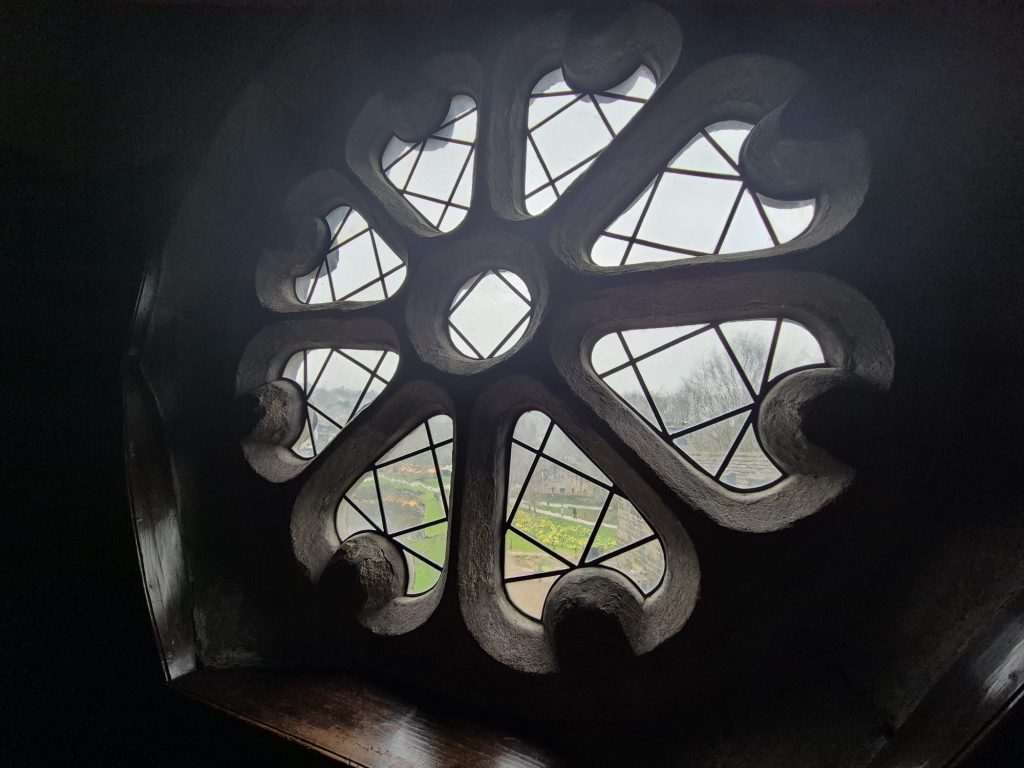
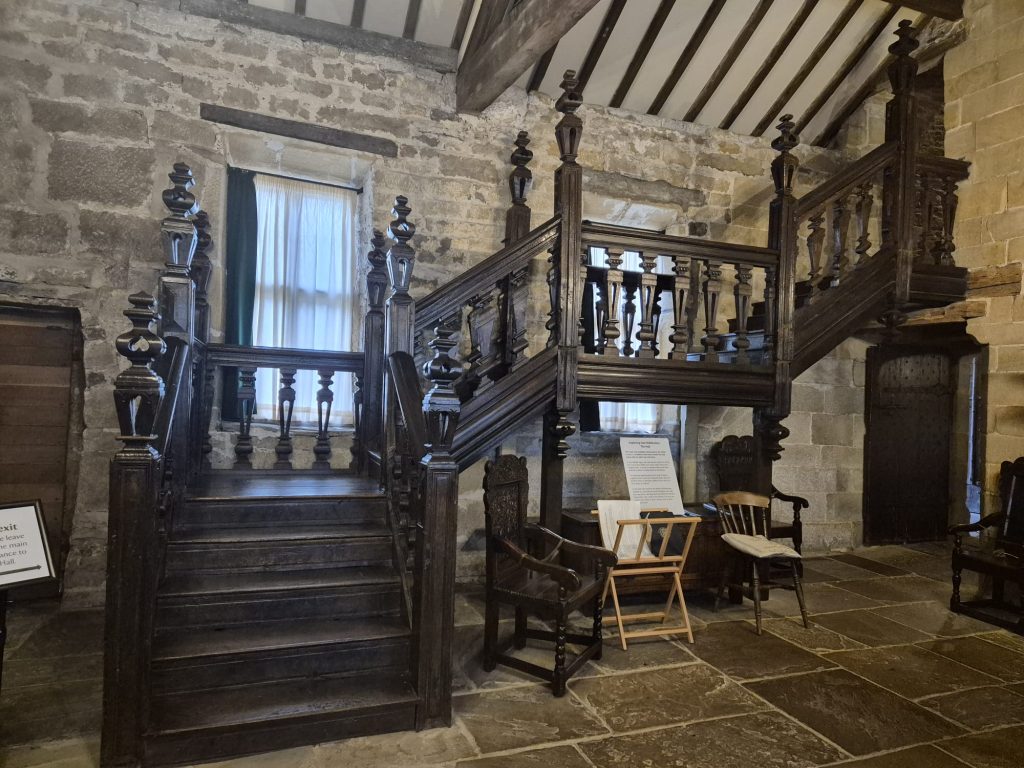
Last week I went on a gothic pilgrimage to East Riddlesden Hall in Keighley, West Yorkshire. This gothic pile, which dates back to the seventeenth century, has appeared in no less than three screen adaptations of Emily Bronte’s Wuthering Heights. The Hall’s contrasting features, with romantic Rose Windows set in darkened Yorkshire stone, make it the perfect setting for Bronte’s obsessional love-beyond-the-grave story.
Remarkably, the Hall was saved from demolition in 1937. It has in its archive a copy of the screenplay of the first ever film version of Wuthering Heights from Ideal Films Ltd in 1920. Perusing the typewritten script by Eliot Stannard, with annotations by the director A.V. Bramble, felt very special, a standout research moment. The level of detail is fascinating to Bronte scholars as it describes every scene and costume change that is important to this re-telling. You can read something of the description of Heathcliff in the photo of the script below. He is ‘capable of intense loves and hatreds’; ‘coarse’, ‘rough’ and ‘uncultivated’, ‘he is physically and temperamentally three times more manly than Edgar Linton’.
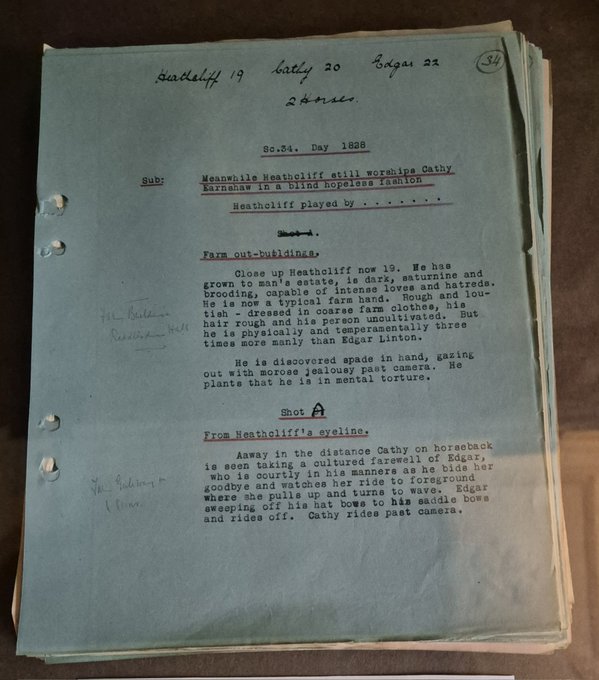
This 1920 film has sadly been lost to the ravages of time but the script was miraculously recovered in 2014. The archive also has the cinema programme which accompanied the original release of the film, with photos of its filming locations. This too is an important part of the legacy of the novel and its adaptations.
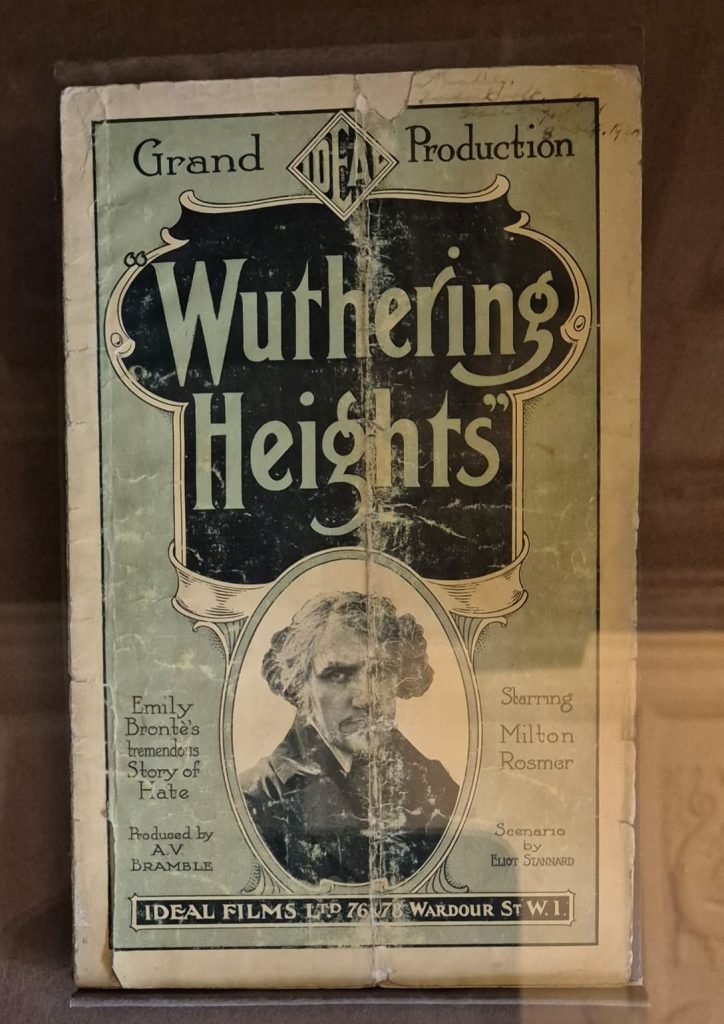
To date, there have been over 35 film and television adaptations of Emily Brontë’s Wuthering Heights. Since the first silent version in 1920, the story has continually been adapted with major films appearing in 1939, 1970, 1992, 2011 and 2026. The most iconic of these is the 1939 version starring Laurence Olivier and Merle Oberson.
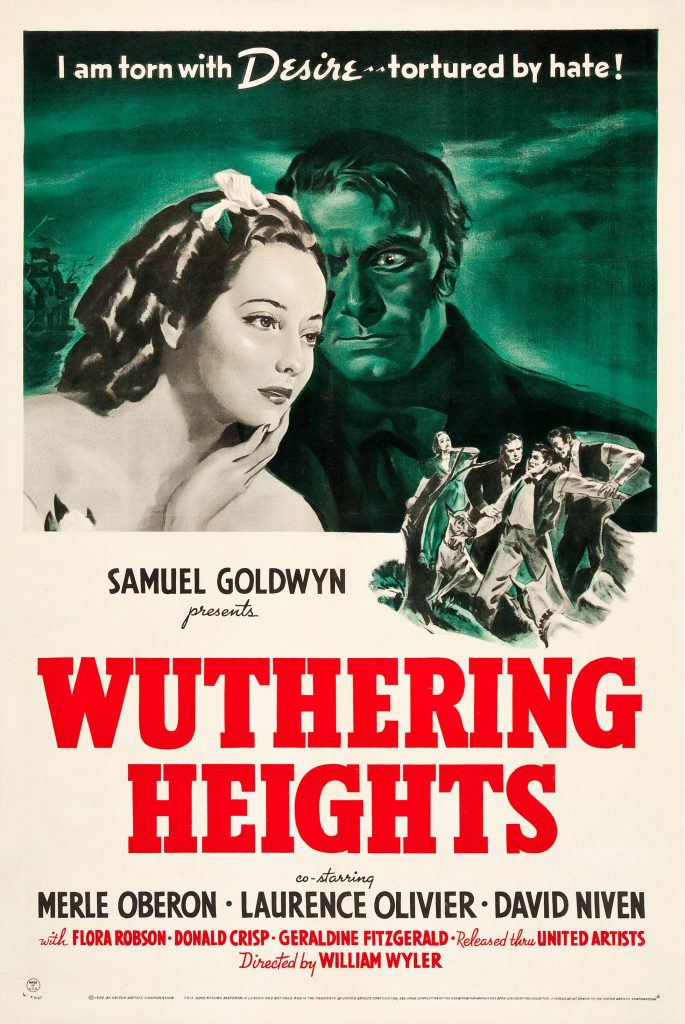
Notable other twentieth-century adaptations include the 1970 film starring Timothy Dalton, and the 1992 version starring Ralph Fiennes and Juliette Binoche. In the twenty-first century we’ve had the 2009 Tom Hardy film and the 2011 version directed by Andrea Arnold. There have been interesting world adaptations too, from Abismos de Pasión (1954, Mexico), to Dil Diya Dard Liya (1966, India), and Hurlevent (1985, France). Wuthering Heights has inspired countless retellings, with each director shaping the story in their own way, from intense tales of revenge to sweeping unconventional romances, culminating in today’s adaptation directed by Emerald Fennell and starring Margot Robbie and Jacob Elordi. The overt eroticism of this manifestation of the novel and the film’s obvious and intentional anachronisms have made it this year’s most divisive film. (Bill posted on Valentine’s Day about the controversy, about the romance elements in the novel and films, and about faithfulness in adaptations.)
In light of this, it’s fascinating to be able to come full circle and to return again to this spirited yet faithful 1920 script. Through this I have experienced the ideas behind the first ever adaptation of the gothic romance between Cathy and Heathcliff. East Riddlesden Hall has similarly evolved over time; like our approach to the novel, it has endured many changes and manifestations.
All photos are my own. With thanks to the Bronte Parsonage Museum who have worked tirelessly to preserve and share the literary legacy of the Bronte sisters.
Discover more from Open Graves, Open Minds
Subscribe to get the latest posts sent to your email.
