
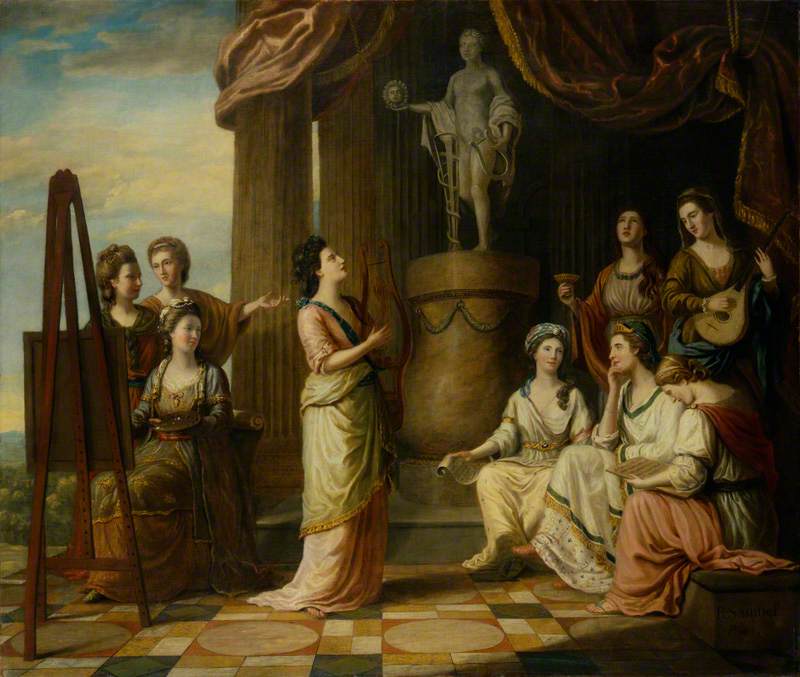
Human beings are ineluctably social, and every action they perform that is social, including the transformation of nature so they can live, is coordinated through language. Our lives rest upon our faculty for dialogue, for reaching agreement on what is true, and a fundamental assumption that we are speaking to one another in good faith.
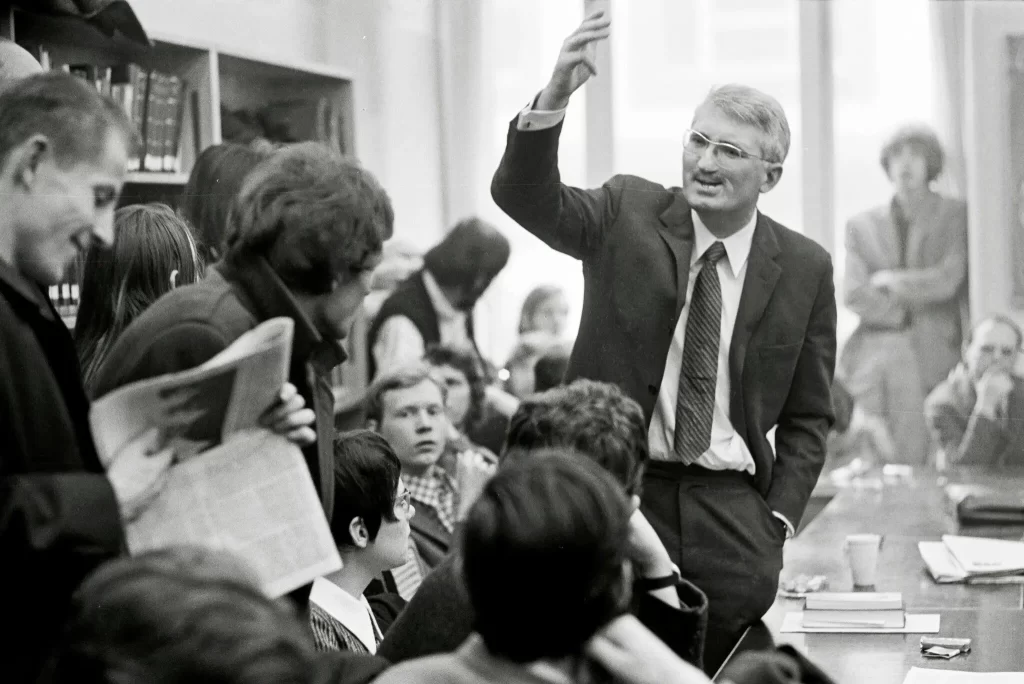
This is really what lies at the core of the philosophy of Jürgen Habermas, who has just died at the age of 96. Habermas before his death was, I think, the greatest living philosopher and one of the most important thinkers from the second half of the twentieth-century until now. He was certainly one of the most erudite, drawing on a deep acquaintance with continental philosophy (particularly the Frankfurt School, of which he is considered the second generation), but also forging links with the analytical tradition of the Anglophone world. He was particularly indebted to the speech-act theory of Austin and Searle. His interests ranged from sociology through psychology, anthropology, linguistic, jurisprudence, and religion.
Some of his earliest writing was inspired by the horror of Nazism and the refusal of some Germans to adequately acknowledge it. He mounted a fierce attack on Heidegger’s complicity with the Nazis and on German right-wing historians who minimised the uniqueness of the Holocaust. But it is The Structural Transformation of the Public Sphere (1962) that he is probably best known for to English speakers, an account of how the growth of literary criticism in the eighteenth century is connected to the formation of a space of debate and critique in opposition to the State. This space, the public sphere, would degenerate as mass media became commodified. He has been much misunderstood here; the public sphere was more a regulative ideal that was never fully realised, and Habermas was aware that it excluded the working class, women, and minority groups.
His later work generalises that ideal as a universal and essential foundation of human society, which of necessity presupposes a communicative rationality. There is an ‘ideal speech situation’ of informed, uncoerced, and unconstrained dialogue. But this can be subject to various kinds of distortions, from unconscious and systematic self-deception to deliberate, strategic manipulation. In the magnum opus that is the culmination of a series of books that develop this theme, The Theory of Communicative Action (1981) he shows how what he calls (drawing on phenomenology) the ‘lifeworld’, our everyday lived experience, can become ‘colonised’ by autonomous systems of power and money.
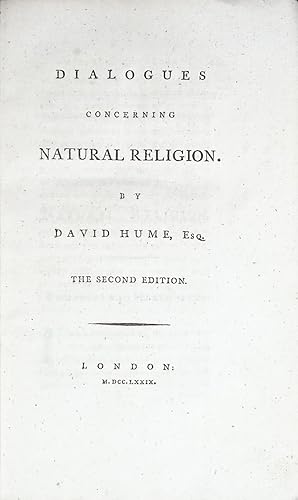
My doctoral thesis was on the eighteenth-century dialogue (as a literary genre in the manner of Plato), a genre that flourished in that period. I was trying (not as successfully as I would like) to show how the formation of the English novel at that time was modulated by the dialogue form and often incorporated it, and how these dialogues themselves were novelised in ways that enriched them as literary artefacts. I relied on Habermas’s notion of communicative reason considerably, so I do feel a personal sense of loss.[1]
However, I do think there are flaws in Habermas’s thought. I find unsatisfying his shift away from Marxism and the incorporation of systems theory, and the subsequent political stances that this led to. The aesthetic dimension is very undeveloped and the poetic, polysemous aspect of language neglected in favour of the purely communicational. I was hugely disappointed by his recent public intervention on Palestine (I think there are complex reasons for this, both personal and cultural, and one Iraqi scholar has pointed out how completely at odds these remarks are with Habermas’s own universalist philosophy).
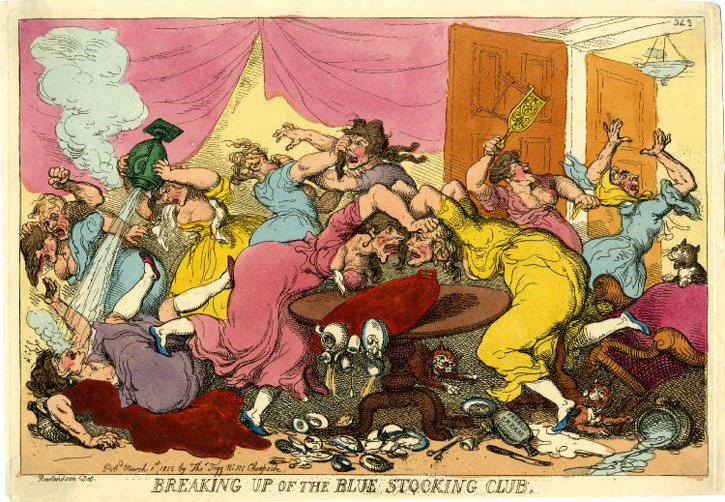
Yet Habermas’s central thesis is of crucial importance, especially in an era where the very idea of truth is under attack, where rational debate seems impossible and where it is demonstrably blocked and distorted by the corporate ownership of channels of communication. Where, too, many people as well as being deliberately and systematically manipulated seem sunk in astonishing depths of self-deception.
In an age of growing unreason, Habermas’s defence of the Enlightenment as ‘an unfinished project’ preserves some of the radicalism of the Frankfurt School and their conviction that, despite the narrowing of reason to the purely instrumental, only reason can unfold the human capacity to create a better world. His humanist stance and meticulous arguments against anti-humanist strands of contemporary thinking when billionaire posthumanists seize hold of information and communication and neoliberalism aims to reify and dehumanise everything, is inspiring.
In a time of polarisation and the intensified atomisation that social media fosters, and amidst debates about free speech, Habermas’s regulative ‘ideal speech situation’ reminds us of our authentic dialogic capacity. The core argument that consciousness is social, linguistic, and intersubjective is a crucial counterpoint to the rise of AI; Habermas constantly reminds us what it is to be truly human.
And how, you may ask, does Habermas fit in with the OGOM Project? His focus on the systematic distortion of communication between people may cast light on how Gothic texts dramatise manipulative villainy and extreme dislocations of rationality. His discourse ethics, which places much emphasis on the recognition of the Other, can help theorise the notion of an ethical Gothic that we are pursuing. Gothic literature has had an ambivalent relationship with the Enlightenment since its inception, and Habermas was one of that project’s most ardent and subtle defenders, so his thinking can illuminate that relationship more acutely. But perhaps it is in the gaps in Habermas’s thought, gaps that the very rigour of his thought reveal, that we turn to in order to see ways of re-enchantment that resist the instrumental reason of disenchantment that Habermas, following Weber, analysed so meticulously. And by turning to other thinkers in dialogue with Habermas (such as his mentor Adorno and Paul Ricoeur), we hope to sketch a way of reading that discloses how Gothic and fantastic modes conjure up an unsettling glamour that ignites an emancipatory ethics.
[1] My essay on Jane Austen’s Sense and Sensibility, ‘Jane Austen’s Conversational Pragmatics: Rational Evaluation and Strategic Action in Sense and Sensibility’ is an example of my approach if anyone is interested. I wanted to revisit this critically for a conference on Austen at 250 years, for I now think there is more of a dialectical underside to Austen’s Enlightenment rationalism than I recognised; my missing this corresponds to a gap in Habermas’s aesthetics, I think. (Ill health prevented me from presenting the paper, sadly.)
Discover more from Open Graves, Open Minds
Subscribe to get the latest posts sent to your email.
